Home Blog Page 301

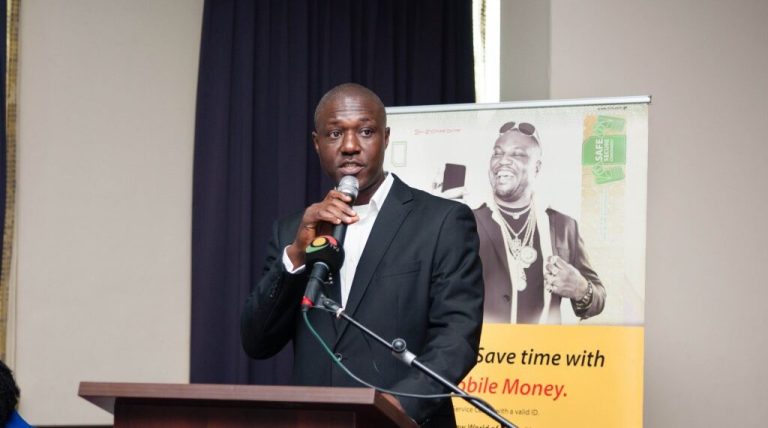
In the third quarter of 2023, MoMo PSB achieved a significant milestone with a total of 3.6 million active wallets

0

MoMo PSB, the payment service subsidiary of MTN Nigeria, reported a remarkable 53.1% year-over-year surge in active wallet users, reaching 3.6 million in the third quarter of 2023.

This financial update was disclosed by MTN in its Q3 statement released on Monday.

When we look at the quarter-over-quarter figures, this growth translates to a 16% increase compared to the 3.1 million active wallets in the previous quarter.

This surge in MoMo wallets significantly contributed to MTN’s fintech business during the quarter, making MoMo users now represent 40.6% of its fintech customer base.

However, it’s worth noting that the number of active MoMo wallet users remains relatively low compared to the total number of registered users, which stood at 27.9 million by the end of Q3.

MTN emphasized that MoMo PSB has expanded its agent network, which now boasts over 293,000 agents, marking a substantial 55.7% year-on-year growth and bringing its services closer to the people.

Additionally, the PSB has successfully onboarded 197,000 merchants since initiating its merchant ecosystem in March 2023.

Regarding MTN’s fintech revenue performance, CEO Karl Toriola expressed, “Our fintech business continued to gain traction, recovering from the slowdown in H1.

Fintech revenue increased by 5.6% as we expanded the adoption of our core fintech services, including wallet and MoMo agent business.

Although our fintech active user base declined by 20.4% year-on-year, it rebounded impressively by 27.2% quarter-on-quarter, reaching 8.9 million.”

Toriola attributed the YoY decline to an earlier slowdown in activity on the over-the-top (OTC) platform due to cash shortages in Q1.

Nonetheless, efforts to rebuild the base are yielding positive results, with a remarkable 25.5% growth in OTC users compared to Q1 2023.

Furthermore, MTN’s digital revenue for Q3 exhibited robust growth, surging by 55.4%, driven by the increased adoption of digital products and a 67% growth in the active user base, now totaling 16.1 million.

The company noted that the monthly active users of Ayoba, its instant messaging platform, continued to grow steadily, with the addition of over 2.8 million users, bringing the active user count to approximately 8 million.

Karl Toriola emphasized that MTN is well-positioned to stimulate the growth of active wallets and merchant ecosystems through consumer education and commercial initiatives.

Additionally, MoMo PSB will leverage its agent network to provide even better service to its customers.

It’s worth mentioning that MTN, alongside other mobile network operators like Airtel, Glo, and 9mobile, was granted a Payment Service Bank (PSB) license last year, aimed at promoting financial inclusion in Nigeria.

As a PSB, MoMo has the capability to collect deposits, offer savings accounts, and facilitate cross-border transfers, catering to both individuals and small enterprises.


As mobile phone usage grows, Nigeria and other countries encounter a rising e-waste issue, according to a report

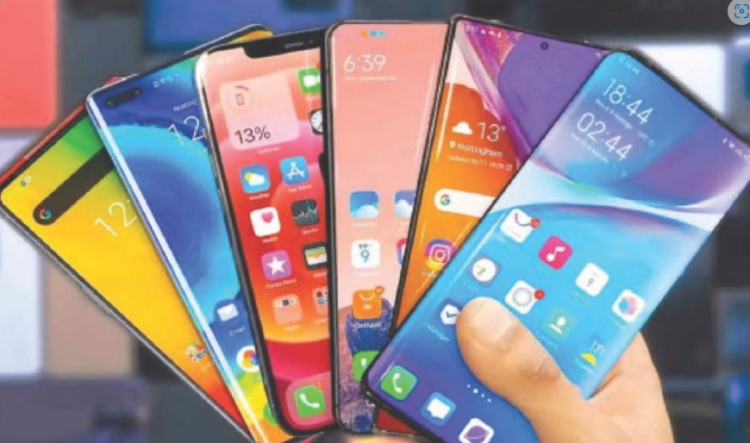
A report from the GSM Association (GSMA) highlights a pressing issue for Nigeria and other Sub-Saharan African countries as the proliferation of mobile phones leads to an imminent challenge of electronic waste (e-waste).

GSMA’s recent ‘Mobile Economy Sub-Saharan Africa’ report projects that by the end of 2023, Sub-Saharan Africa will boast a staggering 1 billion active feature phone and smartphone connections.

This number is expected to surge further with the anticipated addition of over 200 million new devices by the end of 2027.

However, this growth in device numbers raises a significant concern regarding the surge in e-waste and the heightened consumption of natural resources within the region.

Nigeria, which currently holds the largest number of mobile subscriptions in Africa, with over 220 million connected lines as of August 2023, could potentially account for the region’s largest mobile e-waste problem.

In stark contrast to developed countries with well-established e-waste management systems, many African nations lag in this area.

To address this looming challenge, GSMA underscores that while the technical lifespan of a mobile device is between four and seven years, the average period of use is only around three years.

This discrepancy highlights that the primary hurdle to reducing waste lies in consumer behavior.

GSMA suggests that incentivizing consumers will be pivotal in tackling this issue, even though it might be complicated by various factors like affordability, information availability, social norms, and personal preferences influencing consumer choices.

The report also emphasizes the role of governments and industry players in implementing strategies such as building new channels for collecting, refurbishing, and reselling devices, as well as educating consumers and running awareness campaigns on sustainability.

Operators and other ecosystem players across Sub-Saharan Africa are already at the forefront of these efforts, working to promote circularity in mobile phones and digital devices.

GSMA further notes that device ecosystem players in Sub-Saharan Africa are adopting the circular economy concept in device manufacturing.

This involves producing phones with longer lifespans, using recyclable and recycled materials, and incorporating renewable energy in the production process.

These measures aim to reduce the number of devices discarded prematurely, facilitating sustainable transformation within the industry.

Adding to the concern, the European Chemical Society identified 30 elements commonly used in smartphones in November 2022.

Among these, 11 were flagged as elements with limited availability, which could pose risks to future supply.

Additionally, the unsustainable usage of seven elements found in smartphones could present serious risks within the next 100 years.

GSMA estimates that a refurbished phone can have an 87% lower climate impact than a newly manufactured phone.

Proper recycling of 5 billion mobile phones could recover a significant value of precious materials, including gold, palladium, silver, copper, rare earth elements, and enough cobalt to manufacture 10 million electric car batteries, estimated at $8 billion in worth.

In summary, the rapid growth of mobile phone usage in Sub-Saharan Africa comes with an urgent e-waste challenge that necessitates a shift in consumer behavior, industry practices, and government policies to ensure a sustainable and environmentally responsible future.


Supreme Court Decision: It’s the Nigerian People Who Suffer the Most, Not Me – Atiku

0

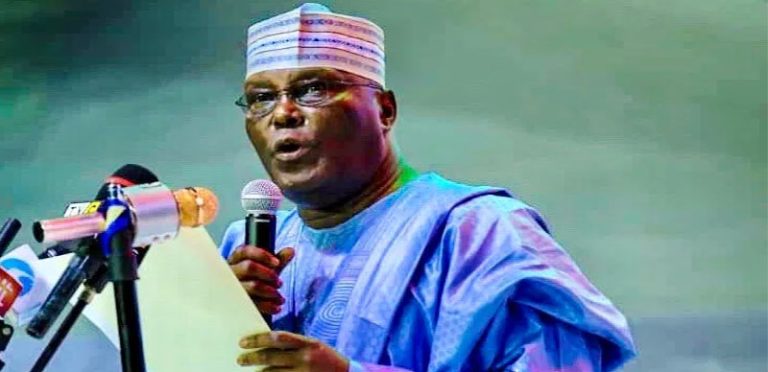
Following the 2023 election, Atiku Abubakar, the presidential candidate of the Peoples Democratic Party, presented a bleak outlook for Nigeria’s future.

This statement came after the Supreme Court dismissed his appeal, affirming President Bola Tinubu’s win in the February presidential election, citing a lack of merit.

Of particular note, the Supreme Court declined to consider Atiku’s attempt to introduce academic records from Chicago State University as fresh evidence to support his claim of certificate forgery against former Lagos governor Bola Tinubu.

The seven-man panel, led by Justice Inyang Okoro, unanimously concurred with the lead judgment that rejected Atiku’s appeals.

During a press conference in Abuja, Atiku expressed his sorrow, emphasizing that the real loss was not his own, but rather a profound setback for Nigeria.

He voiced concerns that if the Supreme Court’s decision appeared to tolerate wrongdoing and even reward it, the nation faced dire straits, regardless of who occupied the highest office.


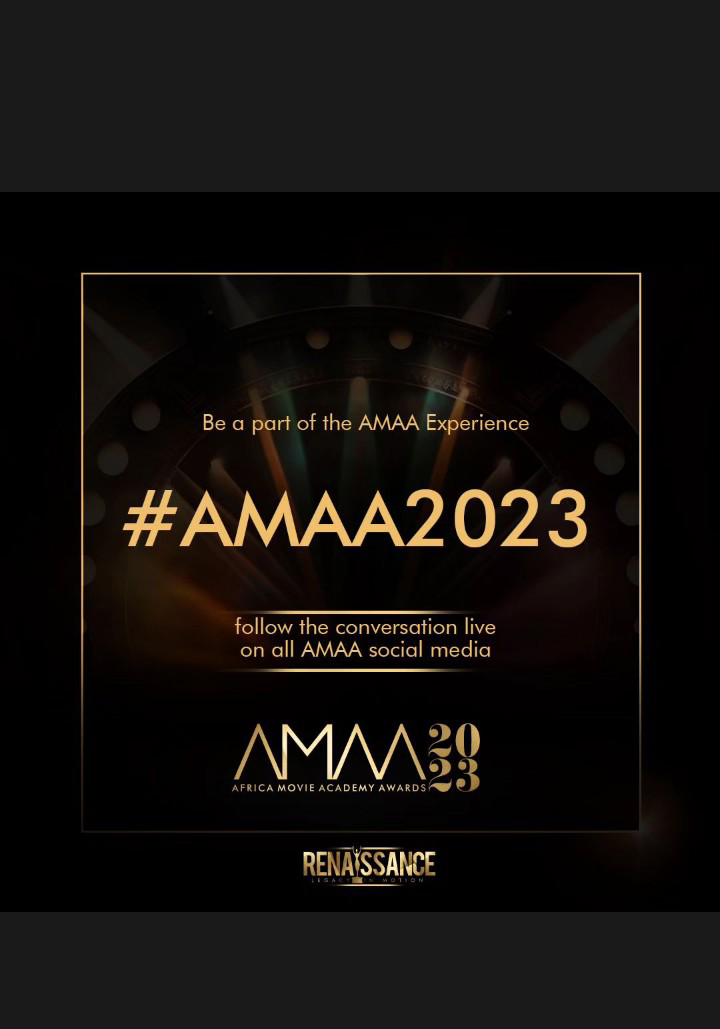
Africa Movie Academy Awards 2023 winners

0

The 19th edition of the Africa Movie Academy Awards was held on Sunday, October 29, 2023, at the prestigious Balmoral Convention Centre in Ikeja, Lagos.

Filmmakers from around the world gathered at the awards gala to honour and recognise the outstanding achievements in African cinema.

The event served as a platform to celebrate the very best in the industry, bringing together talented individuals from diverse backgrounds under one roof.

Nancy Isime, Rahama Sadau, and Richard Ato Turkson took on the role of hosts at the prestigious awards ceremony.

C.J. ‘Fiery’ Obasi’s film, Mami Wata, emerged as a frontrunner in the nominations, securing an impressive 12 nominations. The film was recognised in various categories, including Best Film in an African Language, Best Cinematography, Best Sound, Best Screenplay, and Best Director.

Here is a full list of nominees and winners at the AMAA 2023 awards:

Efere Ozaka Award For Best Short Film

Lions (Ethiopia) – Winner

Riel (Namibia)

Enmity Djin (Mauritania)

Jubril Malaifia Award For Best Animation

Lost (Uganda)

Azania Rises (South Africa)

Jabari (Ghana) –  Winner

Bashorum Gaa (Nigeria)

Best Documentary

Africa Cradle of Humanity and Modern Civilization (Senegal/Canada)

Nightlife in Lasgidi (Nigeria)

Maayo Wonaa Keerol – The River is not a Border (Senegal)

Ifine (Beauty) (Sierra Leone)

Le Spectre de Boko Haram (Cameroon) – Winner

Ousmane Sembene Award For Best Film In An African Language

Pusha Pressa Phanda (South Africa)

Anikulapo (Nigeria) – Winner

The Kitera Chronicle (Uganda)

Four Walls (South Africa)

Mami Wata (Nigeria)

Michael Anyiam Osigwe Award For Best Film By An African-Born Director Living Abroad

Talia’s Journey (Senegal/Belgium) – Christophe Rolin

Golden Stripes (Nigeria/UK) – Peace Osigbe

KOFA (Nigeria/Canada) – Jude Idada – Winner

Best Diaspora Short Film

We Were Meant To (United States) – directed by Tari Wariebi

Michael Anyiam Osigwe Award For Best Film By An African-Born Director Living Abroad

Talia’s Journey (Senegal/Belgium) – Christophe Rolin

Golden Stripes (Nigeria/UK) – Peace Osigbe

KOFA (Nigeria/Canada) – Jude Idada – Winner

Best Diaspora Short Film

We Were Meant To (United States) – directed by Tari Wariebi

The Ballad of Olive Morris (United Kingdom) – directed by Alex Kayode-Kay

Fifty-Four Days (United Kingdom) – directed by Cat White and Phoebe Torrance

Raw Materials (Jamaica) – Directed by Sosiessia Nixon – Winner

Best Diaspora Documentary

Sound of the Police (United States) – Directed by Stanley Nelson – Winner

Fantastico Negrito – Have You Lost Your Mind Yet (United States) – directed by Yvan Iturriaga and Francisco Nuñez

Black Rio (Brazil) – directed by Fernando Sousa and Gabriel Barbosa

Best Diaspora Narrative Feature

Cheese (Trinidad & Tobago) – directed by Damian Marcano

Our Father, The Devil (United States) – Directed by Ellie Foumbi – Winner

The Pastor and the Revolutionary (Brazil) – directed by José Eduardo Belmonte

Best Achievement in Production Design

Pat Nebo – Anikulapo – Nigeria – Winner

Eve Martin – Omen – DRC

Sira – Burkina Faso

Antoine Nshimiyimana – Fight Like a Girl – Rwanda

Chantel Carter – Gereza – South Africa

Best Achievement in Costume Design

Bunmi Demilola Fashina – Mami Wata – Nigeria

Toyin Bifarin Ogundeji – Anikulapo – Nigeria

Millicent Jack – 4-4-44 (Four Four Forty-Four) – Nigeria

Djibril Drame – Xalé – Senegal – Winner

Elkehoste and Baloji Omen – DRC

Sidi Ouedraogo Sira – Burkina Faso

Best Achievement in Make-Up

Campell Precious Arebamen – Mami Wata – Nigeria – Winner

Hakeem Effect and Toyin Bifarin Ogundeji – Anikulapo – Nigeria

Lila Vander Elst – Omen – DRC

Our Lady of the Chinese Shop – Angola

Omowunmi Okungbure – Gangs of Lagos – Nigeria

Best Achievement in Soundtrack

Fight Like a Girl – Rwanda – Winner

L’Axe Lourd (The Highway) – Cameroon

Gereza – South Africa

Omen – DRC

Obinna Arua – 4-4-44 (Four Four Forty-Four) – Nigeria

Best Achievement in Visual Effects

Andrej Gregori, Voranc Kumar, Ziga Radulji -Omen – DRC

Alexandre Dachkevitch – Mami Wata – Nigeria

Josh Borrill – The Trade – Nigeria

Emmanuel Bassey – Gangs of Lagos – Nigeria – Winner

Best Achievement in Sound

Juliana Oswald – Our Lady of the Chinese Shop – Angola

Vianney Aube – Sira – Burkina Faso – Winner

Erik Griekspoor – Omen – DRC

Samy Bardet – Mami Wata – Nigeria

Michel Tsagli – Xalé – Senegal

Best Achievement in Cinematography

Lilis Soares – Mami Wata – Nigeria – Winner

Joachim Philippe – Omen – DRC

Richard Henkels – Fight Like a Girl – Rwanda

Thomas Wilski – Talia’s Journey – Senegal/Belgium

Eduardo Kropotkine – Our Lady of the Chinese Shop – Angola

Best Achievement in Editing

Nathan Delannoy – Mami Wata – Nigeria

Bertrand Conard – Omen – DRC – Winner

Sylvie Gadner – Sira – Burkina Faso

Layla Swart – Gereza

Madhew Leutwyler – Fight Like a Girl

Best Achievement in Screenplay

C.J. ‘Fiery’ Obasi – Mami Wata – Nigeria

Ufuoma MeHHri – 4-4-44 (Four Four Forty-Four) – Nigeria

Moussa Sene Absa, Pierre Magny, Ben Diogay Beye – Xalé – Senegal – Winner

Madhew Leutwyler – Fight Like a Girl – Rwanda

National Film and Video Censors Board (NFVB) Award for Best Nigerian Film

Mami Wata – Winner

Anikulapo

4-4-44 (Four Four Forty-Four)

Gangs of Lagos

The Trade

L.I.F.E.

Brotherhood

Best Young/Promising Actor

Maleek Sanni – Gangs of Lagos – Winner

Ewube -L’axe Lourd (The Highway

Darisimi Nadi – Obara’m

Sanou Titiama – Le chant des fusils (The Song of the Rifle

Eyiyemi Afolyan – Anikulapo

Best Actor in a Supporting Role

Francis Onwuchei – The Trade – Nigeria

Jeff Jackson – Four Walls – South Africa

Hakeem Kae-Kazim – Fight Like a Girl – Rwanda

Jimmy-Jean Louis – Rise – Winner

Best Actress in a Supporting Role

Uzoamaka Aniunoh – Mami Wata – Nigeria

Rokhaya Niang – Xalé – Senegal – Winner

Clarck Natmbwe – Fight Like a Girl – Rwanda

Best Actor in a Leading Role

Richard Mofe Demalo – 4-4-44 (Four Four Forty-Four) – Nigeria

Marc Zunga – Omen – DRC

Fenando Kamugisha – The Fallen Advocate –Uganda

Tobi Bakre – Brotherhood – Nigeria – Winner

Justine Murichii – Shimoni – Kenya

Mike Danon – Sira – Burkina Faso

Best Actress in a Leading Role

Lucie Debay – Omen – DRC

Ehle Mbali Mlotshwa – 4 Walls – South Africa

Nafissatou Sisse – Sira – Burkina Faso

Adesua Etomi – Guns of Lagos – Nigeria

Nse Ikpe Etim – 4-4-44 (Four Four Forty-Four) – Nigeria – Winner

Bimbo Ademoye – Anikulapo – Nigeria

Ama Qamata – Fight Like a Girl – Rwanda

First Debut Feature by a Director

Baloji – Omen – DRC – Winner

Ery Claver – Our Lady of the Chinese Shop – Angola

Jean Elliot Ilboudo (le Chant des fusils)The Song of the Riffle – Cameron

Best Director

Moussa Sene Absa – Xalé

C.J. ‘Fiery’ Obasi – Mami Wata

Baloji – Omen

Apolline Traore – Sira – Winner

Izu Ojukwu – 4-4-44 (Four Four Forty-Four)

Kunle Afolayan – Anikulapo

Kgosana Monchusi, Menzi Mzimela, Juvaiś Dunn – 4 Walls

Best Film

Xalé- Senegal – Winner

Mami Wata – Nigeria

4-4-44 (Four Four Forty-Four) Nigeria

Omen – DRC

4 Walls – South Africa

Sira – Burkina Faso

Anikulapo – Nigeria

Tinubu Appoints Rotimi Oyedepo As Prosecutor For EFCC, Six Others

0

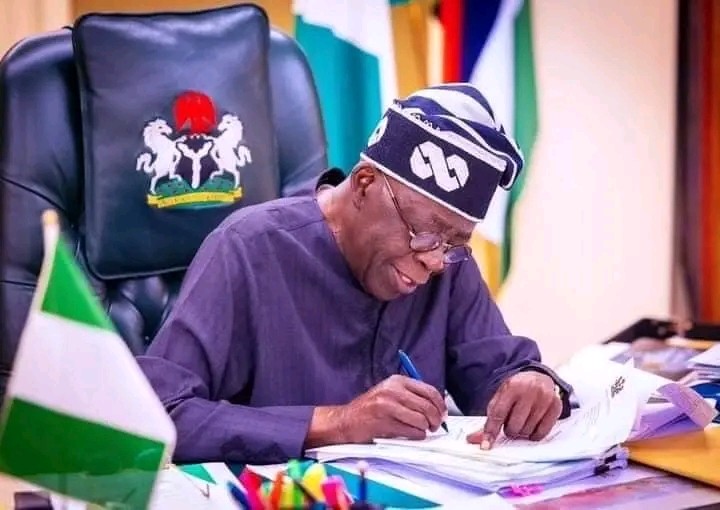
President Bola Ahmed Tinubu has appointed a new team of aides for the Economic Financial Crimes Commission (EFCC), including Rotimi Oyedepo as the top prosecutor.

These appointees have been assigned to the Federal Ministry of Justice in Abuja, where they will work closely with the Attorney-General of the Federation (AGF) and Minister of Justice, Lateef Fagbemi. The newly appointed individuals are as follows:

1. Kamarudeen Ogundele has taken on the role of Special Assistant to the President for Communication and Publicity.

2. Hussein Oloyede has been appointed as the Special Assistant for Arbitration, Drafting, and Regulations.

3. Rotimi Oyedepo (SAN) will serve as the Special Assistant for Financial Crimes and Public Prosecution Compliance.

4. Monsurat Gafar has assumed the position of Special Assistant for Coordination and Intergovernmental Agency Relations.

5. Marcus-Obiene Fernández is now the Special Assistant responsible for Justice Sector Reforms and ICT/Digital and Innovative Technology.

6. Ahmed Wada will carry out his duties as Special Assistant for Special Duties.

7. Tolu Obamuroh has taken on the role of Technical Adviser on Oil and Gas, Arbitration, and International Disputes.

These appointments reflect the President’s commitment to strengthening the EFCC and ensuring effective collaboration with the Ministry of Justice.


PenCom to oversee employers’ supplementary perks for employees

The National Pension Commission has implemented measures to ensure the effective management of additional benefits provided to workers by their employers.

This initiative is outlined in a framework designed for the establishment of Additional Benefits Schemes under the Contributory Pension Scheme.

According to the framework, Section 4 (4) (a) of the Pension Reform Act 2014 permits employers to offer extra benefits to their employees upon retirement.

PenCom has emphasized that only institutions licensed by the National Pension Commission, as outlined in Sections 54 and 56 of the PRA 2014, are authorized to hold and manage pension funds and assets.

Section 59 of the same act stipulates minimum penalties for any violations of Sections 54 and 56.

In accordance with this framework, employers have the option to establish Additional Benefits Schemes (ABS) to facilitate the provision of supplementary benefits to employees when they leave their positions with the employer.

It is essential to note that ABS under the Contributory Pension Scheme (CPS) will be overseen by licensed Pension Fund Administrators, and the assets will be safeguarded by licensed Pension Fund Custodians, in alignment with the regulations set forth in the PRA 2014 and subject to approval by the commission.

In summary, this framework is issued to delineate the procedures for creating and managing ABS by employers, as a means to complement the retirement benefits offered to their employees under the CPS.

PenCom has also made it clear that any employer seeking to establish an ABS for their employees must demonstrate compliance with the provisions of the PRA 2014.

This includes up-to-date remittance of pension contributions, Group Life Insurance coverage for employees, and the execution of a portfolio management agreement with Pension Fund Administrators (PFAs) of their choice.

Furthermore, employers have the flexibility to appoint one or more PFAs to manage their ABS. In cases where multiple PFAs are chosen, a lead PFA should be designated, with notification provided to the commission.

FG plans to bring in €1.2 million worth of equipment for the restoration of Eko Bridge

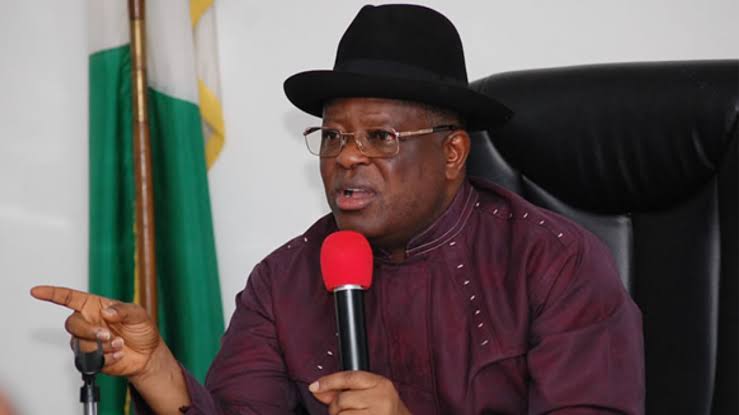
Dave Umahi, the Minister of Works, has emphasized the necessity of importing construction equipment valued at €1.2 million to facilitate the effective rehabilitation of the Eko Bridge in Lagos State.

During a recent inspection of multiple bridges in Lagos State, including the Third Mainland, Carter, Falomo, Iddo, Eko, Marina, and Iganmu Bridges, along with various directors and contractors, the Minister made this announcement.

In a statement released by Clement Ezeorah, the Deputy Director of Press and Public Relations, the Minister explained that the equipment’s importation is required for the comprehensive repair of the Eko Bridge, particularly since the bridge deck will need to be opened for this purpose.

Umahi stated, “To address the complex nature of the repairs required for the Eko Bridge, where the bridge deck will be exposed, equipment with a value of €1.2 million will be brought into the country for use in maintaining this critical aspect of the bridge.”

The former Governor of Ebonyi also highlighted that the bridge’s structural issues were primarily due to a lack of a maintenance culture at the national level.

He further pointed out challenges with the Third Mainland Bridge, which was constructed in two segments six decades ago.

He explained, “The Eko Bridge faces two key challenges – a lack of adequate maintenance and deterioration of the bridge’s bearings.

While there are numerous air gaps, the previous administration made commendable efforts to address these issues.

The rehabilitation work is currently in progress, with an expected completion date in 2024, as we are actively working on increasing the workforce and equipment at the construction site.

The Eko Bridge’s significance is undeniable, as it plays a crucial role in facilitating the movement of trucks to Lagos Island.


Nigerian citizens allocated $340.84 million in foreign exchange for educational expenses over the span of six months, as reported by the Central Bank of Nigeria

0

Nigerians seeking admission to foreign universities spent a substantial $340.84 million on their applications between January and June 2023, as reported by the Central Bank of Nigeria’s data on foreign exchange transactions related to educational services.

The data reveals that in April 2023, the expenditure on foreign education amounted to $40.54 million, followed by $48.81 million in May 2023.

However, in June 2023, the expenses dropped significantly, with the bank reporting $32.61 million spent during that month.

Comparing this to the first quarter of 2023, where $218.88 million was spent, there was a notable decrease of $96.92 million, equivalent to a 44.28 percent decline.

Furthermore, the first quarter of 2023 performed poorly compared to the second quarter of 2022, with a decrease of $124.42 million, representing a 50.5 percent reduction.

Notably, the funds remitted to foreign academic institutions lacked significant reciprocation in the form of inflows from foreign sources into the local education sector.

Experts have suggested that students seeking to migrate may have been compelled to obtain dollars from Bureau De Change operators due to delays in banks processing their Form A requests.

Recent data from the Home Office of the United Kingdom revealed a remarkable 222.8 percent increase in study visas issued to Nigerians, with 65,929 visas granted as of June 2022, compared to 20,427 during the same period in 2021.

The Central Bank faces a backlog of accumulated forex demand on the official market, forcing individuals and businesses to turn to the black market for dollar transactions.

This situation is exacerbated by the declining investment and lower crude oil exports, which contribute to more than 90 percent of Nigeria’s export income.

In an earlier interview, Dr. Anderson Ezeibe, the National President of the Academic Staff Union of Polytechnics, emphasized that insufficient government investment in the education sector has adversely affected it.

Dilapidated infrastructure, unhappy lecturers and students, and a lack of access to quality equipment for practicals contribute to the production of inadequately educated graduates.

Professor Alabi Thomas, an educator at the Federal University of Technology, Minna, blamed government policies for driving the migration, stating that these policies continue to hamper the education sector.


The Chinese loan has increased by $800 million in just one year, reaching a total of $4.73 billion

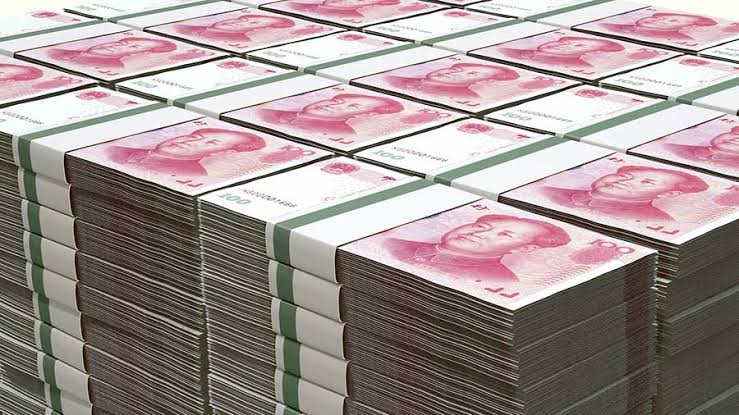
Nigeria’s debt to China saw a notable increase, rising from $3.93 billion as of June 30, 2022, to $4.73 billion as of June 30, 2023, marking an $800 million increase within a year.

This surge represents a substantial growth of 20.36% from the second quarter of 2022 to Q2 2023, based on an analysis of external debt stock data from the Debt Management Office.

While the Nigerian government has maintained a degree of secrecy regarding the terms of its loans from China, the Debt Management Office (DMO) has provided some insights in the past.

According to DMO statements in June 2020, loans from China, totaling $3.121 billion as of March 31, 2020, are considered concessional. They come with interest rates of 2.5% per annum, a tenor of 20 years, and a grace period (moratorium) of seven years.

These terms align with the provisions of the Fiscal Responsibility Act, 2007, offering low interest rates and extended repayment periods.

A closer look at the 15 projects financed by Chinese loans reveals a diverse range, encompassing water supply, power generation, railways, airport terminals, communication, and agricultural processing. These projects are instrumental in Nigeria’s infrastructure development and economic growth.

The projects vary in terms of disbursement and interest rates. While some loans have been fully disbursed, others remain partially disbursed. Interest rates range between 2.5% and 3%, contradicting the initial claim by the DMO that all loans were fixed at 2.5%.

Repayments for these loans have been ongoing, with Nigeria servicing Chinese loans with $263.14 million during the review period. Notably, there were no recorded debt service payments for Chinese loans in Q2 of 2022 and 2023, suggesting that Nigeria was not required to make payments during these quarters.

Amid concerns that Nigeria’s assets might be at risk in case of loan default, the Director-General of the DMO, Patience Oniha, assured the public that these loans were primarily concessional and did not involve national assets as collateral.

In addition, the United States expressed concerns about China’s potential influence over the Nigerian government through these loans, citing sub-prime financing for infrastructure projects that could exacerbate Nigeria’s debt burden.

Chinese companies, particularly the China Civil Engineering Construction Corporation (CCECC), have played a significant role in Nigeria’s railway projects, handling projects worth billions of dollars. Chinese financing has enabled these projects’ progress.

However, China’s willingness to provide further loans to Nigeria appeared to waver due to concerns over Nigeria’s ability to repay.

In 2021, Minister of Transportation Rotimi Amaechi alleged that China was becoming hesitant to lend more money due to a National Assembly probe into the government’s loan repayment capacity.

In March 2023, the China Exim Bank rejected a significant loan request from Nigeria, but there have been subsequent developments indicating a commitment to refinance and complete critical railway projects.

In conclusion, Nigeria’s relationship with China through these loans has been marked by growth, concerns, and potential alterations, highlighting the complex dynamics surrounding the country’s debt and infrastructure development.


Sanwo-Olu encourages the National Institute of Credit Administration (NICA) to advance the credit management profession

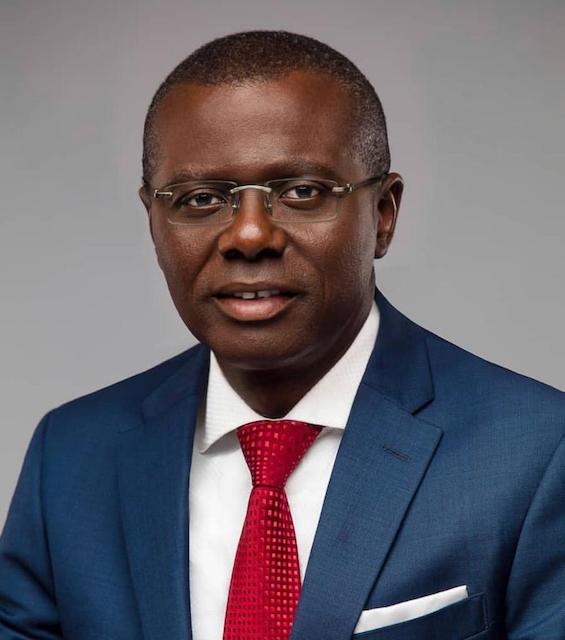
Lagos State Governor, Babajide Sanwo-Olu, has encouraged the National Institute of Credit Administration (NICA) to further champion the credit management profession within the country. He expressed this during NICA’s 30th Anniversary Business Networking Dinner Night in Lagos, on a Wednesday.

Represented by Mr. Mobolaji Ogunlende, the Commissioner of the Ministry of Youths and Development of Lagos State, Governor Sanwo-Olu commended NICA for its three decades of accomplishments.

He applauded the dedication, expertise, and unwavering commitment of its leadership and members in promoting excellence in credit management.

The governor highlighted NICA’s role in equipping professionals with the knowledge and skills needed to navigate the dynamic financial landscape over the past few decades.

He also noted NICA’s transition into one of the authoritative bodies for controlling, supervising, and regulating credit management in Nigeria.

Mr. Andy Ojei, the President and Chairman of NICA’s Governing Council, emphasized the crucial role of a robust credit management system in achieving sustainable economic growth.

He stressed that such a system could prevent global economic crises caused by insufficient credit management skills. NICA’s commitment to aiding governments in shaping policies and advocating for their implementation in credit management matters was a source of pride.

NICA’s aim to contribute to the ease of doing business in Nigeria through international collaborations and partnerships, thereby attracting trade and investment, was also highlighted.

Prof. Chris Onalo, the Registrar and Chief Executive Officer of NICA, expressed satisfaction as NICA celebrated its three decades in existence and its recent recognition as a national chartered professional body for credit management knowledge, education, and certification in Nigeria.

He emphasized the importance of hard work, passion, diligence, and dedication in achieving such milestones and reiterated NICA’s vision for a better economic future in Nigeria.