Home Blog Page 324

In 2022, the trade volume between Germany and Nigeria reached a substantial €3 billion, as reported by the envoy

0

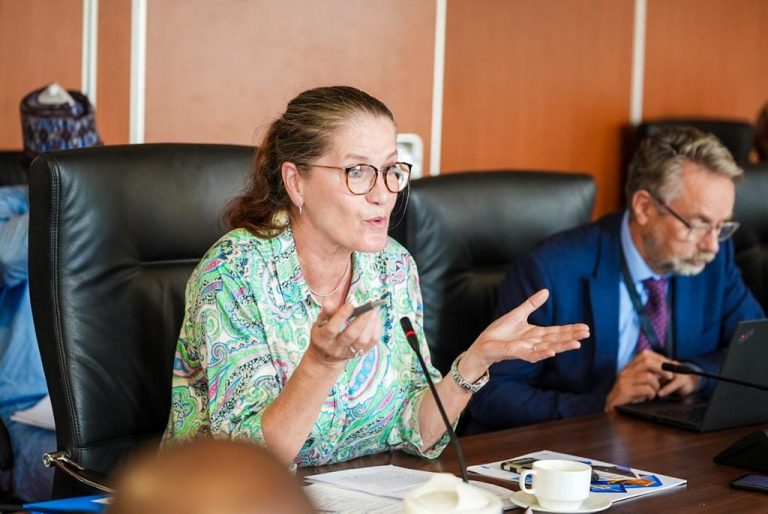
The German Ambassador to Nigeria, Annett Günther, announced during a press conference on Thursday that the bilateral trade between the two countries reached €3 billion in 2022.

Günther provided insights into the composition of this trade relationship, highlighting that Germany primarily exports machinery (28%), food products (20%), and chemical products (19%) to Nigeria, while Nigeria’s main exports to Germany consist of crude oil (83%), food products (12%), and other raw materials (4%).

Furthermore, Günther shared that in 2022, 2,000 Nigerians successfully passed the German language examinations at the Goethe Institute, and approximately 4,000 Nigerian students were studying in Germany.

She emphasized the strong economic ties, revealing that 90 German companies are currently operating in Nigeria, directly generating 17,000 jobs and indirectly contributing to job creation on a much larger scale.

In terms of investments, Germany has committed over €600 million to development projects across various sectors in Nigeria, solidifying its position as the second-largest donor.

Additionally, Germany pledged €620 million to support the Economic Community of West African States (ECOWAS).

On the humanitarian front, Germany has continued its significant contributions, allocating €50 million in 2022 for activities such as protection, food security, health, and shelter, which have a profound impact on saving lives in Nigeria and the region.

Advocacy Group Calls for Congressional Investigation into Tinubu’s CSU Certificate

0

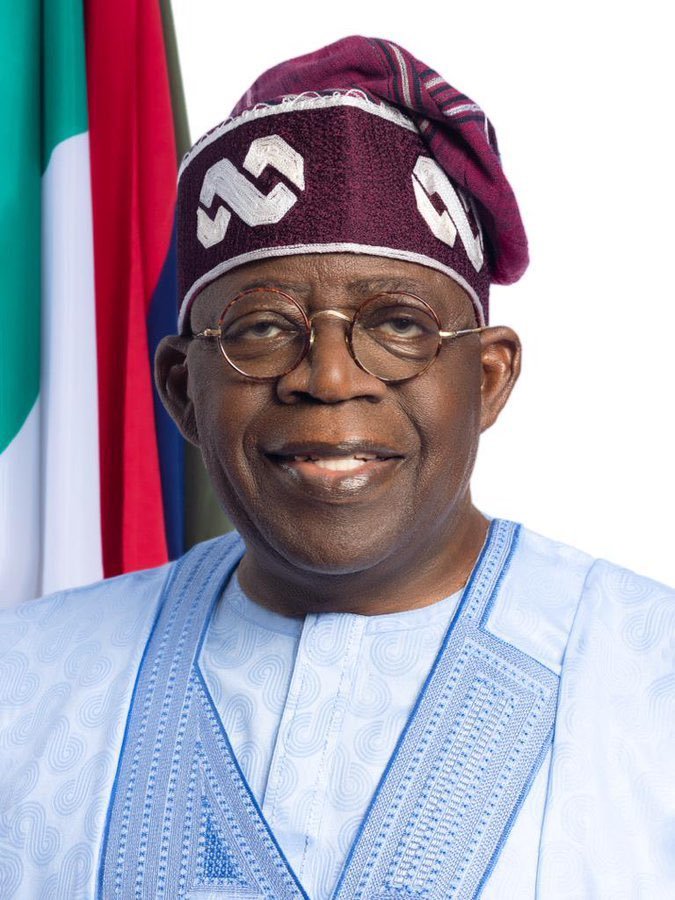
The United Global Resolve for Peace (UGRFP) has urged the National Assembly to investigate President Bola Tinubu’s educational qualifications from Chicago State University to ensure their validity and authenticity.

They emphasized that this investigation is not only a matter of justice but also a commitment to upholding the rule of law and transparency.

UGRFP Chairman, Shalom Olaseni, made this demand in a statement, stating that ignoring this issue could tarnish Nigeria’s reputation both regionally and globally, and allowing the controversy to linger would have far-reaching consequences.

The group has also implored the National Assembly, as the embodiment of Nigeria’s legislative authority, to approach this matter with utmost seriousness.

They stressed the importance of a thorough, impartial, and prompt investigation as a demonstration of the nation’s dedication to the rule of law and transparency.

UGRFP cautioned against using this issue for political vendettas and urged for a transparent and honest resolution of the allegations surrounding President Tinubu’s certificate, which they believe is crucial for maintaining trust and confidence in the country’s leadership.

They called upon the President to address the nation and provide “indisputable evidence” to validate the authenticity of his educational qualifications obtained from CSU.

They emphasized that safeguarding Nigeria’s reputation and credibility is paramount.

Olaseni expressed concerns about the media attention surrounding these allegations and their potential to harm Nigeria’s image if left unaddressed.

He stated that transparency is not merely an expectation but a necessity for maintaining trust in leadership.

Lastly, Olaseni warned that failing to address such serious allegations could send a dangerous message that integrity and accountability can be compromised without consequences, which would undermine Nigeria’s democracy at its core.

Why are Nollywood Movies So Bad?

0

Nollywood is a cultural phenomenon and no doubt one of the most enduring ones of the 21st century. Like other industries, through the decades, it has had to adapt to various societal shifts and technological advancements, continuously changing to survive, to push the needle of creativity forward, as well as turn a handsome profit– it still is a business after all. On that front, things have never been better. Now the second largest film industry in the world by output, churning out over 2,500 films annually, Nigeria’s film industry contributed 2.3% (about N239 billion, or $660 million) to its Gross Domestic Product in 2021. That same year, it employed close to 300,000 workers, the highest in five years. All the projections for the future indicate that this path only shines brighter. So, why do critics and audiences, both at home and abroad, regularly lament their dissatisfaction with a good number of these films? Why does it feel like while more money is being invested, the ball is being dropped, as far as creativity and artistry are concerned?


Things feel like they’re in stasis, as if a plateau has been reached where we’ve elected to pitch our tents and set up shop. A fellow critic said to me last year, “I am tired of saying the same thing in different ways,” referring to how their reviews of virtually every Nollywood project released had come to feel like flogging a rigor-mortised horse; for them, the diagnosis of the problem with one movie or TV show was almost always the same as the next: a severe lack of coherence among all filmmaking elements. Not that the filmmakers aren’t trying. Across the industry, thousands of people are at work, attempting to better their craft through any means possible, which proves an uphill task given the disadvantages that come with being a Nigerian in Nigeria. Still, these autodidacts merely symptomize the deeper issues: the lack of proper and adequate film education in the country, the absence of a vibrant film culture in which to partake or take pride, as well as shaky scaffolding where a solid industry structure should be. But I’m getting ahead of myself.


A Brief History

The history of the film industry in Nigeria can be categorized into four eras.


During the Colonial period (1903-1960), the first films screened in Nigeria were at the Glover Memorial Hall in Lagos, from August 12 to 22, 1903. Although the films from this era were not as interested in entertainment as much as they were in propaganda, many people flocked to see documentaries and newsreels, produced by the government and religious organizations alike.


In what is termed the Independence era (1960-1972), notable theater practitioners such as Moses Olaiya (aka Baba Sala) and Hubert Ogunde began their transition to the big screen. The former would go on to release Mosebolatan in 1985, a box office success which grossed about N107,000.00 in five days.


In 1972, the Nigerian Enterprises Promotion Decree enabled more Nigerians to be involved in cinema exhibition and distribution. However, this period of boom, both for oil and cinema, eventually dwindled. Celluloid had become a lot more expensive than video, which was quickly gaining popularity. Before 1999, all the major cinemas in Lagos had closed down.


The stage was set for Nollywood as we knew it in the early 2000s to come into effect. And though there is a lot of controversy surrounding the name, it first appeared in a 2002 New York Times article by Norimitsu Onishi, who used it to describe the feeling of hanging out in Surulere where filmmakers were “busy shooting on every street corner, frantically churning out what were then called ‘home videos’”, a trend that didn’t begin with 1992’s Living in Bondage but was nonetheless popularized by it. Apparently, ‘Nollywood’, refers to ‘nothing wood’, as in the process of creating something out of nothing. According to Charles Igwe, CEO of Nollywood Global Media Group, “a medical doctor friend of mine, in describing his experience of our filmmaking activities, likens it to performing open-heart surgery with forks and knives, but the genius of it all is that the patient survives.”


The state of things in the industry right now is one where a lot of the major players seem to have not only accepted this forks-and-knives way of doing surgery but also come to revel in it. Yes, it is commendable and nothing short of miraculous that Nollywood has gotten this far, despite all odds and oddities, and I have and will continue to sing the praises of our hits (and our misses) at every opportunity. However, an industry cannot soar on the wings of its outliers alone. Like several film industries abroad, we have clawed our way to prominence. Yet, if we fail to have real conversations about how to move forward, and how to create a structure that enables things to operate more smoothly, we risk the deterioration of all the success so far.


The Present

One recurring critique of a lot of Nollywood films is that the stories fail to add up somehow. This issue is further illustrated in the characterization, plot, and dialogue; there’s usually a sense of the story feeling incomplete, either because the promise of the premise is not delivered on, or the storytelling is inauthentic and insincere, choosing to fall to tired tropes rather than aim for the specificity of the Nigerian condition. This is not to say that these problems are not present elsewhere. Even Hollywood seems to have, in recent years, lost sight of the importance of screenwriting to the art and business of filmmaking. Apart from certain exceptions, a work of narrative film lives and dies by its screenplay. If there’s no meat within those pages, then there’s nothing for the actors or directors to chew on, nothing to interpret. You’d have to try to ruin a good screenplay, while a bad one would require tons of work to beat into shape.


Here’s a quote from Mexican filmmaker, Alfonso Cuaron, speaking at Cannes about his 1998 film, Great Expectations. He stresses the significance of a good screenplay, saying: “I had said no three times, but I became cocky. I said, ‘Okay, I don’t like this script, but we’re going to compensate visually.’ That never works. When the essence—the concept, the soul—isn’t there, you can’t compensate with anything. That is the truth of the matter…I did the wrong film. I should not have done it. I didn’t know what I was doing.”


And yet, given just how important screenwriting is to the film production process, it is baffling that more time is not being invested in this aspect, especially by the major players. Not everyone who is involved with making movies can automatically become a screenwriter, and frankly, not everyone should. The craft is frequently described as deceptively hard to master. Even the great American writer F. Scott Fitzgerald couldn’t cut it in Hollywood, because writing scripts requires a lot more than being a literary genius. Not all films can afford to have their screenplays penned down in one weekend. Some will require months and months of story development, collaboration, and scores of discarded drafts.


Of course, a lot of Nollywood bigwigs know this. Their counterargument is usually that “people need to eat” and the industry needs to ensure production time is as short as possible. For that reason they cannot dedicate that much time to story development and writing, knowing that the audience will watch whatever they churn out anyway, evidenced by the occasional favorable box office returns—once again, outliers. Granted. However, “people need to eat” is not a sustainable way to run an industry. Filmmakers have a responsibility to the public, to not serve them regurgitations of overused tropes, but fresh stories that not only entertain but also inform and challenge their views– kudos to the filmmakers in the industry who have found a way to consistently do just that. To think it impossible to routinely do all these in a film and still make a lot of money implies a lack of vision and a severe misunderstanding of the purpose as well as the capacity of narrative cinema.


According to an anonymous Nollywood producer, “The problem [with story in particular and the quality of filmmaking overall] starts from the top, [from] the EP/Producer. They use our favorite actors to mask their mediocrity. They believe that once the audience loves certain actors, they’ll be very biased regardless of the story. If we can get it right from this stage, every other person will fall in place.” Producers are meant to facilitate and organize the entire film production process, instead of merely acting as the bankrollers.


Steven Soderbergh (Ocean’s 11) once said: “Cinema is a specificity of vision. It’s an approach in which everything matters. It’s the polar opposite of generic or arbitrary and the result is as unique as a signature or a fingerprint. It isn’t made by a committee, and it isn’t made by a company, and it isn’t made by the audience.” A lot of the directing we see in mainstream Nollywood runs afoul of this sentiment.


Let’s examine acting, one department in Nollywood that has remained consistently filled with talents awaiting the script/project to push them. The problem with acting in Nollywood begins with the executive producers and is also tied to the distributors; it’s essentially a Mobius strip situation. Certain actors and internet stars are thrown in front of our faces repeatedly. Whether or not they are fit for the role(s) seems to take a backseat to their bankability and brand recognition. Most of the time, throwing all the famous people you can afford into a two-hour film will not give you much acclaim with audiences. Sometimes, it will even fail to make you as much money as you’d hoped.


Here, we can begin to understand the “lack of coherence between filmmaking elements” my colleague talked about. When to curry favor with distributors, producers fill their films with people who either cannot act well, or are unfit for the role, and the underpaid screenwriter is under pressure to churn out a screenplay before moving on to the next one, and the directors and cinematographers deliver a project that for the most part is generic and arbitrary, what can we expect but a slew of films that are as put-together as the wall of Jericho, post-fall?


A lot of these issues also stem from why we produce films in the first place.

Credit: Osamudiamen Joe

 

NIDF’s listing contributes an additional N92.55 billion to the NGX’s market capitalization

The Nigerian Infrastructure Development Fund (NIDF) made a significant impact on the Nigerian Exchange Limited’s market capitalization, adding N92.55 billion during its listing on Thursday.

This momentous event was marked with a closing-gong ceremony and a presentation outlining the details of the listing at the NGX.

NIDF, managed by Chapel Hill Denham, stands as Nigeria’s premier infrastructure debt fund, exclusively domiciled in the country.

It boasts a total value of N200 billion as a public infrastructure investment fund, representing a vital contribution to the nation’s development.

During the listing ceremony, Phil Southwell, the fund’s chairman, shared that since its launch in mid-2017, NIDF has generated an impressive return of 155 percent.

Remarkably, it has managed to avoid any Non-Performing Loans (NPLs), offering an enticing risk-return profile for investors.

Southwell expressed his belief that NIDF is just the beginning of a series of investment trusts listed on the NGX, drawing parallels with the UK market where investment trusts play a significant role.

Temi Popoola, the CEO of NGX, expressed enthusiasm about the listing, emphasizing the exchange’s commitment to supporting financial instruments that drive sustainable wealth creation and infrastructure development in Nigeria.

He also highlighted how the listing would enhance NIDF’s visibility, providing investors with more diverse investment opportunities.

Bolaji Balogun, CEO of Chapel Hill Denham, proudly declared NIDF as Nigeria’s best-performing fund over the past five years.

He emphasized that the fund not only delivered substantial economic returns but also made a positive impact on people’s lives.

By the close of Thursday’s trading session, the NGX’s market capitalization had reached N36.526 trillion.

NIDF’s primary focus remains on domestic investments in key sectors of the Nigerian economy, including motorways, power, and agriculture.

Utica Capital introduces a novel mutual fund that seamlessly combines investment and insurance components

Assets management firm, Utica Capital Limited, on Thursday, unveiled its new collective investment scheme which combines both investment and insurance features.

At the launch of the product called Utica Custodian Assured Fixed Income Fund, which held at its head office in Lagos, the firm explained that the product is aimed at deepening the capital market as well as boosting insurance penetration which is less than one per cent in Nigeria.

The Chairman of Utica, Dr Adesegun Akin-Olugbade, said, “UCAF is customised for the Nigerian market. It deepens the capital market on one hand, it also adds to insurance penetration on the other hand. We are a company that is devoted to the capital market.

“In our industry where the dynamics are ever evolving and the challenges are relentless, it is our duty to provide the investing public with the opportunities needed to achieve their financial goals. We understand that every investor has unique aspirations and investment needs, and that is why we have meticulously crafted this new product, the Utica Custodian Assured Fixed Income Fund.”

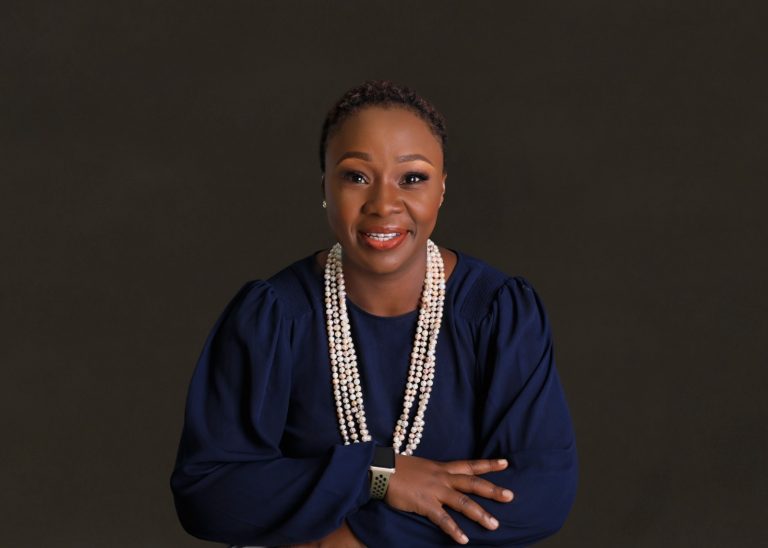
Speaking on the product, Managing Director of Utica Capital, Ola Belgore, said, “Utica Custodian Assured Fixed Income Fund is the perfect blend of returns and protection. UCAF as an investment and insurance collective investment scheme embodies the very essence of our mission which is to become the most sought after brand in asset and fund management in Nigeria and Africa within the first 10 years of our existence. In the ever evolving world of investment, the need for innovative, reliable and adaptable investment solutions has never been more crucial. UCAF is about meeting the needs of would-be investors and Utica’s unwavering commitment to the financial wellbeing of the investing public.

“We have partnered with other capital market operators on the fund. As you know, this is a collective investment scheme which is popularly called mutual funds; there are other capital market parties,”

In her presentation, Utica Portfolio Manager, Aderonke Osho, revealed that UCAF will be heavy on FGN BONDS at about 70 to 80 per cent with provision made for liquidity too.


BAT Nigeria has designated a woman as the Marketing Deployment Director

0

British American Tobacco Nigeria has proudly introduced Kikelomo Fisayo-Okusanya as the Marketing Deployment Director for the West and Central Africa Cluster, marking her as the second woman to join this influential leadership team within the cluster.

According to an official statement, Kikelomo brings with her an impressive track record in the marketing realm, having started her journey with BAT Nigeria in 2003 as a Trade Marketing Representative.

In 2016, she took on the pivotal role of Area Head for Activation and Shopper Marketing.

By 2021, Kikelomo had risen to the esteemed position of Area Head for 360 Activation & Marketing Operations.

In this capacity, she made significant contributions, including pioneering an immersive virtual reality marketing experience and orchestrating a substantial transformation of the Marketing Skills and Development unit.

The statement underlines BAT’s unwavering commitment to gender diversity in leadership, aiming to achieve 40% female representation in senior leadership and 45% in management roles by 2025.

This initiative underscores their dedication to inclusivity and gender equality at the managerial level.

Managing Director Yarub Al-Bahrani commented on her appointment, emphasizing British American Tobacco Nigeria’s dedication to “A Better Tomorrow” and the cultivation of an inclusive work environment that fosters diverse perspectives and ideas, ultimately leading to more informed decision-making and improved business outcomes.

BRT bus fatally collides with three individuals in a tragic incident in Lagos

0

The Lagos State Police Command has officially verified that a collision involving two motorcycles and a BRT vehicle in the Alakija region of Lagos resulted in the tragic demise of three individuals.

A widely circulated video on social media featured a voice cautioning residents against using motorcycles in the BRT lanes.

The voice urged, “Please, my fellow citizens, refrain from entering the BRT lane.

If you choose to ride an Okada, ensure it stays out of the BRT lane. Unfortunately, three lives were lost,” as heard in the video.

In the video footage, three lifeless bodies were visible on the ground in front of the damaged BRT bus, with one of the motorcycles lodged beneath it.

These victims were en route to their homes on Wednesday in the same area when their motorcycles collided with the BRT.

Additionally, it was reported that irate youths attempted to set the BRT vehicle ablaze but were prevented by the police officers who swiftly arrived at the scene.

Benjamin Hundeyin, the State Police Public Relations Officer, confirmed the incident to “Yes, the accident occurred yesterday (Wednesday) at approximately 5 pm.

The Lagos task force seizes 35 vehicles and carries out shanty demolitions

0

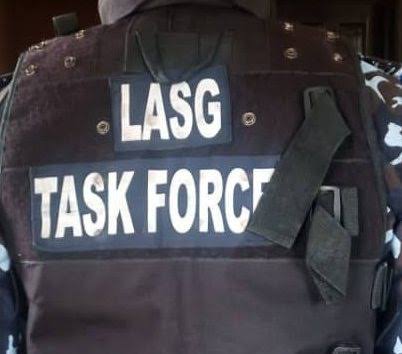
The Lagos State Task Force has confiscated 35 vehicles due to unauthorized parking and road blockage along the Jibowu corridor in Yaba, as announced by the task force’s spokesperson, Gbadeyan Abdulraheem, in a statement on Thursday.

The operation was conducted on Wednesday under the supervision of the agency’s chairman, CSP Shola Jejeloye, who criticized some transport operators for their self-centered behavior in occupying a significant part of the road for loading goods and picking up passengers.

Jejeloye expressed concern about the bus operators at Jibowu who had turned the area into makeshift courier stations and small garages, causing disruptions to traffic flow, especially at night. He emphasized that the impounded vehicles would face legal consequences.

Jejeloye also pledged ongoing patrols to curb such disruptions along the Jibowu corridor, particularly during nighttime when these violations are most prevalent.

In a separate operation, the Lagos State Task Force demolished shanties and makeshift structures around the Lekki-Epe area, particularly around Ikota and Eleganza Bus Stop.

These structures had marred the expressway’s appearance and were known to harbor criminals.

The task force encountered opposition from some individuals initially, but their actions were in line with the state’s agenda to maintain a “New Lagos mega city status,” and only shanties, not permanent buildings, were demolished.

Refine the FIFA Best Awards

0

Nigerian striker Victor Osimhen has been named among the final 12 nominees for The Best FIFA Men’s Player of The Year award,

This prestigious list, unveiled by the global football governing body, features Osimhen as the sole African player to make the cut, contrasting with his compatriot Asisat Oshola, who didn’t secure a spot in the women’s category.

The eligibility period for this esteemed award spans from December 19, 2022, to August 10, 2023. Among the distinguished nominees are renowned players such as Argentina’s Lionel Messi, France’s Kylian Mbappe, and Norwegian sensation Erling Haaland.

During this time frame, Osimhen dazzled by scoring 29 goals and contributing significantly to Napoli’s first Serie A title victory in more than 30 years.

He also earned the accolade of being the top scorer in the previous Serie A season and was included in the league’s Team of The Season.

Joining Osimhen on the shortlist are other notable talents like Kevin De Bruyne, Julian Alvarez, Marcelo Brozovic, Ilkay Gundogan, Rodrigo Cascante, Khvicha Kvaratskhelia, Declan Rice, and Bernardo Silva.

In the women’s category, FIFA has shortlisted players including Oshoala’s Barcelona Femini teammates Jennifer Hermoso and Aitana Bonmati, along with Linda Caicedo, Rachel Daly, Kadidiatou Diani, Caitlin Foord, Mary Fowler, Alex Greenwood, Lindsey Horan, Amanda Ilestedt, Lauren James, Sam Kerr, Mapi León, Hinata Miyazawa, Salma Paralluelo, and Keira Walsh.

Furthermore, African goalkeepers Andre Onana from Cameroon and Yassine Bounou from Morocco have both secured places in the final five-man list for The Best FIFA Men’s Goalkeeper award.

Bounou’s accomplishments include winning the 2022/23 UEFA Europa League with Sevilla and earning a spot in the competition’s Team of The Season, while Onana achieved success with Inter Milan, winning the 2022 Supercoppa Italiana and the Coppa Italia.

They face competition from top goalkeepers Thibaut Courtois, Ederson Santana de Moraes, and Marc-André ter Stegen.

Entrepreneurs brought to court on charges of suspected embezzlement totaling N47.5 million

0

Three individuals, identified as Ime Essien (49), Nnamdi Obianuka (36), and Chidera Stephen (21), who reside in Lagos, found themselves facing charges in an Ikeja Chief Magistrate’s Court on Thursday.

Their alleged crime involves the theft of 375 bags of sesame seeds with a total value of N47.5 million.

According to ASP Raji Akeem, the prosecutor in the case, these offenses took place on August 8 at No 9, Warf Road, Apapa, Lagos.

The complainant, Mr. Olubunmi Olumekun, had hired these three men for the task of loading and transporting 375 bags of sesame seeds, weighing 37.5 tonnes and valued at N47.5 million, to various destinations in Lagos and Ogun states.

However, they failed to make the deliveries, and all efforts by Mr. Olumekun to recover his goods proved futile.

The charges against them fall under sections 287 and 411 of the Criminal Law of Lagos State, 2015.

Despite the accusations, the three men entered pleas of not guilty. Chief Magistrate Mrs. Bola Osunsanmi subsequently granted them bail, each with a sum of N3 million and two sureties of equal value. The case has been scheduled for mention on October 23.