Home Blog Page 383

TECNO unveils the CAMON 20 Doodle Edition, powered by the power of Android.

0

TECNO, the leading smartphone brand from Africa, has recently introduced the CAMON 20 Doodle Edition in collaboration with the renowned artist Mr. Doodle.

To celebrate this remarkable launch, TECNO hosted an exclusive doodle event, graced by numerous celebrities from Nigeria’s entertainment sector.

The CAMON 20 Doodle Edition seamlessly combines cutting-edge design and advanced technology, resulting in a captivating masterpiece that turns heads and initiates conversations wherever it accompanies you.

Kindly enjoy the attached images capturing the essence of this splendid event.”

“Nigeria and Ghana collaborate to tackle the shortage of IT skills.”

0

Tezza, a Nigerian Academy, and the Accra Institute of Technology (AIT) in Ghana are currently engaged in discussions to establish a partnership aimed at addressing the digital skills gap in Africa by training individuals from both countries.

This collaboration is anticipated to facilitate the exchange of knowledge and talent, promote research advancements, and enhance cultural understanding between the two institutions.

The initial conversation about this partnership was sparked during a recent visit by Prof.

Clement Dzidonu, President of AIT, to Nigeria, where he praised Tezza Academy for its potential to equip young graduates with practical skills that align with industry demands, effectively preparing them for the ever-evolving workplace landscape.

Prof. Dzidonu expressed enthusiasm for the possibility of introducing a Tezza initiative in Accra and forming a strategic alliance that capitalizes on AIT’s esteemed reputation and extensive network in Ghana.

This partnership could lead to joint endeavors, including internships, job opportunities, and industry-sponsored projects that address the pressing need for well-rounded IT professionals in Africa.

Furthermore, the collaboration envisions creating a Ghanaian Immersive Program in Accra, mirroring the scale of Tezza Academy’s current cohort, and facilitating placements to overcome challenges often faced by traditional university programs in engaging graduates effectively.

The overarching goal is to connect bright talents from various Ghanaian universities to Tezza Academy’s immersive program, not only shaping their career pathways but also fostering cultural diversity and a broader perspective on technology and innovation.

Additionally, this partnership seeks to provide support for student entrepreneurs, fortifying startup incubation programs and granting access to funding opportunities for innovative projects.

Addressing the issue of brain drain, Jide Modele, Managing Partner at Tezza Academy, emphasized the Academy’s commitment to reversing the trend by training and retaining skilled IT professionals.

This effort involves equipping self-motivated youths with cutting-edge IT skills and ensuring job placements, thereby transforming brain drain into brain gain and bolstering Nigeria’s role in the global IT industry.

It’s worth noting that Tezza Academy offers tuition-free residency programs that empower young Nigerians with advanced IT skills, guaranteeing job placements following an intensive three-month training.

Since 2020, the Academy has been actively forming partnerships and providing comprehensive skill sets that align with local and offshore sector requirements, effectively addressing unemployment and employability challenges in Nigeria.

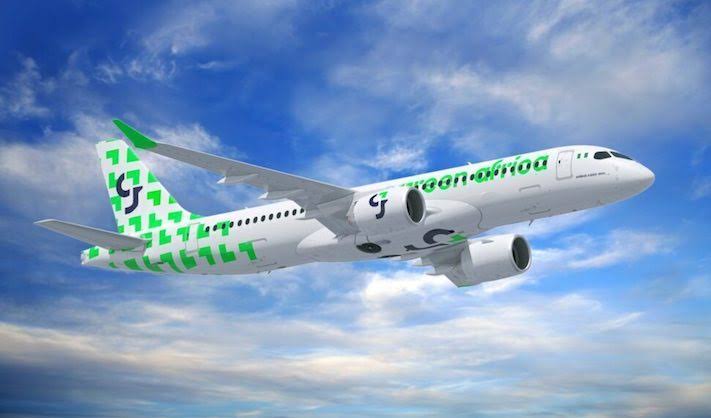
Green Africa reduces airfare prices for flights between Lagos and Ibadan.

0

Green Africa Airways has introduced a special launch of reduced-price flight tickets between Lagos and Ibadan, aiming to alleviate the heavy traffic congestion experienced on the Lagos-Ibadan Expressway.

This move offers a convenient alternative for travelers due to the ongoing road construction.

The airline’s initiative, which was announced through a Twitter post by the People Democratic Party, involves the commencement of flight ticket sales at an affordable rate of N6,500.

This step is part of the broader efforts by the Oyo State Government, led by Governor Seyi Makinde, to enhance the quality of life for both residents of the state and Nigerians in general.

The statement emphasized that the airline’s operations between Ibadan and Lagos will begin with the attractive fare of N6,500, aimed at mitigating the traffic congestion along the Lagos-Ibadan Expressway.

Governor Makinde’s dedication to improving citizens’ lives is evident in his ongoing projects, such as the expansion of the airport road and the planned expansion of the airport itself under his #Omituntun2.0 agenda.

The positive response from residents of both Ibadan and Lagos highlights their eagerness to embrace this development as a means to enhance their living standards and circumvent the challenges posed by traffic on the Lagos-Ibadan Expressway.

ECOWAS empowers women through specialized training in intra-African trade, fostering their active engagement and expertise in cross-border commerce within the continent.

0

The Economic Community of West Africa has conducted a training program for Nigerian women, aiming to equip them with essential skills for successful intra-African trade.

Recently held in Lagos, the event, titled “Capacity Building for the Federation of Businesswomen West Africa on Access to Regional and Continental Markets under the Trade Regime,” welcomed participants.

Alaba Lawson, President of The Ecowas Federation of Businesswomen and Entrepreneurs, stated that the event’s primary goal is to include women from the ECOWAS region in the African Continental Free Trade Area, ensuring the smooth movement of goods and addressing challenges collaboratively.

Raymond Dagana, Trade and Private Sector Adviser at Deutsche Gesellschaft fur Internationale Zusammenarbeit, highlighted the Trade Facilitation West Africa Programme’s aim to streamline regional and global trade, simplifying trade processes and supporting efficient movement of goods.

President Wale Cole of the Lagos Chamber of Commerce and Industry stressed the significance of commitment for the success of the African Continental Free Trade Area (AFCFTA) agreement.

He noted that while external nations may not fully support it, understanding complex trade deals and promoting active regional and continental trade agreements is crucial.

Cole underlined the potential benefits of AFCFTA, estimating a substantial GDP increase and improved livelihoods in participating nations.

He emphasized the need to assist female-led businesses with regional trade access and support them through workshops and information sharing.

He asserted that African unity is essential for the success of AFCFTA, which aims to eliminate trade barriers, create value chains, attract investments, stimulate job creation, and enhance Africa’s competitiveness and economic growth.

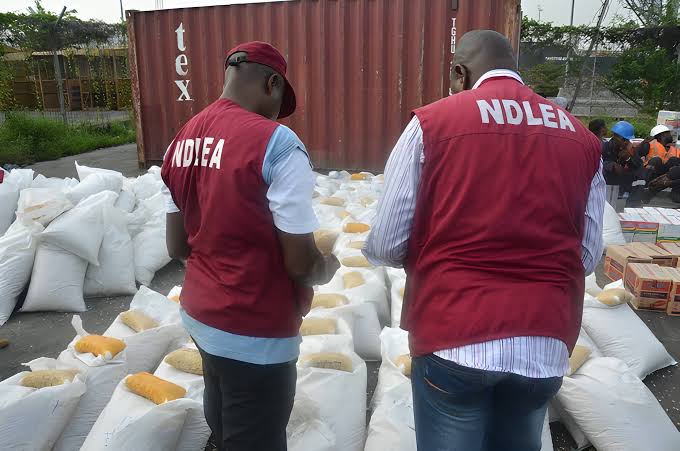
NDLEA confiscates illicit drugs valued at N56.9 million in the FCT and apprehends a total of 343 suspects.

0

The FCT Command of the National Drug Law Enforcement Agency (NDLEA) has reported intercepting approximately 3,091.032 kilograms of suspected illicit drugs, valued at over N56.9 million, between January and the present date.

Mr. Kabir Tsakuwa, the FCT Commandant of the agency, revealed these findings during an interview with the News Agency of Nigeria in Abuja on Wednesday.

Tsakuwa disclosed that the seized illicit drugs encompassed substances such as suspected cannabis sativa, cocaine, Methamphetamine, Heroin, Tramadol, Rohypnol, Diazepam, Ecstasy, and Megadon.

Over the stated period, a total of 343 drug suspects were apprehended, comprising 328 males and 15 females.

Within this timeframe, 188 drug offenders faced prosecution, out of which 126 were convicted and sentenced to varying prison terms.

Notably, the largest portion of the seized drugs, accounting for approximately 3,022.529 kilograms, was cannabis sativa.

The overall estimated monetary value of these seized drugs stands at around N56,903,600.

Additionally, the NDLEA leader highlighted that 33 individuals struggling with drug use disorders underwent rehabilitation, while 102 drug users received counseling and were subsequently released during this period.

In collaboration with other security agencies, the NDLEA is planning a joint operation within the FCT to dismantle shanties and areas suspected of fostering drug abuse and criminal activity.

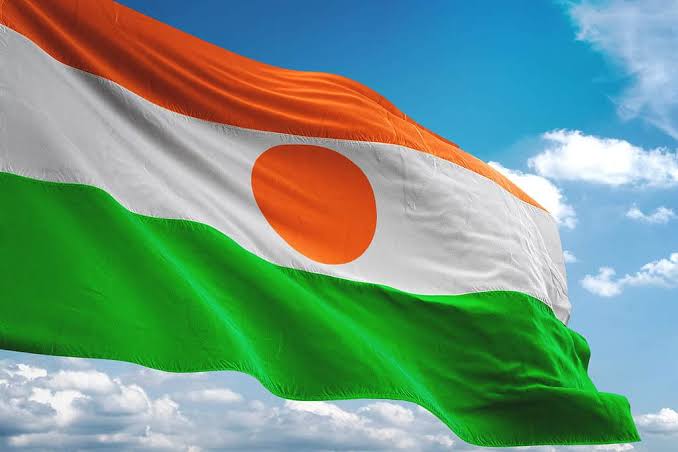
17 soldiers from Niger were killed in an attack close to Mali, as reported by the Ministry.

0

A tragic incident unfolded on Tuesday as seventeen Niger soldiers lost their lives in an assault believed to be orchestrated by suspected jihadists near the western border with Mali.

The defense ministry conveyed that an army detachment fell victim to a terrorist ambush in the vicinity of Koutougou, a somber event detailed in a statement released late on Tuesday.

Tragically, an additional twenty soldiers suffered injuries, six of whom are in critical condition, with all the casualties promptly transported to the capital city of Niamey.

During their retreat, over 100 assailants were reportedly subdued by the responding military forces.

The region of Africa’s Sahel has grappled with a jihadist insurgency for over a decade, initially originating in northern Mali in 2012 before spreading to neighboring Niger and Burkina Faso in 2015.

The “three borders” region, where the countries intersect, has become a recurring hotspot for attacks carried out by rebel factions affiliated with the Islamic State group and Al-Qaeda.

This pervasive unrest has led to a devastating toll, resulting in the loss of numerous soldiers, police personnel, and innocent civilians, compelling millions to abandon their homes in search of safety.

The profound anguish provoked by the ongoing bloodshed has been a catalyst for military takeovers across all three countries since 2020.

Most recently, on July 26, Niger experienced a coup, resulting in the removal of President Mohamed Bazoum from power.

Additionally, Niger is contending with a jihadist insurgency in its southeastern region, stemming from militants who traverse from northeastern Nigeria—a conflict traceable back to the inception of Boko Haram’s campaign in 2010.

(Source: AFP)

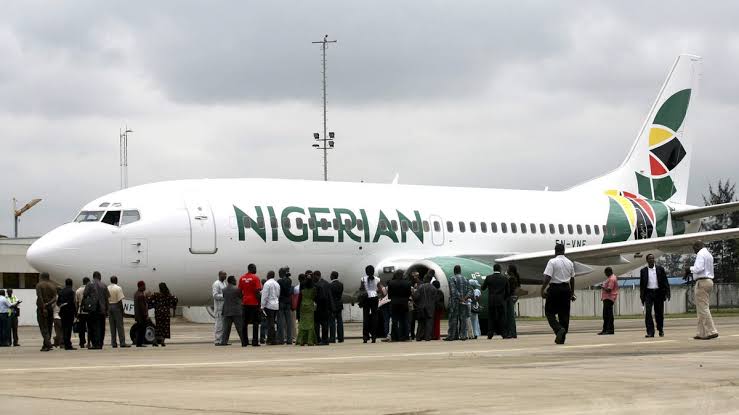
Airlines claim that Nigeria Air lacks an operational license.

0

The Airline Operators of Nigeria has indicated that the proposed national carrier, Nigeria Air, might face delays in commencing operations due to the absence of an Airline Operator’s Certificate (AOC).

Prof Obiora Okonkwo, the spokesperson for the Airline Operators of Nigeria, stated that even if Nigeria Air were to launch its operations in October 2023, it would be doing so without a valid AOC.

Okonkwo emphasized that the AOC process was still at its initial stage, expressing his frustration and reluctance to dwell on the matter any longer.

Contrastingly, Mesfin Tasew, the CEO of Ethiopian Airlines, conveyed in an interview with Bloomberg TV that Nigerian Air was expected to commence operations by October.

Tasew expressed eagerness for Nigeria Air to initiate flights on both local and international routes.

Nigeria Air has been embroiled in controversy, particularly during the final stages of former President Muhammedu Buhari’s administration.

However, it encountered an obstacle in progressing to phase two of the AOC process in June 2023, as stated in a letter from the Nigerian Civil Aviation Authority.

Furthermore, Prof Obiora Okonkwo, who also serves as the chairman of United Nigeria Airline, emphasized that any action contradicting a court order would constitute a clear violation of the law.

He expressed confidence that the court would take the necessary steps to address the matter.

He stressed that their stance on Nigeria Air was clear, and their priority was addressing the more pressing challenges faced by the aviation industry.


FG plans to divest its interests in NNPC along with 19 other entities.

0

The Federal Government may sell stakes in about 20 state-run companies to raise funds and improve governance in the entities.

This is according to a Bloomberg report. The Nigerian National Petroleum Corporation is among the firms the government may sell a stake in, according to the chief executive officer at the Ministry of Finance Incorporated, Armstrong Takang.

He stated that the agency is considering options including strategic sales and initial public offerings and aims to implement the plan within 18 months.

He noted that some of the entities need the private sector to take controlling shares and the major consideration for the government is to create value rather than retain control.

He said, “It is better for us to own 49 per cent of a high-performing entity than 90% of an entity that is underperforming.”

These sales may coincide with President Bola Tinubu’s plan to reform the country’s economy. Takang stated that the agency is in the process of appointing consultants including valuers, financial advisers, lawyers, bankers, and others to handle different aspects of the transactions.

In October 2022, sources at the Ministry of Finance, Budget and National Planning exclusively told The PUNCH that the government was considering selling or concessioning about 27 national assets.

The assets included Tafawa Balewa Square in Lagos, the National Integrated Power Projects in Olorunsogo, Calabar II, Benin (located at Ihorbor), Omotosho II, Geregu II plants, all the hydropower plants across the country, including Oyan, Lower Usuma, Katsina-Ala, and Giri plants.

The sources noted that more than 25 of such projects will be turned into active assets that will generate money in some ways to the Federal Government.

Since 2016, the Federal Government has been considering the possibility of selling certain national assets as a strategic measure to bolster its revenue generation efforts.


Fuel marketers express dissatisfaction as the government dismisses the possibility of a price increase.

0

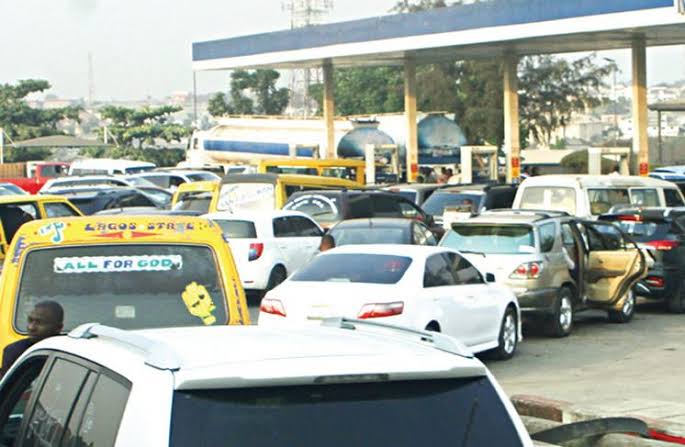
Oil marketers, on Tuesday, advised President Bola Tinubu to gradually relax the removal of subsidy on Premium Motor Spirit, popularly called petrol, following the inability of importers to access the United States dollars and the impact which this was having on businesses.

This came as Tinubu ruled out fuel price hike and reversal of fuel subsidy.

However, marketers of petroleum products encouraged the President to learn from Kenya, stressing that the African country had to return subsidy on petrol to curb the devastating impact which its removal had on Kenyans.

“Let them not do the needful, they will see the consequences. We learned this morning that Kenya, which equally removed subsidy and noticed that its effect was so hard on the citizens, has again resumed the subsidy regime for the period of two months,” the Secretary, Independent Petroleum Marketers Association of Nigeria, Abuja-Suleja, Mohammed Shuaibu, told our correspondent.

He added, “Government is about the people and it must have a listening ear. For Nigeria, how can we be an oil producing nation with four refineries and all of them are down. We now depend on imports.

“When he (Tinubu) announced that thing (subsidy removal), we said it was going to bring problems. Are we not feeling the consequences of that announcement now? It is forex that largely determines the cost of petroleum products here.

“Marketers are not willing to import products again,  So if the government is going to relax the removal of subsidy for a while, it should better do that as a matter of urgency.”

Shuaibu argued that despite the fact that the Nigerian National Petroleum Company Limited announced earlier on Tuesday that it had no intention of increasing petrol price, the cost of the commodity would rise above its current N617/litre in weeks, if the exchange rate continues to increase.

“Relaxing subsidy removal is going to be a very wise decision right now, because going by the price of the dollar, the cost of petrol is bound to rise. In fact, some oil marketers are ready to join the labour union to protest,” he added.

Some dealers had said subsidy on petrol would gradually creep in, should the NNPCL continue to sell at N617/litre, particularly if the rise in forex rate persists.

The National Public Relations Officer, Independent Petroleum Marketers Association of Nigeria, Chief Chinedu Ukadike, said the outright removal of subsidy would cause severe hardship.

“I’ve been saying this even before subsidy on petrol was removed. How can you stop subsidy without anything on ground as palliatives?

“Trips that used to be N5,000 in the past and now over N15,000. Businesses are shutting down. The suffering is rising. The government has to intervene now,” he stated.

The IPMAN PRO had earlier explained that the price of imported commodities, including petrol, would continue to rise as far as the rate of exchange of the dollar increases.

“Once there is a slack in the naira against the dollar, there is going to be an effect. The demand and supply of forex is a key factor. We should also understand that it is not only petroleum products that use forex.

NEITI reacts

This came as the Nigeria Extractive Industries Transparency Initiative advised the government to initiate and implement a deliberate policy that would attract investors to invest and help in fixing Nigeria’s refineries.

In its latest policy advisory for the oil sector, NEITI advised the Federal Government to come up with a deliberate policy to encourage private investments in refineries.

“A deliberate policy initiative should be implemented with full Presidential backing to encourage Nigerians and foreign investors already awarded licences to establish private refineries in Nigeria.

The incentives may include tax holidays, institutional support, and availing potential investors in the downstream sector of the available opportunities within the existing ‘Federal Government ease of doing business policy.’

Also calling for intervention, the Executive Secretary, Major Oil Marketers Association of Nigeria, Clement Isong, earlier stated that it was high time the government intervened.

“Well, the President himself said in his speech that if they find petrol prices moving too high, they would intervene. We don’t want prices to move too high, nobody wants that.

“So if the dollar continues to climb, we are expecting some sort of intervention from the government based on what the President said,” the MOMAN official stated.

Similarly, the National President, Natural Oil and Gas Suppliers Association of Nigeria, Benneth Korie, told journalists that one of the best options before President Tinubu currently, was to hasten the repair of Nigeria’s refineries.

Tinubu reacts

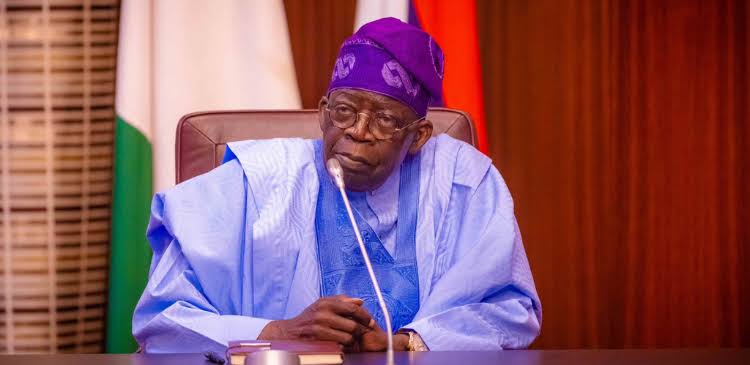
Amidst the hike in cost of living brought about by the removal on Premium Motor Spirit popularly known has petrol which has led to a corresponding increase in fuel prices, the Presidency on Tuesday said Nigeria is currently the only country in West Africa enjoying the cheapest and most affordable price of PMS.

The Special Adviser to the President on Media and Publicity, Ajuri Ngelale, told State House correspondents that daily consumption of fuel has dropped from 67M litres to 46M litres following the removal of subsidy.

Ngelale, who noted that he spoke to the President on Tuesday morning, noted that the President urged stakeholders in the country to hold their peace while adding that the threats of an indefinite strike by the organized labour was premature.

He said, “The President wishes first to state that it is incumbent upon all stakeholders in the country to hold their peace. We have heard very recently from the organised labour movement in the country with respect to their most recent threat.

“We believe that the threat was premature and that there is a need on all sides to ensure that fact finding and diligence is done on what the current state of the downstream and midstream petroleum industry is before any threats or conclusions are arrived at or issued.Secondly, Mr. President, wishes to assure Nigerians following the announcement by the NNPC limited just yesterday that there will be no increase in the pump price of petroleum motor spirit anywhere in the country. We repeat, the president affirms that there will be no increase in the pump price of petroleum motor spirit.”

Speaking further, Ajuri noted that the market having been deregulated would no longer allow a single entity to dominate the market.

“The market has been deregulated. It has been liberalized and we are moving forward in that direction without looking back.

“The President also wishes to affirm that there are presently inefficiencies within the midstream and downstream petroleum sub sectors that once very swiftly addressed and cleaned up will ensure that we can maintain prices where they are without having to resort to a reversal of this administration’s deregulation policy in the petroleum industry.”

Ngelale also noted that Tinubu approved that the chart containing prices of PMS in other countries be transmitted to Nigerians so as to show the cost of PMS in West African countries.

He added, “Senegal at pump price today of N1,273 equivalent per liter, Guinea at N1,075 per liter, Côte d’ Ivore at N1,048 per litre equivalent in their currency, Mali N1,113 per litre, Central African Republic N1,414 per litre, Nigeria is presently averaging between N568 and N630 per litre.

“We are presently the cheapest, most affordable purchasing state in the West African sub-region by some distance. There is no country that is below N700 per liter.

Meanwhile, the Nigerian National Petroleum Corporation, in a post around 11.48pm on Monday on its official X (formerly Twitter) said it had no intention to increase the pump price of petrol.

The EFCC pursues individuals engaged in dollar speculation, while the CBN reduces the allocation for banks.

0

Deposit Money Banks are grappling with a shortage of US dollars following a reduction in foreign exchange allocations by the Central Bank of Nigeria.

Bank officials have reported their inability to meet customer demands for forex, particularly for purposes such as school fees and Personal Travel Allowance.

The disparity between supply and demand has worsened, leading top banking officials to express hopes for increased intervention from the central bank to alleviate the shortage.

Several bank sources have confirmed that the Central Bank of Nigeria has significantly scaled back their foreign exchange allocations.

The central bank has announced plans to implement measures to stabilize the value of the naira, which had been experiencing a decline.

While the naira saw some improvement in the parallel market after the central bank’s intervention, Bureau de Change Operators remain cautious, awaiting further action.

Notably, the Acting Governor of the Central Bank of Nigeria, Folashodun Shonubi, mentioned that the fluctuations in the parallel market are influenced not only by economic factors but also by speculative demand.

Some Bureau de Change Operators reported a decline in the naira’s value against the dollar, despite the central bank’s assurances of increased dollar supply.

In another development, the Federal Government is considering taking action against Bureau De Change operators in an effort to address the pressure on the local currency.

Sources suggest that the government is concerned about the speculative practices of currency speculators, which have contributed to the current forex challenges.

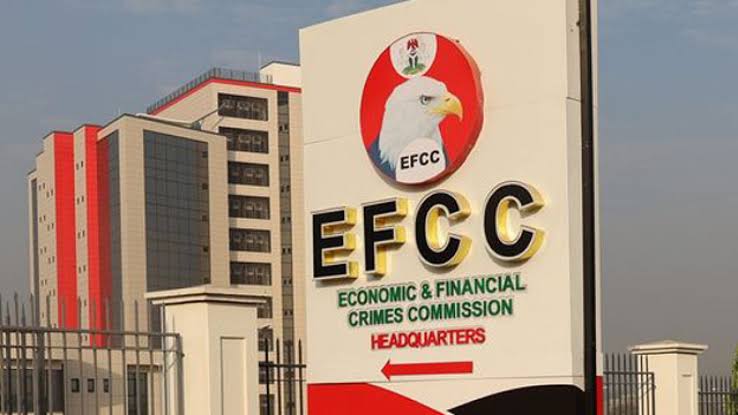
The Economic and Financial Crimes Commission might be involved in addressing this issue, although specific details and verification remain pending.