Home Blog Page 384

Federal Government to arraign Emefiele and associates on Thursday for N6.9bn procurement fraud.

0

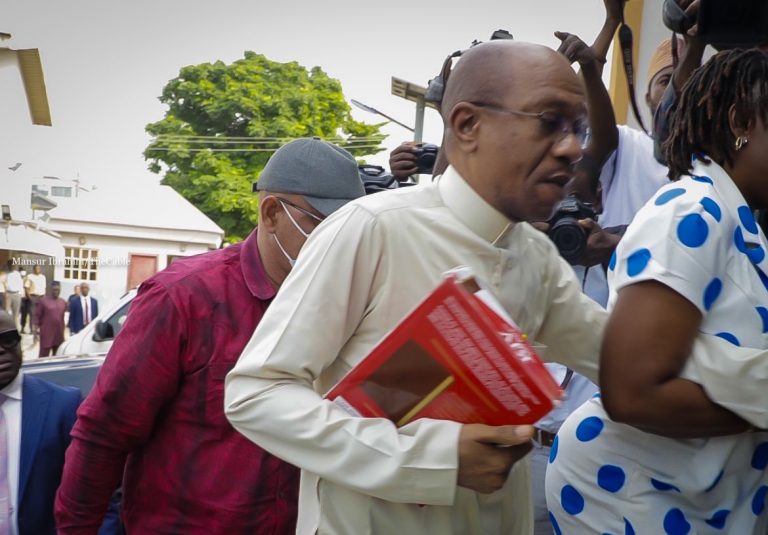
On Thursday, the suspended Governor of the Central Bank of Nigeria, Godwin Emefiele, and his associates are set to appear in the Federal Capital Territory High Court in Maitama, Abuja, where they will face charges related to a N6.9 billion procurement fraud.

The charges include allegations of conspiracy, conferring corrupt advantages, and procurement fraud.

Emefiele, along with Sa’adatu Yaro, a female CBN employee, and her company, April1616 Investment Limited, are facing a total of 20 charges.

Emefiele, who has been in detention since his suspension on June 9 by President Bola Tinubu, is accused of conferring corrupt advantages on Yaro by awarding contracts to her company.

The charges specify instances where contracts for vehicles, including Toyota Hilux vehicles, armoured Mercedes Benz buses, Toyota Landcruisers, and a Toyota Avalon car, were allegedly awarded at inflated costs.

These actions are said to be in violation of the Corrupt Practices and Other Related Offences Act 2000.

If found guilty, Emefiele may face a sentence of five years imprisonment without the option of a fine.

The charges are supported by evidence from witnesses including officials from the Central Bank of Nigeria, and the case has raised concerns about potential abuse of legal processes and court orders.

In a separate matter, a Federal High Court in Lagos is considering withdrawing charges of illegal possession of firearms against Emefiele, with arguments surrounding the government’s adherence to court orders.

Aníkúlápó (Series), Blood Vessel, Ijogbon & The Black Book – These Nollywood Titles are Coming to Netflix this Year

0

Aníkúlápó (Series), Blood Vessel, Ijogbon & The Black Book – These Nollywood Titles are Coming to Netflix this Year


Aníkúlápó (Series), Blood Vessel, Ijogbon & The Black Book – These Nollywood Titles are Coming to Netflix this Year!

Fresh from the success of Femi Adebayo‘s Yoruba epic “Jagun Jagun“ and the star-studded event “Lights, Camera… Naija!” in Lagos, Netflix presents a diverse range of upcoming Nollywood titles. These new releases include fan favourites that will land on the platform throughout the last quarter of the year.


Nigerian filmmakers like Editi Effiong, Mo Abudu, Charles Okpaleke, Kunle Afolayan, and Kemi Adetiba are bringing their creative talents to the screen. These titles are currently in various stages of production and will make their debut on Netflix, reaching over 238 million members worldwide across more than 190 countries.


Ben Amadasun, Netflix’s Vice President of Content for the Middle East and Africa, expressed excitement, saying, “We are fortunate to bring incredible projects from some of Nigeria’s most prolific creators. Collaborating with them has enabled us to showcase Nigeria’s immense storytelling talent and creativity and make Netflix the home of the best Nigerian stories for our audience in Nigeria and around the world.”


Expect highly anticipated films and series from prolific Nigerian filmmakers, all premiering exclusively on Netflix. While exact release dates for each title will be revealed closer to the launch, here’s a glimpse of what’s in store:


The Black Book

A gripping mystery and crime thriller by Editi Effiong and Anakle Films. Dive into a tale of old scores resurfacing as a father seeks justice after corrupt policemen kill his son. The film stars Richard Mofe-Damijo and Ade Laoye, alongside an ensemble cast.


Blood Vessel

Charles Okpaleke and Play Network Studios present a thrilling mystery and crime movie. Follow six friends attempting to escape their hometown’s unrest by stowing away on a ship bound for South America. The film boasts a talented cast including David Ezekiel, Adaobi Dibor, and Jide Kene Achufusi.


Ijogbon

Immerse yourself in a coming-of-age drama-adventure film from Kunle Afolayan and Golden Effects Pictures. Four teenage youths stumble upon a pouch of diamonds in a rural village, setting off a chain of dramatic events. The cast features Ruby Akubueze, Kayode Ojuolape, and more.


Aníkúlápó (series)

Kunle Afolayan and Golden Effects bring you a spinoff series based on the beloved Yoruba epic, Aníkúlápó. Following the success of the movie, this four-part sequel features returning stars and new additions.


War: Wrath and Revenge

Mo Abudu’s EbonyLife Studios introduces a brand-new drama series. Witness the gripping story of Nuhu Bula’s rise to power, orchestrated by his determined wife. The series features a star-studded cast including Mofe Duncan, Rahama Sadau, and more.


There are more exciting titles currently in production, set to debut on Netflix in 2024 including Kemi Adetiba’s crime thriller series “To Kill A Monkey,” and EbonyLife’s “Òlòtūré” series.


Òlòtūré (series)

“Òlòtūré” will return to Netflix as a series, where Òlòtūré, a young journalist continues her undercover work as a journalist crossing the Benin border. Her perilous journey will take her through the hostile lands of Niger and Libya to the Mediterranean as she desperately tries to find a way out. Kenneth Gyang makes his return as a director with the cast featuring Sharon Ooja, Omoni Oboli, Beverley Osu, Ikechukwu Onunaku, Stan Nze, Amarachukwu Ono, Bukola Oladipupo, Daniel Etim Effiong and Patrick Doyle taking up their roles in the series.


To Kill A Monkey

“To Kill A Monkey” will star William Benson and Bucci Franklin in the lead roles and includes cast support by Bimbo Akintola, Chidi Mokeme, Dami Adegbite and Ireti Doyle. The series – written and directed by Kemi who also produced it alongside Remi Adetiba – recently kicked off production.


REVIEW – JAGUN JAGUN IS NOT AN EPIC!

0

JAGUN JAGUN IS NOT AN EPIC!


I am not a professional movie reviewer and I cannot recall if I have done up to 5 reviews here. Mostly, I watch and discuss my thoughts with my wife and a few friends informally.


One of the things I admire about the arts is the ability of everyone with ears, eyes or the sense of touch to judge. The arts is to magnanimous that it allows even f00ls to air their opinion and they do not even have to be f00lish. Unlike the sciences where you work towards a predetermined outcome, the arts allows you the license to run freely and claim wherever you land is your outcome.


POSITIVES

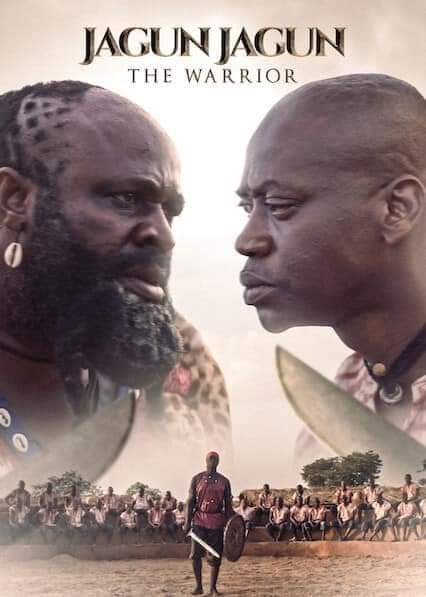
Jagun Jagun is a sweet beauty to the eyes and I am excited that it shows the ability to extract emotions from the viewer. Agemo’s dy.ing scene while in the hands of Gbotija and the duel between Gbotija and Gbogunmi stood out for me. I had the rush of emotions that should come with such developments.


I love the generous use of costumes, the scenery of the location, and the crisp and clear image cum sound. Quite enjoyable was the exciting use of Yoruba anecdotes, proverbs and alliterations- a very fundamental beauty of the Yoruba Language (though I think it was overused in certain instances).


The interplay of the metaphysical and natural strength was also brilliant. Introducing the character of Agemo, the masked demon-assassin, is a novel illustration of how warriors who have higher and deeper pacts with the extra-terrestial and celestial could summon agreements to gain an edge over their adversaries when the tide is again them.


I was also impressed with the clean bl00d-spilling, skin cutting tricks. It is a nice departure from the quack job of the past. Particularly, I love the mirage that coalesced into an image from the battlefield before Ogundiji, which compelled him to summon Agemo’s intervention. I had to go watch that scene again.


I love the way the movie presents the complications and complexities of love in the relationship between Gbotija and Gbogunmi on one hand, and Gbotija and Iroyinogunkiitan (Agemo) on the other hand.


How a villainous character like Gbogunmi, who from all indications is the de-facto 2iC to the super villain, Ogundiji, could defy his master’s order to invade his mother-in-law’s village speaks to how love conquers the dark desires of the vilest man. This is what set events that would lead to his eventual demise in motion.


While in the amphitheatre, sparring with Gbotija, his adopted son, it is love that k!lls him and not the knife. Taking a deep look at the scene, while Gbotija summons the intervention of the wood out of which the handle of the knife Gbogunmi held was carved, it is the metal and not the wood that pierces Gbogunmi. The expression of shock on the face of Gbotija when Gbogunmi is struck and when he is on the ground shows it is the willing de@th of a villain in love with a protégé whom he cannot afford to kill. You will see proof in at least four occasions before that point where Gbogunmi has the chance to kill Gbotija but withdraws. It is not taunting. It is love complicating life for two worthy adversaries.


Move forward.


Agemo is a powerful masquerade but while we confirm it is controlled by Ogundihji, the vessel is Kiitan who is madly in love with Gbotija. When love comes in, even the spirit is weakened. History is replete with millions of instances of otherwise powerful folks that love pulled down. It is not the tree branch that kills Agemo. It is the love that hesitates when it comes face to face with the one it worships. Else, Agemo takes out Gbotija in the twinkling of an eye.


It is the hope that k!lls. Scratch that. It is the love that k!lls. Love is a beautiful burden that complicates the ease of life.


The introduction of Ibrahim Chatta at the end! What a way to keep your audience asking for more. Fem Adebayo just subtly committed himself to a sequel. Now, he cannot escape it.


NEGATIVES

There is NO perfect work of art anywhere. In fact, its imperfection is what makes it an art. Hence, the movie has got a number of negatives that must be checked WHEN (not if) the sequel is ready.


The frequent twitching of head by Ogundiji is needless and an overkill. The locked, dirty beard does nothing to make the character more fearsome. We have seen more terrible characters less dirty.


The cast was too crowded with superstars that many of them had redundant roles that could be taken by lesser known actors that this movie would have given an opportunity to make a big announcement of themselves on the scene. I understand the business side of the initiative but I think this was an opportunity lost to blood new talents.


The development of the story is quite tacky at some point that you may wonder if a better job could not be done. Generally, it is fine but it could be far better if the same efforts that went into aesthetics had gone into story/plot development.


I am not sure about the Oriental/Western-styled choreographed sword moves and fight. It is not Yorubaish. Historically, our warriors wrestle, shoot arrows and to a large extent engage machetes at the war front. I could excuse the use of guns if I am to infer from Ogundiji’s conversation with Gbogunmi at the scene where we first see the later that the new weapons supplied by the Whites are guns. He actually said “I have reserved three for you but I will teach you how to use them”. The only conflict I have here is the fact that in the scene before, I think I saw warriors with guns on the battlefield. Perhaps, some of Ogundiji’s serving warriors had access to them before Gbogunmi knew of their existence.


I have written about the excessive use of alliterations earlier.


I hope Ibrahim Chatta does not continue with the sniffing thing he seemed to show off in the sequel WHEN it is released. That would be a disaster to what should be an exceptionally brilliant character.


MY DEDUCTION

As with a standard Yoruba movie, Jagun Jagun is rich in didactics. There are both subtle and open lessons for social well-being.


I reckon the movie is presented like an epic. But I dare say it is not an epic and it is on this basis that I forgive its many flaws, lest, I could be less generous in my commendations.


Jagun Jagun is a socio-political commentary, mirroring the African (Nigerian) reality.


Ogundiji is a politician and a political system.


He is ruthless, devoid of empathy and full of dark emotions. He invades a town, sacks its inhabitants, crushes its system of governance and imposes a king, who is his vassal, on it. He runs a warrior academy, identifying smart talents and grooms them in the art of war, not with the mind of setting them free to become deliverers, but that they may be a willing tool in his hands to perpetuate his enterprise and expand his empire. Ogundiji does not develop anyone or spare a soul for the general good. It is about what benefits Ogunjimi in the end. Just think about how he discovers young Kiitan and what he makes of her eventually.


If he had not died in the end, I am certain he would aspire to be king and overlord over all the lands he had conquered with their kings officially becoming “kinglets” (imagine piglets) under him.


It would simply be a case of “I have served you all enough. I also want to be President (sorry, king)”.


The passing reference to “awon Oyinbo ti ko awon irin ise tuntun kan wa fun wa” (the Whites have brought us some new weapons) by Ogundiji while speaking with Gbogunmi is an indictment on the complicity of the West in the many intra-tribal and national wars plaguing Africa (read Nigeria). As Ogundiji explains, they send the weapons in appreciation of what he is doing.


Clearly, there is a higher interest that benefits from Ogundiji’s wars beyond him. While he is allowed to decide who takes what in terms of political leadership in the conquered lands, his masters (the West) who supply him weapons and ammunitions corner their benefits in having unrestricted access to pillage the resources of these blessed lands for their own good and the preservation of their citizens who are shielded from the relentless blood-letting.


It is the reality of what plays out today. The West finances fratricidal wars in Africa, installs and supports tyranny, looks away from electoral fraud when it serves their interests and watches Africa burn to light their own streets.


Ogundiji dies in the end but do not be shocked if he resurrects in the sequel or Ibrahim Chatta becomes the new Lord of the Manor.


You ask me why? Because evil never truly dies except there are more Gbotijas who never forgive vileness but will cut it down no matter where it is and how long it has existed.


Did I tell you to be careful with offending women especially those who know your limitations? Hell hath no fury like a woman scorned. Ogundiji learnt that the hard way.


My rating? 8/10 and this is largely due to the subtle way a political malady is expertly portrayed.


You can disagree with me but remember, this is the arts where every viewer has a meaning they find in the work.


Hezekiah Akinrinde

15082023


#PastorHez

#JagunJagunMovie

#moviereview

Oloture’ Returns – Sequel Series In The Works

0

Oloture, the 2019 Nollywood crime drama adapted from an investigative report on human trafficking, is set to return to Netflix as a series. Sharon Ooja, the lead actress in the original film, made the announcement on Tuesday, August 15, 2023, via her Instagram page.

The upcoming series will delve into the journey of the main character, Oloture, after she crosses the Benin border and is trafficked abroad as an undercover journalist posing as a prostitute.


Released in 2019, the movie Oloture provided a glimpse into the life of the titular character, an undercover journalist who infiltrates a human trafficking ring and is subsequently transported to Italy as a worker.


The talented cast of the series includes Sharon Ooja, Omoni Oboli, Beverly Osu, Ikechukwu Onunaku, Stan Nze, Amarachukwu Onoh, Bukola Oladipupo, Daniel Etim Effiong, and Patrick Doyle.


The news of the series has generated mixed reactions from fans. While many are eager to discover what happens to Oloture after the heart-wrenching cliffhanger that concluded the movie, some question the necessity of turning it into a series.


One individual from the crowd expressed their skepticism, stating, “Lol, is there a point to making Oloture a series? I suppose we need to understand why Sharon’s character followed them all the way across the border…” On the other hand, there are those who are ecstatic about the return of Oloture, exclaiming, “Oloture is coming back as a series! Let’s go!” and “Oloture is coming back, OMG!” among other enthusiastic responses.


Shortly after its release in 2019, Oloture quickly climbed the ranks to become one of the top 10 most-watched movies worldwide on Netflix. The film succeeded in raising awareness and sparking conversations about the grave issue of human trafficking.

LASTMA and the Nigerian Army have reached an agreement to further enhance their collaboration in improving traffic management within Lagos.

0

Mr. Bolaji Oregba, the General Manager of LASTMA, announced on Tuesday via a press release that a collaborative partnership between the Lagos State Traffic Management Authority and the Nigerian Army has been established for traffic management in Lagos.

Oregba made this announcement during a productive meeting at the LASTMA Headquarters in Oshodi, where officials from the 9 Brigade Command of the Nigerian Army, led by Brigadier General Adegoke Moses Adetuyi, were present.

Addressing the recent unfortunate incident involving a confrontation between a LASTMA officer and a soldier, Oregba emphasized the strong bond between the two sister agencies.

He confirmed that Lastma personnel will continue to receive unwavering support from the Nigerian Army and other state agencies.

Highlighting the significance of the relationship, Mr. Oregba stated, “We will uphold the integrity of this partnership and cherish the mutual respect and camaraderie that exists between Lastma and the Army.”

Furthermore, Oregba assured that measures are being taken to prevent any similar altercations between Nigerian Army personnel and LASTMA officials.

He revealed plans to maintain existing communication channels and explore new hotlines to promptly address any future issues that may arise.

Brigadier Adetuyi echoed the sentiment of collaboration, emphasizing that a unified front among security agencies is vital to curb the influence of negative elements.

He stressed the importance of enhanced cooperation among all government entities, including Lastma, for a more effective and harmonious operational environment.

Nigeria witnesses a substantial surge in its inflation rate, reaching 24.08% in July 2023, driven by the impactful removal of subsidies.

0

Nigeria witnessed a remarkable surge in inflation, reaching 24.08% in July 2023, marking a 129 basis-point increase compared to the previous month’s 22.79%.

This surge marks the sixth consecutive increase in the headline index for this year, as reported by the National Bureau of Statistics (NBS) in its recently released Consumer Price Index (CPI) report.

This substantial increase can be attributed to the complete removal of petrol subsidies and the unification/devaluation of the official exchange rate.

Notably, the month-on-month headline inflation rate for July stood at 2.89%, which was 0.76% higher than the rate recorded in June 2023 (2.13%).

The driving factors behind the year-on-year inflation were Food and non-alcoholic beverages (12.47%), housing water, electricity, gas, and other fuel (4.03%), and clothing and footwear (1.84%).

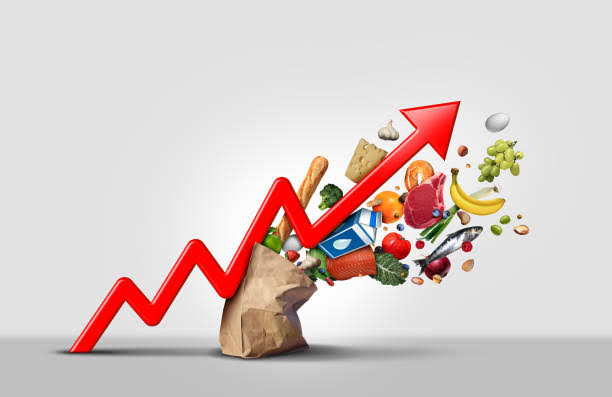
Food inflation experienced a significant rise, reaching 26.98% in July 2023, marking a 1.73% point increase from the previous month and a 4.97% point increase from the same period in 2022.

On a month-on-month basis, the Food inflation rate for July 2023 was 3.45%, 1.06% higher compared to June 2023 (2.4%).

The Core inflation rate, excluding volatile agricultural produce, stood at 20.47% in July 2023 on a year-on-year basis, reflecting a 4.41% increase from July 2022 (16.06%).

On a month-on-month basis, the Core inflation rate increased from 1.77% in June 2023 to 2.11% in July 2023.

In terms of regional variation, Kogi (28.45%), Lagos (27.30%), and Ondo (26.83%) experienced the highest year-on-year inflation rates, while Borno (20.71%), Jigawa (20.85%), and Sokoto (20.92%) recorded the slowest rises. Kogi State also recorded the highest food inflation at 34.53% in July, followed by Lagos (32.52%), and Bayelsa (31.31%).

The removal of fuel subsidies and exchange rate unification have had a substantial impact on inflation, resulting in an escalation of food, energy, and transport costs.

Transportation expenses saw a nationwide spike, largely attributed to the significant rise in petrol prices and the unification and devaluation of the official exchange rate.

The Nigerian Naira’s exchange rate surpassed N740 per US Dollar, reflecting a substantial devaluation from the previous average of N460 per US Dollar.

This data showcases a clear reflection of the ongoing economic trends and challenges in the country.

“What prompted my unannounced visits to hospitals on Lagos Island – Sanwo-Olu explains”

0

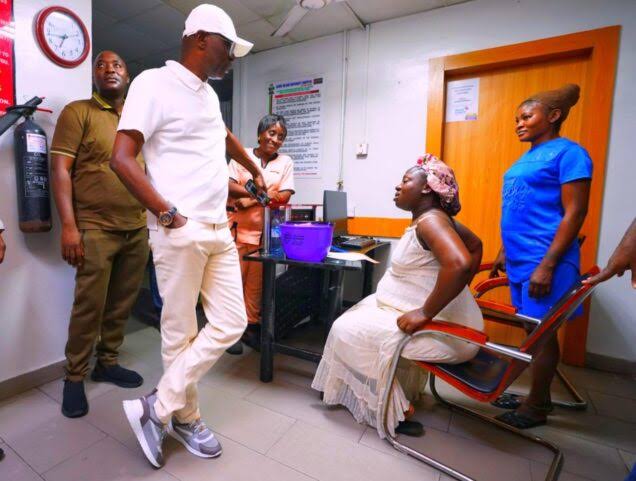
Lagos State Governor, Mr. Babajide Sanwo-Olu, has clarified the reason behind his surprise visits to Island Maternity Hospital and Lagos Island Hospital, catching the medical staff off-guard. In a statement from his Chief Press Secretary, Mr. Gboyega Akosile, on Monday, Sanwo-Olu explained that his impromptu visits were motivated by his desire to witness the situation firsthand and ensure that the healthcare staff were adhering to the health palliative scheme.

This scheme covers the expenses for normal pregnancy delivery, Caesarean sections, and antenatal care provided in state-owned hospitals.

The governor expressed that he needed to assess the effectiveness of the intervention and determine areas requiring specific and general assistance.

According to the statement, Governor Sanwo-Olu arrived unannounced at the hospital at exactly 6:35 pm.

He proceeded to the maternity ward, where he encountered two expectant mothers receiving medical attention.

One of the women, Odeyemi Omowunmi, who is heavily pregnant but not yet due for delivery, had been admitted ahead of her scheduled delivery due to unstable blood pressure.

This measure was taken to safeguard her pregnancy after experiencing two previous miscarriages.

Odeyemi expressed her gratitude for the cost-free care provided under the health palliative scheme, which covers all medical expenses.

Since the inception of the free medical services on August 1st, numerous pregnant women have benefitted from the program, receiving free deliveries and antenatal care across various Lagos-owned hospitals.

Governor Sanwo-Olu was guided through the maternity ward by Chief Matron Akinsola Dorcas, and he further inspected facilities at Lagos Island Hospital.

This included an audit of the 10-storey Doctors’ Quarters, where a house officer tragically lost their life in an elevator accident.

The governor personally assessed apartments, storage areas, and power supply systems during the inspection, led by Dr. Segun Ogunlana, a representative of the House Officers.

“Federal Government’s Gas Expansion Projects Set to Absorb Annual Investment of $20 Billion”

0

On Monday, the Federal Government revealed that an annual investment of approximately $20 billion will be essential to realize the envisioned expansion of gas projects in Nigeria, fostering a deeper utilization of gas across the nation.

This announcement was made during the Decade of Gas Action Plan Dialogue, hosted by the African Initiative for Transparency, Accountability, and Responsible Leadership in Abuja, as conveyed by the Nigeria Extractive Industries Transparency Initiative (NEITI).

Ogbonnaya Orji, the Executive Secretary of NEITI, emphasized that the successful execution of the government’s gas utilization policy hinges on a strategic and ambitious commitment to invest in gas infrastructure.

He emphasized that such investment must encompass enhancing connectivity from upstream facilities through processing, power generation plants, and various end uses.

Orji highlighted the importance of allocating around $20 billion annually to bridge Nigeria’s gas infrastructure, acknowledging the need for clarity in prioritizing specific aspects of this substantial investment amidst the evolving landscape of fossil fuel funding.

He underlined the significance of aligning Nigeria’s gas utilization policy with the country’s energy transition plan, and underscored Nigeria’s position as possessing Africa’s largest gas reserves, ranking ninth globally.

NEITI’s reports confirmed that Nigeria’s gas reserves exceed 200 trillion cubic feet, a fact consistent with the provisions outlined in the Petroleum Industry Act of 2021.

The Act marked a pivotal advancement in the governance and fiscal frameworks governing the growth of the gas sector.

Orji urged the government to promptly formulate a comprehensive national gas utilization policy, one that precisely outlines the responsibilities of industry stakeholders, government entities, and investors involved in the plan’s implementation.

He further recommended developing a market-driven gas utilization plan that can effectively translate gas-related strategies into sustainable economic development.

Louis Ogbeifun, the Executive Director of the African Initiative for Transparency, Accountability, and Responsible Leadership, pointed out that while many countries are gradually moving away from fossil fuels, Nigeria’s focus on leveraging its abundant natural gas reserves remains integral to its energy landscape.

Recognizing the substantial financial outlay required for this endeavor, Ogbeifun expressed concern over funding gas projects in a cost-efficient manner, especially considering the challenges posed by asset loss, crude theft, currency depreciation, and the capital-intensive nature of sustainable energy alternatives.

In the short term, Ogbeifun suggested that the Federal Government should consider increasing crude oil production to generate revenue, which could then be channeled towards diversification and investment in alternative energy sources.

Despite the ongoing transition away from fossil fuels, he noted that natural gas, while still part of the fossil fuel family, offers a comparatively cleaner energy source than coal or petroleum.

Ogbeifun concluded by emphasizing the importance of carefully strategizing Nigeria’s gas projects and funding mechanisms to achieve long-term sustainable energy goals.

“Institute Raises Concerns About Accountants’ Over-Reliance on AI, Highlighting Potential Dangers”

0

The Audit Committee Institute has issued a cautionary advisory to auditors and accountants regarding the adoption and reliance on Artificial Intelligence as a tool in business and audit processes.

The institute’s Chairman, Chris Ekeigwe, stressed this message in a release titled ‘Audit Perspective on Artificial Intelligence – transitioning from trust but verify to verify and verify.’

Ekeigwe underscored the potential risks of auditors and accountants placing complete trust in AI during the audit process, believing it capable of producing flawless financial reports.

He emphasized that such blind faith could have detrimental consequences for the corporate world.

Drawing a historical parallel, Ekeigwe recalled the early days of personal computers when professionals were misled into thinking computers were infallible.

This misplaced belief led to overconfidence and a heavy reliance on computer-generated reports, resulting in auditors failing to detect errors and fraud promptly.

This, in turn, contributed to the collapse of several companies between the 1980s and 2000s, including Barings Bank, Bank of Credit and Commerce International, Wells Fargo, Enron, and WorldCom.

Ekeigwe cautioned against repeating such a scenario, especially given the substantial power of AI today.

He warned that reverting to this mindset could have even more catastrophic consequences.

In light of this, Ekeigwe urged accountants and auditors to exercise caution when encountering persuasive claims from the tech industry about AI’s infallibility and the need for trust.

He noted that modern society tends to excessively prioritize technology at the expense of critical thinking, attributing undue authority to it.

Ekeigwe stated, “I observe this trend happening again today with the tech industry’s enthusiastic messaging that we should place our trust in AI, despite mounting evidence that AI lacks the necessary reliability to warrant unquestioning faith.”

Recognizing the potential dangers associated with AI, Ekeigwe emphasized that the principle of “verify and verify” carries profound significance in an AI environment.

He asserted that this approach has a direct impact on the future effectiveness of controls, audit outcomes, and the overall stability of an entity’s operations.

Ekeigwe advocated for a shift in the audit paradigm from “trust but verify” to “verify and verify,” reflecting the necessity of thorough and continuous scrutiny in an AI-driven landscape.

Banks might reassess customer loans due to the decline in the value of the naira.

0

The recent easing of foreign exchange regulations is expected to have a moderate effect on banks’ Lending to Deposit Ratio, as per a report from Cordros Securities.

The report, titled ‘Impact of CBN’s Strategy to Reinforce LDR in Tier 1 Banks,’ suggests that banks might need to reassess their foreign currency loans and deposits due to the current sharp depreciation of FX.


Cordros highlights that the Central Bank of Nigeria conveyed its commitment to maintaining the minimum LDR at 65%, and plans to enforce this directive again from July 31, 2023.

Non-compliant Deposit Money Banks could face an additional Cash Reserve Requirement of around 50% on the lending shortfall based on the target LDR.

The circular also indicates that this policy aims to regulate excess liquidity in the financial system and support the real sector in Nigeria.

Cordros’ analysis shows that all the banks covered in their report have consistently fallen short of complying with the 65% minimum LDR directive, with tier 1 banks averaging a 50% LDR over the past three years, compared to the industry average of 65.9%. Preliminary figures for 2023 further underscore this trend.