



Home Blog Page 396

“Longest-serving Presidents in Africa: Gabon’s Magnificent Seven”

0

Yet another coup has rocked the African continent, this time taking place in Gabon. A faction of army officers has announced the overthrow of the 53-year-long rule by both Omar Bongo and his son Ali in this Central African nation.

The coup leaders declared the nullification of the results of the recent election, in which President Ali Bongo had secured an extension to his 14-year tenure. This incident marks the tenth coup in Africa, with the most recent one occurring in Niger Republic.

A notable reason behind the growing frequency of coups in Africa is attributed to the prolonged tenures of certain African leaders. Currently, there are nine African Presidents who have remained in power for over two decades.

Here are some of the long-serving presidents:

1. Teodoro Obiang Nguema Mbasogo (44 years): Equatorial Guinea’s President Obiang has maintained his grip on power since 1979, making him Africa’s longest-serving president. His rule began with a reputation for brutality and dictatorship, overseeing the torture and execution of political opponents.

2. Paul Biya (42 years): Cameroon’s President Biya assumed office through a coup in 1982 and has held onto power since. While he initially ruled repressively, he later allowed multiparty elections in the 1990s but continued to remain in power.

3. Denis Sassou (36 years): The Republic of the Congo’s President Sassou has been in office for 36 years, having first taken power in 1979. His extended tenure has been marked by criticism for alleged corruption, poor governance, and human rights violations.

4. King Mswati III (36-year rule): Eswatini’s absolute monarchy has been under the rule of King Mswati III for 36 years. He ascended the throne in 1986 at the age of 18.

5. Yoweri Museveni (35 years): Uganda’s President Museveni assumed power in 1986 and has been re-elected multiple times since then. Over the years, he’s faced criticism for growing authoritarianism and limiting civil liberties.

6. Isaias Afwerki (30 years): Eritrea’s President Afwerki, who led the country’s independence movement from Ethiopia, has been in office for 30 years. The nation’s militarization has led to a significant exodus of citizens seeking safety and opportunities elsewhere.

7. Paul Kagame (23 years): Rwanda’s leader, Kagame, has been in power since 2000. After a constitutional change in 2015, he is poised to remain in office until 2034. His election victories have raised skepticism about the credibility of the process.

These enduring presidential tenures underscore a complex situation where some leaders resist stepping down, contributing to the backdrop of political instability and coups across the continent.

Nollywood Our Stars Are Huge For Export Earnings for Nigeria – Nollywood Filmmaker Titi Jeje

4

Creative industry is based on individual creativity, skill and Talent which have the potentials to create wealth and jobs through the development or production of intellectual property.

Titi Jeje – Chairman Tampan Guild of Directors

Historically some of us grew up to hear stories of the groundnut pyramids in Kano, cocoa houses in Ibadan and few other places were the main source of export earnings but over time when the Black Gold (Oil) (1956) was discovered we abandoned our primary commodities.


Most countries you go to in Africa today or globally when you talk about nollywood, they all agree that it is the second biggest film industry the globe and our stars are huge export earnings for Nigeria that we have not taken advantage of.

The effort of our forefathers who are pioneers of this legacy must be safe guarded, we must conserve the ideology of the Nigerian African man.


No gain saying, the likes of Baba Ogunde, Ola Balogun, Oyin Adejobi, kola Ogunmola, duro ladipo there performance even before the invention of television can never be forgotten, we must continually build upon this.


It baffles me when they say we don’t have a structure, there was a structure and there is a structure but we failed to develop on this structures.


Knowledge and creative skills are the third weave of export business we are seeing in Nigeria today. How much are we supporting the Association, Guilds and our Actors?

It’s not just to talk about them on local televisions channels, Facebook or instagram, it’s about how well we harness those capacities and build it into an industry that will generate massive earnings for us all .


I urge the Government to the consider creative industry the same way it has focused on export commodities and crude oil.

The Money Deserves Better Movement, a consumer-oriented organization, has urged Nigerian banks to lower transaction fees and enhance the value of returns on investment for their customers.

This call comes as a response to the revelation that banks’ fees and commissions income surged by 17.5% to N365 billion in the first quarter of 2023, while the interest earned on high-interest savings accounts only averaged four to five percent per year.

The MDBM expressed concern over these modest investment returns, especially considering the current inflation rate in Nigeria, which stands at 24.08% according to the National Bureau of Statistics.

The group emphasized the need to advocate for more favorable terms for their money. They demand higher interest rates to encourage saving and seek improved access to investment opportunities.

In their statement, the group proclaimed, “We are taking a stand for our finances. Our money deserves better treatment.

Saving should yield higher returns, incentivizing us to save rather than spend. Access to improved investment options should be effortless. Consequently, we’re taking to the streets to champion our cause.”

Bamise Lucas, a member of MDBM, underscored their focus on advocating for improved rates and reduced transaction charges.

Their overarching aim is to drive a financial revolution that enhances the benefits offered by financial services to customers and attracts more individuals to participate.

Sarah Ola, the Public Relations Officer of MDBM, highlighted that implementing these changes would motivate more people to entrust their funds to banks, leading to better investment returns.

The movement is also advocating for lower costs associated with electronic transactions, considering the growing trend of digitized financial activities.

Ola emphasized that reduced transaction charges would facilitate the widespread adoption of digital payment methods, fostering financial inclusivity and efficiency.

Furthermore, Ola advised investors to explore alternative investment avenues with companies authorized by the Securities and Exchange Commission, which could potentially yield even higher returns than traditional banks.

China, India, Mexico, and several other nations are gearing up to make new and substantial investments in Nigeria.

0

At the 2023 International Business Conference and Expo organized by the Lagos Chamber of Commerce and Industry with the theme ‘Invest Nigeria’, diplomats representing China, India, Mexico, and Indonesia expressed their commitment to further deepening their investments in Nigeria’s economy.

During the event, the Chinese ambassador, Jian Chun, highlighted China’s intention to strengthen its connection with Nigeria through sustainable investments. He pointed out that companies like Huawei had already started establishing a solid presence through strategic investments.

Shri Balasubramanian, the Indian Ambassador to Nigeria, emphasized India’s substantial investments over the past four decades, spanning pharmaceuticals, food, manufacturing sectors, totaling $19 billion. He revealed plans to venture into new areas such as renewable energy due to evolving demands.

Usra Harahap, the Indonesian Ambassador to Nigeria, identified Nigeria as a strategic partner in Africa, underscoring Indonesia’s intent to strengthen economic ties in various sectors.

Alfredo Miranda, the Mexican Ambassador to Nigeria, echoed the sentiment of strengthening economic relations between the two countries.

Lagos Chamber of Commerce and Industry President, Michael Olawale-Cole, emphasized the conference’s role in fostering discussions about the Nigerian economy and pinpointing investment opportunities.

Lagos State Governor, Babajide Sanwo-Olu, represented by Deputy Chief of Staff Gboyega Shoyanwo, stressed the importance of a robust investment landscape for ensuring sustainable development.

Introducing Olúwaṣeun Akinyanju, Young Kesari, A Talented Filmmaker and Actor

2

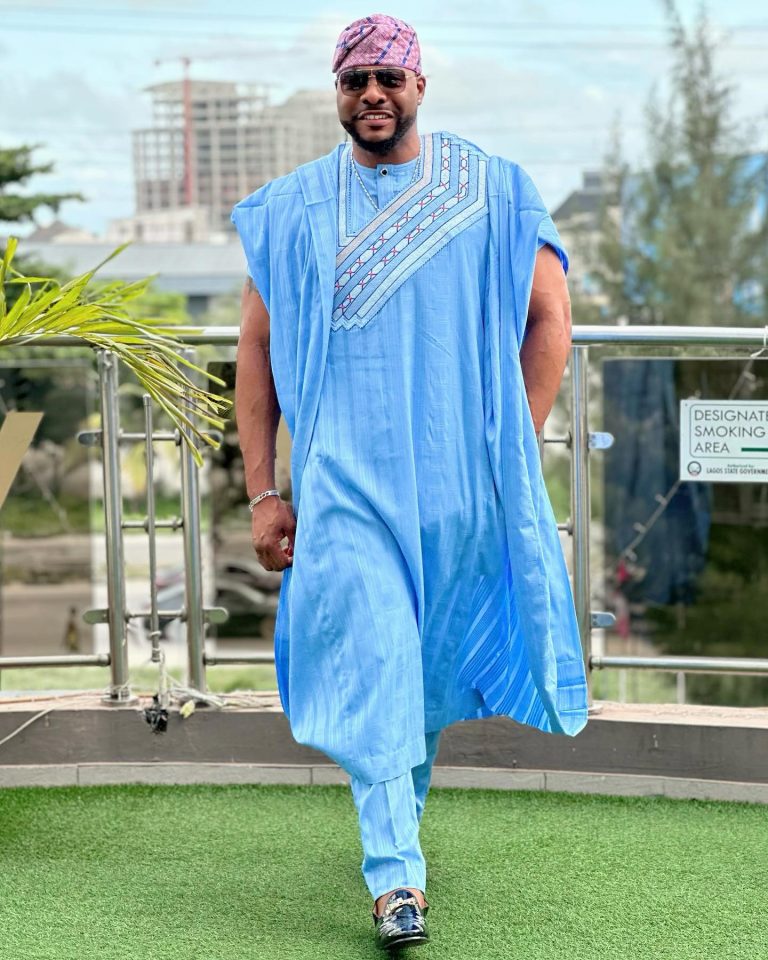
Introducing Olúwaṣeun Akinyanju: A Talented Filmmaker and Actor

Allow me to introduce you to Olúwaṣeun Akinyanju, a dedicated and hard-working filmmaker and actor. With a passion for storytelling, he has made a name for himself in the industry, having featured in several movies and worked on numerous projects as a script supervisor, continuity expert, and assistant director.

One of his notable roles was playing the young Itẹle Di Icon in the movie Kesari. Following the successful first week of Kesari in cinemas, Seun Akinyanju expresses his gratitude to his boss, Ibrahim Yekinni Itẹle, for providing him with the opportunity to showcase his talent.


In his own words, “Saying ‘thank you’ is not enough for me to express how grateful I am for your support over the years. You are my mentor, and your guidance and advice have been invaluable to me. I can’t thank you enough for all the help that you’ve bestowed upon me. Love you Boss 🙌🙌🙌”

Keep an eye out for this young actor as he continues to impress in his upcoming projects. With his dedication and talent, Olúwaṣeun Akinyanju is sure to make a significant impact in the world of filmmaking.

“World Bank provides guidance to the government on public expenditure”

0

The World Bank has actively collaborated with the Federal Government to ensure the efficient and effective utilization of public funds for the betterment of Nigerian citizens.

During a courtesy visit to the Minister of Budget and Economic Planning, Atiku Bagudu, the World Bank Country Director, Mr. Shubham Chaudhuri, emphasized the bank’s commitment to partnering with both federal and state governments to drive transformative initiatives.

These initiatives encompass stimulating private investments, fostering job creation, supporting youth and women empowerment, and nurturing children’s development in Nigeria.

In his conversation with the press following the meeting, Chaudhuri elaborated on the extensive spectrum of assistance the World Bank has provided to Nigeria, spanning areas such as education projects, economic empowerment endeavors, and energy access for rural communities.

Beyond merely offering financial support, the discussion between the minister and Chaudhuri delved into the exchange of ideas and experiences derived from various countries.

Highlighting the World Bank’s global presence, Chaudhuri underscored the bank’s role in facilitating the sharing of successful strategies from one country to another.

The intention is to apply lessons learned in diverse contexts, such as implementing effective measures witnessed in Indonesia within the Nigerian landscape.

A significant aspect of this conversation revolved around Nigeria’s cash programs and ongoing state-led initiatives, in which the Ministry of Budget and Economic Planning plays a coordinating role for both federal and sub-national entities.

In response, the minister expressed gratitude for the comprehensive support extended by the World Bank to the ministry and the broader government.

He elucidated that the interactions between the ministry and the World Bank primarily revolved around blended development assistance projects, which incorporate a mix of loans and grants, often sourced from donors like the European Union.

This collaborative approach aims to harness resources effectively for advancing the nation’s development objectives.

“Failing to prioritize open trade could lead to fluctuations in prices, as highlighted by Okonjo-Iweala.”

0

The Director-General of the World Trade Organisation, Ngozi Okonjo-Iweala, recently emphasized that moving away from open trade would result in heightened price fluctuations, inflationary pressures, and weakened prospects for economic growth.

Speaking at the annual Jackson Hole Economic Policy Symposium hosted by the Federal Reserve Bank of Kansas City, U.S., she highlighted the importance of predictable trade, which contributes to reduced volatility, increased economic resilience, and disinflationary influence.

Okonjo-Iweala cautioned against the costly consequences of trade fragmentation into rival blocs.

She stated, “A world that rejects open and predictable trade will witness reduced competitive pressures, amplified price volatility, and diminished growth and development opportunities.

This scenario would also impede the transition to a low-carbon economy and heighten supply vulnerability when facing unexpected shocks.”

Discussing the resurgence of sustained inflation in affluent nations, she noted how subsequent monetary tightening exacerbated debt distress and financial instability in many developing economies.

Some policymakers have even contemplated rolling back globalization due to these shocks and escalating geopolitical tensions.

WTO economists estimated that a scenario where the world economy separates into two self-contained trading blocs could reduce the long-term global GDP by a minimum of five percent, causing significant welfare losses in certain developing nations.

Okonjo-Iweala highlighted the positive trends in trade costs, with agricultural products, manufactured goods, and services experiencing a 12 percent cost reduction over the past two decades.

The increasing digitization and growth in service-based trade could serve as a powerful disinflationary force.

Lower trade costs for goods and services underscore the potential for globalization to drive growth, efficiency, and economic opportunities, while also aiding in price control.

The Director-General pointed out that initiatives like the agreement on Services Domestic Regulation and ongoing negotiations on electronic commerce among WTO members could further amplify the disinflationary effect.

She stressed that capitalizing on these prospects necessitates maintaining open and predictable international markets, firmly rooted in a robust and effective rules-based multilateral trading system.

NLC expresses strong disapproval of the police presence at the NURTW national secretariat.

0

The Nigeria Labour Congress has strongly criticized the seizure of the National Union of Road Transport Workers’ (NURTW) national secretariat by thugs, who were reportedly accompanied by law enforcement personnel. In a statement released after an urgent National Administrative Council meeting on Monday, the NLC expressed its opposition to the alleged involvement of the Nigerian Police in the intrusion into the NURTW national secretariat located in Abuja.

The labor organization’s communiqué pointed out, “During the meeting, the NAC acknowledged the recent instances of the Nigeria Police interfering in the internal affairs of various unions.

This trend is seen as a violation of union autonomy and a breach of the legal framework that governs labor relations.”

The NLC strongly denounced what it claims to be an unauthorized intervention by the Inspector General of Police in the raid on the NURTW National Secretariat, seemingly with the intention of removing the lawfully elected union leadership and installing an alternate faction.

“The NAC has unequivocally demanded the immediate and unconditional evacuation of the unlawfully occupied NURTW National Secretariat by both the police and the group of individuals involved.

This demand must be fulfilled within 48 hours from the time of the resolution.”

In a bid to ensure openness and responsibility, the NLC has called upon His Excellency Bola Ahmed Tinubu, the President of the Federal Republic of Nigeria, to address the allegations associating his name with those responsible for the incursion.

“The NLC stressed that President Tinubu, as a product of democratic processes, should clarify his position and disassociate himself from any involvement in the incident.”

The labor union has also issued a warning of a potential strike if the lawfully elected leadership of the NURTW is not reinstated.

“The resolutions made by the NAC underline its unwavering dedication to upholding democratic values, safeguarding the independence of unions, and ensuring the well-being and rights of workers all over Nigeria.

As the nation closely observes these developments, the NLC remains resolute in its commitment to protecting the interests of Nigerian workers and unions, while urging for the swift resolution of the present crisis.”

Stanbic’s after-tax profit for the first half of 2023 has surged by an impressive 121%.

Stanbic IBTC Holdings Plc, a financial institution, has issued its financial report for the first half of 2023.

The report highlights an impressive 121.46% increase in Profit After Tax, rising from N30.669 billion to N67.919 billion compared to the same period in 2022.

The report, which was submitted to the Nigerian Exchange Limited with a slight delay attributed to seeking regulatory approval from the Central Bank of Nigeria, reveals substantial growth across various financial metrics.

The group’s gross earnings surged by 58.18%, profit before tax soared by 107.58%, and profit after tax witnessed an impressive growth of 121.46% for the period ending on June 30, 2023.

Stanbic IBTC’s directors recommended an interim dividend of 150 kobo per share, matching the previous year’s figure, for the review period.

The favorable results can be attributed to the rise in Net Interest Income, which surged by 44.35% to N72.684 billion from N50.353 billion in 2022. Non-interest revenue also demonstrated strong growth, increasing by 56.64% to N98.618 billion from N62.957 billion.

Although there was a minor increase of 9.37% in net impairment loss on financial assets from N5.467 billion to N5.979 billion, the overall picture remained positive.

Furthermore, total assets experienced a noteworthy increase of 47%, reaching N4.45 trillion compared to N3.03 trillion in December 2022. Gross loans and advances rose by 37% to N1.70 trillion from N1.24 trillion in the same period.

In response to these results, Dr. Demola Sogunle, the Chief Executive of Stanbic IBTC, expressed his views.

He noted that the initial half of 2023 was eventful due to factors such as general elections and cash scarcity, leading to slower business activities initially.

However, business activities rebounded during the second quarter, with an increase in the PMI and demand due to better access to cash and business expansion.

Dr. Sogunle highlighted that the bank achieved significant growth in key income areas.

He mentioned a substantial increase of over 100% in the Group’s profitability, largely driven by growth in revenue streams.

The growth was reflected in a 62% year-on-year rise in interest income, attributed to higher yields and loan volumes as the bank aimed to support clients through lending and investment opportunities.

Dr. Sogunle also shared the bank’s participation in processing the first inbound commercial transaction on the Pan African Payment and Settlement System (PAPSS) in Nigeria.

PAPSS, a project of the African Union and the African Continental Free Trade Area Secretariat, aims to promote intra-African trade.

This accomplishment showcases Stanbic IBTC’s commitment to providing secure and efficient payment solutions across Africa, further aligning with their goal of helping clients unlock the potential of the African market.

Product tax revenues surge to N1.36 trillion within a span of six months, according to the NBS.

Taxes imposed on goods within the country surged to N1.36tn during the initial half of 2023, despite widespread economic difficulties.

This increase reflects a significant 113.29% surge from the N636.19bn reported in the first half of 2021, as well as a 25.00% rise from the N1.09tn documented in the same period of 2022.

These statistics were sourced from National Bureau of Statistics data focusing on Net Indirect Taxes on Products, calculated using present base prices.

When considering the impact of inflation, the taxes on products tallied up to N465.94bn during the first six months of 2023.

This showcases a substantial 34.98% escalation from the N345.19bn reported in the initial half of 2021 and an 11.94% rise from the N416.23bn noted in the corresponding period of 2022.

As described by the World Bank, net indirect taxes encompass the aggregate of product taxes minus subsidies.

The bank clarified that product taxes pertain to the payments manufacturers bear concerning the production, sale, purchase, or utilization of goods and services.

In the second quarter of 2023, the country’s Gross Domestic Product (GDP) grew by a real-term rate of 2.51% on a year-on-year basis.

This figure represents a decline from the 3.54% registered in Q2 2022, with the National Bureau of Statistics suggesting this might be attributed to challenging economic circumstances.

Confronted with a reduction in global economic activity and the consequent drop in revenue, the Federal Government has been intensifying its taxation initiatives.

Outlined in the 2023-2035 Medium Term Expenditure Framework and Fiscal Strategy Paper, these efforts encompass an enhancement of the tax administration framework, which includes tax filing and payments.

Additionally, the government aims to introduce new taxes and potentially elevate existing ones, particularly in the realm of health-related taxes on items such as sugar-sweetened beverages, tobacco, and alcohol.

This strategy has been met with mixed reactions from the public.

Remarkably, the year-on-year rise in product taxes has taken place amid a decline in purchasing power across the country, evidenced by a 22.79% inflation rate in June.

The World Bank highlighted that this decrease in purchasing power resulting from high inflation has exacerbated poverty, causing approximately four million Nigerians to fall below the poverty line between January and May 2023.

Anticipations suggest that inflation will continue to surge, possibly reaching 25% by the end of 2023.

The World Bank’s forecast indicated, “Headline inflation is expected to rise from 18.8% in 2022 to 25% in 2023.”

Meanwhile, the International Monetary Fund (IMF) has been advising Nigeria to raise its Value-Added Tax (VAT) rate to 15% by 2027. Such a move could potentially further amplify the revenue generated from product taxes, subsequently influencing product prices.