Home Blog Page 397

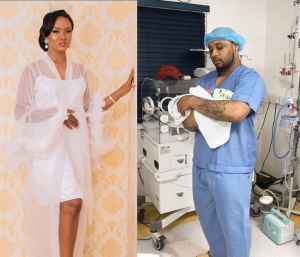
UNIPORT student fatally stabs girlfriend in Edo State.

0

Edo State Police Command authorities have apprehended Victor Ochonogor, a 24-year-old final-year student at the University of Port Harcourt, following the fatal stabbing of his girlfriend, Success Regha, on Monday.

The incident took place within their residence at 10, Osahon Street, Ogheghe Quarters, situated off Sapele Road in Benin City.

The tragic event unfolded as Ochonogor, enrolled in the Applied and Industrial Chemistry program, engaged in a violent confrontation with his girlfriend.

Both individuals were within their locked residence when the altercation escalated, leading to a mutual exchange of stabbings.

During a press briefing on Tuesday in Benin, State Commissioner of Police Muhammed Dankwara disclosed the details of the incident.

The alert was raised by the suspect’s landlord, Emmanuel Momoh, who reported the incident to law enforcement.

Tragically, the young woman, Success Regha, suffered fatal injuries from stab wounds to her neck and chest inflicted by Ochonogor using a knife.

The suspect explained to reporters that he had been in a relationship with the deceased for three years.

He recounted that while she was visiting him from Asaba in Benin, she accused him of being involved in kidnapping activities.

This accusation incited anger within Ochonogor, which seemingly contributed to the unfortunate incident.

In addition to the case involving Ochonogor, the police also presented another individual to the press.

Etinosa Omoregie, affiliated with the Nigeria Hunters and Forest Security Service, was paraded before journalists due to his alleged involvement in a murder case.

The police commissioner stated that Omoregie reportedly shot a man named Eric, who subsequently succumbed to his injuries after being rushed to a medical facility.

The police have also detained other suspects in unrelated cases.

Among them is Efosa Osayande, aged 31, who was arrested for purportedly sharing explicit images of his former girlfriend publicly. Furthermore, Friday Igberase is in police custody on charges of rape.

These incidents underscore the importance of law enforcement and social awareness campaigns to address issues of violence, crime, and consent within society.

“Long lines at fuel stations in Lagos and surrounding areas due to pipeline vandalism by thieves.”

0

The resurgence of long queues for Premium Motor Spirit (petrol) is becoming evident once again at filling stations in Lagos, Ogun states, and a few other locations in the South-Western states.

While queues haven’t been spotted in Abuja and Northern states, depots in Lagos are experiencing dwindling petrol supplies.

These queues are notably present at various stations, causing congestion on roadways such as the Oshodi-Ojodu Berger Expressway and sections of the Lagos-Ibadan Expressway.

The North-West filling station has the longest queue, dispensing petrol at N568/litre, while other stations have slightly shorter queues.

However, stations like Conoil, Enyo, and Oando at Berger in Lagos are without any petrol supply. Some stations like Worldoil, Fatgbems, and Quest in Ogun State have closed their outlets due to this shortage.

The Chairman of the Independent Petroleum Marketers Association of Nigeria, Akin Akinrinade, explained that the pipeline vandalism issue they raised alarms about in July has been impacting supply.

This has affected depots’ ability to load products, particularly the Satellite Depot.

The NNPCL Retail depot is also dispatching products on a limited scale.

Unfortunately, these disruptions extend to Lagos and the entire South-West.

The NNPCL Retail owns depots across the country, with nine in the North and twelve in the South.

However, due to pipeline vandalism, they have relied on private depots for product dispatch, which has led to challenges in maintaining a steady supply.

There have been efforts to repair pipelines, like the Satellite depot in Lagos, but even that depot was vandalized in July.

As a result of the rising foreign exchange and high prices at depots, some stations have been unable to import products. Many stations have had to shut down due to financial constraints.

The imbalance between demand and supply has also led to a reduction in imports by NNPCL, further contributing to the scarcity of petrol.

It was initially hoped that the Dangote Refinery’s operations would help alleviate the situation, but with the refinery’s delayed output, the scarcity continues.

While the market price of petrol has increased significantly since the end of fuel subsidies, there is still hope for intervention from NNPCL to stabilize the situation.

Major outlets in Lagos have been impacted, and motorists are worried about the potential for further price increases.

This situation has led to panic among commercial transport operators and motorists alike. While queues have not spread to other regions, the decline in imports could potentially lead to wider scarcity and queues if not addressed promptly.

The President of the Petroleum Products Retail Outlets Owners Association of Nigeria, Billy Gillis-Harry, stressed the importance of rehabilitating refineries to prevent similar scenarios in the future.

“Chronology of Recent Coups in Africa” Improved Description: “A Detailed Overview of Recent Instances of Coups Across Africa”

0

A group of military officials in Gabon proclaimed their control over the nation through a televised message shared on social media on Wednesday. This declaration followed shortly after the election body of Gabon announced that the incumbent President Ali Bongo secured a third term, thereby extending his family’s decades-long rule over the oil-rich country with a population of 2.3 million.

If successful, this coup would mark the tenth occurrence of such incidents in the western and central regions of Africa since 2017. Notably, Niger underwent a military takeover in July, which caused significant ripples across the area and drew in countries with strategic interests in the region.

Here’s a summary of some prominent coup events that have taken place in Africa in recent years:

– **2019 Sudanese coup d’état:** President Omar al-Bashir was ousted on April 11, 2019, by the Sudanese Armed Forces following widespread protests. The military took over, eventually leading to a two-year transitional period.

– **2020 Malian coup d’état:** On August 18, 2020, parts of the Malian Armed Forces initiated a mutiny that resulted in a coup. President Ibrahim Boubacar Keta resigned amid detainment, making it Mali’s second coup in less than a decade.

– **2021 Malian coup d’état:** On May 24, 2021, the Malian Army, led by Vice President Assimi Gota, carried out a coup, detaining several top officials. This was the nation’s third coup in a span of 10 years.

– **2021 Tunisian self-coup:** Tunisian President Kais Saied overthrew the Hichem Mechichi government on July 25, 2021, suspending the Assembly of Representatives and causing political upheaval amid the COVID-19 pandemic.

– **2021 Guinean coup d’état:** On September 5, 2021, Guinea’s President Alpha Condé was captured by the military, leading to the dissolution of the government and constitution.

– **2021 Sudanese coup d’état:** General Abdel Fattah al-Burhan and the Sudanese military staged a coup on October 25, 2021, detaining several high-ranking officials.

– **January 2022 Burkina Faso coup d’état:** A coup occurred on January 23, 2022, resulting in the removal of President Roch Marc Christian Kaboré.

– **September 2022 Burkina Faso coup d’état:** On September 30, 2022, another coup ousted Interim President Paul-Henri Sandaogo Damiba due to concerns about handling the nation’s insurgency.

– **2023 Nigerien coup d’état:** On July 26, 2023, the Republic of Niger witnessed a coup where President Mohamed Bazoum was detained, leading to the rise of a new military junta under the command of General Abdourahamane Tchiani.

These incidents underscore a concerning timeline of coup activities across Africa in recent times.

Oyo APC alleges that Makinde redirected N5.7 billion and relief materials.

0

The All Progressives Congress in Oyo State raised concerns on Tuesday regarding the alleged misdirection of funds and essential supplies provided by the Federal Government to alleviate the hardships caused by the removal of fuel subsidies during the President Bola Tinubu administration.

Tinubu had declared his intent to implement relief measures to alleviate the suffering caused by hunger and economic difficulties, particularly among the less privileged in the nation.

It’s noteworthy that a portion of these aid funds and supplies was reportedly released through both state and local governments in recent weeks.

Some states, such as Kwara and Ogun, openly acknowledged receiving these resources.

In a statement from Olawale Sadare, the APC Publicity Secretary, issued in Ibadan, the capital of the state, on Tuesday, criticism was directed towards the PDP government in the state for allegedly concealing details about the receipt, allocation, and management of the resources and provisions provided to Oyo State by the Federal Government, which were intended for the benefit of the state’s residents.

He remarked, “Almost every state in the country has announced the receipt of a minimum of two billion naira out of the five billion naira allocated by the Federal Government to support the most economically vulnerable through the state governments.”

“Recently, the nearby states of Osun and Kwara declared the reception of two billion naira each, whereas Makinde chose not to disclose this to the public, following his usual pattern.”

“For roughly six weeks now, the whereabouts of the three thousand bags of rice that Makinde received from Abuja remain unknown to the state’s populace.

There are indications that these resources might have been diverted, much like what happened with the COVID-19 relief materials provided by the Federal Government, corporate bodies, and individual philanthropists.”

“We also urge Makinde to clarify why he instructed local government council chairpersons to transfer the two installments of N56 million, which the federal government allocated to the local governments between August 16 and 18 this year, into the state government’s account.

The 33 local government councils in the state collectively received N3.696 billion, yet they seemingly failed to utilize any of these funds for their intended purpose.”

“It’s apparent that the supposedly organized Palliative Committee established by Gov.

Makinde about a month ago was merely a façade to deceive the public, as the committee’s practical role appears to be negligible.”

“We wouldn’t be taken aback if the state government were to release a limited quantity of rice and noodles to the committee in the upcoming days and instruct them to distribute these provisions to a few members of the PDP, all for the sake of creating an impression that the targeted impoverished population in society has gained benefits,” Sadare concluded.”

Nothing Is Spiritual About Nigeria Music – TEMS

0

“When I listen to Nigerian music, it sounded so plain and basic, and there was nothing spiritual about it that I could connect to,” —Tems tells Kendrick Lamar.

In a recent interview on ‘Interwine’ with legendary American rapper Kendrick Lamar, Grammy award-winning Nigerian singer Tems told Kendrick Lamar that she decided to pursue classic R&B instead of Afrobeats, which is more popular in Nigeria.

The singer explained that when she used to listen to Nigerian music, it sounded plain and basic to her. She didn’t feel any substance or anything spiritual she could connect with in Afrobeat songs, as she was more familiar with the type of music associated with artists like Celine Dion.

Tems wanted to make a difference by producing music that would touch souls and connect with people. This is why she chose to focus more on creating R&B music.

She also added that most of the producers she worked with were more into Afrobeat and could not really do well with the sound she wanted to put out that is why she learned to produce herself.

“NNPP imposes a six-month suspension on Kwankwaso and others”

0

The Board of Trustees of the New Nigeria Peoples Party has taken action against its candidate in the February 25 presidential election, Sen. Rabiu Musa Kwankwaso, due to alleged anti-party activities. Alongside this, the Board suspended the National Working Committee of the party.

To fill the vacancies, they appointed new national officers, led by Dr. Agbo Major as acting National Chairman and Mr. Ogini Olaposi as acting National Secretary, along with 18 others.

Reportedly, these suspensions will remain in effect for a period of six months.

The decision was made through a voice vote by party members during a special general assembly held at Rockview Hotels in Apapa.

The party’s founder, Dr. Boniface Aniebonam, and the National Publicity Secretary, Major, were also suspended by the NWC on August 24.

At the conclusion of the meeting in Lagos, Babayo Muhammed Abdulahi, the Secretary of the BoT, accused Kwankwaso of unauthorized interactions with President Bola Tinubu, Alhaji Atiku Abubakar of the Peoples Democratic Party, and Mr. Peter Obi of the Labour Party.

Abdullahi revealed that Kwankwaso had lost his status as the NNPP national leader due to these actions.

Furthermore, he emphasized that the purported suspension of the NNPP founder disregarded the party’s constitution.

The BoT alleged that Kwankwaso’s participation in anti-party activities and unauthorized discussions with various political figures led to his six-month suspension pending investigation by the Disciplinary Committee.

The BoT declared that the breach of the Memorandum of Understanding (MoU) between NNPP, Kwankwasia Movement, TNM, and NAGAFF led to the withdrawal of partnership.

The acting chairman of the party, Dr. Agbo Major, expressed his intention to mend the divisions caused by the suspended NWC members and reaffirmed the party’s commitment to being people-oriented.

The special general assembly meeting witnessed the attendance of the new NWC and members from across the nation

“List of the ten Nigerian startups with the highest funding as of August 2023.”

Nigerian startups have gained substantial prominence worldwide, demonstrating their prowess in generating inventive solutions that captivate investors in pursuit of substantial returns.

As these investments prove lucrative, they pave the way for increased funding opportunities for both established and emerging innovators from Nigeria.

Amid the global economic challenges of 2022, which prompted significant layoffs by prominent tech companies, Nigerian startups managed to secure more than $1.2 billion in funding during the year.

Although this fell slightly short of the $1.5 billion achieved in 2021, Nigeria still retained its status as a favored destination for global venture capital and angel investors keen on exploring opportunities in Africa.

Nigerian startups have successfully traversed the fundraising journey from pre-seed to series D, with several now branching out into investing in other nascent ventures.

Despite the remarkable progress, the demand for additional funding continues to surge due to the continuous emergence of tech-savvy Nigerians with innovative ideas that necessitate financial infusion for scaling.

Presently, numerous startups are striving to bootstrap their operations and are eyeing their inaugural revenue streams, while a multitude of innovative enterprises are amassing millions in funding and aiming for more to facilitate business expansion.

The surge in funding within the Nigerian startup ecosystem is yielding numerous positive outcomes for the national economy. It is fueling job creation, propelling innovation, and attracting foreign investments.

These startups are also playing an increasingly pivotal role in addressing pressing societal challenges in Nigeria, such as financial inclusion, poverty alleviation, unemployment, and healthcare improvements.

Despite some deceleration in the current year, Nigerian startups are still actively securing funding.

Examining those that have raised capital in the past, as well as those that have recently secured investments, Nairametrics has identified the top 10 most well-funded startups in Nigeria based on their cumulative funding amounts:

1. Moniepoint ($55.5 million)
2. ThriveAgric ($65.4 million)
3. Konga ($79.5 million)
4. Kuda Bank ($91 million)
5. TradeDepot ($123 million)
6. Lumos Global ($125 million)
7. Moove ($335 million)
8. Andela ($381 million)
9. Flutterwave ($475 million)
10. OPay ($570 million)

These startups encompass a diverse range of sectors, including fintech, agriculture, e-commerce, and energy, collectively exemplifying the remarkable growth and potential of the Nigerian startup ecosystem.


Nigerian Cinemas joins Cinemas in UK and USA to announce “The Nigeria Cinema Day”

0

NIGERIA CINEMA DAY


Nigerian Cinemas joins Cinemas in UK and USA to announce “The Nigeria Cinema Day” which takes place on Saturday, September 2, 2023. This is a global day that aims to reward cinema goers and bring back old customers with discounted ticket prices.

The Cinema Exhibitor’s Association of Nigeria welcomes moviegoers to celebrate a day at the movies with discounted tickets of N1000 to kick-off the first Nigeria Cinema Day, on Saturday September 2, 2023.


For more details go to www.ceannigeria.com and look for more announcements on all social media platforms on CEAN and your local Cinema’s Social Media Platforms and website.


Join thousands of other moviegoers and head to a Cinema near you.

Dangote Cement Plc has stated that Nigeria’s cement price is in line with or lower than prices across the West African coast.

0

Dangote Cement Plc has stated that Nigeria’s cement price is in line with or lower than prices across the West African coast.


According to Dangote Cement, the price of a bag of cement from its factories across Nigeria (as at 28th August 2023) is N4,010 in Okpella and N4,640 in Ibese, Obajana, and Gboko. Including transportation costs and the location of delivery, prices could range between N5,000 to N5,300 per bag.


“This clarification was made in view of recent misinformation that the company sells cement in Nigeria at significantly higher prices relative to other countries, particularly, the Republic of Benin, and other neighbouring countries,”


The group managing director of Dangote Cement, Mr Arvind Pathak, advised that, it is important to distinguish Dangote Cement’s ex-factory prices from prices at which retailers sell cement in the market.


“Our check in Cotonou, the commercial capital of the Republic of Benin indicated that cement sells between CFA 3,495 and CFA 4,500, which at the current exchange rate of CFA 1: NGN 1.43 is between N4,997 to N 6,435 per bag,” he said.


“We continue to innovate new ways to deliver quality products to millions of our customers across Africa, while providing top-notch customer services. At Dangote Cement, we are committed to building an inclusive and sustainable business for all stakeholders across the value chain,” he explained.

Share the investigative findings regarding NDDC, as urged by women from the Niger Delta region to Tinubu.

0

Leaders of women from various ethnic groups in the Niger Delta have urged President Bola Tinubu to release the findings of the forensic audit of the Niger Delta Development Commission (NDDC).

This call was made by Ms. Ann-Kio Briggs, who led a delegation, during a meeting with Dr. Samuel Ogbuku, the Managing Director of NDDC, in Port Harcourt.

The delegation comprised women from different ethnic organizations, civil society groups, faith-based and community organizations, market women, and NGOs.

The forensic audit, initiated by President Muhammadu Buhari in 2021, was designed to investigate NDDC’s activities from its inception to August 2019.

However, despite the completion of the audit several months ago, the government has not disclosed when the forensic report will be accessible to the public.

Ann-Kio Briggs expressed discontent with the prolonged delay in releasing the report, particularly given the substantial financial investment made in conducting the audit. She emphasized that the women of the Niger Delta are dissatisfied with the lack of publication of the NDDC forensic audit report.

Moreover, she drew attention to the substantial outstanding debts owed to NDDC, which have significantly hampered the commission’s operational effectiveness.

Briggs emphasized that women in the region have long been marginalized despite their active participation alongside men in advocating for justice, equity, accountability, and regional development.

She pointed out that the absence of women’s rights in appointments, development initiatives, political representation, and economic acknowledgment is an issue that cannot be disregarded.

She urged Dr. Ogbuku, the Managing Director, to prioritize addressing the concerns raised by the women.

This includes taking steps to ensure that the ongoing engagement between the NDDC and women’s representatives yields meaningful results.

Acknowledging the challenges faced by the region, Ogbuku noted that the commission is planning to launch projects and programs aimed at enhancing the capacity of women and youth in the area.

He revealed that the NDDC is in the process of organizing a Niger Delta Stakeholders Summit to address the issues faced by different groups, with a particular focus on women.

Ogbuku underscored the importance of women’s contributions to the region’s development and highlighted the intention to involve all stakeholders in shaping the NDDC’s strategies for regional progress.

He indicated that the upcoming summit would provide a platform for women to voice their aspirations for the future and allow various stakeholders to contribute ideas aligned with the current realities of the region.