Home Blog Page 7

Over 200,000 Children Vaccinated Against Malaria in Kebbi and Bayelsa, Says NPHCDA

0

National Primary Healthcare Agency Targets High-Burden States in Ongoing Immunisation Drive


ABUJA, NIGERIA — The National Primary Health Care Development Agency (NPHCDA) has announced a significant milestone in the country’s fight against malaria, revealing that 202,860 children have been successfully vaccinated against the disease in the states of Kebbi and Bayelsa.

The figure was disclosed by Dr. Rufai Ahmed, Director of Disease and Immunisation at the NPHCDA, during a media briefing held in Abuja on Tuesday.

Targeting High-Burden Areas

Dr. Ahmed explained the strategic rationale behind selecting the initial states for the malaria vaccination campaign.

“We started the malaria vaccination in Kebbi and Bayelsa because those were the states we identified as having a high burden [of malaria]. So far 202,860 children in Kebbi and Bayelsa have been reached with malaria vaccines,” he stated.

The initial success of reaching over 200,000 children underscores the government’s commitment to leveraging the new malaria vaccine as a critical tool for reducing childhood morbidity and mortality caused by the disease. Malaria remains one of the leading causes of death in Nigerian children under five years old.

The NPHCDA’s targeted approach aims to achieve maximum impact by focusing resources on areas where the health risk is most pronounced, paving the way for a potential expansion of the programme to other states in the future.

Playwright Jeremy O. Harris Released from Custody in Japan After Drug Allegations

0

Tony-Nominated Creator of ‘Slave Play’ Detained for Three Weeks Over Alleged MDMA Smuggling


TOKYO, JAPAN — American playwright and actor Jeremy O. Harris has been released from Japanese police custody following a three-week detention related to allegations of attempting to smuggle illegal drugs into the country.

Harris, known for his groundbreaking Tony-nominated work Slave Play and his acting role in the series Emily in Paris, was released on Monday, December 8, after being held since his arrest on November 16 at Naha Airport in Okinawa.

The Allegations and Detention

The 36-year-old playwright was detained after Japanese customs officials at the Naha Airport reportedly discovered approximately 780 milligrams of crystal containing Ecstasy (MDMA) in his carry-on tote bag. The amount is roughly equivalent to less than a gram. Harris had arrived in Okinawa for sightseeing, traveling from Britain via Taiwan.

Following the discovery, he was arrested on suspicion of violating Japan’s stringent Customs and Narcotics and Psychotropics Control Acts. The case was later forwarded to local prosecutors for further investigation and potential indictment. Japan is known for maintaining some of the world’s strictest anti-drug laws, where a conviction for smuggling could carry a sentence of up to seven years in prison, even for small quantities.

Released Without Charges

While local police declined to comment on whether formal charges were filed upon his release, a representative for Mr. Harris told media outlets that the playwright was released without charges.

The representative added that Harris plans to remain in Japan to continue conducting research and writing for an upcoming creative project. The lengthy detention period, nearly the maximum 23 days permitted under Japanese law before indictment, had drawn attention to the country’s often-criticized “hostage justice” system.

Jeremy O. Harris has received critical acclaim for pushing boundaries in theatre and film, including co-writing the screenplay for the A24 film Zola and serving as a producer on the HBO series Euphoria.

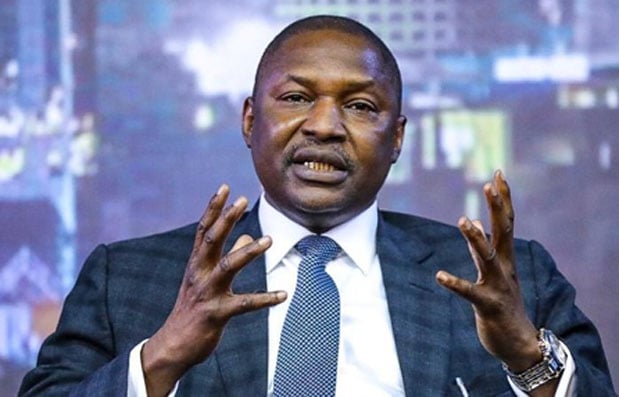
EFCC Intensifies Probe: Ex-AGF Malami Interrogated Over ’46 Bank Accounts’

0

Former Attorney-General Spends Night at EFCC Headquarters as Investigation Continues

ABUJA, NIGERIA — The Economic and Financial Crimes Commission (EFCC) has significantly ramped up its investigation into Abubakar Malami, the former Attorney-General of the Federation (AGF) and Minister of Justice.

TheCable has learned that Malami spent Monday night at the headquarters of the anti-graft agency as intense interrogations commenced.

Overnight Questioning at EFCC

According to an associate of the former Minister, Malami was formally invited for questioning on Monday. However, his late arrival in the evening necessitated his prolonged stay, forcing him to spend the night at the facility to ensure the continuity of the intense questioning session.

The associate revealed that Malami was cooperating with investigators as he responded to a series of queries related to the ongoing inquiry.

Focus on ’46 Bank Accounts’

The investigation appears to center on a substantial number of financial dealings allegedly linked to the former AGF. The associate disclosed that a major part of the EFCC’s line of inquiry involves the scrutiny of 46 bank accounts purportedly linked to Malami.

The EFCC is expected to be probing the sources of funds, transaction patterns, and beneficiaries associated with these accounts as part of its wider investigation into the former Minister’s tenure and assets.

The questioning of a high-profile former cabinet member like Malami marks a significant development in the administration’s stated commitment to tackling corruption.

No More Cash: FG Mandates E-Payments, Gives MDAs 45 Days to Deploy PoS Terminals

0

Government Bans Physical Cash Collection for Revenue, Citing TSA Violations

ABUJA, NIGERIA — The Federal Government has taken a definitive step to enforce digital financial transparency by prohibiting all Ministries, Departments, and Agencies (MDAs) from collecting physical cash for revenue transactions.

The move comes in response to persistent violations of the existing e-payment and Treasury Single Account (TSA) policies, which are designed to centralize and secure government revenues.

The 45-Day Ultimatum

The directive was formally communicated through four treasury circulars, all dated November 24, and issued by the Office of the Accountant-General of the Federation (AGF). The circulars were signed by Shamseldeen Ogunjimi, the Accountant-General of the Federation.

To ensure immediate compliance, the MDAs have been given a strict 45-day deadline to fully implement the new policy by deploying appropriate Point of Sale (PoS) terminals and other electronic channels at all their collection points.

Reason for the Ban

Mr. Ogunjimi expressed deep concern in the circulars over the continued practice of physical cash collection at government revenue points, despite explicit guidelines issued in earlier circulars designed to mandate electronic collection methods.

The ban is intended to plug revenue leakages, improve accountability, and consolidate government funds through the TSA system, ensuring that all public finances are channeled transparently and directly to the Consolidated Revenue Fund. The reliance on cash has long been cited as a major vulnerability to corruption and financial mismanagement within government agencies.

ECOWAS Declares State of Emergency in West Africa Amid Coup Surge

0

Commission President Cites ‘High Risk’ Environment, Warns Elections Now Instability Triggers

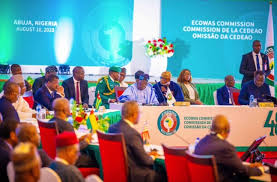
ABUJA, NIGERIA — The Economic Community of West African States (ECOWAS) has formally declared a state of emergency across the entire West African region, a dramatic move signaling the bloc’s heightened concern over escalating political instability and security threats.

The declaration was made on Tuesday by Dr. Omar Touray, President of the ECOWAS Commission, during the 55th session of the Mediation and Security Council at the ministerial level, held in Abuja.

Driven by Coups and Worsening Insecurity

The meeting was urgently convened following a series of successful military coups and botched mutinies that have rocked the sub-region in recent times, most notably the military intervention in Guinea-Bissau and a recent attempted coup in the Republic of Benin.

Touray delivered a sobering assessment of the situation, stating that recent events underscore the “imperative of serious introspection on the future of our democracy and the urgent need to invest in the security of our community.”

He warned that country-by-country analyses presented to the ministers show a general status of “high risk” across the community, necessitating immediate and concerted action.

Key Risk Factors Outlined by ECOWAS

The ECOWAS Commission President outlined several major risk factors driving the community into this state of emergency:

  • Persistence of Military Interventions: Citing recent examples in Guinea-Bissau and Benin.

  • Non-Compliance with Transition Norms: Specifically referencing concerns over military leaders in countries like Guinea potentially turning civilian.

  • Erosion of Electoral Inclusivity: Warning that the fairness of elections is diminishing across multiple states.

  • Expanding Influence of Armed Groups: Highlighting the growing reach of terrorists, armed groups, and criminal networks.

  • Elections as a Major Trigger: Touray lamented that “elections have become a major trigger of instability in our community,” despite the bloc’s efforts to promote constitutional principles.

Implications and Next Steps

The declaration of a state of emergency is seen as an attempt by ECOWAS to restore its credibility and signal a more decisive approach to confronting threats to constitutional order, particularly after the withdrawal of key members like Niger, Mali, and Burkina Faso to form the Alliance of Sahel States (AES).

The Ministerial Council meeting precedes the gathering of ECOWAS Heads of State and Government, who are expected to deliberate on the Council’s recommendations. The declaration is expected to pave the way for accelerated efforts, including:

  • More frequent meetings of the Mediation and Security Council.

  • Increased pooling of resources to confront terrorism and cross-border crime.

  • Sustained efforts to manage political transitions and safeguard constitutional norms.

Touray concluded by urging member states to uphold unity, stressing the humanitarian crisis where approximately 7.6 million individuals are currently forcibly displaced across the region.

LIRS Seals Ikeja Shoprite Over Alleged Tax Noncompliance

0

Popular Ikeja City Mall Outlet Shut Down as LIRS Enforces Tax Obligations

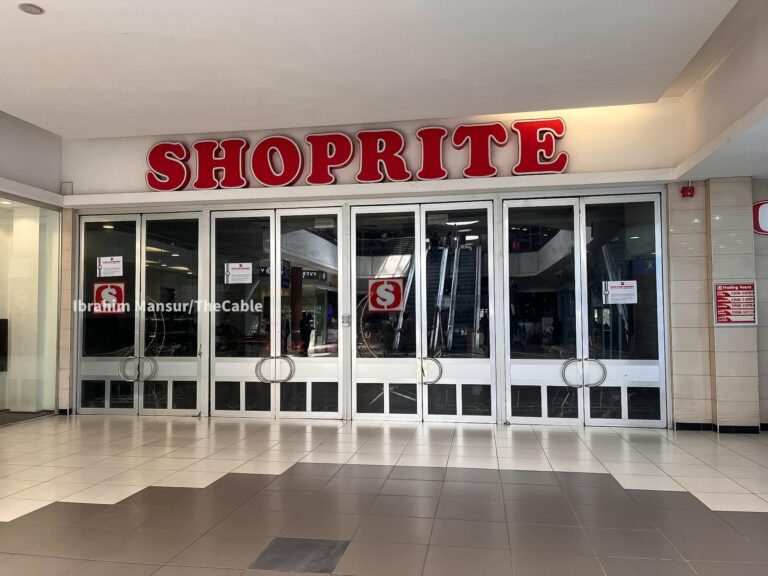
LAGOS, NIGERIA — The Lagos State Internal Revenue Service (LIRS) has taken decisive action, sealing the popular Shoprite outlet located at the Ikeja City Mall due to alleged failure to comply with its tax obligations.

The enforcement action was carried out on Monday, effectively shutting down the operations of the major retail store.

Breach of Personal Income Tax Act

A notice posted prominently at the entrance of the retail giant, and seen by TheCable, confirmed the reason for the closure.

The LIRS stated that the breach—the alleged failure to meet tax obligations—constitutes an offense punishable under the law. Specifically, the LIRS referenced Section 94 of the Personal Income Tax Act, 2011 (as amended).

This section specifies that noncompliance with tax obligations is an offense punishable by both fines and imprisonment. The sealing serves as a severe enforcement measure aimed at compelling the retail outlet to address its outstanding tax liabilities to the state government.

The action against such a high-profile establishment underscores the LIRS’s commitment to rigorous tax enforcement across the state to boost internal revenue generation.

CBN Governor Cardoso Inaugurates ACGSF Board, Signals ‘New Dawn’ for Agricultural Financing Revitalized Scheme Aims to Transform Nigeria’s Agricultural Sector

0

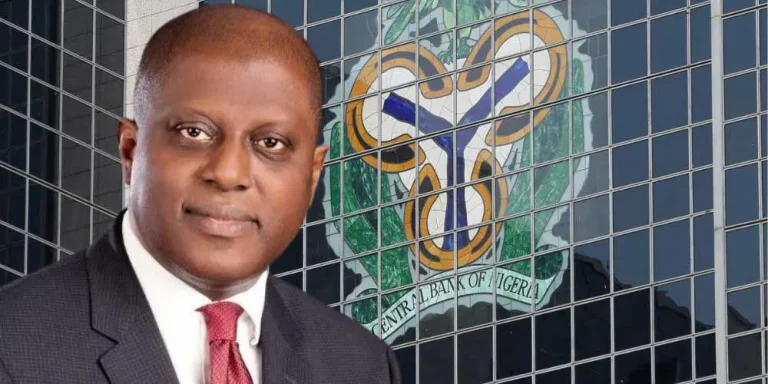
ABUJA, NIGERIA — The Governor of the Central Bank of Nigeria (CBN), Dr. Olayemi Cardoso, officially inaugurated the new board for the Agricultural Credit Guarantee Scheme Fund (ACGSF) in Abuja on Tuesday.

Speaking at the ceremony, Cardoso heralded the inauguration as signaling “a new dawn” for agricultural financing across the country. He underscored the critical role the scheme plays in the nation’s economic structure.

Nigeria’s Oldest Development Finance Programme

Dr. Cardoso described the ACGSF as one of Nigeria’s oldest and most vital development finance programmes. Established in 1977, the scheme is a key mechanism designed to de-risk the agricultural sector by providing guarantees for loans granted by commercial banks to farmers. This guarantee minimizes the risks faced by lending institutions, thereby encouraging them to increase their credit allocation to the agricultural value chain.

The Governor emphasized that a revitalized ACGSF is a critical tool for transforming the agricultural sector, which is essential for national food security, job creation, and economic diversification.

The inauguration of the board is expected to bring renewed focus, robust governance, and improved efficiency to the fund’s operations, ensuring it meets its mandate of facilitating increased access to credit for small-scale farmers and agricultural enterprises.

Governor Sanwo-Olu Inaugurates Danjuma’s Mega Logistics Hub to ‘Redefine’ West African Trade

0

TY Logistics Park FZE Opens Grade-A Facility in Lekki Free Zone

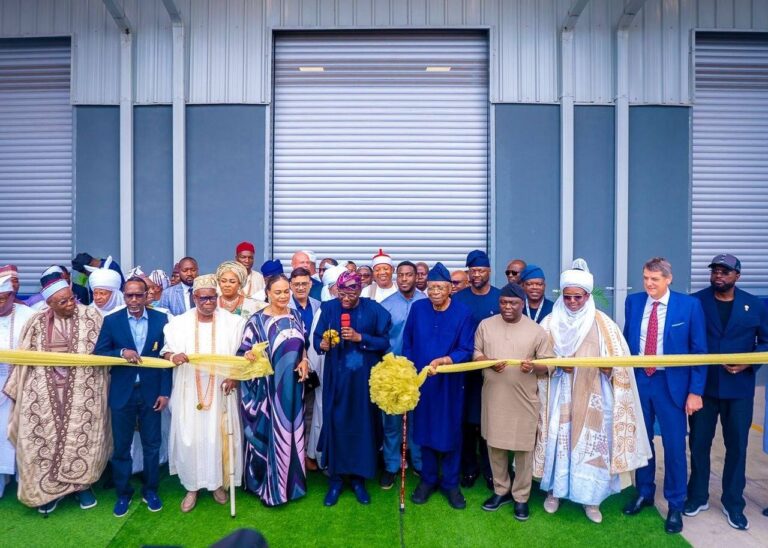
LAGOS, NIGERIA — Lagos State Governor Babajide Sanwo-Olu has officially inaugurated a major new logistics facility—the TY Logistics Park FZE—a project owned by former Minister of Defence, General Theophilus Danjuma (rtd).

The newly commissioned logistics hub, located within the Alaro City area of the Lekki Free Zone (LFZ), is touted as a facility that will redefine how goods move across the West African sub-region.

A Four-Year Vision Comes to Life

The unveiling ceremony, held on Monday at the TY Logistics FZE Logistics Park, marks the culmination of a four-year strategic vision to transform regional trade infrastructure.

The facility is characterized as a Grade-A free zone contract logistics facility. This classification signifies that the park adheres to the highest international standards in terms of quality, design, and operational efficiency, offering modern warehousing, supply chain management, and handling services.

The location within the Lekki Free Zone provides the park with significant operational and fiscal advantages, including customs duty exemptions, simplified import/export procedures, and unrestricted foreign currency repatriation. This integration into the LFZ is key to the facility’s goal of becoming a central node for regional and international trade logistics.

The park is expected to enhance Nigeria’s position as a gateway to West Africa by providing the infrastructure necessary for efficient, high-volume handling of goods, thereby reducing supply chain bottlenecks and supporting economic growth.

Femi Adebayo Announces Agesinkole: King of Thieves 2 with Unprecedented Community Cinema Tour

Nollywood blockbuster mastermind Femi Adebayo has officially unveiled the highly anticipated sequel to his record-breaking 2022 epic, Agesinkole: King of Thieves 2. In a significant and nostalgic departure from modern cinema distribution, Adebayo announced the film will not debut in conventional cinemas but will instead embark on a nationwide Community Cinema tour this festive season.

The decision, which the filmmaker described as a “small way to say thank you to everyone who has supported me over the years,” harks back to the “good old days when the whole street gathered to watch greatness unfold.”

A Return to the Grassroots

Agesinkole 2 is scheduled to begin its unique run from December 24th through to January 4th (presumably spanning the 2025/2026 holiday season).

This community-focused strategy makes the film highly accessible, with ticket prices significantly discounted compared to standard cinema rates:

  • Lagos: ₦4,000

  • Outside Lagos (Nationwide): ₦3,000

While the specific locations for the community screenings are yet to be revealed—fans have been instructed to “Watch out for locations in the next video”—the move is a clear effort to connect with audiences at a grassroots level, reviving the communal viewing experience for which Nigerian cinema was once known.

Building on a Blockbuster Legacy

The sequel follows the immense success of the original 2022 film, King of Thieves (Agẹṣinkólé). The first installment, which starred Adebayo himself as the titular, all-powerful bandit terrorizing the fictional Kingdom of Ajeromi, was a cinematic game-changer. It redefined the Yoruba epic genre in Nollywood, celebrated for its high production values, complex mythical themes, and stunning visuals.

King of Thieves became a commercial giant, grossing over ₦320 million at the box office and cementing its place as one of the highest-grossing Nigerian films of all time. Its critical acclaim led to eight nominations at the 2023 Africa Magic Viewers’ Choice Awards (AMVCA), including Best Overall Movie, and a win for Best Art Director.

Production and Cast Details

For the second installment, Femi Adebayo’s Euphoria360 Media has partnered with Circuitsstreams and @HawkstudiosHQ for co-production. The distribution mantle has been taken up by BLUE Pictures Distribution. Notably, while the first film was co-produced with Anthill Studios, this sequel features a new configuration of creative partners.

Early reports suggest the sequel will introduce a fresh cohort of talent alongside returning stars. Confirmed additions to the already acclaimed cast include veteran actors such as Yemi Solade, Bimbo Akintola, and Gabriel Afolayan.

Femi Adebayo’s return as the feared Agesinkole promises another chapter in the saga of the notorious thief, with the filmmaker teasing: “The legend has returned, and the kingdom will never be the same.”

As the release date approaches, anticipation is high for the announcement of the screening venues, marking the countdown to what is shaping up to be one of the most unconventional and community-focused film rollouts in recent Nollywood history.

Check Video Details Below: https://www.instagram.com/reel/DR99lqqCJ6L/?utm_source=ig_web_copy_link&igsh=MzRlODBiNWFlZA==

UN Slashes 2026 Aid Appeal to $23 Billion Amid Plunging Donor Support, Focuses on Most Urgent Crises

0

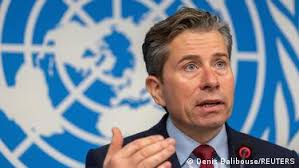
UNITED NATIONS, NEW YORK — The United Nations (UN) announced a dramatic reduction in its annual humanitarian aid request for 2026, appealing for $23 billion—roughly half the amount sought in the previous year—as global donor funding continues its steep decline.

The revised figure represents the immediate funding priority within the larger $33 billion Global Humanitarian Overview (GHO) 2026 budget, which was officially launched by the organization on Monday. This unprecedented reduction underscores the deepening financial constraints faced by the international aid community, forcing the UN to make agonizing choices about which lifesaving programs to prioritize.

Record Needs vs. Record Shortfall

The release of the 2026 GHO comes against a backdrop of record humanitarian needs worldwide. Millions of people are currently affected by a confluence of devastating crises, including:

  • Protracted conflicts and wars

  • Intensifying climate disasters

  • Persistent epidemics

  • Widespread crop failures and surging global hunger

  • Mass displacement

Despite this escalating demand for assistance, the UN’s Office for the Coordination of Humanitarian Affairs (OCHA) has been compelled to lower its appeal. According to spokespeople, the decision reflects the harsh reality of dwindling contributions from member states and private donors.

“This reduced appeal is not a reflection of reduced need; it is a difficult and pragmatic decision,” a senior UN official stated during the launch. “With donor support continuing to fall, we are forced to focus only on the most urgent, life-threatening cases to stretch every dollar.”

Prioritizing the Immediate and Essential

The $33 billion GHO 2026 budget is designed to provide essential, lifesaving support to millions of the world’s most vulnerable individuals. However, the UN is now concentrating its efforts on securing the initial $23 billion to fund critical, immediate interventions.

This means programs deemed less urgent, such as long-term resilience building or certain recovery initiatives, may face deep cuts or be suspended entirely. Aid agencies are bracing for a difficult year, where the focus will shift almost exclusively to delivering basics like food, clean water, emergency shelter, and essential medical care to stave off famine and widespread death.

Attacks on Aid Workers Complicate Delivery

Compounding the funding crisis is the growing threat to humanitarian personnel. The 2026 GHO launch highlighted a concerning rise in deadly attacks against aid workers in conflict zones, making the delivery of assistance more dangerous and complex than ever before. This security challenge adds another layer of difficulty to reaching those in desperate need, even where funding is available.

The launch of the Global Humanitarian Overview serves as a stark warning to the international community: while global crises multiply, the resources available to respond are shrinking significantly, threatening the lives of the most vulnerable populations across the globe.