Home Blog Page 74

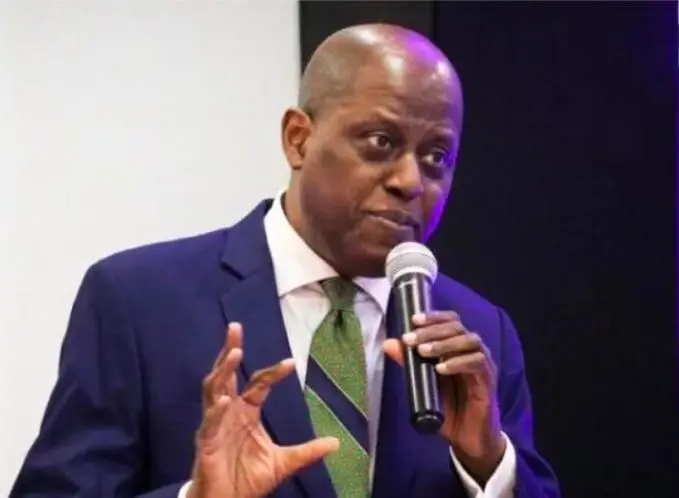
CBN Governor Olayemi Cardoso to Deliver Lecture on Innovation in Lagos, October 3

0

Lagos, Nigeria – The Governor of the Central Bank of Nigeria (CBN), Mr. Olayemi Cardoso, is set to deliver a keynote lecture in Lagos on Thursday, October 3, where he will highlight the role of innovation in driving Nigeria’s economic growth and financial stability.

The lecture, titled “Innovation as a Catalyst for Economic Transformation”, is expected to gather policymakers, industry leaders, academics, and financial experts at the Civic Centre, Victoria Island. According to the organisers, the event aims to foster dialogue on how Nigeria can harness technology, creativity, and forward-looking policies to address economic challenges and build sustainable growth.

Cardoso, who assumed office as CBN Governor in 2023, has consistently emphasised the importance of innovation in monetary policy, financial inclusion, and banking reforms. Under his leadership, the apex bank has pushed for measures to strengthen digital payments, support fintech growth, and expand access to credit for businesses and households.

In a statement ahead of the lecture, the CBN Governor noted that innovation is no longer optional but essential for Nigeria’s progress. “If Nigeria is to thrive in today’s competitive global economy, we must embrace innovation across every sector — from finance and technology to agriculture and manufacturing,” he said.

The lecture is expected to explore topics such as digital finance, the role of central banks in fostering innovation, public-private partnerships, and strategies for positioning Nigeria as a leader in Africa’s emerging knowledge economy.

Distinguished guests from the banking sector, technology firms, academic institutions, and government agencies are expected to attend, while discussions will also feature panel sessions with leading voices in finance, innovation, and entrepreneurship.

Analysts say the timing of the lecture is significant, as Nigeria continues to face inflationary pressures, currency volatility, and slow growth. Stakeholders will be keen to hear how the CBN plans to balance stability with innovation in shaping the country’s economic future.

The October 3 Lagos lecture is part of a wider series of engagements aimed at promoting policy dialogue and knowledge exchange between government institutions, the private sector, and the public.

EFCC Recovers N364.5bn, $326.5m and Secures 4,111 Convictions in One Year

0

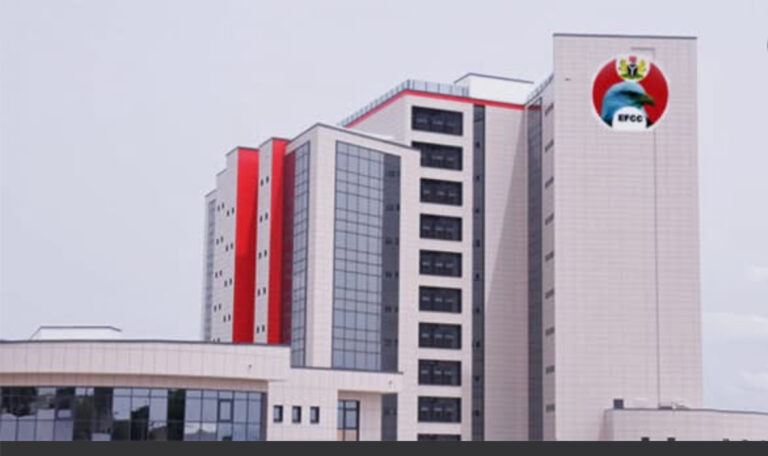
Abuja, Nigeria – The Economic and Financial Crimes Commission (EFCC) has disclosed that it recovered assets worth N364.5 billion and $326.5 million while securing 4,111 convictions between January and September 2025.

The announcement was made by the Acting Chairman of the Commission, Mr. Mohammed Hammajoda, during a briefing on the agency’s performance within the year under review. He said the achievements reflect the EFCC’s strengthened resolve to combat corruption, economic crimes, and financial malpractice across Nigeria.

According to Hammajoda, the recovered funds and secured convictions cut across cases of money laundering, internet fraud, contract fraud, illicit oil deals, and other forms of economic sabotage. He noted that a significant portion of the recoveries came from high-profile cases involving politically exposed persons, fraudulent public procurement practices, and illicit financial flows.

“The Commission has intensified its investigative strategies and strengthened inter-agency collaboration, which has contributed to the remarkable successes recorded this year,” Hammajoda stated. “Our goal is not only to secure convictions but also to ensure the restitution of stolen funds to the government and rightful owners.”

The EFCC boss added that the 4,111 convictions recorded represent one of the highest tallies in recent years, with many of the convicts being cybercrime offenders, popularly known as “Yahoo boys.” He emphasised that the Commission is determined to sustain the momentum and expand its operations to tackle new and emerging financial crimes.

Hammajoda also revealed that the Commission has invested in capacity building and digital forensic tools to improve its efficiency in investigating complex financial crimes. He called on Nigerians to support the EFCC’s anti-corruption drive by resisting the temptation of illicit practices and reporting suspicious transactions.

The announcement has drawn wide reactions, with anti-corruption advocates describing it as a positive step toward strengthening transparency and accountability in governance. However, some civil society groups have urged the EFCC to ensure that recoveries are properly accounted for and transparently managed to avoid recycling corruption.

Analysts believe the Commission’s performance will boost Nigeria’s credibility in international financial circles, particularly in relation to foreign investment and anti-money laundering compliance.

The EFCC has vowed to maintain its fight against corruption as a central mandate, stressing that the recovered assets would be channeled towards supporting national development initiatives.

Madagascar’s President Dissolves Government Amid Days of Protests

0

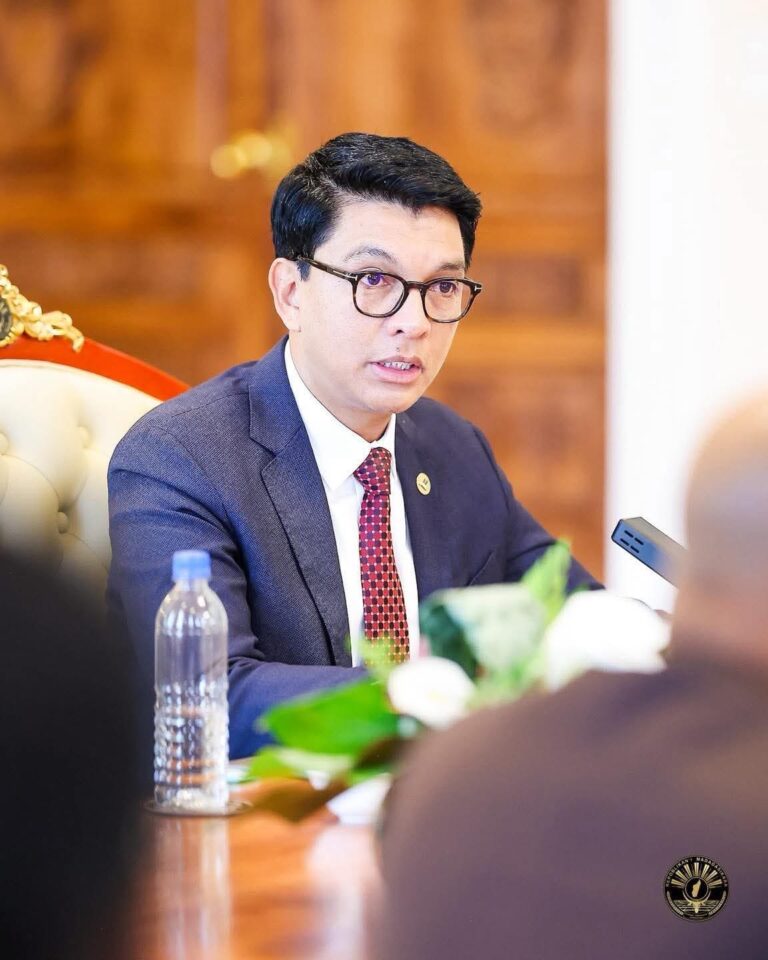
Antananarivo — Madagascar’s President Andry Rajoelina on Monday announced the dissolution of the government following several days of street demonstrations by citizens demanding political and economic reforms.

In a televised address, Rajoelina said the move was in line with Article 54 of the country’s Constitution and confirmed that the mandate of Prime Minister Christian Ntsay and his cabinet had been terminated.

“According to Article 54 of the Constitution, I have decided to terminate the duties of the Prime Minister and the government,” the president declared. “While waiting for the appointment of the new government, those in office will provide the interim.”

Rajoelina outlined a process for the formation of a new administration, stating that proposals for prime ministerial candidates would be received over the next three days. Once a prime minister is appointed, he explained, the incoming head of government would be given a timeframe to present a new cabinet.

The president said the new leadership must prioritize national development and the fight against corruption. He also invited Malagasy citizens at home and abroad to take part in the process.

“We will build a government that will work for the people and accelerate efforts to help the people,” Rajoelina said. “For those who want to serve the country, away from corruption, and who have the skills required to lead some ministerial departments, I invite you to apply and submit your CVs at the state palace of Ambohitsorohitra. There will also be an email and LinkedIn service for those living abroad.”

The announcement comes amid mounting discontent in the Indian Ocean nation, where demonstrations in recent days have reflected frustration over corruption, unemployment, and slow development. Critics have accused Rajoelina’s administration of failing to deliver on economic promises, while supporters argue that the government has faced global economic headwinds and political obstruction.

Political analysts say the dissolution signals both an attempt to respond to public pressure and a strategy to consolidate Rajoelina’s control ahead of future electoral contests.

It remains unclear who will be chosen to lead the new government, but the president’s decision to open applications publicly marks a rare approach in Madagascar’s political landscape.

South Africa: Julius Malema Convicted for Firing Rifle at Political Rally

0

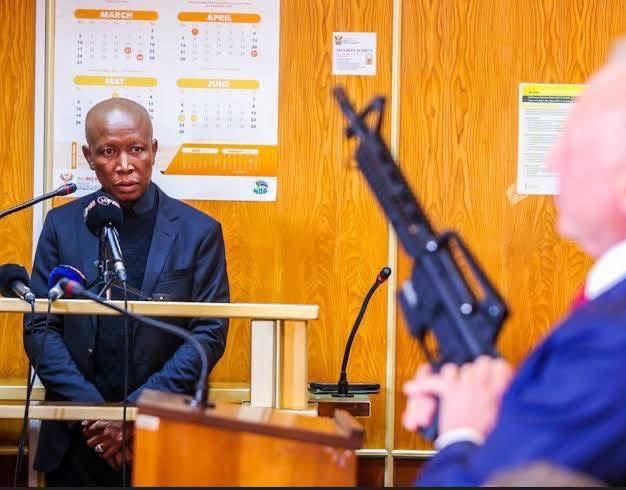
South African opposition leader Julius Malema has been convicted of violating the country’s firearm laws after a magistrate found him guilty on Wednesday for discharging a rifle during a political rally in 2018.

Malema, the head of the Economic Freedom Fighters (EFF), was charged under the Firearms Control Act following an incident at his party’s fifth-anniversary celebration in Mdantsane, Eastern Cape Province. Video footage from the event showed the politician firing several rounds into the air while addressing thousands of supporters, an act that quickly went viral and sparked public debate.

Alongside Malema, his former bodyguard, Adriaan Snyman, faced charges for allegedly supplying the weapon. However, Snyman was acquitted, prompting Malema to accuse the presiding magistrate, Twanet Olivier, of racial bias, claiming Snyman’s acquittal was due to his being white.

The case was initiated by Afriforum, a lobby group representing Afrikaner interests, which laid criminal charges against Malema soon after the 2018 incident. During the trial, Malema argued that the firearm seen in the footage was a replica or toy gun, a defense the court dismissed. Magistrate Olivier ruled that the evidence presented established that the weapon was a real firearm and that Malema had contravened the law.

The conviction marks a significant legal setback for Malema, a controversial figure in South African politics known for his fiery rhetoric and uncompromising stance on land reform and economic inequality. The EFF leader has previously faced multiple legal challenges, including cases involving incitement and corruption, though he has often framed these battles as politically motivated attempts to silence him.

Sentencing in the firearm case is expected to follow, though the court has not yet announced a date.

Malema and his party have not issued an official statement on the ruling, but his comments in court suggest that he intends to challenge both the verdict and what he perceives as institutional bias within South Africa’s justice system.

Nollywood at the Oscars: A Story of Missed Chances and Systemic Failure – Adesina Kasali

0

For the third time in five years, the Nigeria Official Selection Committee (NOSC) has issued the same dispiriting verdict to the world:

“We have nothing to offer. No film. No submission. No chance.”

This announcement, despite six Nigerian films being considered, is more than just a cautious artistic decision. It is a troubling admission of systemic failure. At a time when Nollywood claims to be evolving into a global force, this repeated retreat exposes how far behind we remain.

A Cycle of Disappointment

The NOSC was established to select Nigeria’s official entry for the Academy Awards’ Best International Feature Film category. Its role is to ensure that Nigerian cinema is represented on the most prestigious stage in world cinema. Yet, almost every year, the committee has left us disillusioned.

• In 2019, Nigeria made its first Oscar submission with Genevieve Nnaji’s Lionheart. The film was disqualified for not meeting the Academy’s non-English dialogue rule, a controversy that could have been avoided with proper preparation.

• In 2020, The Milkmaid was accepted but failed to progress beyond the preliminary stage.

• In subsequent years, bold and ambitious films like CJ Obasi’s Mami Wata and the Hausa epic Mai Martaba were either submitted and rejected or sidelined by the committee.

• Now, in 2025, six films were considered, but the committee concluded that none had the “creative and technical depth” to compete globally.

This recurring pattern has become a symbol of stagnation rather than progress.

The Deeper Problem: A Structural Deficit

It is easy to blame the committee, but the truth runs deeper. Nigerian filmmakers often aspire to global recognition without the infrastructure to support it. We speak of “technical depth” and “global standards,” yet few steps are taken to build them.

Training and Mentorship: How many structured programs exist to train Nigerian filmmakers in advanced editing, sound design, cinematography, and post-production? Too few to count.

Investment in Infrastructure: How many studios in Nigeria can deliver the level of quality demanded by the Academy? Most filmmakers still outsource key processes abroad.

Strategic Campaigning: An Oscar run is not just about the film itself; it requires lobbying, publicity, and networks with distributors and international partners. Nigeria has not built these alliances in any consistent way.

What we are witnessing is not just artistic hesitation. It is the result of years of underinvestment in the structures that make world-class cinema possible.

Why the Oscars Matter

Some argue that Nollywood does not need the Oscars to validate its success. While it is true that Nigerian films enjoy wide popularity at home and in the diaspora, the global stage offers more than prestige.

An Oscar presence affirms credibility. It signals that Nigerian stories can meet international benchmarks of storytelling, technical polish, and cultural resonance. It opens doors for global partnerships, co-productions, and distribution opportunities.

By repeatedly withdrawing from the race, we are telling the world that Nigerian cinema is not ready to compete. That narrative, if left unchallenged, risks cementing a reputation of mediocrity.

The Way Forward

This cycle can be broken, but only through deliberate action. Nigeria needs to treat global cinema as a serious industry, not a hopeful lottery.

1. Structured Development Programs: Government, guilds, and private investors must fund consistent mentorship schemes to elevate technical and artistic skills.

2. Post-Production Investment: Cutting-edge facilities for editing, sound, color grading, and visual effects must be built and sustained locally.

3. Oscar Campaign Infrastructure: Partnerships with international distributors, festival curators, and PR strategists must be established so our films are not abandoned after submission.

4. National Film Policy: A cultural policy that prioritizes global competitiveness in cinema should back Nollywood the same way countries like South Korea, India, and Mexico have supported their industries.

Conclusion

In my own conclusion,the repeated declaration of “no film” should no longer be accepted as routine. It is not just an artistic judgment; it is a reflection of systemic neglect.

Nigeria has the stories, the talent, and the ambition. What it lacks is structure. Until that gap is addressed, Nollywood will remain a giant at home but a hesitant participant abroad.

If Nigerian cinema truly desires to stand tall on the world stage, then the time for excuses has passed. We must build the systems that ensure our best films do not just exist, but excel. Only then will the NOSC have no choice but to say yes.

Written by: Adesina Kasali

Nigeria @ 65: Atiku’s Aide Dismisses Tinubu’s Independence Speech as “Empty Promises”

0

Abuja – Phrank Shaibu, Special Assistant on Public Communication to former Vice President Atiku Abubakar, has faulted President Bola Ahmed Tinubu’s Independence Day broadcast, describing it as a speech filled with “empty promises” and out of touch with the realities faced by ordinary Nigerians.

In a statement issued on Wednesday, Shaibu criticised the President’s address delivered to mark Nigeria’s 65th Independence Anniversary, arguing that the administration’s claims of progress in the economy, infrastructure, and social welfare were far removed from the daily struggles of citizens grappling with inflation, unemployment, and insecurity.

According to him, while Tinubu spoke about reforms, youth empowerment schemes, and disbursement of welfare funds, the lived experience of most Nigerians reflected rising food prices, inadequate power supply, and worsening poverty levels.

“President Tinubu’s broadcast was nothing more than empty rhetoric,” Shaibu said. “Nigerians do not need speeches, they need relief. Families are hungry, businesses are suffocating, and our young people are leaving the country in droves because they see no future here.”

He accused the government of pursuing policies that have worsened hardship, citing the removal of fuel subsidies and exchange rate unification as reforms that triggered inflation and eroded purchasing power without corresponding safety nets.

Shaibu further alleged that despite promises of transparency and efficiency, the Tinubu administration had failed to provide clear accountability on funds claimed to have been disbursed to vulnerable households.

The opposition aide urged the government to prioritise practical measures that directly ease the burden of Nigerians, rather than what he described as “grand declarations designed for optics.”

The Presidency has yet to issue an official response to Shaibu’s criticism, but government officials have consistently maintained that current reforms, though painful in the short term, are necessary to reposition the economy and secure a more prosperous future.


President Tinubu: Nigeria’s Best Days Ahead as Nation Marks 65th Independence Anniversary

0

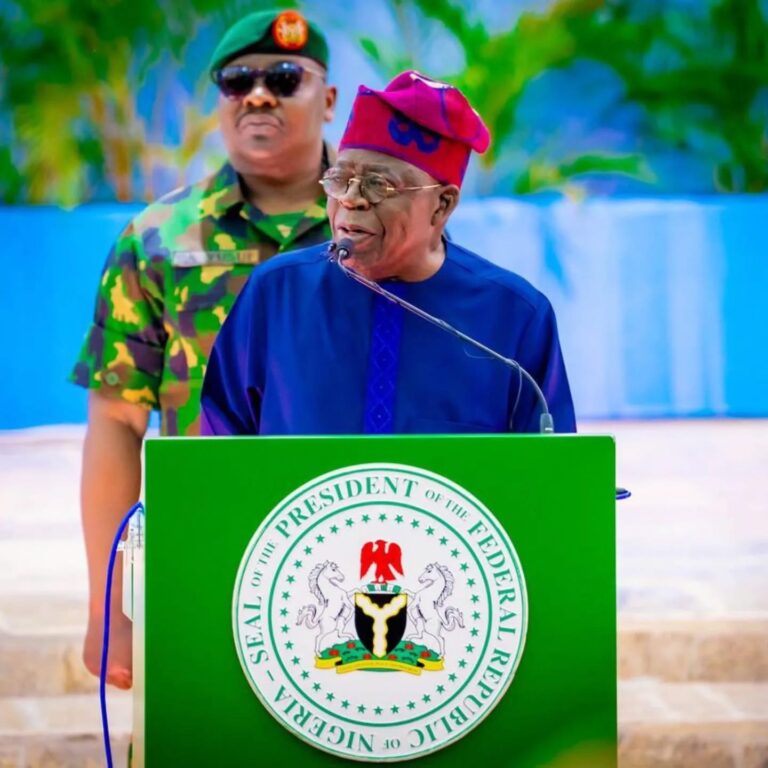
Abuja – President Bola Ahmed Tinubu on Wednesday led the nation in commemorating Nigeria’s 65th Independence Anniversary, paying tribute to the sacrifices of the country’s founding fathers and reaffirming Nigeria’s place as the beacon of hope for the black race.

In a nationwide broadcast, the President reflected on Nigeria’s journey since 1960, acknowledging strides made in education, healthcare, infrastructure, and economic growth. He noted, however, that the nation has also endured trials including civil war, years of military rule, and political upheavals.

Since taking office in May 2023, Tinubu said his administration has pursued far-reaching reforms to reset the economy. He cited the removal of fuel subsidies, unification of exchange rates, and reallocation of funds to priority sectors such as education, healthcare, infrastructure, and social welfare. Despite initial hardship, he assured Nigerians that “the worst is over,” pointing to signs of recovery in key economic indicators.

On infrastructure, the President outlined ongoing expansion of rail networks, federal highways, ports, and airports aimed at unlocking trade and investment. He highlighted social protection measures, including the disbursement of ₦330 billion to eight million vulnerable households, as well as new youth-focused initiatives such as the Nigerian Education Loan Fund (NELFUND), Credicorp, YouthCred, and the iDICE programme designed to empower young entrepreneurs.

Tinubu also addressed the nation’s security challenges, declaring that steady gains have been recorded in the fight against terrorism and banditry. He credited the armed forces for recent successes that, according to him, have restored confidence in affected communities.

While acknowledging that his policies have brought short-term pain, the President maintained they are essential to building a more self-reliant and prosperous nation. He urged Nigerians to embrace productivity, innovation, and patronage of local goods, stressing that the real measure of progress will be seen in food security, quality education, stable electricity, and sustained national security.

“Together, we shall overcome our challenges,” Tinubu said, expressing optimism that Nigeria’s 65th anniversary marks the beginning of a new era of resilience and renewal.

President Tinubu: 153,000 Nigerians Benefit from ₦30bn Credicorp Loans

0

Abuja – President Bola Ahmed Tinubu has announced that 153,000 Nigerians have so far benefitted from the ₦30 billion released under the Presidential Conditional Grant Scheme, better known as Credicorp.

The President made this disclosure during his nationwide broadcast to mark Nigeria’s 65th Independence Anniversary on Wednesday. He said the initiative, launched as part of his administration’s economic reforms, was designed to support small businesses, traders, artisans, and young entrepreneurs across the country.

According to Tinubu, the Credicorp programme represents a deliberate effort to cushion the impact of recent economic adjustments while promoting self-reliance and job creation. He explained that the disbursements, made through digital platforms, were targeted at Nigerians with viable business ideas but limited access to conventional loans.

“Already, over 153,000 of our citizens have received direct support through ₦30 billion Credicorp loans,” the President said. “This is a clear demonstration of our commitment to empower hardworking Nigerians, stimulate enterprise, and strengthen the productive sector of our economy.”

He noted that the scheme complements other youth-focused programmes, including the Nigerian Education Loan Fund (NELFUND), YouthCred, and the iDICE initiative, which collectively aim to expand access to finance, technology, and skills development.

Tinubu stressed that while the reforms of his administration have imposed temporary hardships, initiatives like Credicorp were proof that government resources are being redirected to benefit the people directly. He urged beneficiaries to use the funds responsibly, reinvest in their businesses, and create opportunities for others.

“With Credicorp, we are laying the foundation for a stronger small and medium enterprise sector that will drive economic growth and lift millions out of poverty,” he said.


Gateway Airport to Commence Direct Flights to Abuja from October 7

0

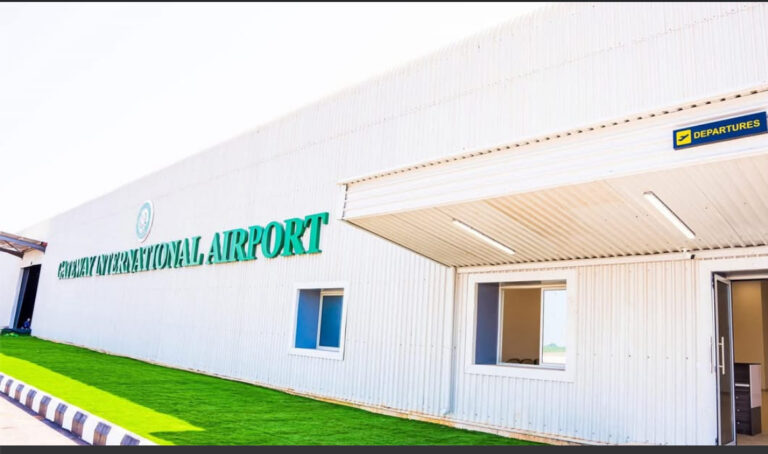
Abeokuta – The Ogun State Government has announced that the Gateway International Agro-Cargo Airport will begin direct passenger flights to Abuja on Tuesday, October 7, 2025.

The disclosure was made in a statement issued on Wednesday by the state’s Commissioner for Information, who described the development as a major milestone in the government’s aviation and economic agenda.

According to the statement, the inaugural flight from the Gateway Airport in Iperu, Ikenne Local Government Area, to the Nnamdi Azikiwe International Airport, Abuja, will mark the start of regular scheduled services connecting the state directly with the Federal Capital Territory.

Governor Dapo Abiodun hailed the launch of Abuja flights as “a landmark achievement” for Ogun State, noting that the facility was conceived to boost both passenger and cargo traffic, stimulate investment, and strengthen the state’s position as a key logistics hub in Nigeria.

“The commencement of direct flights from our airport to Abuja is not only about convenience for our people but also about opening up new economic opportunities, enhancing trade, and projecting Ogun as an investment destination,” the Governor said.

Aviation officials explained that the airport, which has already recorded test flights and received relevant approvals, is now fully ready for commercial operations. They added that plans are underway to expand routes to other Nigerian cities and eventually international destinations.

The Gateway Agro-Cargo Airport, commissioned in 2024, was designed as a dual-purpose facility for both cargo and passenger services. Government officials believe it will significantly reduce travel time for residents and businesses in Ogun and neighboring states, while also serving as a hub for agricultural exports.

Flight schedules, ticket sales, and operational details are expected to be released in the coming days by the designated airline partners.


U.S. Embassy in Nigeria Suspends Social Media Updates as U.S. Government Shutdown Takes Effect

0

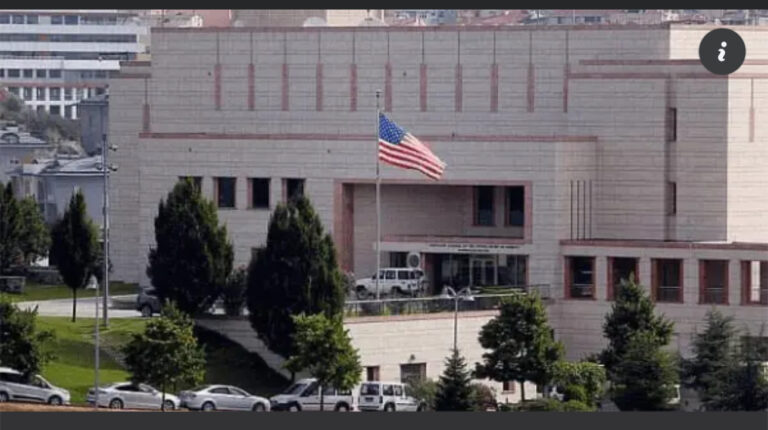
Abuja — The United States Embassy in Nigeria has announced the suspension of its social media updates following the partial shutdown of the U.S. government.

In a notice issued on Tuesday, the Embassy explained that the measure was in line with directives from Washington and would remain in effect until the government resumes full operations.

“Due to the lapse in appropriations, this account will not be updated regularly,” the Embassy stated on its official platforms before halting activity. It added that only urgent and emergency messages would be shared during the shutdown period.

The suspension of routine social media updates means that Nigerians who rely on the Embassy’s official handles for consular announcements, visa information, cultural events, and travel advisories will have limited access to updates for the time being.

While the Embassy has assured that essential services such as consular assistance for U.S. citizens and emergency visa processing will continue, observers note that the pause in communication could slow public access to information, particularly for applicants and travellers.

Government shutdowns in the United States occur when Congress fails to pass budget appropriations to fund federal agencies. In such cases, non-essential services, including public communication functions, are temporarily halted.

This development places the U.S. mission in Nigeria among many American diplomatic posts worldwide adjusting their operations until the funding impasse is resolved in Washington.