Home Blog Page 76

Sowore Rejects Trump’s Reported Threat of Military Action in Nigeria, Warns Against Foreign Interference

0

Sowore Rejects Trump’s Reported Threat of Military Action in Nigeria, Warns Against Foreign Interference

By Ranks Africa News Desk

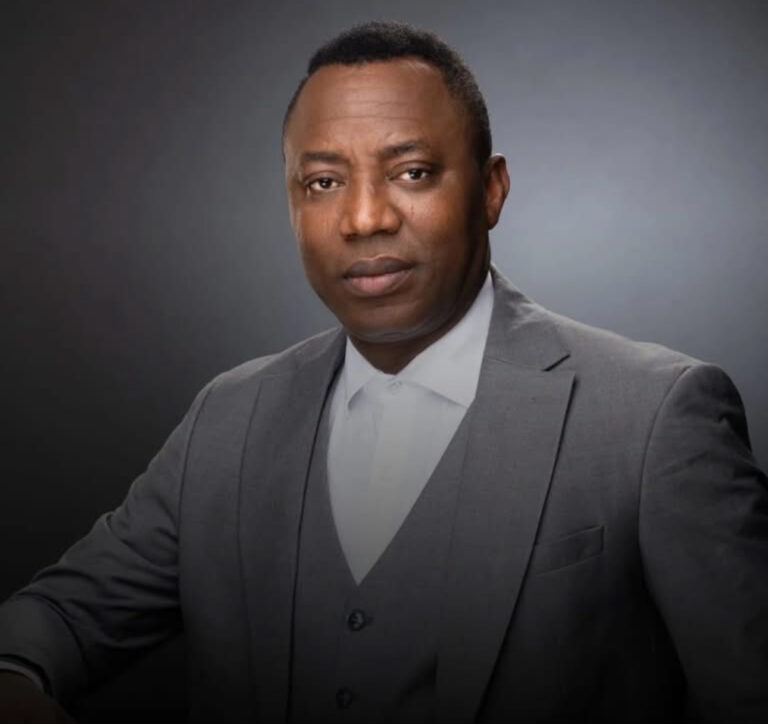
Human rights activist and pro-democracy advocate Omoyele Sowore has voiced strong opposition to reports of a statement by U.S. President Donald Trump, suggesting possible military intervention in Nigeria under the guise of protecting Christians.

Taking to his official X handle, Sowore cautioned that such foreign involvement has historically deepened instability and chaos in nations where it was supposedly intended to “restore order” or “protect rights.” He cited examples from the Middle East and Africa, warning Nigerians not to be swayed by rhetoric that could undermine national sovereignty.

“Foreign military action has never brought stability anywhere—it only creates more suffering,” Sowore wrote. “Nigeria’s problems can’t be solved by outside powers. True change must come from within—through responsible leadership and accountability.”

Sowore emphasized that while the protection of all citizens, regardless of faith, remains vital, sustainable progress must emerge from domestic reforms, not external pressure or intervention.

His statement comes amid rising diplomatic tension between Abuja and Washington, following the U.S. government’s recent designation of Nigeria as a “Country of Particular Concern” over alleged religious persecution.

The activist’s comments echo a broader sentiment among civil society voices calling for homegrown solutions to Nigeria’s political and security challenges rather than reliance on foreign powers.

As the debate intensifies ahead of President Tinubu’s planned visit to Washington for high-level talks, Sowore’s warning underscores the delicate balance between defending human rights and preserving national sovereignty in Nigeria’s evolving international relations.

President Tinubu Set for High-Level Talks with US Officials Amid Growing Diplomatic Tensions

0

President Tinubu Set for High-Level Talks with US Officials Amid Growing Diplomatic Tensions

By Ranks Africa News Desk

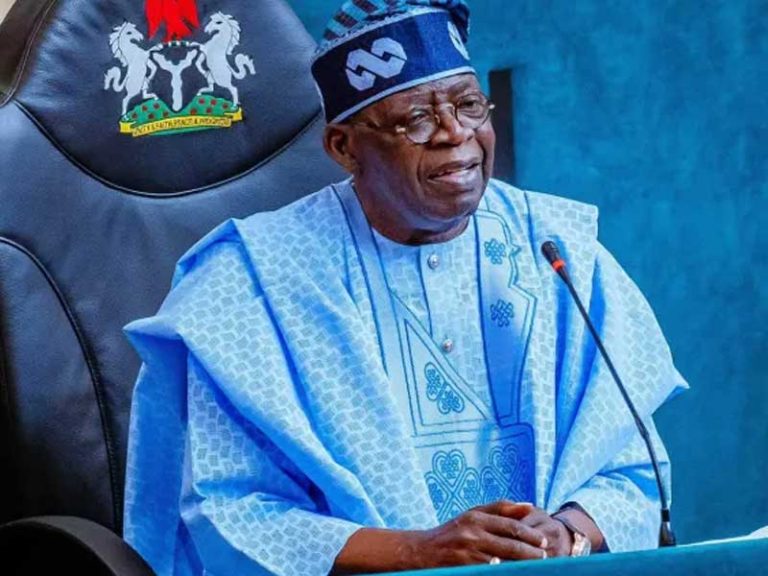
President Bola Ahmed Tinubu is set to embark on a critical diplomatic mission to the United States on Tuesday, for high-level discussions with senior American officials. The visit, according to presidency sources, seeks to ease escalating tensions between Abuja and Washington following recent allegations and policy moves by the US government.

The talks are expected to center on allegations of widespread persecution of Christians in Nigeria and reported threats of possible military intervention made by US President Donald Trump. President Tinubu will meet with US Vice President JD Vance, who has been officially designated to lead the discussions on behalf of President Trump.

The meeting, insiders say, will focus on strengthening bilateral cooperation in counter-terrorism, regional stability, and global security. Both nations are also expected to review existing partnerships under the US–Nigeria Strategic Dialogue framework and explore new areas of collaboration, particularly in defense, energy, and governance reforms.

Tensions between Nigeria and the United States reached a new height after President Trump announced Nigeria’s designation as a “Country of Particular Concern,” citing alleged attacks on Christian communities. The move drew strong reactions from Abuja, with President Tinubu firmly rejecting the classification, stressing that Nigeria’s Constitution guarantees full religious freedom for all citizens.

The Nigerian leader has consistently maintained that his administration engages both Christian and Muslim leaders across the federation, and that the government is taking concrete steps to combat security threats affecting Nigerians of every faith.

Analysts say the upcoming talks could mark a turning point in Nigeria–US relations. A diplomatic resolution may reaffirm Washington’s commitment to Nigeria as a key partner in West Africa, while a breakdown could strain long-standing security and economic cooperation between the two countries.

As the world watches closely, the outcome of this meeting will not only determine the future direction of bilateral relations but may also influence how both nations navigate faith-based tensions, foreign policy priorities, and global peace efforts in the months ahead.

Potential Implications of President Trump’s Threat of Military Action

If President Trump’s threat of military intervention were to materialize—or even persist rhetorically—it could trigger a severe diplomatic crisis between Nigeria and the United States.

  • Economic impact: Nigeria could face sanctions or reduced foreign investment if diplomatic channels collapse.
  • Security cooperation risks: Joint counter-terrorism programs, intelligence sharing, and military aid could be suspended.
  • Regional instability: Any direct or indirect US military move would destabilize West Africa’s fragile security balance.
  • Diplomatic isolation: Nigeria might pivot toward alternative allies, including China or Russia, further reshaping global power alignments in Africa.

For now, all eyes remain on Washington, as President Tinubu’s visit could determine whether the two nations move toward renewed partnership—or deeper confrontation.

A Call for Caution: Why Foreign Military Intervention in Nigeria Would Do More Harm than Good

0

I have observed with keen interest Nigerians discuss the possibility of U.S. military intervention in Nigeria. The excitement by some is unfortunately ignorantly conceived as a solution to the killings by the extremist group.

it is essential to consider the dire consequences of such a decision, particularly for ordinary Nigerians.
History has shown that military invasions often exacerbate chaos rather than restore order, as evidenced by the turmoil in Libya and Iraq. These nations, once relatively stable, now grapple with widespread violence and instability following foreign interventions.

While the ongoing violence against Christians in Nigeria is a grave concern, it is crucial to recognize that extremist groups also threaten Muslim communities, as well as traditional worshippers and secular individuals. The root of the problem lies not in religious differences, but in the rise of violent extremists who exploit societal fractures.

The Nigerian Federal Government must take decisive action to combat these groups, demonstrating a commitment to justice and security for all citizens. A robust approach that emphasizes law enforcement, community engagement, and socioeconomic development is necessary. This strategy will help address the underlying issues without further aggravating an already volatile situation.

In short, intervention may seem like a solution, but more thoughtful, locally driven efforts are vital to securing a peaceful and united Nigeria. Let’s urge restraint and support the Nigerian people in their fight against extremism.

Fidelis Duker is a Filmmaker and Media Practitioner who writes from Abuja

Acts of Genocide Hidden in Plain Sight: Examining Targeted Violence in Nigeria and the United States

0

Genocide is defined as “the crime of intentionally destroying a part or all of a national, ethnic, racial or religious group by killing people or by other methods”. By this definition, there are acts of genocide in Nigeria; and even in the United States of America, where they are euphemistically labeled hate crimes .

In Nigeria , those who currently perpetrate these acts of genocide are in four categories. First, the local and invading foreign terrorists from the sahel region of Africa who are engaged in a war with the Nigerian State, fighting to establish what they call an “Islamic State”. It must, however, be noted that these terrorists kill Christians and Muslims indiscriminately.

The second category is that of muslim fanatics, islamists and jihadists who are extremist fringes of islamic groupings in Nigeria who favour a full blown implementation of sharia law. These fringe elements seize on protests , riots, religious upheavals and periodic alleged desecration of the name of the Holy Prophet to kill, maim and destroy places of worship .

The third category is that of ethnic expansionist, territory annexationists, conquerors and settlers who use the pretext of intenerant pastoralism to grab greener pasturelands from local populations and indigenous communities. This category also has a bi-category of ethnic armies who are organized to defend the local groups and populations against armed invasions and pillages

The fourth category is that of ethnic militias and bandits , including separatist groups that are clamouring for secession.

Apart from these identified categories, there are bandits and criminal gangs engaged in kidnappings in many parts of Nigeria and collecting huge ransom payments.

What is the best way to respond to the foreign threat to militarily invade Nigeria to protect “ Christians”, based on allegations of anti-Christian genocide ?

The Federal Government of Nigeria has failed in putting a stop to these acts of genocide and unwarranted killings. The government has been negligent ; and in some cases government functionaries have been found to engage in acts of sabotage, collusion and connivance .

As a matter of urgency, the Government of the Federation must comprehensively restructure the internal security and defence system in Nigeria by sharing policing and internal security powers with local governments and States to enable them defend, in real time, their peoples and lands against bandits, terrorists, separatists, “Islamists” and marauders, who are using the facade and pretext of ethnic nationalism and itinerant pastoralism, to kidnap , kill, expropriate and subjugate local populations and indigenous communities. In this regard , it is silly for the FGN to create another national, centralized, agency called the National Forest Guard ( to be constituted based on federal character and quota system by way of recruitment, and to be composed, organized and deployed like the current police force , relying on interstate personnel posting ), which is handed over to a National Security Adviser Office. This is repeating past mistakes . Let the people of every state protect and defend their state.

Under this restructured internal security and defence system , a federal police and rejuvenated military force will coexist with the local governments and state governments police formations in the country.

A final end must be put to intenerant pastoralism in Nigeria . Cattles must be confined to states of origins of cattle owners and herdsmen, where they can receive support from government for grazing and ranch development. Interstate, crops and farms destroying marches in the name of exercising right to freedom of movement and right to residency in any part of Nigeria, open grazing and the antediluvian grazing routes , steeped in stone- age primitivism, must be prohibited.

The FGN should sincerely wage a full throttle war against all terrorists and bandits in all parts of the country. Dubious “ peace accords “ with implacable terrorists should be discarded forthwith.

Pusillanimous diplomacy and placatory genuflections are not the right propitiation to a man who thinks he is the emperor of the universe. Raising a team to his palace in Washington to engage him diplomatically will bring nothing but a televised national humiliation for any such unfortunate delegation. A mind fixated on scooping petroleum, gold , lithium et cetera on a disproportionate scale , as cost of funding his imagined military invasion to save his Christian brethren, would not be dissuaded from his arrogant messianism by such a visit. The sin of refusal to accept into Nigeria Venezuelan deportees from America cannot be forgiven by such a visit .

The best response by Nigeria is to immediately reorganize itself to ensure that lives and property are secure within our borders, that lives of innocent citizens are no longer wantonly wasted, and that religious liberty is not only guaranteed in our Constitution but also lived as our daily experience.

For those who are desperate for the Nigerian revolution , or who desire regime change , who have engaged in unbridled cyber jubilation, thinking that an armed invasion by this foreign government will precipitate change , let us be clear, what you are courting is chaos and unmitigated humanitarian crisis .

And for those Nigerians who have been praying for the disintegration of Nigeria, who see the man’s threatened intrusion as a God-sent opportunity for the actualization of an oodua nation, arewa republic or state of Biafra, let it be stated that while the man’s action may throw Nigeria into a state of pervasive internecine and fratricidal war , there will be no clinical secession by default , or seamless partition of Nigeria into ideal independent states. No. While the biggest black country on earth would be facing destruction, your separatist dreams would remain unfulfilled. And in case you do not know , in the face of such an invasion , you may be regarded as an enemy domestic , tried for treason , treasonable felony or aiding the enemy, and dealt with harshly , in accordance with the law

OPay hosts Empowering Futures Conference, launches ₦1.2 billion scholarship to 420 Nigerian students

0

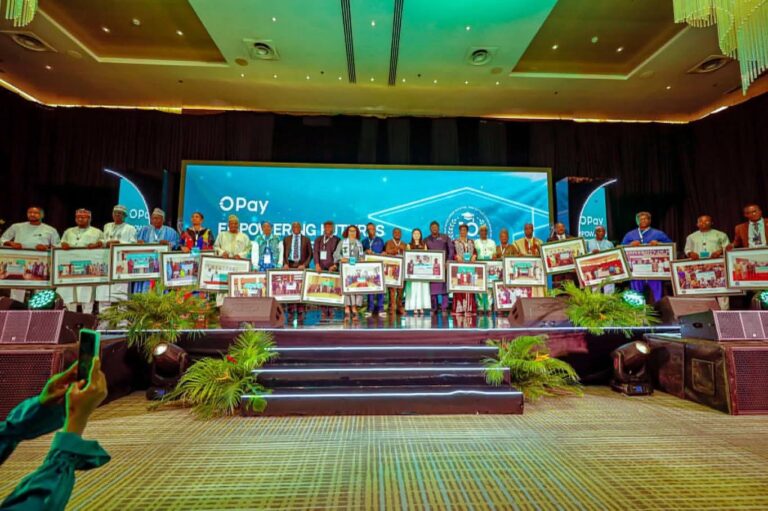
Leading Fintech firm, OPay Digital Services Limited, has reaffirmed its dedication to supporting Nigerian youth by organizing the “Empowering Futures Conference 2025” in Lagos and unveiling a ₦1.2 billion university scholarship program.

The event took place on Friday, October 31, at the Lagos Marriott Hotel in Ikeja.

It was attended by academics, tech experts, and notable celebrities like Tunde Onakoya, Nancy Isime, Enioluwa Adeoluwa,  Stan Nze, Layi Wasabi, Tania Omotayo, Kiekie, Ebuka Uchendu, and many others.

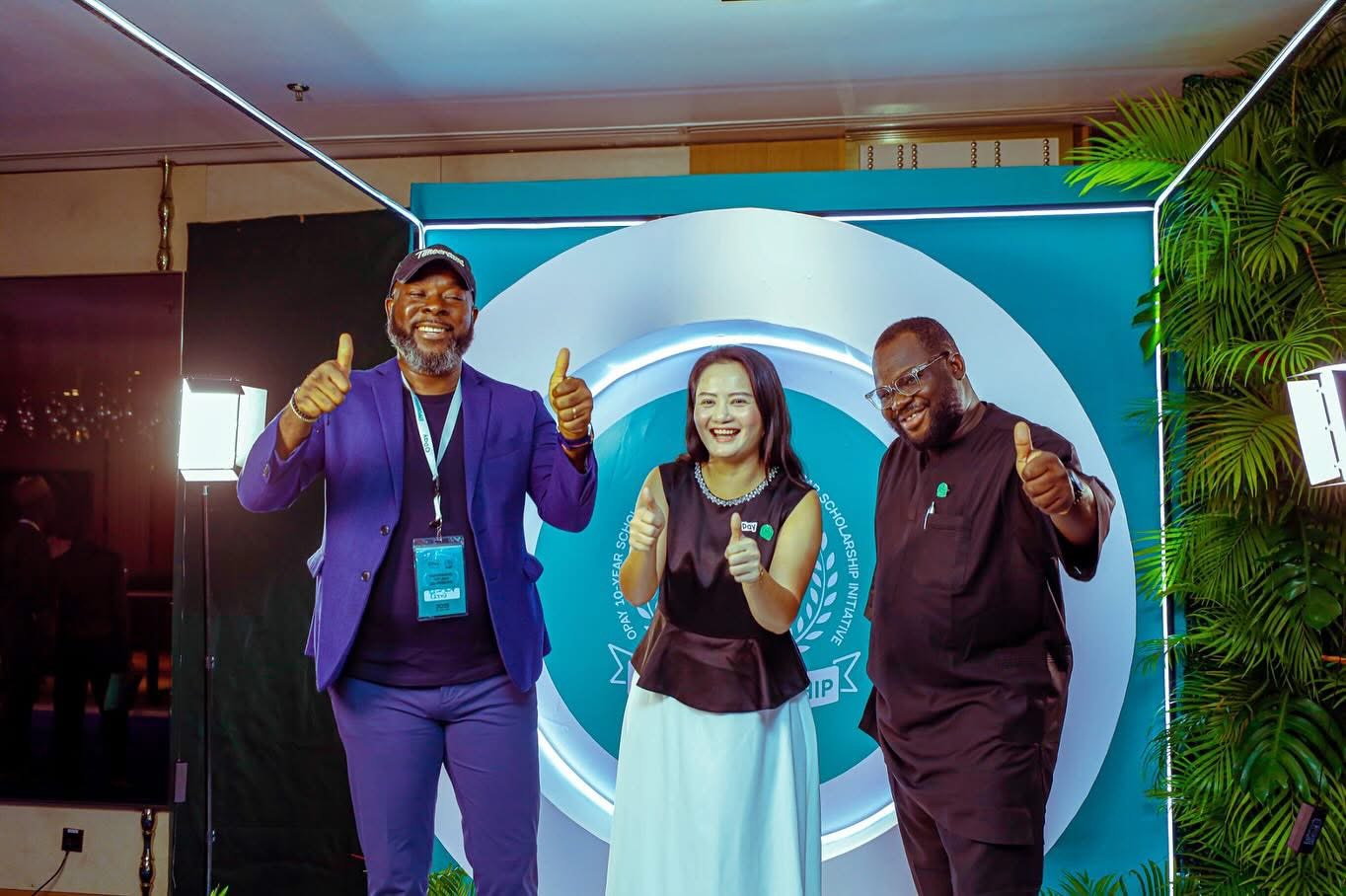
During the event, OPay unveiled several programs under its Corporate Social Responsibility agenda. Among them is the ₦1.2 billion, 10-year scholarship program developed in partnership with Nigerian universities.

Executive Director and Chief Commercial Officer of OPay Nigeria, Elizabeth Wang, disclosed the 10-year ₦1.2 billion Corporate Social Responsibility scholarship plan.

The scholarship aims to sponsor 420 students each year across 20 universities in all six geopolitical zones of Nigeria, offering financial assistance for tuition, accommodation, and essential study materials.

Institutions that were recipients of the grants included the Ahmadu Bello University, University of Ibadan; Obafemi Awolowo University; University of Ilorin; Federal University of Technology, Minna; Benue State University; University of Calabar; Olabisi Onabanjo University; and Bayero University.

Others were the Kwara State Polytechnic; University of Abuja; University of Uyo; Ambrose Alli University; Nasarawa State University; University of Maiduguri; Federal University of Health Sciences, Bauchi;  University of Jos;  University of Nigeria, Lagos State University; and the Federal Polytechnic, Nekede.

Additionally, the company introduced the CyberLab Project, a digital skills initiative focused on establishing innovation labs in universities nationwide to foster tech-driven learning and creativity.

King Charles Strips Prince Andrew of Remaining Titles, Orders Him to Leave Royal Lodge

0

King Charles Strips Prince Andrew of Remaining Titles, Orders Him to Leave Royal Lodge

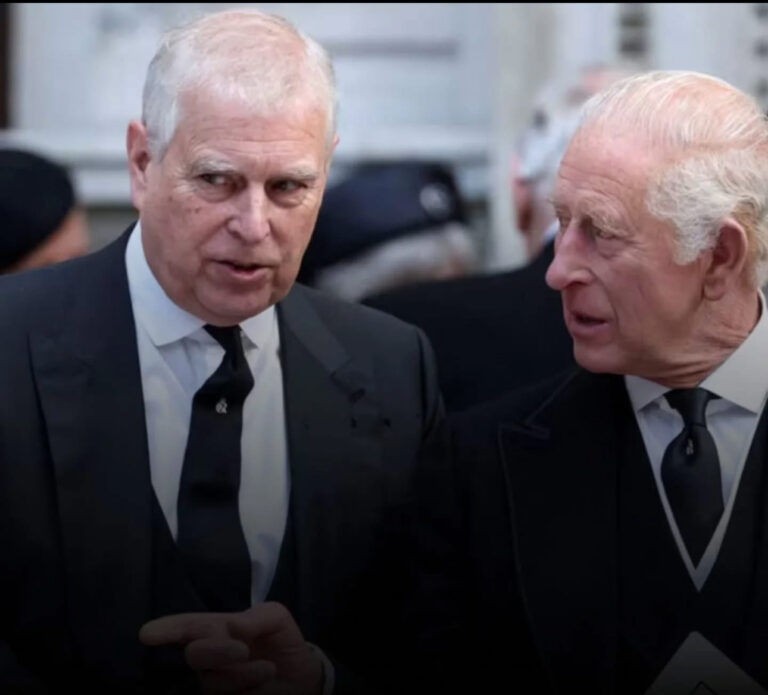
Buckingham Palace has confirmed that King Charles III has formally removed Prince Andrew’s remaining royal titles and directed him to vacate his residence at the Royal Lodge on the Windsor Estate.

The move comes amid renewed public scrutiny surrounding Prince Andrew’s past association with the late U.S. financier and convicted sex offender Jeffrey Epstein. Although the Duke of York continues to deny all allegations linked to the controversy, the decision marks the latest step in the royal family’s effort to distance itself from the ongoing fallout.

According to the Palace statement, Prince Andrew will relocate to a private residence on the Sandringham Estate, a property also owned by the royal family.

This latest development follows previous disciplinary measures taken against the Duke, including the withdrawal of his public duties and the loss of his honorary military titles in 2022. The Palace reiterated that the King’s decision aligns with his broader commitment to maintaining the integrity and accountability of the monarchy.

Federal Government Launches Nationwide ‘Tax Reform Challenge’ for Students

0

The Federal Government of Nigeria has officially launched the Tax Reform Challenge, a nationwide competition aimed at engaging students across tertiary institutions in creative discussions surrounding the country’s ongoing tax reform initiatives.

The announcement was made on Friday by Taiwo Oyedele, Chairman of the Presidential Committee on Fiscal Policy and Tax Reforms, via his official X (formerly Twitter) handle.

According to Oyedele, the competition is designed to raise public awareness, promote tax education, and encourage youth-led dialogue on Nigeria’s evolving fiscal landscape. He noted that the initiative aligns with the committee’s broader vision of fostering transparency, accountability, and inclusiveness in tax policy development.

“The goal is to deepen public understanding of the new tax framework while giving young Nigerians a voice in shaping fiscal reform discussions,” Oyedele stated. He emphasized that students will be encouraged to propose innovative ideas and practical solutions that can improve tax administration and enhance revenue generation without stifling business growth.

The Tax Reform Challenge will reportedly feature essay submissions, debates, and creative presentations, with prizes and recognition for outstanding participants. It forms part of the committee’s ongoing efforts to bridge the communication gap between policymakers and citizens, especially the younger demographic that represents Nigeria’s future workforce and taxpayers.

Further details on participation guidelines, eligibility, and submission timelines are expected to be released in the coming days through the committee’s official communication channels.

Tanzania’s Samia Suluhu Hassan Wins Second Term Amid Deadly Protests and Opposition Crackdown

0

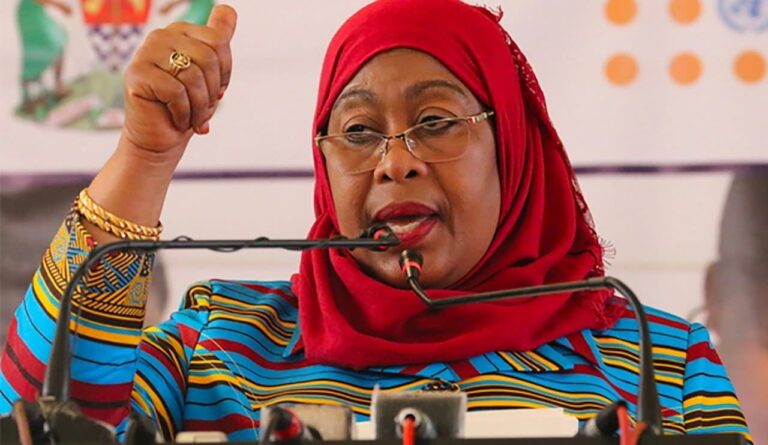
Tanzania’s National Electoral Commission has declared President Samia Suluhu Hassan the winner of the country’s presidential election, granting her a second term in office with nearly 98 percent of the vote.

The landslide victory, however, has been marred by widespread unrest and accusations of repression. Several of Hassan’s main challengers were either jailed or disqualified ahead of the polls, fueling allegations from opposition parties that the election was neither free nor fair.

Since Wednesday, violent protests have erupted across major cities, with opposition groups claiming that hundreds of people have been killed by security forces. Multiple foreign diplomats have described the reports of mass casualties as credible, though the Tanzanian government has yet to release any official figures or confirm fatalities.

Hassan, who first became president in 2021 following the death of John Magufuli, campaigned on a platform of stability and economic growth. Her ruling party, Chama Cha Mapinduzi (CCM), has maintained an unbroken grip on power for more than 60 years, making it one of Africa’s longest-ruling political movements.

International observers have expressed concern over the conduct of the vote and the escalating violence, warning that Tanzania’s democratic credibility may be at risk unless transparency and accountability are restored in the post-election process.

How Nigerian Fintech Founder Sulaiman Adewale Turned a Personal Struggle into Xara — a WhatsApp-Based Payment Innovation Bringing Simplicity to Everyday Transactions

0

When Sulaiman Adewale sat at the supermarket checkout feeling the blur of numbers on a print-out—his short-sightedness making a routine payment stumble—he didn’t just shrug. He began building a payment system aimed at removing that friction. “My short-sightedness was the trigger,” Adewale says, adding that the real thrust behind the idea was simple: accessibility and convenience.

From frustration to solution: building for everyone

Adewale’s starting point was this: many people find digital payments harder than they need to be—not because they aren’t smart, but because the tools assume too much. He says: “I started working on Xara because I wanted a very simple payment system that works even for people who are not very tech-savvy.”

And when it came to where that system should live, he didn’t over-engineer it: “My approach wasn’t about marketing strategy. Built on WhatsApp wasn’t because it was trendy—it was common sense. WhatsApp is the platform where almost everybody is already.” He emphasises: “I’m a proponent of taking technology to the people. I don’t want people to have to download anything unless they have to. The people I believe would love this product are already there.”

What Xara is and how it works

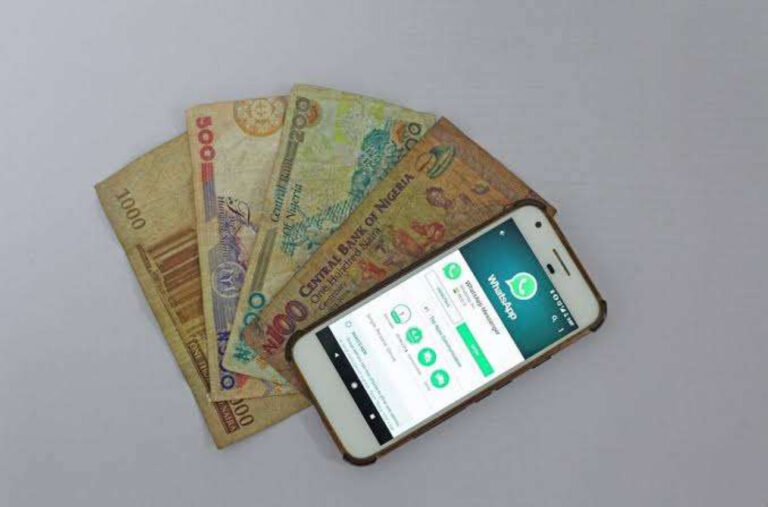
Launched in June 2025, Xara is a WhatsApp-based AI-powered assistant that allows users in Nigeria to send money, pay bills and manage transactions simply by chatting.  Instead of switching apps, navigating menus or forms, users send natural-language text or voice commands in the WhatsApp chat with Xara. It even supports images (for example snapping an account number) and voice notes.  The bot currently understands English and Nigerian Pidgin; local languages like Hausa and Yoruba are on the roadmap.  To get started, a user adds Xara’s WhatsApp number, completes onboarding, receives a virtual account number via partner bank (for example 9 Payment Service Bank), links a funding source and all done. 

Early traction and significance

Within weeks of its launch, Xara registered thousands of users and processed significant volume: over ₦135 million (≈ USD 88,200) within its first two weeks.  The platform reports tens of thousands of registered users and thousands of daily active users.  What the metrics hint at is less about flashy growth and more about the promise of closing a real gap: Nigeria’s large population that finds traditional fintech apps too clunky or intimidating. According to Central Bank of Nigeria data, over 28 million Nigerians remain financially excluded.  By building into WhatsApp—already familiar and widespread—the barrier to entry drops.

Challenges and what lies ahead

Adewale is candid about hurdles. He says building trust in a “low-trust industry” like fintech in Nigeria is a marathon. He points out that many users start with small amounts (₦1,000, then ₦5,000) before ramping up as they gain confidence.  Security and regulatory compliance are front of mind: the product uses WhatsApp’s end-to-end encryption, offers a 4-digit PIN for transactions, and leverages its banking partner’s licence rather than yet holding its own.  On the scaling front, Adewale hopes to raise seed funding, secure more licences, and expand into other African countries where WhatsApp is dominant. 

Why this matters

For media strategist / consultant minds like yours (just noting, since you work in media/PR), Xara’s story offers a few angles:

  • Simplicity as differentiator: In a landscape saturated with apps, a “no-download, chat-only” proposition stands out.
  • Built from lived experience: The founder’s micro-moment—short sight making payments harder—gives the product an authentic origin.
  • Platform leverage: Choosing WhatsApp wasn’t just convenience—it’s tapping into behaviour and context instead of asking the user to change it.
  • Inclusion focus: The older adult segment and low-digital-literacy audience are frequently overlooked; this product intentionally addresses them.
  • Narrative richness: There’s tension (exclusion vs access), simplicity vs complexity, local language support vs tech grandeur. These make for strong story hooks.


NIGERIA IS STILL TAKING BABY STEPS TOWARDS DEMOCRACY —ADEWOLE ADEBAYO

0

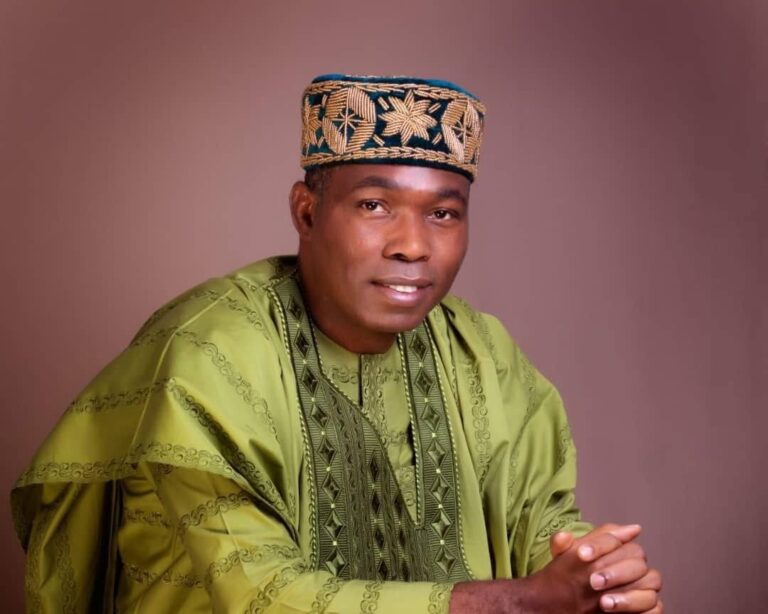
The 2023 Presidential Candidate under the Social Democratic Party (SDP), Prince Adewole Adebayo, has said the country is yet to attain true democracy, describing the current system as civil rule rather than a genuine democratic order.

Prince Adebayo made this known on Friday while featuring on Frontline, a current affairs programme on Eagle 102.5 FM, Ilese-Ijebu, where he shared his thoughts on Nigeria’s political evolution, national stability, and the country’s slow democratic progress since 1999.

According to the SDP chieftain, Nigeria is only taking its first steps in the democratic journey, a phase he likened to that of a newborn learning to walk.

“The Nigerian democracy hasn’t come yet. What we have is civil rule; we are working towards democracy. We are taking baby steps, and we are falling from time to time,” he said.

Adebayo explained that while Nigeria has left behind military rule, the nation has yet to embrace the principles that make democracy thrive free and fair elections, rule of law, and prosperity for citizens.

He argued that true democracy cannot coexist with widespread poverty.

“Democracy and poverty do not go hand in hand,” he noted. “A poor nation cannot be truly democratic because hunger makes people vulnerable to manipulation. Nigeria must create abundant living conditions before we can say we are practicing democracy.”

Prince Adebayo expressed concern that most Nigerian leaders are fixated on the privileges of office rather than the responsibilities that come with governance.

“Our leaders enjoy power, and when people enjoy power, they don’t want to lose it. But they don’t know that the ultimate power is in freedom,” he said.

He attributed the country’s leadership failures to a lack of reflection and purpose among those in authority. According to him, many leaders have forgotten their humble beginnings and divine purpose, choosing instead to indulge in material accumulation.

“Our leaders have three problems,” he said. “They are consumed by excessive greed, they fail to reflect on their life’s purpose, and they seek power without responsibility. Power without reflection becomes dangerous because it blinds them to their duty.”

Adebayo added that the inability of Nigerian leaders to exercise moderation in the use of power has deepened political instability across the country.

On the New INEC Chairman: ‘I Expect Nothing’

Reacting to the appointment of Joash Amupitan, the new Chairman of the Independent National Electoral Commission (INEC), the SDP standard-bearer said he had no expectations, describing the process that brought him into office as “routine and unreflective.”

“I’m not expecting anything, so I don’t have stomach ulcer,” Adebayo said wryly. “He was appointed routinely and approved routinely. The only thing I can offer him is prayer — that he remembers the values his mother instilled in him: do not lie, do not support evil, and do what is right.”

The lawyer and former presidential candidate observed that the National Assembly failed to conduct a thorough screening process that could inspire public trust.

“How do you clear someone who will preside over our electoral future in just two hours?” he asked. “There should have been a proper public hearing where Nigerians could give feedback. That way, the appointee himself would understand the seriousness of the job.”

Adebayo added that the casual handling of constitutional processes has made Nigerians lose faith in public institutions. He said he prays for both President Bola Tinubu and the new INEC boss to act with conscience and avoid confusion that could harm the country.

Presidential Pardon Misused

On the recent controversies surrounding presidential pardons, Adebayo criticized the approach adopted by the current administration, describing it as careless and lacking moral reflection.

“The problem is not that the President has no power to pardon people. The problem is that he has not thought deeply about why that power was given to him,” he said.

He explained that presidential pardons are meant to correct failures within the justice system, address cases of rehabilitation, or ease societal tensions — not to reward political connections.

“It’s not meant for frivolities or playing games,” he stressed. “When the President assigns such sensitive duties to aides who lack discernment, they begin to add all sorts of names to the list. That’s why Nigerians are losing faith because excellence has disappeared from decision-making.”

He urged the Presidency to handle such constitutional powers with greater accountability and sensitivity, warning that misusing them could send the wrong signal that crime pays when one has access to power.

On Nnamdi Kanu and Omoyele Sowore’s Protest

When asked about activist and fellow 2023 presidential candidate Omoyele Sowore’s call for protests to demand the release of Nnamdi Kanu, Adebayo acknowledged Sowore’s sincerity but disagreed with his approach.

“Omoyele Sowore is mostly and almost always genuine,” Adebayo said. “But being genuine doesn’t mean you’re correct. A man can sincerely point you in the wrong direction.”

He noted that while Sowore’s activism stems from genuine concern for justice, the complexities of Kanu’s case require careful legal and political handling.

On the federal government’s handling of the Indigenous People of Biafra (IPOB) agitation, Adebayo said the matter reflects the disjointed nature of the Nigerian state, where political, security, and judicial institutions often act in isolation.

“There are different parts of the federal government the political, the law enforcement, and the judiciary,” he explained. “Each must play its role responsibly. But in Nigeria, we often see conflict and confusion among these arms, which only worsens public distrust.”

Prince Adebayo said Nigeria’s democratic progress depends on leaders who think deeply about their calling and govern with humility.

“The presidency is a serious office the highest in the land,” he said. “That is why we call the President His Excellency. But there must be excellence in thinking, not just in title.”

He maintained that unless Nigeria reconnects governance with public welfare, democracy will remain distant and fragile.

“People want to be in power but not take responsibility. Until that changes, Nigeria will keep taking baby steps towards true democracy,” he said.