Home Blog Page 77

Sterling Financial Holdings Reports 141% Surge in Nine-Month Profit, Driven by Strong Interest Income and Efficiency Gains

0

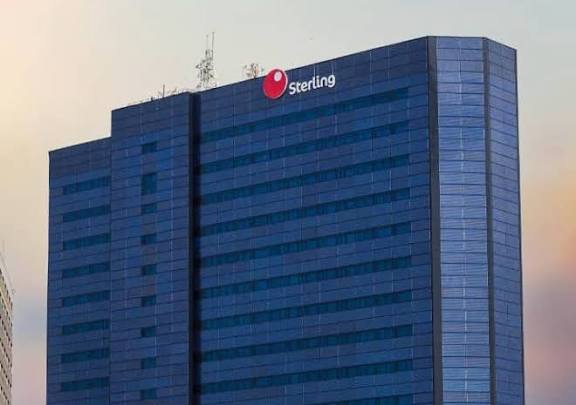
Sterling Financial Holdings Company Plc has announced a solid financial performance for the third quarter of 2025, posting significant year-on-year growth in both profit and revenue streams.

According to the company’s unaudited financial statements released on Thursday, profit before tax (PBT) rose to ₦25.4 billion in Q3 2025, more than doubling the ₦12.07 billion recorded in the same period last year. Profit after tax (PAT) also climbed sharply to ₦20.5 billion, representing an 83.5% year-on-year increase, buoyed by strong interest income and improved operational efficiency.

For the nine-month period ending September 30, 2025, Sterling reported a 141% year-on-year surge in profit before tax, rising to ₦70.96 billion from ₦29.4 billion a year earlier. Profit after tax for the same period also soared to ₦62.2 billion, up from ₦27.4 billion in 2024.

The financial holding company attributed its impressive results to sustained growth in its core banking business, strategic cost management, and diversification across its key subsidiaries.

Market analysts view Sterling’s performance as a reflection of disciplined execution and a stronger earnings base, positioning the group for continued profitability amid a challenging macroeconomic environment.

The company is expected to release detailed segment results in the coming weeks, providing further insight into the performance of its banking, investment, and asset management divisions.

U.S. Ends Automatic Work Permit Extensions for Immigrants, Citing National Security Concerns

0

The U.S. Department of Homeland Security (DHS) has announced a major policy change ending the automatic extension of Employment Authorization Documents (EADs) for immigrants renewing their work permits under certain categories. The agency said the decision aligns with its commitment to strengthening national security and public safety through enhanced background checks.

Under the new rule, immigrants who file to renew their EADs on or after October 30, 2025, will no longer receive automatic extensions of their work authorization while their renewal applications are pending. Instead, each renewal applicant will undergo a full vetting process before DHS grants an extension.

“With this rule, DHS prioritizes the proper screening and vetting of aliens before extending the validity of their employment authorizations,” the agency said in an official statement.

The department explained that the change will allow U.S. Citizenship and Immigration Services (USCIS) to conduct more frequent and thorough reviews of applicants, helping to detect fraud and identify individuals who may pose security risks before they are cleared to work in the United States.

DHS, however, clarified that limited exceptions will remain in place. These include automatic extensions provided by law or those announced in Federal Register notices, particularly for individuals under Temporary Protected Status (TPS).

The move represents a significant shift from the previous policy, which allowed certain categories of noncitizens — including asylum seekers, refugees, and some visa holders — to continue working legally while their renewal applications were being processed.

Critics have expressed concern that the change could lead to employment gaps and uncertainty for lawful immigrants awaiting permit renewals, while supporters argue it reinforces national security safeguards and ensures a more controlled vetting system.

The DHS said it will continue reviewing its immigration procedures to balance security measures with fair and efficient processing for eligible immigrants.

Wema Bank Posts ₦146.4 Billion Profit Before Tax for Nine Months, Up 142% Year-on-Year

0

Wema Bank Plc has reported a robust financial performance for the nine months ended September 30, 2025, recording a profit before tax (PBT) of ₦146.44 billion, a 141.58% increase from ₦60.62 billion in the same period last year.

The impressive growth, disclosed in the bank’s unaudited financial statements filed with the Nigerian Exchange (NGX) on Thursday, underscores Wema Bank’s strengthened earnings capacity and operational resilience amid persistent macroeconomic challenges and rising cost pressures.

According to the report, the lender’s strong showing was driven by improved interest income, enhanced cost efficiency, and strategic balance sheet management. The bank also posted growth across other key financial indicators, reflecting its sustained focus on innovation, digital expansion, and customer-centric banking solutions.

Wema Bank, which has positioned itself as a leader in Nigeria’s digital banking space through its ALAT platform, continues to leverage technology and agile banking models to deepen market penetration and profitability.

Analysts say the bank’s performance signals improved efficiency in asset utilization and a growing contribution from its non-interest income streams, despite inflationary headwinds and tightening monetary conditions.

The lender is expected to release its full-year audited results in early 2026, offering further insight into its performance trajectory and strategic priorities.

African Airlines See 5.3% Growth in International Passenger Demand in September — IATA

0

African airlines recorded a 5.3% year-on-year increase in international passenger demand in September 2025, reflecting steady recovery across the continent’s aviation sector, according to the International Air Transport Association (IATA).

The IATA’s September 2025 global air travel report showed that Africa’s load factor — a key measure of seat occupancy — rose slightly to 74.7%, up 0.1 percentage points from the same period in 2024. The improvement was supported by a 5.1% expansion in capacity, which refers to the total number of available seats for sale.

The modest rise in load factor suggests that demand growth slightly outpaced capacity, signaling efficient route optimization and stronger passenger volumes, particularly on intra-African routes and business and leisure travel corridors connecting major regional hubs.

“African airlines saw a 5.3% year-on-year increase in demand. Capacity was up 5.1% year-on-year. The load factor was 74.7% (+0.1 ppt compared to September 2024),” the IATA report noted.

The data underscores a broader post-pandemic recovery trend in international air travel, with African carriers steadily regaining traffic levels amid rising connectivity and tourism demand.

On a global scale, IATA reported that total passenger demand grew by 3.6% in September 2025 compared to a year earlier, while capacity rose 3.7%. The global load factor stood at 83.4%, slightly lower by 0.1 percentage points year-on-year.

International demand globally was up 5.1%, with capacity up 5.2%, maintaining a high load factor of 83.6%, while domestic markets posted modest gains of 0.9% in demand and 1.1% in capacity, achieving a load factor of 83.0%.

IATA said the figures point to “continued resilience in passenger travel demand” despite economic pressures, with the strongest growth coming from regions like Africa, the Middle East, and Asia-Pacific where cross-border connectivity continues to expand.

The New Gold: How Nigeria’s Non-Oil Export Sector Is Rewriting the Nation’s Economic Story

0

There comes a moment in every nation’s journey when the old engines of prosperity begin to falter and for Nigeria, that moment has arrived.

For decades, crude oil defined the rhythm of the economy, dictating the nation’s fortunes and failures alike. But as global energy transitions accelerate, prices fluctuate, and local production struggles under infrastructural and governance challenges, the once-reliable oil lifeline now offers diminishing returns.

Nigeria’s new wealth story is no longer written in barrels — it’s being measured in bags of cocoa, tons of lithium, containers of sesame, and megabytes of digital exports.

The Turning Point

Economists have long argued that Nigeria’s path to lasting prosperity lies beyond oil. Agriculture, solid minerals, manufacturing, and the fast-growing digital economy form the backbone of a diversified economic future — one that can withstand global shocks and domestic fiscal pressures.

Encouragingly, that future is no longer theoretical. The numbers are starting to prove it.

According to the Nigerian Export Promotion Council (NEPC), Nigeria earned $1.791 billion from non-oil exports in the first quarter of 2025, a 24.75% increase from the same period in 2024. That growth is not just about raw materials — it’s about the emergence of a new ecosystem built on value addition, trade financing, and modern logistics.

Behind this shift lies a network of institutions quietly powering the transformation — and one name keeps surfacing at the center of it all: Zenith Bank.

The Institution Behind the Movement

Over the past five years, Zenith Bank Plc has solidified its role as the single largest financial catalyst for Nigeria’s non-oil export expansion, commanding nearly 40% of the sector’s total transaction value.

From cocoa farms in Ondo, cashew plantations in Kogi, and lithium mines in Nasarawa, to fertilizer producers and processed food exporters across the nation, Zenith Bank’s footprint runs deep.

The bank provides the financial infrastructure that keeps exports moving — facilitating foreign exchange inflows, managing export proceeds, and ensuring compliance with international trade and anti-money-laundering standards.

Its digital platforms have simplified export documentation and remittance tracking, empowering both large-scale exporters and small businesses eager to reach new markets.

The Engine of Dollar Inflows

In the last three years, Zenith Bank has processed more than $6 billion in export remittances — a milestone that cements its position as Nigeria’s No. 1 Export-Remittance Bank.

This consistent inflow of foreign exchange provides more than liquidity; it offers stability to the broader economy at a time when the Central Bank of Nigeria (CBN) is working to rebuild reserves and strengthen the naira.

By prioritizing export financing and trade-facilitation products, Zenith Bank has not only bridged gaps in funding but also helped Nigerian exporters compete globally — from agricultural produce and solid minerals to processed foods and petrochemical by-products.

Beyond Oil, Toward Ownership

What’s unfolding is more than an economic adjustment — it’s a cultural and generational shift. A new class of Nigerian entrepreneurs, agribusinesses, and manufacturers are proving that the nation can earn its place in the global economy through innovation, not extraction.

Non-oil exports are fast becoming Nigeria’s new gold — and institutions like Zenith Bank are the refineries turning that raw potential into real prosperity.

The journey beyond oil is still in motion, but for the first time in decades, the path forward feels self-made — not oil-made.


 

Over 552,000 Retirees Now Receive Monthly Pensions Under Nigeria’s Contributory Pension Scheme — PenCom

0

More than 552,000 retirees across Nigeria are now receiving regular monthly pensions under the Contributory Pension Scheme (CPS), the National Pension Commission (PenCom) has revealed.

The Commission also announced that total pension assets have surpassed ₦25 trillion, a major milestone in Nigeria’s pension reform journey and a reflection of the scheme’s growing role in national economic development.

The disclosure was made by PenCom’s Director-General, Ms. Omolola Oloworaran, during a two-day sensitisation workshop held in Yola, Adamawa State, for employees and pensioners in the North-East region. She was represented at the event by Alhaji Bello Abubakar, PenCom’s Commissioner for Administration.

According to Oloworaran, the achievement underscores the steady growth and stability of the CPS since its introduction in 2004. She noted that the scheme has not only ensured the prompt and consistent payment of retirement benefits but has also deepened Nigeria’s financial markets by mobilising long-term savings for investment in infrastructure and other sectors.

“With over ₦25 trillion in pension assets, the CPS has become a key driver of Nigeria’s economic stability, contributing significantly to national development,” she stated.

The sensitisation workshop aimed to raise awareness about the workings of the CPS, clarify misconceptions, and educate contributors on their rights and obligations under the scheme.

PenCom also reaffirmed its commitment to ensuring transparency, accountability, and improved service delivery in pension administration, while expanding coverage to informal sector workers through the Micro Pension Plan.

The success of the CPS marks a significant transformation from Nigeria’s old defined-benefit system, which was fraught with inefficiencies, delayed payments, and mounting liabilities. Today, the contributory model has become a cornerstone of retirement security and financial inclusion across the country.

Equity Group Reports $405 Million Profit in Q3 2025, Driven by Regional Growth and Digital Expansion

0

Equity Group Reports $405 Million Profit in Q3 2025, Driven by Regional Growth and Digital Expansion

Equity Group Holdings has posted a profit of $405 million for the third quarter of 2025, marking a 32% increase compared to the previous quarter.

The strong performance underscores the success of the financial group’s regional growth strategy and continued investment in digital banking innovation. According to the bank, the rise in profitability was supported by robust contributions from subsidiaries across East and Central Africa, as well as increased efficiency in digital transactions and customer engagement.

In a statement, the lender highlighted that nearly half of its total earnings were generated outside Kenya, reaffirming the impact of its diversification efforts across markets such as Uganda, Rwanda, Tanzania, South Sudan, and the Democratic Republic of Congo.

Equity Group noted that its digital transformation initiatives continue to enhance service delivery and expand access to financial services, particularly through mobile and online platforms. The bank’s focus on technology-driven solutions and regional inclusion has positioned it as one of Africa’s most dynamic financial institutions.

Analysts say the results reflect not only the group’s operational resilience but also its ability to adapt to changing economic conditions and customer needs across multiple markets.

Nigerians Lose ₦316 Billion to Ponzi Schemes and Illegal Fund Managers — SEC

0

The Securities and Exchange Commission (SEC) has revealed that Nigerians have lost an estimated ₦316 billion to Ponzi schemes and unregistered fund managers, warning the public against falling prey to fraudulent investment platforms promising unrealistic returns.

According to the Commission, despite repeated warnings and sensitisation campaigns, thousands of Nigerians continue to invest in illegal schemes driven by greed, desperation, and lack of financial literacy.

SEC officials noted that these schemes often disguise themselves as legitimate investment opportunities, using social media and digital payment platforms to lure unsuspecting citizens with promises of high profits in a short time.

“The growing number of victims is alarming. Greed, ignorance, and the get-rich-quick mentality remain the major factors driving participation in Ponzi schemes,” the Commission stated.

The regulator reiterated that only licensed fund managers and investment firms registered with the SEC are legally authorised to collect funds from the public for investment purposes. It urged Nigerians to verify the registration status of any investment platform through the Commission’s official website before committing their money.

The SEC also disclosed that it is working with law enforcement agencies and the Economic and Financial Crimes Commission (EFCC) to trace fraudulent operators, recover assets where possible, and prosecute offenders.

The Commission further emphasized the importance of financial education, noting that public awareness remains the most effective safeguard against investment fraud.

Ponzi schemes — which pay old investors with funds from new participants — have surged in recent years, especially amid economic hardship and digital financial expansion, leaving many Nigerians in debt and disillusioned.

The SEC’s renewed warning comes as part of its ongoing campaign to strengthen investor protection and promote transparency within Nigeria’s capital market.

Nigerian Banks Record Over 213 Million Ad Impressions Across Social Media Platforms — Report

0

Fifteen of Nigeria’s leading banks collectively generated more than 213 million ad impressions across major social media platforms in the third quarter of 2025, highlighting the growing dominance of digital marketing in the country’s banking sector.

The data comes from the Banking Conversion Digital Marketing Efficiency Report (Q3 2025), published by ConversionTracker.com, which analyzed user traffic, engagement behavior, and conversion performance across top financial institutions.

The report assessed 15 major banks, including Access Bank, Citibank, Ecobank, Fidelity Bank, First Bank of Nigeria, FCMB, Globus Bank, GTBank, Keystone Bank, Polaris Bank, Stanbic IBTC Bank, Standard Chartered, Sterling Bank, Union Bank, and United Bank for Africa (UBA).

According to the findings, Nigerian banks are increasingly leveraging digital platforms such as LinkedIn, YouTube, Facebook, Instagram, and TikTok to reach both existing and prospective customers. The report also noted a surge in targeted content marketing, video campaigns, and influencer-driven engagement strategies as banks compete for digital visibility and brand trust.

Beyond impressions, the report offers a detailed analysis of conversion efficiency — tracking how effectively online engagements translate into actual banking actions such as account openings, app downloads, or loan applications.

ConversionTracker.com highlighted that banks with faster website loading speeds, stronger search engine optimization (SEO) visibility, and active customer interaction on social media recorded higher digital conversions.

“Nigerian banks are no longer just advertising online — they’re optimizing the entire digital customer journey,” the report stated. “Performance now depends as much on responsiveness and user experience as on marketing spend.”

The findings underline how digital engagement has become a crucial battleground for banks, as younger and tech-savvy customers increasingly prefer online channels for financial services.

Industry experts say the trend signals a broader shift in Nigeria’s financial ecosystem — where digital marketing, data analytics, and user experience are now central to how banks attract, retain, and grow their customer base.

From Afrobeats Star to Fuji Custodian: Adekunle Gold Reclaims the Soul of Nigerian Sound

0

In this edition of Ranks Africa Spotlight, we spotlight Adekunle Gold — the man redefining the rhythm of African sound.

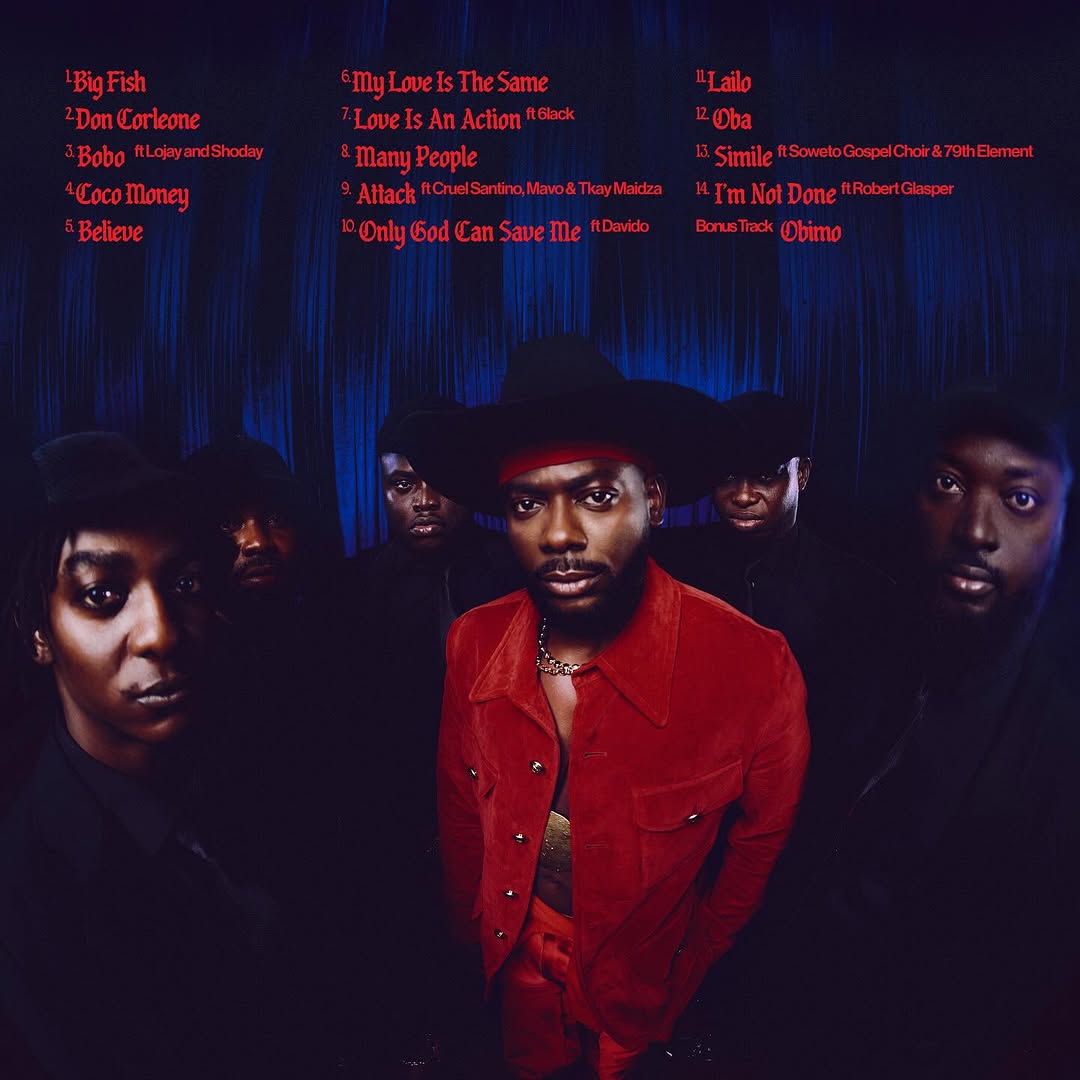
In the relentless rhythm of Afrobeats’ global takeover — where algorithms chase viral hooks and borders blur into playlists — Adekunle Gold emerges not as a chaser, but as a custodian. His sixth studio album, Fuji, released on October 3, 2025, isn’t just another notch in Afrobeats’ belt; it’s a deliberate pulse-check — a vibrant reminder that the genre’s heartbeat was kindled in the smoky clubs of Lagos, not the sterile glow of streaming dashboards.

With 15 meticulously sequenced tracks spanning 40 minutes, Fuji scores high not only for its sonic brilliance but for Gold’s uncanny ability to diagnose what Afrobeats truly craves: roots deep enough to weather trends, vibes that linger like the aftertaste of pepper soup, and a blueprint for Africa’s musical business that transcends the “one-sound-fits-all” trap.

This isn’t about Gold’s chameleon-like versatility — though his catalog, from the R&B introspection of About 30 (2018) to the genre-blending flair of Catch Me If You Can (2023), already proves he’s a maestro of metamorphosis. No, Fuji is a reckoning — a high-octane homage to the Fuji genre that shaped his youth, infused with Apala echoes and Tungba swagger, polished to Afrobeats’ glossy sheen.

Naming it Fuji isn’t casual; it’s an artistic declaration. A masterstroke that announces to the world that Nigeria’s — and by extension, Africa’s — creative empire isn’t confined to Afrobeats alone. As Adekunle Gold told BellaNaija,

“I’m already making Fuji sounds; since my first album Gold, I’ve had a Fuji-sounding song on every album. Even if I sing R&B, I sound Fuji. So I might as well show the world this sound I grew up on.”

In a landscape dominated by export-ready bangers, Fuji is cultural cartography — mapping Africa’s sonic diversity for a world too quick to box it in.

While streams have been impressive, what truly defines this album is its live voltage. From sold-out Lagos lounges to pulsating stages across Abuja and Port Harcourt, Gold’s Fuji performances ignite a wildfire of energy that transcends the digital space. At his October 18 headline show at Eko Hotel, the atmosphere was electric — with crowds belting along to Don Corleone and My Love Is The Same, featuring the tender voice of his daughter, Iyabeji. For 90 minutes, Gold proved that Fuji isn’t nostalgia — it’s evolution.

Tracks like Big Fish recount his journey from humble beginnings to global acclaim, while Many People explores fame’s fragile duality. Only God Can Save Me honors his late father with raw vulnerability, while Attack pulsates with triumphant defiance. Collaborations with 6LACK, Davido, and Zlatan enrich the project with cross-border textures while preserving its Nigerian soul.

As Premium Times aptly described it, Fuji is “a cultural masterclass in evolution and authenticity.” Adekunle Gold doesn’t just revisit the past; he propels it forward — giving Fuji the global stage it’s always deserved.

For Ranks Africa, spotlighting Adekunle Gold isn’t just about his music — it’s about heritage in motion. In an era when Afrobeats risks dilution by global trends, Fuji restores balance — rooting the genre in its soil while inviting the world to the feast.

🔥 Kudos, AG Baby — not just for creating a masterpiece, but for honoring your roots, amplifying your voice, and proving that Africa’s rhythm will always set the world’s pulse.

🎧 Stream FUJI now on all digital platforms.
💬 What’s your standout track? Tell us below!