Home Blog Page 79

Strength in Style: Bukola Olowoniyi, The Woman Behind Ewa Lagos Fabrics

0

In the vibrant world of African fashion, where colour, culture, and community converge, Bukola Olowoniyi has carved a name that resonates beyond Lagos. As Chief Executive Officer of Ewa Lagos Fabrics, she has grown from a local fabric merchant into one of the continent’s foremost Aso-Ebi vendors, redefining how Nigerians and Africans celebrate tradition through style.

Her business is built on the heartbeat of the Aso-Ebi culture — fabrics that carry stories of unity, joy, and belonging at weddings, birthdays, and ceremonies across the continent. From sourcing exquisite textiles to curating bespoke collections, Olowoniyi has elevated Aso-Ebi into a symbol of modern African pride while remaining deeply rooted in heritage.

What sets her apart is not only the scale of her operations but the strength she embodies as a woman entrepreneur. In a competitive industry, she has turned creativity and resilience into business strategy, serving clients across Nigeria and the diaspora. For many, Ewa Lagos Fabrics is more than a vendor — it is a trusted partner in life’s most memorable celebrations.

Celebrating Bukola Olowoniyi is celebrating the strength of Nigerian womanhood: visionary, enterprising, and proud of its cultural legacy. In her story lies a reminder that tradition can be modern, that fabrics can be more than cloth, and that women continue to shape Africa’s industries with grace and power.

20 African Countries Enforce Six-Month Passport Validity Rule for Travellers

0

Nigerian and other African travellers have been advised to check the validity of their international passports before embarking on trips, as at least 20 African countries require a minimum of six months’ validity for entry.

According to updated travel guidelines, many nations on the continent now enforce the six-month rule in line with international best practices. The requirement means that visitors must hold passports valid for at least six months beyond their date of entry, regardless of the length of stay permitted.

Immigration experts warn that failure to meet this condition often results in denial of boarding by airlines or refusal of entry at border posts. The rule is aimed at ensuring travellers have sufficient documentation throughout their stay and to avoid complications in cases of emergency extensions.

The 20 African countries currently enforcing the rule include:

  1. South Africa
  2. Kenya
  3. Ghana
  4. Egypt
  5. Morocco
  6. Ethiopia
  7. Rwanda
  8. Tanzania
  9. Uganda
  10. Botswana
  11. Namibia
  12. Zambia
  13. Zimbabwe
  14. Senegal
  15. Gambia
  16. Sierra Leone
  17. Liberia
  18. Malawi
  19. Mozambique
  20. Cape Verde

Travel agents and immigration officials have urged passport holders to renew their documents well in advance of expiration. They also stressed that compliance with validity rules will prevent avoidable disruptions to travel plans, especially for students, business travellers, and tourists.

With rising international travel from Nigeria and other parts of West Africa, authorities continue to emphasize passport renewal campaigns to reduce the risk of last-minute cancellations and stranded passengers.


Nigeria’s September Revenue Rises to N3.65 Trillion, Marks 411% Growth — FIRS

0

Nigeria recorded a sharp increase in federally collected revenue in September 2025, with receipts reaching N3.65 trillion, according to figures released by the Federal Inland Revenue Service (FIRS). The figure represents a 411 percent rise compared to the same period last year.

The FIRS attributed the surge to improved compliance in tax administration, expanded digital collection systems, and stronger oversight in the oil and non-oil sectors. The service said recent reforms have significantly widened the tax net and curtailed leakages that previously undermined revenue performance.

“This unprecedented growth is a testament to the resilience of our economic reforms and the dedication of taxpayers,” the FIRS noted in a statement. “We are seeing the results of increased efficiency in our systems, enhanced monitoring, and a broader base of contributors to national revenue.”

The N3.65 trillion collected in September is expected to boost allocations to the three tiers of government, easing fiscal pressures as the country faces rising inflation, high debt service obligations, and demands for infrastructure funding.

Analysts say the surge underscores the potential of Nigeria’s domestic revenue base if leakages are reduced and compliance is sustained. However, they caution that translating the gains into tangible public benefits will depend on prudent fiscal management and accountability in government spending.

The September report continues a trend of stronger revenue inflows in 2025, positioning the country to better finance its budget and reduce reliance on external borrowing.

Air Tanzania Commences Lagos–Dar es Salaam Flights, Government Promises Visa Reforms for Nigerians

0

Air Tanzania has officially launched direct flights between Lagos and Dar es Salaam, a development expected to deepen economic, tourism, and cultural ties between Nigeria and Tanzania. The inaugural flight was celebrated in Lagos with top government officials, diplomats, and business leaders in attendance.

At the ceremony, Tanzania’s Permanent Secretary in the Ministry of Transport, Professor Godius Kahyararara, announced that the government is set to review its visa system to make travel easier for Nigerians. He assured that significant reforms will be introduced within a week to remove barriers that have long discouraged smooth travel between the two countries.

“What I can promise is that within a week, there will be major changes in the visa system,” Kahyararara said. “We have already discussed this with our colleagues in Nigeria and Tanzania, and it is one of the issues that must be resolved to ensure the direct flight benefits both countries. Our research showed that Nigerians travelling to Zanzibar, our top tourist destination, often take longer routes through Addis Ababa or Nairobi. With this new service, they can reach Tanzania in less than five hours.”

Tanzania’s Ambassador to Nigeria, Mr. Selestine Kakele, also underscored the importance of the new air connection, describing Nigeria as Africa’s second-largest economy and a crucial partner for Tanzania.

“For us, this represents a great opportunity to open up Tanzania by establishing direct air transport services that connect our two nations,” he said. “This connection will strengthen trade, investment, and people-to-people ties between Tanzania and Nigeria.”

Industry observers say the new route is poised to boost tourism, as Tanzania seeks to attract more Nigerian visitors to destinations such as Zanzibar, Serengeti National Park, and Mount Kilimanjaro. The service is also expected to facilitate greater movement of business executives and investors exploring opportunities in both countries.

Air Tanzania, the country’s national carrier, has in recent years been expanding its regional and international operations as part of efforts to reposition itself as a major player in African aviation. The Lagos–Dar es Salaam route marks another milestone in its growth strategy and a significant step in building stronger aviation links within Africa.

📸 Air Tanzania Company Limited

L

Ex-Legislative Aide, Banker Jailed Eight Years for N120.5m Employment Scam in Abuja

0

LThe Federal Capital Territory (FCT) High Court in Jabi, Abuja, has convicted and sentenced a former legislative aide and banker, Mr. Goni Yilkan, to eight years in prison for his role in a N120.5 million employment scam.

Justice F. E. Messiri delivered the judgment following a prosecution led by the Ilorin Zonal Directorate of the Economic and Financial Crimes Commission (EFCC). According to a statement issued by the anti-graft agency on Tuesday, Yilkan was found guilty of obtaining money under false pretence.

The court held that the convict deceived unsuspecting job seekers by promising them employment opportunities in exchange for large sums of money. Investigations revealed that he collected over N120.5 million from multiple victims, exploiting their desperation for work.

Yilkan, a native of Nguru in Yobe State, faced a two-count charge under Section 1(1)(a) of the Advance Fee Fraud and Other Related Offences Act, 2006, with punishment prescribed under Section 1(3) of the same law.

Delivering judgment, Justice Messiri ruled that the prosecution had successfully proved its case beyond reasonable doubt. The court consequently sentenced Yilkan to eight years’ imprisonment, underscoring the seriousness of financial crimes that prey on citizens’ aspirations.

The EFCC welcomed the conviction, describing it as another significant step in its ongoing fight against advance fee fraud and employment racketeering. The agency also cautioned the public to remain vigilant against offers of job placements in exchange for money, noting that such practices are illegal and often fraudulent.

The conviction adds to a growing list of successful prosecutions by the EFCC as it intensifies its campaign against financial crimes across Nigeria.

Red Star Express Merges Logistics Subsidiary into Parent Company Structure

0

Red Star Express Plc has announced the integration of its logistics subsidiary into the parent company, bringing an end to the unit’s status as a separately registered legal entity.

The development, confirmed in a corporate disclosure, is part of the company’s ongoing restructuring strategy aimed at streamlining operations, cutting administrative costs, and strengthening its market position in Nigeria’s competitive courier and logistics sector.

According to the statement, the decision will allow Red Star Express to consolidate its resources, harmonise management processes, and deliver more coordinated services across its business lines. The company noted that the restructuring is expected to improve efficiency, eliminate duplication, and align its logistics services more closely with its core express delivery operations.

Industry analysts say the move reflects a broader trend within Nigeria’s logistics and supply chain sector, where rising operational costs, new regulatory demands, and shifting consumer expectations are pushing companies to consolidate and simplify structures.

Red Star Express, a licensed courier company and one of the leading players in Nigeria’s logistics market, operates services ranging from express parcel delivery and freight to warehousing and e-commerce solutions. The integration is expected to position the firm for greater competitiveness, particularly as demand for logistics continues to grow with the expansion of online retail and cross-border trade.

The company assured shareholders and customers that the change will not disrupt services, adding that existing contracts and client engagements will remain valid under the restructured corporate framework.

The merger comes at a time when Nigerian logistics firms are under pressure to adopt leaner operations while investing in digital platforms and infrastructure to meet rising demand for speed and reliability in deliveries.


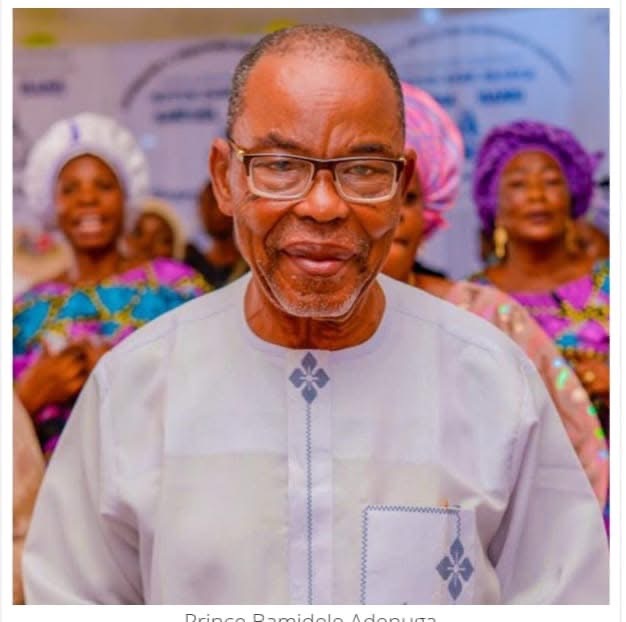
AWUJALE STOOL NOT JAMB OR LOTTERY, ADENUGA DESCENDANTS DECLARE HEIRSHIP :- Prince Bamidele Adenuga

0

The Adenuga family of the Fusengbuwa ruling house has declared that the succession to the Awujale stool of Ijebuland is not an open contest, insisting that only direct descendants of the last Awujale from the line, Oba Theophilus Tuwase Adenuga Folagbade, are entitled to the throne.

Speaking on Frontline, a currents affairs programme on Eagle 102.5 FM, Ilese-Ijebu, on Tuesday, Prince Bamidele Adenuga, alongside Omoba Adelaju Olusegun Adenuga, stressed that the family’s lineage gives them the exclusive right to present candidates for the revered Ijebu throne. “Everybody has the right to aspire to any post, but what I am saying is, the Awujale king is not a university where you get JAMB and apply.

It is very specific. The constitution is very clear. It is not a lottery,” Prince Bamidele declared.

Omoba Adelaju Olusegun Adenuga maintained that both tradition and the 1959 family constitution reserve succession strictly for direct male descendants of Fusengbuwa, passed down through Tuwase and Oba Folagbade.

Tracing their ancestry, he explained that the Adenugas are direct descendants of the last Awujale from the Fusengbuwa line. “I am here on behalf of the descendants of Oba Folagbade, who was the last king in the Fusengbuwa family.

Fusengbuwa has a long history; it starts from our great grace from God, Father Jadiara, who begat Fusengbuwa. From Fusengbuwa to Tuwase, and Tuwase is my grandfather—that is how it goes.

Any other person claiming to be king from that ruling house is non-existent, and history can prove me whether right or wrong,” he said.

While acknowledging internal divisions, Prince Bamidele maintained that the family remains united under a recognized head. “We have one Olori Ebi and that is Alhaji Lateef Owoyemi Ajidagba, who I respect a lot. He is a man of integrity. I am not aligning with him; I am giving him the respect that is due to him. That is Yoruba tradition,” he stated.

Omoba Adelaju reinforced this position, stressing that succession must remain within the direct line of Oba Folagbade. “We are the children and grandchildren of Oba Folagbade. We have the constitutional right to be the ones they live as Omo Oye. The situation with the Fusengbuwa ruling house is that some people have formed another set of groups. But in 1957, four ruling houses were selected to rotate the Awujale among them. When it comes to a ruling house itself, it is the progeny of the last Oba that becomes king. Just as Fusengbuwa gave Tuwase, Tuwase gave Folagbade, and now Folagbade will give his own progeny,” he explained.

He further cited the 1959 law as backing their claim. “The 1959 chapter says, first, he has to be of a male lineage. Secondly, if he doesn’t have male lineage, then it is the children of the female child born on the throne that can become king. If you can’t find a female child, then any of the other children of the Oba can become king. That is what it specifically says,” Adelaju said. He concluded: “Folagbade is the last king; he is the one to leave a progeny. There is no reason to present 200 people. It is not a lottery. We have custom and tradition. Let us look back.”

The debate over the rightful lineage for succession has deepened in recent months, with rival branches within the Fusengbuwa house laying claim to the Olori Ebi title. However, legal luminary and Ijebu historian, Prof. Fassy Yusuf, had earlier clarified in a Frontline interview that Alhaji Lateef Owoyemi is the recognized Olori Ebi of the Fusengbuwa ruling house, describing him as the custodian of the family’s authority.

The Adenuga family maintains that while Owoyemi holds the Olori Ebi title, the constitutional and historical right to produce the next Awujale rests with their branch as direct descendants of the last monarch in the Fusengbuwa line.

The princes dismissed ongoing agitations by rival groups as attempts to rewrite the Ijebu tradition, arguing that only the Folagbade descendants represent the legitimate royal line for succession. Their intervention deepens the crisis within the Fusengbuwa ruling house, where competing factions continue to lay claim to leadership and eligibility for the Awujale stool.

Author: Oluwaseyi Amosun

United States to Deny Visas to Corrupt High-Profile Nigerians

0

The United States government has announced that it will begin denying entry visas to high-profile Nigerians implicated in corruption, electoral malpractice, and the undermining of democratic processes.

According to a statement released on Monday by the U.S. Department of State, the decision reflects Washington’s growing concern over the persistence of corruption in Nigeria’s public sector and its impact on governance, stability, and economic growth. The policy, officials said, is part of a broader effort to hold political and business elites accountable for actions that threaten Nigeria’s democracy and the welfare of its citizens.

“The United States remains committed to supporting Nigeria’s aspirations for transparent governance and credible democratic institutions,” the statement read. “Individuals who engage in significant corruption or seek to manipulate the electoral process will not be welcome on American soil.”

While the State Department did not release specific names, it confirmed that the visa restrictions will apply to politicians, government officials, and influential business figures found to have engaged in corrupt practices. The restrictions may also extend to their immediate family members.

Analysts note that this is not the first time Washington has employed visa bans as a diplomatic tool in Nigeria. Similar measures were taken in 2019 and 2023, targeting individuals accused of electoral interference. However, this latest declaration appears broader in scope, signaling a renewed determination by the U.S. to confront systemic corruption in Africa’s largest democracy.

The announcement has drawn mixed reactions in Nigeria. Civil society groups welcomed the move, calling it a step toward curbing impunity among the political elite. Some government officials, however, criticized the policy as an infringement on Nigeria’s sovereignty.

With national and state elections looming in the coming years, the United States has urged Nigerian leaders to prioritize accountability, transparency, and the rule of law.

CAC to Deploy AI Agent as Company Registration Backlog Hits 7,000

0

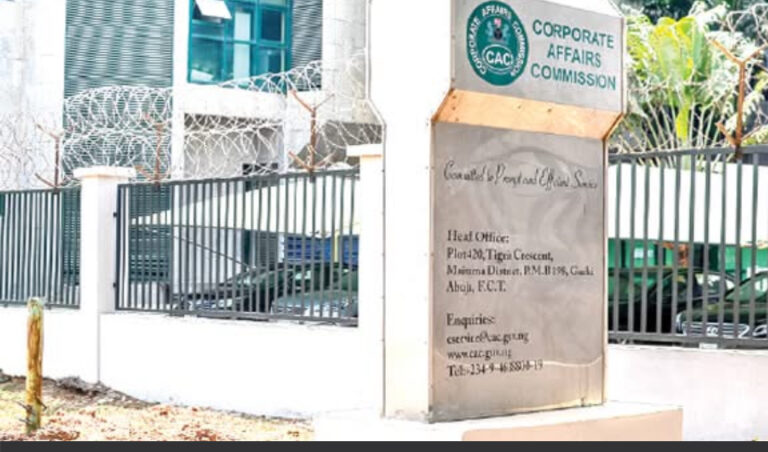
LThe Corporate Affairs Commission (CAC) has announced plans to deploy an artificial intelligence (AI) agent to help clear a mounting backlog of company registration applications, which has risen to more than 7,000.

The move, disclosed by CAC Registrar-General Hussaini Magaji in Abuja on Monday, comes amid growing complaints from entrepreneurs and business owners over delays in securing certificates of incorporation and other statutory documents. The backlog, officials say, has been fueled by the rising number of new business registrations in Nigeria, coupled with technical and staffing challenges faced by the commission in recent months.

Magaji explained that the adoption of an AI-driven system is aimed at streamlining processes, improving efficiency, and reducing human error in the handling of applications. “We are introducing an AI agent that will accelerate registration timelines and ensure applicants receive their approvals without unnecessary delays,” he said.

According to him, the AI agent will be integrated into the CAC’s existing online platform and will be capable of handling routine verification, documentation checks, and application tracking. The technology is expected to drastically reduce waiting periods, allowing the commission to meet its target of providing near real-time registration services.

Stakeholders in the business community have welcomed the development, describing it as a necessary step to strengthen Nigeria’s ease of doing business agenda. However, some cautioned that the technology must be backed by strong oversight to guard against technical failures or misuse.

The CAC has pledged to address concerns, assuring applicants that data security, accuracy, and transparency will remain top priorities. Magaji added that training programs are being designed for staff to work alongside the AI agent, ensuring a smooth transition to the new system.

The commission emphasized that clearing the backlog of applications is an urgent priority, as delayed registration often prevents businesses from opening bank accounts, applying for loans, or entering into legal contracts. With the AI agent set to go live in the coming weeks, the CAC says it is confident that the current backlog will be cleared and processing times will be significantly reduced going forward.