



Home Blog Page 83

FirstBank Celebrates African Heritage at the 5th Door of Return Festival in Badagry

0

Lagos, Nigeria — In reaffirming its commitment to cultural preservation and creative empowerment, FirstBank of Nigeria has announced its proud support for the 5th edition of the Door of Return Festival — a globally recognized celebration that honors Africa’s history, promotes unity, and keeps heritage alive through art, storytelling, and symbolic homecoming.

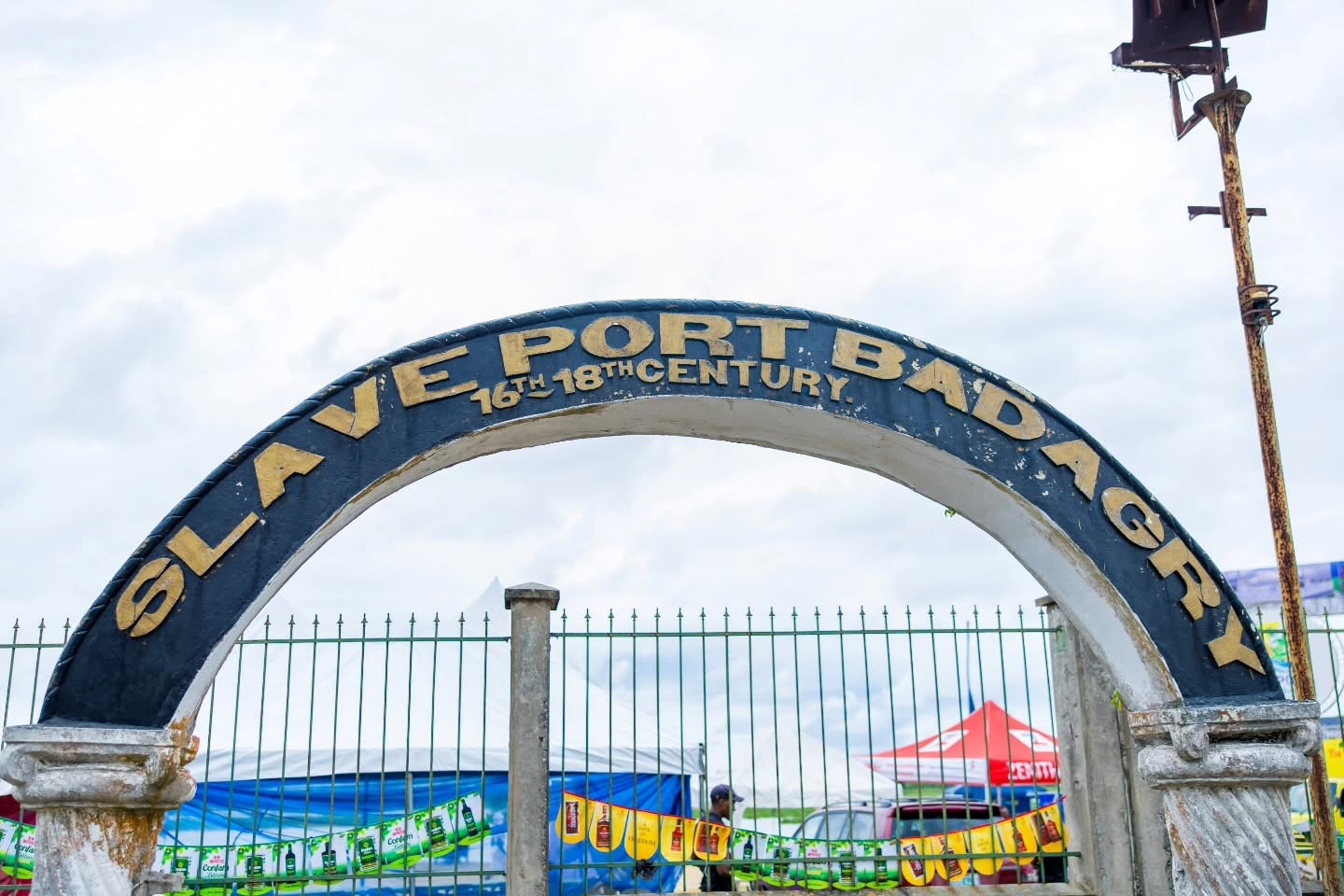
The Door of Return Festival, held annually in Badagry, Lagos State, represents a powerful counter-narrative to the historic “Point of No Return” — the site where thousands of Africans were forcibly taken into slavery centuries ago. The Door of Return ceremony reimagines this painful history into a message of homecoming, healing, and pride, as members of the African diaspora are symbolically welcomed back to the continent in a heartfelt display of cultural reconnection.

In one of the festival’s most emotional highlights, returning participants sail across the Badagry Lagoon in a beautifully decorated cruise boat, greeted with traditional music, dance, and ceremonies that celebrate their reconnection with their ancestral homeland.
“The importance of this moment lies in the transformation of history,” the bank noted. “As their progenitors were once taken away as slaves, Africa — in this context, Badagry and Nigeria — now welcomes them back home as kings and queens.”

Through its First@rt Initiative, FirstBank continues to champion creative and cultural platforms that preserve African identity, inspire artistic expression, and connect generations. The initiative underscores the Bank’s broader mission to support the arts, heritage, and social development across Nigeria and beyond.

By partnering with the Door of Return Festival, FirstBank reinforces its long-standing commitment to empowering communities and celebrating African excellence, while serving as a bridge between history, culture, and the future.




Yvonne Jegede Marks 20 Years in Nollywood — A Journey of Passion, Growth, and Reinvention

0

Celebrated actress, producer, and filmmaker Yvonne Jegede is marking a major milestone — 20 years in Nollywood, one of the world’s largest and most dynamic film industries.

In a heartfelt message, Yvonne reflected on her two-decade journey of storytelling, transformation, and artistic evolution.

“I can’t believe it’s been 20 years already! 20 years since I made my debut in the world’s second-largest movie industry — our beloved Nollywood. 20 years of telling stories, interpreting different roles, and taking on diverse personalities,” she shared.

Starting out at just 20 years old, Yvonne described how stepping into Nollywood changed the course of her life forever. Over the years, she has evolved into one of the industry’s most versatile and respected talents, known for her authenticity on screen and her resilience off it.

Expressing deep gratitude, Yvonne extended appreciation to the producers, cast, and crew members who have worked with her through the years — acknowledging their impact on her personal and professional growth.

“Thank you to every producer, cast, and crew that has worked with me over the years and accepted my flaws, strengths, and weaknesses. Some of you are no longer colleagues; you’re now family,” she wrote.

She also paid tribute to her fans, affectionately calling them her “fanMILY”, for their unwavering love and support throughout her career.

As she celebrates two decades in the spotlight, Yvonne hinted at an exciting new phase, teasing fans to “watch this space” as she unveils #YJReimagined — a fresh chapter in The Yvonne Jegede brand, defined by reinvention, ambition, and renewed creative energy.

“For me, life begins at 20,” she declared — a fitting statement for an actress who continues to inspire with her talent, grace, and evolution.

Would you like me to create a visually formatted magazine-style feature or press release PDF version next (with headline design, pull quotes, and photo space for Yvonne)?

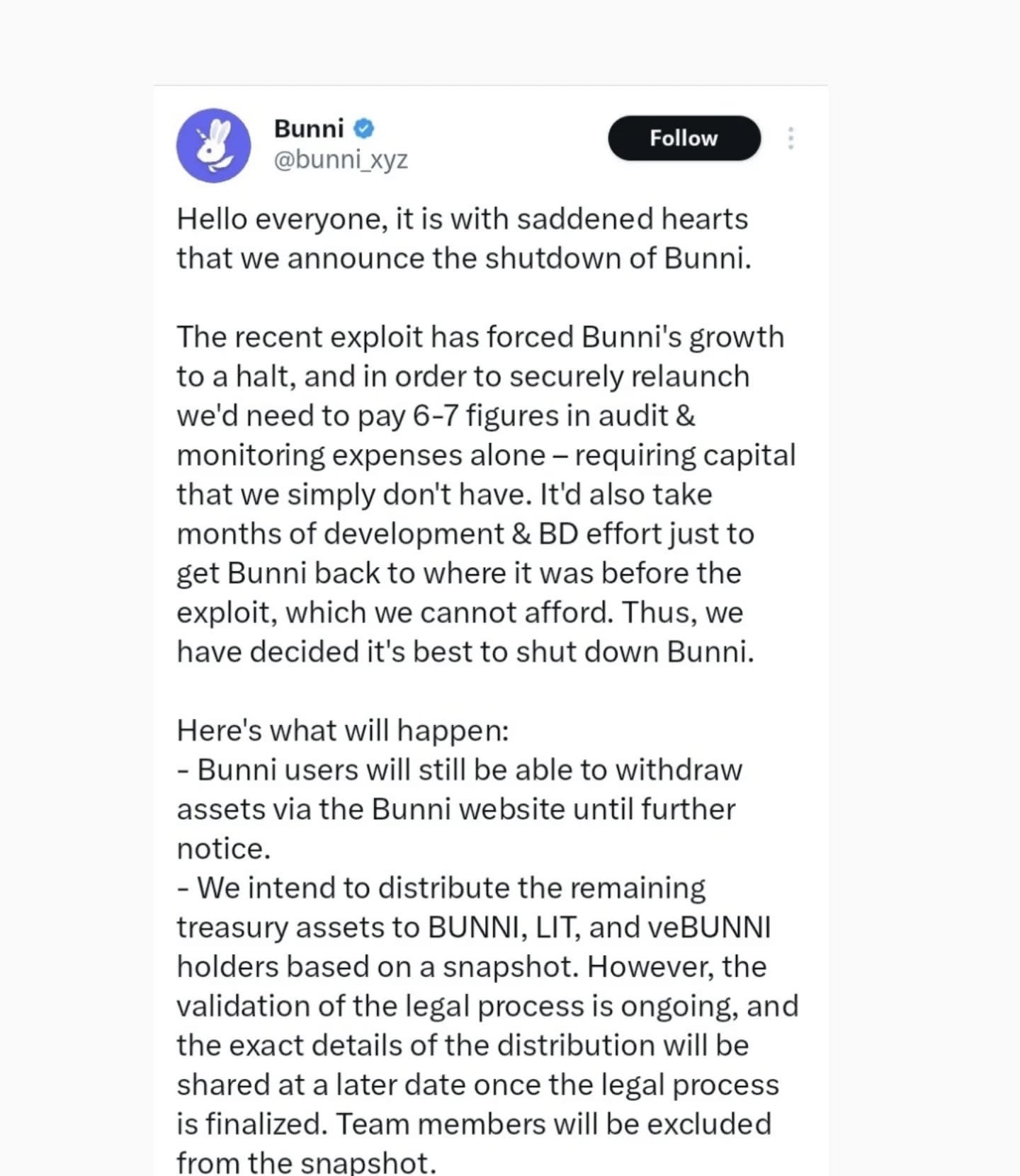
Bunni Permanently Shuts Down After $8.4 Million Flash Loan Exploit

0

Decentralized exchange (DEX) Bunni has officially announced a permanent shutdown after suffering a major $8.4 million flash loan hack that crippled its platform in September. The exploit, which targeted the protocol’s liquidity pools, resulted in the loss of nearly all user funds and dealt a severe blow to the project’s operations.

In a statement released by the Bunni team, developers revealed that rebuilding the platform would require a complete overhaul of its security architecture, alongside extensive audits and development work estimated to cost between six and seven figures. The team admitted that such a financial commitment is beyond its current capacity, effectively ruling out a relaunch.

“We’ve explored every possible recovery path, but a secure and reliable relaunch would demand significant funding for audits and development that we simply don’t have,” the statement read. “As a result, we’ve made the difficult decision to wind down Bunni permanently.”

The team has assured users that they can still withdraw any remaining assets as the exchange undergoes a structured wind-down. Additionally, Bunni’s treasury funds will be distributed to affected users as part of the closure process.

The incident adds to a growing list of DeFi hacks in 2025, highlighting persistent vulnerabilities within decentralized finance ecosystems. Flash loan attacks—where attackers borrow and repay large sums of cryptocurrency within a single transaction to manipulate market conditions—have continued to plague DeFi protocols despite improved auditing practices across the industry.

Security analysts have cited the Bunni hack as another cautionary tale for both investors and developers, emphasizing the importance of robust code audits, time-locked contracts, and stronger liquidity management mechanisms to prevent similar exploits.

Bunni’s shutdown marks the end of a once-promising DEX project known for its innovative liquidity management tools and integration with other Ethereum-based protocols.

UK Supreme Court Rules in Favour of Nigeria in £44 Million Legal Costs Dispute with P&ID

0

The United Kingdom Supreme Court has delivered a landmark ruling in favour of Nigeria in its £44 million legal costs dispute with Process & Industrial Developments (P&ID), affirming that the funds must be recovered in pounds sterling rather than in naira.

The unanimous judgment, handed down on October 22, 2025, by a panel led by Lord Reed, reinforces earlier decisions by lower courts that Nigeria is entitled to receive the awarded costs in the same currency in which its legal obligations were incurred.

According to the Supreme Court, the principle of currency consistency is crucial in international disputes of this nature, ensuring that a party is not disadvantaged by fluctuations in exchange rates or forced conversions. The decision effectively closes P&ID’s challenge to the mode of payment and affirms the finality of Nigeria’s cost recovery rights in the prolonged legal saga.

This ruling represents yet another significant legal victory for Nigeria in its decade-long battle with P&ID. The dispute stems from a failed 2010 gas processing contract, which led to an arbitration tribunal initially awarding US$11 billion in damages to P&ID. However, in October 2023, the UK High Court overturned that award after finding that the contract and subsequent arbitration were tainted by fraud and corruption.

Nigeria’s legal team, led by the Office of the Attorney-General and the UK law firm Mishcon de Reya, argued successfully that the recovery of costs in pounds sterling was consistent with the currency in which the nation’s legal expenses were paid.

Reacting to the judgment, Nigerian government officials described the outcome as a reaffirmation of the country’s determination to defend its national assets against fraudulent claims and to pursue justice through international legal systems.

Legal analysts have hailed the Supreme Court’s decision as a clear precedent for future cross-border disputes, emphasizing that it upholds fairness in the recovery of legal costs and recognizes the sovereignty of states in international arbitration matters.

The verdict further strengthens Nigeria’s position in the ongoing clean-up of legacy contractual disputes and reinforces its broader campaign to protect public resources from exploitation through fraudulent foreign arbitration claims.

Nigerian Digital Lender Lidya Shuts Down After Raising $16.45 Million

Nigerian digital lending startup Lidya has officially shut down operations after nearly a decade in business, marking a dramatic fall for one of Africa’s early fintech success stories. The company, founded in 2016 by Tunde Kehinde and Ercin Eksin, both former Jumia executives, cited severe financial distress and unsustainable operating conditions as reasons for the closure.

Lidya, which gained prominence for offering quick, collateral-free loans to small and medium-sized enterprises (SMEs) across Nigeria and other emerging markets, was once seen as a model for digital financial inclusion in Africa. The startup later expanded its footprint to Europe, with operations in Poland and the Czech Republic, and raised a total of $16.45 million from investors including Accion Venture Lab, Alitheia Capital, Bamboo Capital Partners, and Omidyar Network.

However, the company’s fortunes began to wane in recent years as it battled mounting financial challenges, declining investor confidence, and internal management disputes. Sources close to the company reported that prolonged liquidity shortages and a shrinking loan book made it increasingly difficult to sustain operations or meet customer obligations.

Throughout 2025, Lidya faced a surge of customer complaints on social media and online forums, with users alleging frozen funds, failed withdrawals, and unresponsive customer support. By mid-year, several senior executives had reportedly exited the company amid growing uncertainty about its financial health.

Industry analysts say Lidya’s collapse reflects the harsh realities of the African digital lending landscape, where rising default rates, regulatory pressure, and limited access to long-term capital have forced many fintechs to scale back or shut down.

Once hailed as a pioneer in leveraging data analytics and alternative credit scoring to empower small businesses, Lidya’s demise underscores the fragility of high-growth fintech models that rely heavily on external funding and market expansion.

Neither Kehinde nor Eksin has made a public statement regarding the shutdown, but insiders suggest the founders had explored restructuring options and potential acquisitions before ultimately deciding to wind down the business.

Lidya’s closure marks a sobering moment for Nigeria’s vibrant fintech sector, serving as a reminder that innovation alone is not enough to guarantee sustainability in an increasingly competitive and capital-intensive industry.


Federal Government Approves $1 Billion for Modernisation of Apapa and TinCan Island Ports

0

The Federal Government of Nigeria has approved a $1 billion (₦1.4 trillion) investment for the comprehensive modernisation of the Apapa and TinCan Island ports in Lagos, marking one of the country’s most ambitious port infrastructure upgrades in decades.

The Minister of Marine and Blue Economy, Adegboyega Oyetola, announced the approval on Thursday, stating that the project is designed to transform the two busiest ports in Nigeria into paperless, technology-driven logistics hubs. According to him, the modernisation initiative will enhance cargo handling efficiency, reduce vessel turnaround time, and boost Nigeria’s competitiveness in global maritime trade.

“The goal is to build a smart, efficient, and sustainable port system that meets international standards,” Oyetola said. “We are committed to deploying technology and automation to eliminate bottlenecks, improve transparency, and make our ports globally competitive.”

The project falls under the framework of the Federal Ministry of Marine and Blue Economy’s 10-year strategic plan, which aims to reposition Nigeria’s maritime sector as a major driver of economic growth and diversification. The strategy focuses on infrastructure renewal, digitalisation, environmental sustainability, and regional trade facilitation.

Oyetola revealed that the modernisation effort will include the reconstruction of key port facilities, the installation of smart cargo handling systems, the digital integration of customs and clearance operations, and the development of intermodal transport links to ease congestion and improve cargo evacuation.

The minister also confirmed that similar upgrades would be extended to other major ports across the country, including Port Harcourt, Onne, Warri, and Calabar, in subsequent phases of the national maritime reform plan.

Industry experts have welcomed the move as a timely intervention to address decades of infrastructural decay and operational inefficiencies at Nigerian ports, which have long hindered trade and increased logistics costs.

Analysts believe that successful implementation of the Lagos port modernisation could unlock billions in trade revenue, attract foreign investment, and significantly reduce Nigeria’s dependence on neighbouring ports in Ghana, Togo, and Benin for transshipment activities.

The Apapa and TinCan Island modernisation project is expected to commence in 2026, pending the completion of procurement and environmental assessment processes.

Would you like me to prepare a press-ready PDF version of this report for publication or media distribution?

TETFund to Launch Electric Campus Transportation Scheme in 12 Tertiary Institutions by November 2025

0

The Tertiary Education Trust Fund (TETFund) has announced plans to roll out an electric campus transportation scheme across 12 pilot tertiary institutions in Nigeria by November 2025, marking a significant step toward sustainable and student-friendly mobility within higher education campuses.

The initiative was disclosed by TETFund’s Executive Secretary, Sonny Echono, on Wednesday in Abuja during a courtesy visit by a delegation of the National Association of Nigerian Students (NANS), led by its National Secretary, Comrade Shedrack Anzaku, according to the News Agency of Nigeria (NAN).

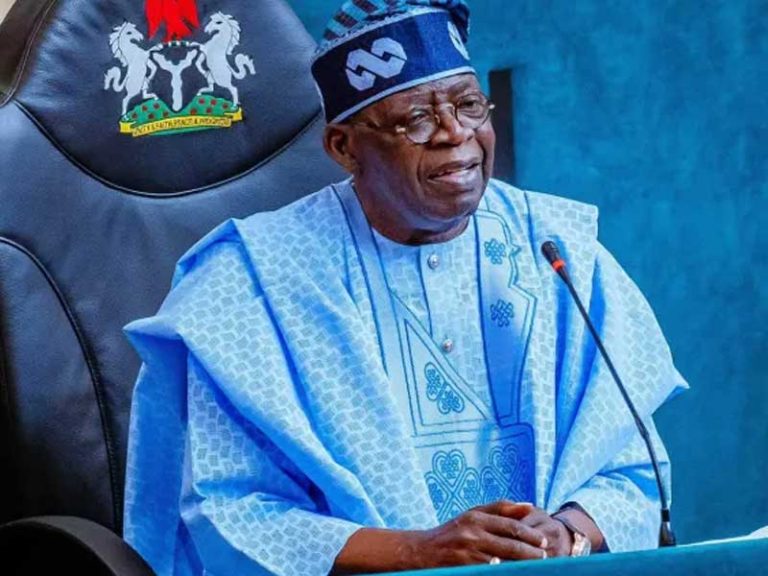
Echono explained that the electric transport project is designed to address mobility challenges faced by students and staff across tertiary institutions, while also promoting environmentally sustainable transportation solutions. He added that the initiative aligns with President Bola Ahmed Tinubu’s directive to improve student welfare and learning conditions through innovation, inclusivity, and infrastructure modernization.

“We are introducing an electric mobility scheme to make movement within campuses easier, safer, and more sustainable,” Echono said. “This is part of a broader strategy to enhance the quality of life in our tertiary institutions while supporting the global transition to clean energy.”

The electric campus buses will serve as a pilot project across select universities, polytechnics, and colleges of education, with the goal of scaling up the program nationwide after its initial evaluation. TETFund officials are also working with relevant ministries, energy providers, and local manufacturers to ensure that the vehicles and charging infrastructure are both cost-effective and locally adaptable.

Echono further emphasized that the initiative complements the government’s broader agenda of advancing green innovation within the education sector and fostering collaboration between academia and industry.

NANS representatives commended TETFund for the initiative, describing it as a progressive intervention that would reduce students’ daily commuting stress, particularly in large campuses where transportation remains a major concern.

The electric campus transportation scheme is expected to be officially unveiled in November 2025, following the completion of feasibility studies, procurement processes, and installation of supporting infrastructure in the selected institutions.

Federal House of Representatives Proposes 20% Cap on Rent Increases Nationwide

0

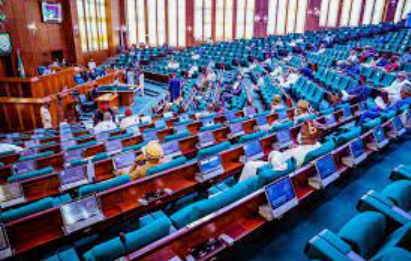
The House of Representatives has proposed a legislative measure to cap rent increases across Nigeria at no more than 20% of the existing rent, in a move aimed at curbing arbitrary rent hikes and addressing the country’s deepening housing affordability crisis.

The resolution, adopted during plenary on Wednesday in Abuja, followed a motion raised by lawmakers who expressed concern over the rising cost of accommodation, particularly in urban centres such as Lagos, Abuja, and Port Harcourt. They warned that the unchecked escalation of rent prices was worsening the plight of low- and middle-income earners already grappling with inflation and stagnant wages.

According to the motion, landlords and property managers have frequently imposed steep and unjustified rent increases, forcing many Nigerians into overcrowded or substandard housing conditions. Lawmakers argued that the proposed 20% ceiling would create a fairer and more predictable rental market, while giving tenants some measure of financial stability.

“The right to decent housing should not be treated as a privilege,” one lawmaker stated during the debate. “Capping rent increases is a necessary intervention to protect citizens from exploitation and to promote social equity.”

The House also urged the Federal Government to invest more heavily in affordable housing schemes, emphasizing the need for strategic partnerships with the private sector, state governments, and mortgage institutions to increase housing supply and reduce demand pressures in the rental market.

Lawmakers further called on the Federal Ministry of Housing and Urban Development to develop a comprehensive national housing policy that ensures access to affordable homes, particularly for young people, civil servants, and low-income families.

In a separate resolution, the House directed the Inspector General of Police (IGP) and the Commandant-General of the Nigeria Security and Civil Defence Corps (NSCDC) to enforce uniform and identification standards for officers at checkpoints nationwide.

The directive mandates that all personnel stationed at roadblocks and inspection points must wear full uniforms and display valid identification cards to promote accountability, reduce cases of misconduct, and align with international policing standards.

Lawmakers noted that the measure was necessary to curb abuses, extortion, and security lapses linked to unauthorized or improperly identified officers, which have undermined public confidence in law enforcement operations.

The House Committees on Housing and Police Affairs have been tasked with monitoring the implementation of both resolutions and reporting back within a specified timeframe.

Guinness Nigeria Reports ₦15.8 Billion Pretax Profit for Q3 2025, Up 315% Year-on-Year

0

Guinness Nigeria Plc has announced a significant turnaround in its financial performance, reporting a pretax profit of ₦15.8 billion for the quarter ended September 30, 2025, representing a 315.49% increase compared to ₦3.8 billion recorded in the same period of 2023.

The performance, detailed in the company’s unaudited financial statements, underscores a strong rebound for the brewer following a turbulent year marked by operational headwinds and currency fluctuations. The result also lifts Guinness Nigeria’s 15-month pretax profit to ₦43.7 billion, a remarkable recovery from a ₦73.6 billion loss posted in the previous comparable period.

According to the report, the company’s strong comeback was driven by robust revenue growth, improved operational efficiency, and strategic cost management initiatives implemented over the past year.

Revenue for the three-month period stood at ₦98.06 billion, reflecting a 64.72% year-on-year increase, while total turnover for the 15-month period reached ₦594.6 billion, highlighting a sustained recovery in sales volumes across key product categories.

Industry analysts attribute the company’s improved performance to growing consumer demand, price adjustments, and enhanced distribution efficiency, particularly in its core beer and spirits segments. The brewer has also benefited from improved supply chain stability and easing input cost pressures following currency reforms and energy sector adjustments.

Guinness Nigeria’s management said the results demonstrate the company’s resilience and adaptability amid Nigeria’s challenging macroeconomic environment.

“Our strategic focus on cost optimization, innovation, and market expansion continues to yield positive results,” the company stated. “We remain committed to strengthening our brands, driving sustainable growth, and delivering value to our shareholders.”

The report also noted that the company is continuing its business transformation programme aimed at achieving long-term profitability, including investments in digital distribution, sustainable packaging, and energy-efficient production systems.

Guinness Nigeria Plc, a subsidiary of Diageo Plc, remains one of the leading players in Nigeria’s beverage industry, with a diverse portfolio that includes Guinness Stout, Malta Guinness, Smirnoff Ice, Orijin, and Harp Lager.

The company’s latest results are expected to boost investor confidence as it consolidates its recovery trajectory heading into the final quarter of its extended financial year.

U.S. President Donald Trump Grants Pardon to Changpeng Zhao Following Money-Laundering Conviction

0

WASHINGTON — In a high-profile move that has rippled through both the cryptocurrency world and Washington’s corridors of power, President Donald Trump has issued a full, unconditional pardon to Changpeng “CZ” Zhao, founder of the global crypto exchange Binance. The announcement, made on October 23 2025, marks a dramatic turnaround in the case of one of the most prominent figures in digital assets. 

Zhao had previously pleaded guilty in late 2023 to a violation of U.S. anti-money laundering laws — specifically failing to maintain an effective anti-money laundering (AML) programme at Binance.  Under the terms of the plea, the company reached a settlement of US $4.3 billion with the U.S. Department of Justice and other regulators, and Zhao himself was sentenced to four months in federal prison in 2024. 

In the White House statement, Press Secretary Karoline Leavitt said Trump exercised his constitutional authority by granting the pardon, arguing that Zhao had been “prosecuted by the Biden administration in their war on cryptocurrency.”  Trump, in his remarks, noted that he did not believe he had ever personally met Zhao, but said the pardon was prompted by “a lot of very good people” who believed Zhao’s case was wrongly pursued. 

Zhao responded on social media platform X stating he was “deeply grateful” to President Trump for upholding “America’s commitment to fairness, innovation, and justice,” and pledged to “help make America the Capital of Crypto and advance Web3 worldwide.” 

Analysts say the pardon not only provides relief to Zhao personally, but may have broader implications for Binance and the cryptocurrency industry in the United States — potentially easing regulatory pressure and opening the door to renewed U.S. operations for the exchange. 

The case had also attracted scrutiny due to connections between Binance and the Trump family’s crypto venture, World Liberty Financial. Reports indicate that Binance accepted a US$2 billion investment from an Emirati fund via the stablecoin operated by that venture. 

Critics, including U.S. Senator Elizabeth Warren, have voiced concern that the pardon may undermine enforcement against crypto platforms that facilitated illicit activities — including transactions linked to sanctioned entities, child-sex-abuse websites and terrorist organisations. 

Whether the pardon will affect Zhao’s personal obligations — including fines or future restrictions on his involvement in Binance — remains unclear. Observers will be watching closely for regulatory and legal developments, including how Binance adjusts under the shifted regulatory climate.

As this story continues to develop, it underscores the evolving relationship between the U.S. government, high-stakes crypto platforms, and the broader financial system.