Home Blog Page 121

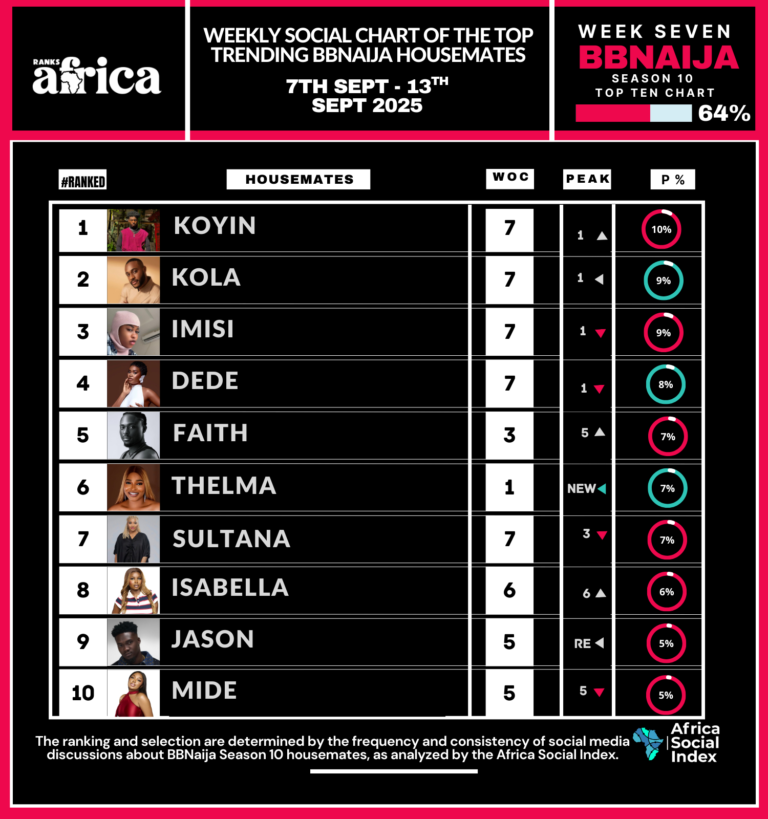
BBNaija Week 7 Social Chart Is Here!

0

The housemates are keeping social media buzzing with nonstop content!

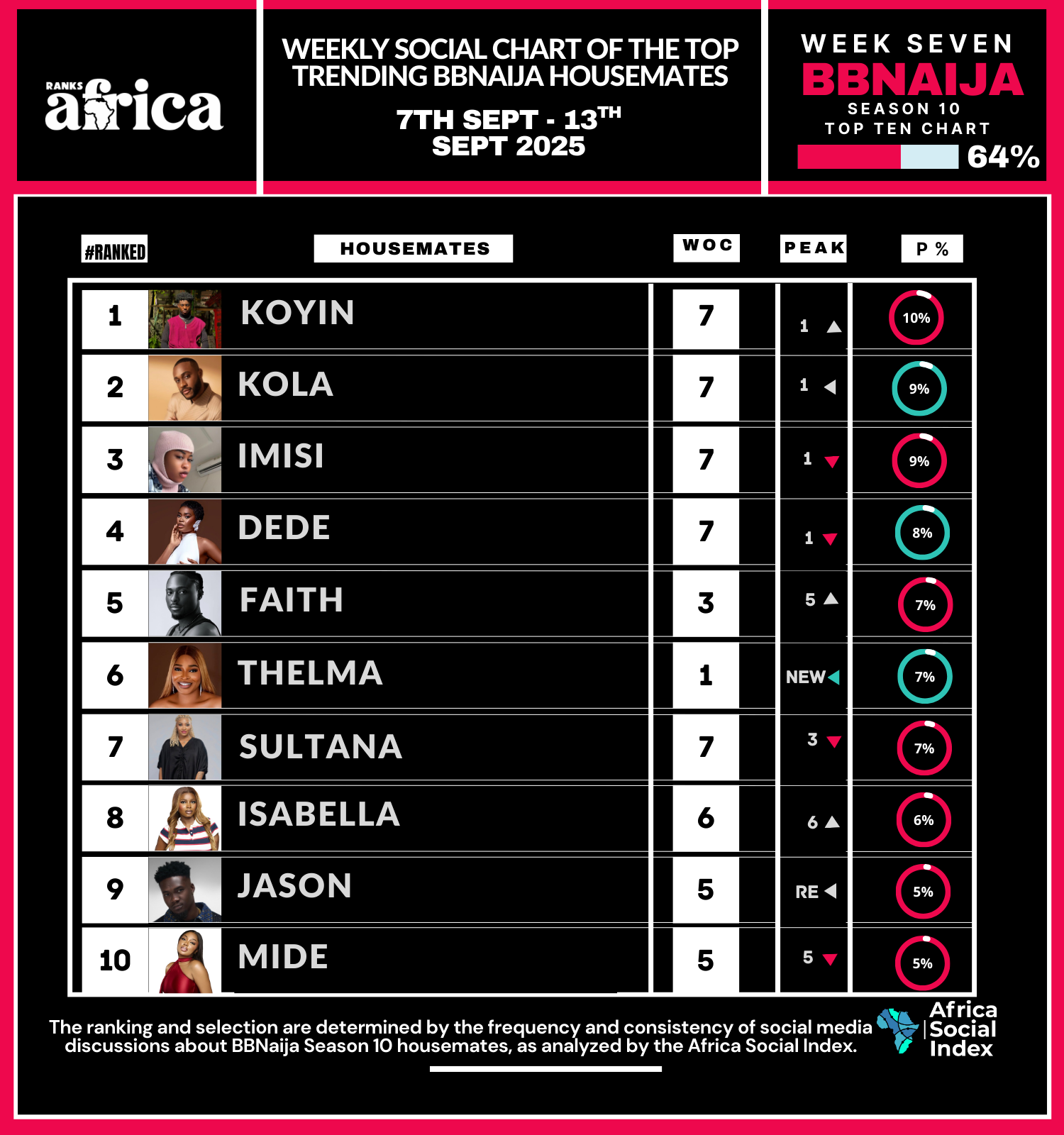
✨ Leading the trend this week is Koyin, moving up to the No. 1 spot, followed closely by Kola. Meanwhile, Imisi, Dede, and Faith continue to dominate conversations and keep their fanbases charged up.

🌍 Also holding strong on the Week 7 chart is Thelma (entering for the first time), while Sultana, Isabella, Jason Jae, and Mide continue making waves as some of the most talked-about housemates across Africa.

The game is heating up fast, and the fanbases are getting louder than ever! 🚀

👉 Who’s your favorite so far?

Deola Art Alade Joins the Grammy Academy: A Milestone for Nigeria’s Creative Industry

0

When the Recording Academy unveiled its 2025 member class, the announcement carried special weight in Nigeria’s creative community. Among the new inductees was Deola Art Alade, co-founder and Group CEO of Livespot360, the Lagos-based creative powerhouse that has transformed the art of storytelling, live production, and brand experiences across Africa.

From Lagos to the Global Stage

For years, Alade has been at the forefront of Nigeria’s rapidly expanding creative economy. Through Livespot360, she has pioneered large-scale productions that merge music, culture, and technology. Her projects have consistently raised the standard of what is possible within African entertainment, positioning Nigeria as a hub of innovation in the global marketplace.

Her appointment to the Recording Academy, the body behind the Grammy Awards, represents more than personal recognition. It signals a widening of the global conversation to include African voices at the highest level of cultural decision-making.

The Significance of the Grammy Academy

The Recording Academy is best known for hosting the Grammys, one of the most prestigious honors in music. Each year, it welcomes a new member class comprising artists, producers, executives, and thought leaders from around the world. These individuals not only vote in Grammy categories but also influence the Academy’s future direction.

By welcoming Alade, the Academy acknowledges her contributions to advancing creative excellence in Nigeria and beyond. Her presence adds weight to Africa’s role in shaping how music is recognized and celebrated globally.

Livespot360 and the Evolution of Creative Storytelling

Under Alade’s leadership, Livespot360 has grown into a multidisciplinary creative solutions company, producing groundbreaking campaigns and unforgettable live experiences. From concerts and festivals to branded activations, the company has earned a reputation for merging artistry with strategy.

Her ability to craft immersive cultural experiences has made her a sought-after figure in both business and entertainment circles. For many observers, her induction into the Grammy Academy is a natural extension of her influence and vision.

Africa’s Creative Economy on the Rise

Alade’s recognition comes at a pivotal time. Nigeria’s entertainment and media sector is valued in the billions of dollars, with Nollywood, Afrobeats, and fashion pushing Africa further into the global spotlight. The inclusion of African executives like Alade in the Academy helps to solidify this momentum, ensuring that the continent is not only celebrated but also represented in key global institutions.

A Defining Moment

For Alade, joining the Recording Academy is both a personal achievement and a symbol of progress for Nigeria’s creative industries. It reaffirms that African innovators have not only caught the world’s attention but are now helping to define its cultural future.

As she takes her seat among the Academy’s global voices, her journey underscores a simple truth: Africa’s creative energy is no longer waiting at the margins—it is shaping the center.


Emir Sanusi Faults Nigeria’s Leadership, Says Country Has Suffered From Poor Governance for Years

0

KANO, Nigeria — The Emir of Kano, Muhammadu Sanusi II, has criticized the quality of political leadership in Nigeria, lamenting that the nation has endured decades of poor governance.

Speaking at a recent public engagement, Sanusi said Nigeria had not been fortunate to produce leaders capable of addressing its fundamental challenges. He noted that successive administrations had fallen short of expectations, leaving the country struggling with recurring crises in governance, economy, and social development.

According to him, Nigeria has for years been saddled with what he described as “lousy leadership,” a pattern he warned could continue to hinder progress if not urgently addressed.

The former Central Bank of Nigeria governor emphasized the need for leaders who demonstrate vision, discipline, and accountability, insisting that genuine development could only come through a shift in the quality of those in public office.

Sanusi’s comments come at a time when concerns about governance and leadership performance remain central to national discourse, with citizens increasingly demanding transparency, reform, and results-oriented policies from those in power.

Tobi Amusan Cruises Through Heats with Commanding Performance at World Athletics Championships

0

Nigeria’s sprint queen, Tobi Amusan, delivered a composed yet emphatic performance in the women’s 100m hurdles at the 2025 World Athletics Championships, easing through her heat with trademark flair.

The world record holder clocked 12.53 seconds to win Heat 6, comfortably ahead of Bahamian rival Devynne Charlton, who crossed the line in 12.69 seconds.

Amusan, known for her poise under pressure, drew cheers from the crowd when she gestured a “calm down” sign after her victory, signaling that the battle has only just begun. Her display not only confirmed her dominance but also reinforced expectations that she remains the athlete to beat as the competition advances.

The Nigerian star, who has carried the hopes of millions since breaking the world record in 2022, appeared relaxed and focused, reserving her best for the semifinal and final stages. “Calma,” her gesture seemed to say, reminding fans and competitors alike that the heats are only a warm-up.

Athletics enthusiasts celebrated her performance online, with many praising both her confidence and consistency on the global stage. Photographers captured the moment with Sony Alpha 1 and 9 cameras, highlighting the intensity and elegance of her run.

As the championships progress, attention will remain firmly fixed on Amusan, whose quest for another world title continues to inspire Nigerians and track lovers across the globe.


Canada Rejects 1,596 Nigerian Asylum Applications in 2025

0

Nigeria Among Top African Sources of Rejected Claims

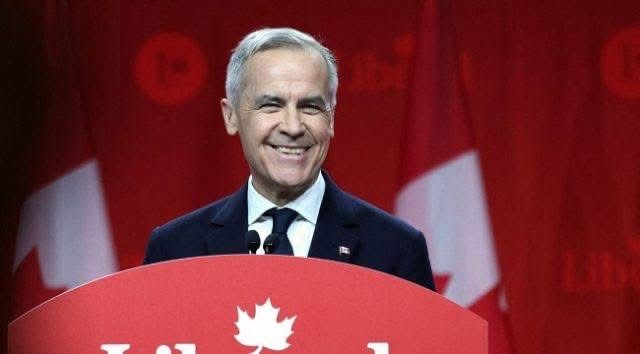
Canada has rejected 1,596 asylum applications filed by Nigerians between January and August 2025, according to fresh figures released by the Immigration and Refugee Board (IRB). The data underscores both the scale of migration pressure from Nigeria and the growing difficulties faced by its citizens in securing refuge abroad.

Rising Nigerian Applications, Higher Rejection Rates

Nigeria continues to rank among the top African countries for asylum seekers in Canada, driven by worsening insecurity, economic instability, and governance challenges. However, the 2025 figures reveal a sharp rejection trend, with many claims dismissed for failing to meet the international definition of a refugee, which requires evidence of persecution on grounds such as race, religion, political opinion, or membership of a vulnerable social group.

In comparison, asylum seekers from countries such as Somalia, Eritrea, and Sudan often see higher acceptance rates in Canada, as conflicts in those nations provide clearer grounds for protection. Nigerian claims, by contrast, are increasingly scrutinized due to what Canadian officials describe as a mixture of “economic migration presented as asylum.”

Background of Increased Scrutiny

Concerns about fraudulent claims have shaped Canadian policy since 2017–2018, when thousands of Nigerians crossed into Canada through unofficial entry points along the U.S. border, many after obtaining American visitor visas. That influx triggered political debates in Ottawa and led to tighter vetting of Nigerian applicants.

The 2025 rejection numbers reflect that policy legacy, with officials keen to balance Canada’s humanitarian obligations with public concerns over irregular migration.

Broader African Context

Nigeria’s rejection figures stand out compared to other African countries. For instance, in the first half of 2025, Canada reported higher acceptance rates for asylum seekers from Ethiopia, the Democratic Republic of Congo, and Cameroon, whose ongoing conflicts provided more straightforward cases of persecution.

Analysts note that while Nigeria faces security crises from Boko Haram insurgency in the northeast, banditry in the northwest, and separatist tensions in the southeast, Canadian decision-makers often view these threats as regional rather than national in scope. As a result, applicants are frequently told they could relocate internally within Nigeria.

Humanitarian Concerns

Rights groups have expressed concern that the high rejection rate overlooks the complexity of Nigeria’s challenges, particularly for young people, journalists, and activists facing targeted threats. “The Canadian asylum system must be careful not to paint Nigerian claims with a broad brush,” said a Toronto-based refugee rights advocate. “Many applicants face real dangers if returned.”

Canada’s Position

The IRB maintains that every application is considered individually and that Canada remains committed to its international refugee obligations. However, the data suggests Nigerian applicants will continue to face an uphill battle as migration pressures grow and host countries adopt stricter asylum regimes.

Outlook

With thousands of Nigerians still seeking safe passage abroad due to insecurity and economic strain, analysts warn that rejection rates like those reported in Canada could push many toward irregular routes, exposing them to exploitation and humanitarian risks.


 

Lagos Hosts Historic AFC World Series Championship at Teslim Balogun Stadium

0

Lagos came alive on Saturday night as the city hosted the AFC World Series Championships, marking a historic milestone for Mixed Martial Arts (MMA) in Nigeria and Africa at large. The electrifying event took place at the iconic Teslim Balogun Stadium in Surulere, drawing thousands of enthusiastic fans and international attention.

The championship featured top-ranked fighters from across the globe, who delivered explosive performances that kept spectators on their feet. The bouts, staged under the African Fighting Championship (AFC) banner, showcased a blend of raw talent, strategy, and endurance, underscoring the growing influence of MMA on the continent.

Organizers described the Lagos edition as a landmark achievement, not only for sports entertainment but also for Nigeria’s standing as an emerging hub for global combat sports. “The AFC World Series in Lagos is proof that Africa is ready to stand shoulder-to-shoulder with the world in Mixed Martial Arts,” said one of the promoters during the event.

The night’s highlight bouts featured both seasoned international fighters and rising African talents, who seized the opportunity to compete before a global audience. Fans cheered passionately as Nigerian fighters demonstrated resilience and skill, further cementing the country’s place in the evolving MMA scene.

The Lagos State Government, in collaboration with private sponsors, played a pivotal role in bringing the event to fruition. Officials noted that the championship would not only boost sports tourism but also inspire a new generation of Nigerian athletes to pursue careers in professional combat sports.

Sports analysts hailed the event as a breakthrough moment that could open doors for more international competitions in Nigeria. With Lagos successfully hosting the AFC World Series, the city has positioned itself as a future destination for major global sporting spectacles.


What I saw inside Hilda Baci’s Jollof Rice – Olawoyin Edris Busayo

0

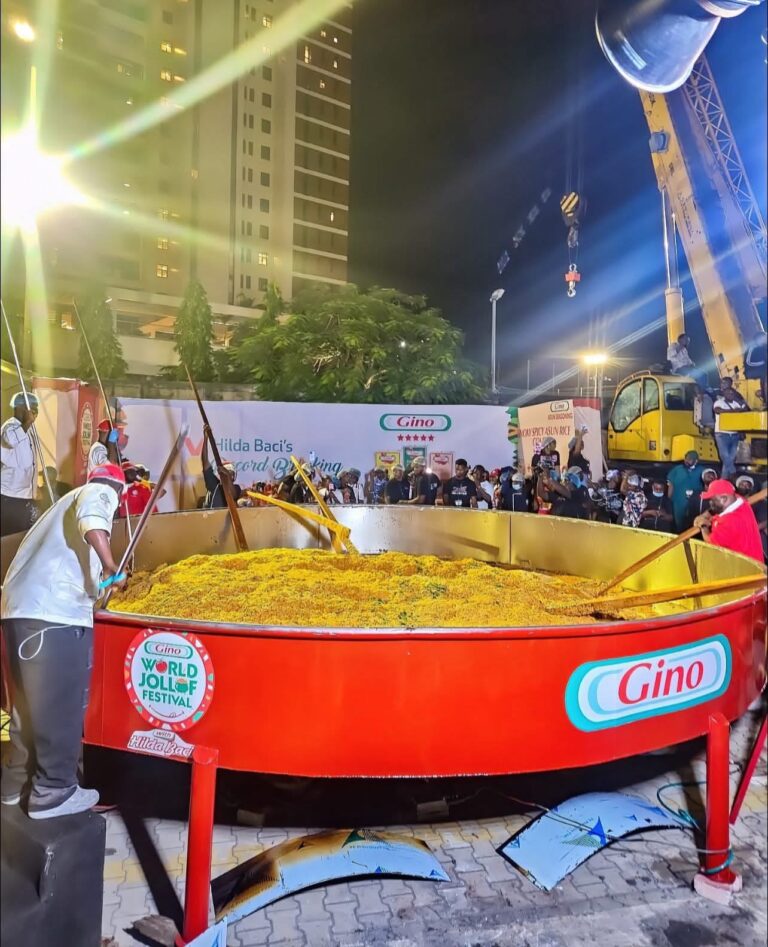
Few weeks ago, the Guinness World Record holder and global chef, Hilda Baci, hinted to the public that she will be embarking on the largest pot of jollof rice cooking on the 12th of September, 2025, at Muri Okunola Park, Victoria Island, Lagos, and she is targeting to feed 20,000 participants.

She equally took her time the following week to explain to us how she intended to go about the cooking, ranging from the quantity of rice ingredients to be used to the measurements of the pot Just 2 days to the event, she took to her page to inform the participants of the new venue, giving reasons of the capacity, which is now beyond her expectations.

Fast forward to the deal day, the largest pot was moved from the old venue to Eko Hotel and Suites, the new venue. The Caterpillar and Crane dropping the largest pot is thrilling to watch, as the demo is like a Nollywood film.The video of the ingredients to be used surfaced online, and it was very fascinating to see, as we can see large quantities of onions, vegetable oil, spices, and other ingredients.

As early as 6am, video of participants has started surfacing online, and looking at their faces, you will see the enthusiasm. You will see the support. You will see the solidarity devoid of media hyping or propaganda.

We’re shown how the pot was washed, how the rice was washed, how it was poured inside the pot, and when the meats, paste, vegetable oil, and spices were poured and roasted. I equally saw when the pot was reopened to check the color of the rice to know whether the ingredients had been properly mixed.

I noticed when the food was done and when the crane operator was asked to lift the pot with contents to ascertain the weight. At this stage, devil showed up as the Big Pot collapsed in the process. I saw how God intervened by not allowing the jollof rice, which took almost a year to plan and finally cooked for 9 hours, to fall out of the pot.I saw how this unfortunate incident was deliberately pended before finally making it out to the public, and this happened when Hilda Baci and her team had finally dished out the food. That’s a spirit of love. A tap of encouragement to Hilda at that.

It shows Nigerians actually know what should come first when they truly love you and your creative ideas. Now, to what is inside the Jollof Rice. I can see people who flew from Rivers State down to the venue inside this Jollof rice. I can see students who are in the middle of depression inside this Jollof rice. Not only that, but I can see people who are going through hell inside the jollof rice. Likewise, I can see people who are passionate about people’s progress inside the Jollof Rice.

Ohh! Do you think people are hungry or jobless to have devoted their time to such an event? Come on, off it, it is beyond that. What that shows you is that if you have something worthy, you tend to get such support, love, and encouragement.

I SAW LOVE INSIDE HILDA BACI’S JOLLOF RICE.

I celebrate you, Hilda Baci on this great feat.

Written By Olawoyin Edris Busayo

NEMA Confirms One Fatality in Lagos Building Collapse

0

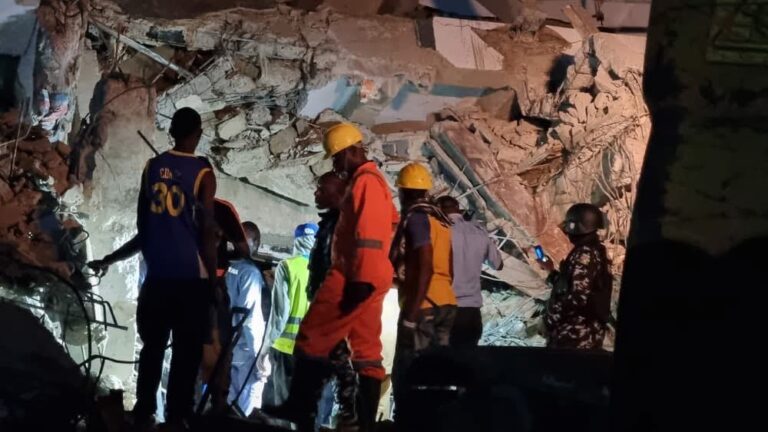
The National Emergency Management Agency (NEMA) has confirmed that one person died after a three-storey building collapsed on Thursday in the Alagomeji area of Yaba, Lagos State.

According to eyewitnesses, the incident occurred in the early hours of the morning, sending residents and passersby into panic as emergency responders rushed to the scene. The building, reportedly under renovation at the time of the collapse, crumbled suddenly, trapping individuals inside.

NEMA’s Lagos Territorial Coordinator, Mr. Ibrahim Farinloye, confirmed the casualty in a statement, noting that search and rescue operations were immediately activated in collaboration with the Lagos State Emergency Management Agency (LASEMA), the Fire Service, and other first responders.

“Unfortunately, one person was recovered dead from the rubble,” Farinloye said. He added that efforts were ongoing to ensure no other victims remained trapped beneath the debris.

Authorities have since cordoned off the site to prevent further danger and to allow for proper investigation into the cause of the collapse. Preliminary reports suggest possible structural weakness, though officials have not yet released a formal assessment.

Building collapses have remained a recurring tragedy in Lagos, with experts often linking them to poor construction practices, substandard materials, and inadequate regulatory enforcement. The state government has repeatedly pledged stricter monitoring of building sites to curb such incidents.

Residents in the area expressed concern over the frequency of collapses in the city and called on authorities to take more decisive action to hold negligent developers accountable.

Nigeria Spends N4 Trillion on Fuel Imports in First Half of 2025

0

Nigeria’s dependence on imported fuel continues to weigh heavily on its economy, with the country spending a staggering N4 trillion on imports in just the first six months of 2025.

Figures released by the National Bureau of Statistics (NBS) show that in the second quarter (Q2) alone, fuel imports cost N2.3 trillion, up from the N1.76 trillion recorded in the first quarter (Q1). This brings the cumulative half-year expenditure to N4 trillion, translating to approximately $2.58 billion at an exchange rate of N1,550 to the U.S. dollar.

The rising import bill underscores the strain on Nigeria’s foreign reserves and highlights the challenges posed by the country’s limited domestic refining capacity. Despite decades of being Africa’s top oil producer, Nigeria continues to rely on imported refined products to meet local demand.

Analysts note that the figures come at a time when the Federal Government is pushing reforms to revive local refining, including the much-anticipated operations of the Dangote Refinery and rehabilitation of state-owned refineries. However, until these projects come fully on stream, the financial pressure of fuel imports is expected to persist.

Economists warn that the trend could further weaken the naira, deepen inflationary pressures, and strain public finances, especially as subsidies remain a politically sensitive issue.

The NBS data provides a stark reminder of Nigeria’s energy paradox: a nation rich in crude oil but burdened by its dependence on foreign refineries to keep its economy running.

Federal Government Unveils Digital Inventory System to Curb Drug Shortages in Hospitals

0

The Federal Government has introduced a new digital inventory management model designed to tackle the persistent shortage of essential medicines in public hospitals across Nigeria.

The initiative, announced on Friday, is part of ongoing health sector reforms aimed at strengthening supply chain efficiency and ensuring uninterrupted access to life-saving drugs.

According to the Ministry of Health and Social Welfare, the digital model will provide real-time tracking of essential drug supplies, allowing health facilities to monitor stock levels, anticipate shortages, and place timely orders. Officials said the system is expected to eliminate manual bottlenecks that often result in late deliveries, wastage, or outright stockouts.

Minister of Health and Social Welfare, Prof. Muhammad Ali Pate, explained that the project will be implemented nationwide in phases, beginning with federal medical centres and teaching hospitals before extending to state-owned facilities.

“This innovation will guarantee transparency, accountability, and efficiency in the management of drug supplies,” Pate said. “No Nigerian should go to a hospital and be told that basic medicines are unavailable.”

The government added that the digital model will also support data-driven decision-making, giving policymakers accurate information on consumption patterns, procurement gaps, and future funding needs.

Healthcare experts have long raised concerns about frequent drug shortages, which force patients to purchase medicines at higher costs from private pharmacies. Analysts say the reform, if properly implemented, could significantly reduce out-of-pocket spending and restore confidence in Nigeria’s public health system.

The Ministry said it is working with private sector partners and international development agencies to ensure the sustainability of the model and to train hospital staff in its use.