Home Blog Page 13

Nollywood in Uproar as Niyi Akinmolayan Challenges Restrictive Actor Contracts

0

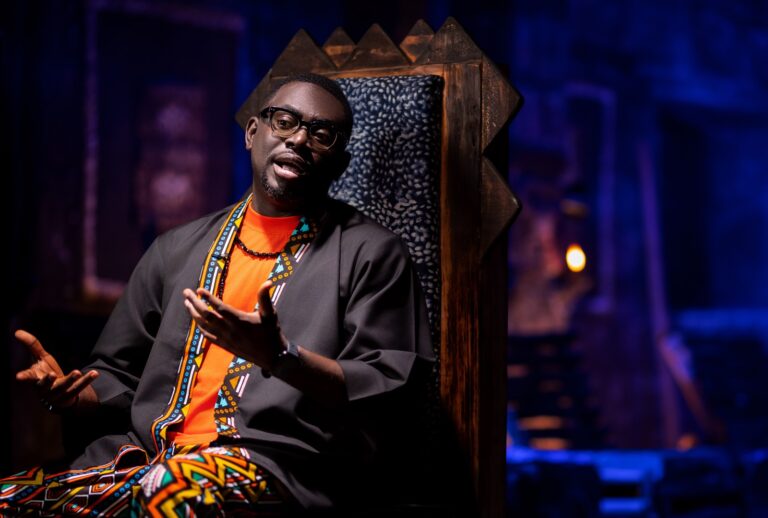
Lagos, Nigeria — Prominent Nigerian filmmaker Niyi Akinmolayan has ignited a storm of debate in Nollywood after publicly urging actors to resist signing contracts that prevent them from promoting other films. His remarks, shared on social media, immediately struck a chord across the industry, drawing sharp reactions from actors, producers, and fans alike.

Akinmolayan’s post questioned the fairness of exclusivity clauses that restrict performers from supporting projects outside their current commitments. Within hours, the conversation escalated, with actors condemning such contracts as “wicked,” filmmakers defending them as a matter of business strategy, and fans expressing confusion over why producers would expect exclusivity in a creative field built on collaboration.

The controversy has spotlighted long-standing tensions in Nollywood over labor practices and contractual obligations. While producers argue that exclusivity protects investments and marketing campaigns, critics say it stifles artistic freedom and undermines the growth of the industry.

Observers note that the debate reflects broader concerns about fairness and transparency in Nollywood’s rapidly expanding market. “This conversation is long overdue,” one industry insider remarked, emphasizing that the clash could pave the way for reforms in how contracts are negotiated and enforced.

Despite the disagreements, one point of consensus has emerged: Nollywood must adopt fairer practices to ensure that both actors and filmmakers thrive in an industry that continues to gain global recognition.

CEO of California Health Care Firm Arrested in $7 Million Veterans Affairs Fraud Case

0

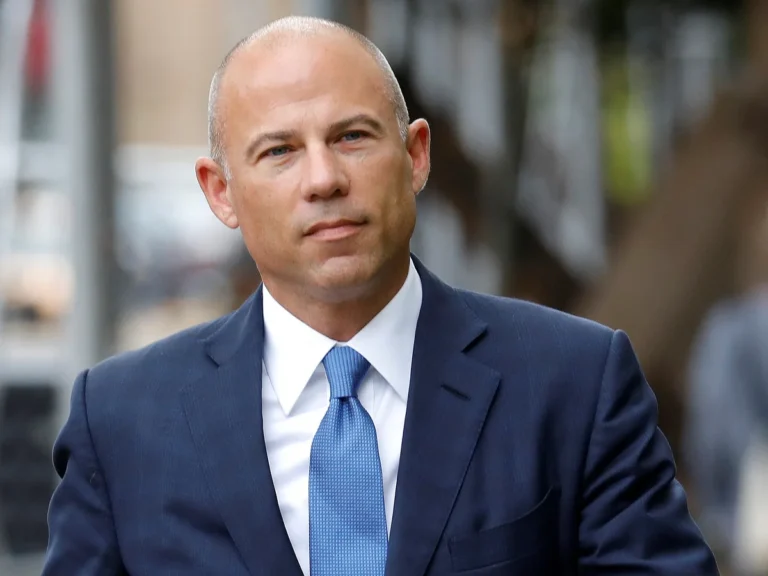
Federal authorities have arrested the chief executive officer of a California-based home health care company who allegedly attempted to flee the United States while facing accusations of defrauding the Department of Veterans Affairs (VA) of more than $7 million.

According to a statement released by the U.S. Attorney’s Office for the Eastern District of California, the suspect was taken into custody at San Francisco International Airport as he prepared to board a flight bound for Nigeria. Officials said the arrest capped a lengthy investigation into fraudulent billing practices that targeted programs designed to provide medical care for U.S. military veterans.

Prosecutors allege that over a five-year period, the company submitted false claims for services that were never provided. In some instances, investigators discovered that the firm billed the government for care purportedly delivered to veterans who had already died.

The case highlights what authorities describe as a deliberate scheme to exploit federal health care programs intended to support former service members. “This arrest demonstrates our commitment to protecting taxpayer dollars and ensuring that veterans receive the benefits they have earned,” the U.S. Attorney’s Office said in its statement.

The suspect now faces federal charges related to health care fraud and wire fraud. If convicted, he could face significant prison time and financial penalties.

The Department of Veterans Affairs has not yet disclosed the full scope of the impact on affected veterans, but officials emphasized that the investigation underscores the importance of safeguarding federal health care programs against abuse.

NIGERIA IN SEARCH: Senator Natasha Akpoti and Eberechi Eze Top Google’s Most-Searched Personalities for 2025

0

LAGOS—Google has released its highly anticipated 2025 Year in Search report for Nigeria, providing a definitive snapshot of the events, issues, and individuals that captivated the nation’s attention throughout the year. The report reveals a compelling mix of politics and sports dominance, with two figures emerging as the most-searched Nigerian personalities: Senator Natasha Akpoti and professional footballer Eberechi Eze.

Politics Takes Center Stage

The emergence of Senator Natasha Akpoti as the #1 most-searched Nigerian personality underscores the central role of political discourse and public interest in national affairs throughout 2025. Her prominence reflects:

  • Heightened Political Interest: Her search dominance highlights a year marked by intense scrutiny of governance, legislative decisions, and judicial processes, signaling a highly engaged populace following political developments closely.

  • Media and Public Scrutiny: As a key figure in high-stakes political narratives, Akpoti’s consistent presence in the news cycle—whether related to legal battles, legislative debates, or public commentary—drove persistent search interest.

Football Fever Remains Unabated

Sharing the top rank of searched personalities is footballer Eberechi Eze, whose inclusion demonstrates Nigeria’s unwavering passion for international football and the diaspora’s impact on national pride.

  • Premier League Performance: Eze’s consistent, high-level performance in the English Premier League and his visibility during international fixtures ensured he remained a constant source of search queries, as millions of Nigerians tracked his professional trajectory.

  • National Team Speculation: Search interest often peaked during periods of speculation or announcements regarding the Nigerian national team, where players with dual eligibility or high club performance generate massive public debate.

Top Trends and Categories

The 2025 Year in Search report revealed other key trends shaping Nigeria’s digital consumption:

  • Top Trending Searches: Major national issues, including debates over economic reform, and high-profile international events dominated the overall trending searches list.

  • Top Trending Actors/Actresses: Showcased the rising global influence of Nollywood, with both established stars and viral sensations capturing public imagination.

  • Top Trending Songs: Reflected the continued global dominance of Afrobeats, with local artists leading the charts and collaborations with international stars driving massive search volumes.

The data confirms that while Nigerians are heavily engaged in sports and entertainment, the political arena remains the single greatest driver of focused, sustained search queries throughout the year.

AFRICA’S SOUNDSCAPE: Spotify Wrapped 2025 Reveals Wizkid, Black Sherif, and Bien as Continental Stream King

0

Spotify has unveiled its 2025 Wrapped report, celebrating the diverse sounds and dominant artists that captured listeners across Africa. The data confirms the growing maturity of the continent’s music markets, with Nigerian superstar Wizkid, Ghana’s trailblazer Black Sherif, and Kenya’s versatile artist Bien emerging as the respective top streamed artists in their home countries.

The 2025 results underscore the genre fluidity, local relevance, and global reach that define Africa’s rapidly expanding music industry.

I. Nigeria: Afrobeats Titans Dominate

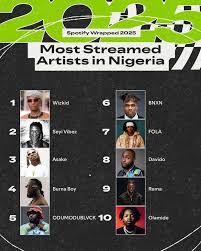
In Nigeria, the list of most-streamed artists is a powerful showcase of Afrobeats and its rapidly evolving subgenres:

  • Wizkid claimed the #1 spot as the Most Streamed Artist in Nigeria.

  • Seyi Vibez secured the #2 position, reflecting the massive popularity of his unique blend of Fuji and Afrobeats.

  • Asake followed closely at #3, cementing his position as one of the genre’s most influential figures.

  • The Top 10 list also featured established heavyweights such as Burna Boy (#4), Davido (#8), Rema (#9), and Olamide (#10), demonstrating the sustained listener loyalty to the titans of Afrobeats.

  • The inclusion of ODUMODUBLVCK (#5) and BNXN (#6) indicates the strong listener interest in the new wave of hip-hop and Afro-fusion artists.

II. Ghana: Black Sherif Leads a Genre-Diverse Field

Ghana’s list highlighted a blend of contemporary stars and veteran acts, with Black Sherif leading the charge:

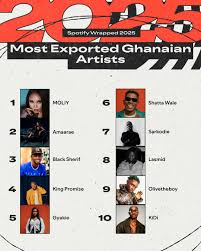
  • Black Sherif was the #1 Most Streamed Ghanaian Artist in Ghana.

  • The list showcased a strong presence of hiplife, Afropop, and dancehall, featuring Kweku Smoke (#2), Sarkodie (#3), and Kwesi Arthur (#4).

  • Dancehall giant Shatta Wale rounded out the top five.

  • Veteran artist Daddy Lumba (#6) and global star Stonebwoy (#7) maintained strong streaming numbers, demonstrating the multi-generational appeal of Ghanaian music.

III. Kenya: Bien’s Solo Success and Sauti Sol’s Legacy

The Kenyan charts demonstrate the enduring power of group legacy and the rapid rise of solo ventures:

  • Bien secured the #1 spot, proving his massive appeal as a solo artist.

  • The iconic group Sauti Sol came in at #2, highlighting the enduring catalog and shared fan base with Bien.

  • Kenyan Hip-hop and Gengetone were well-represented by Wakadinali (#3) and Toxic Lyrikali (#4).

  • Other top streamed artists included Bensoul (#5), Watendawili (#6), and Nyashinski (#8).

The 2025 Wrapped report solidifies the digital dominance of African music, showcasing how artists are effectively leveraging streaming platforms to convert local fame into continental and global success.


Google Pledges ₦3 Billion to Fuel Nigeria’s AI Talent and Digital Security

0

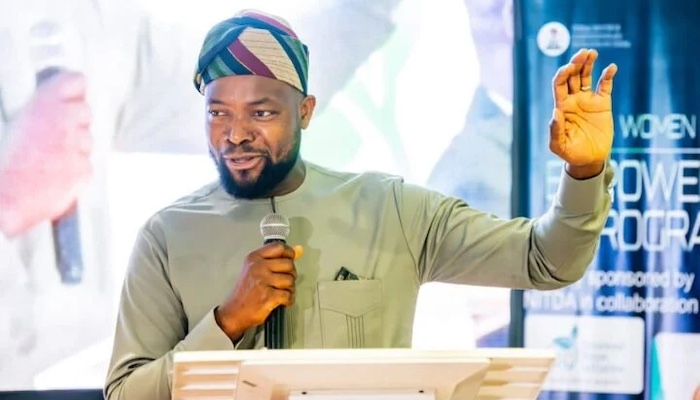
Google, through its philanthropic arm Google.org, has announced a substantial ₦3 billion (approximately $2.1 million)commitment to accelerate Nigeria’s digital transformation. The funding will be deployed through a strategic, two-pillar initiative focused on cultivating advanced Artificial Intelligence (AI) talent and strengthening nationwide digital safety and cybersecurity.

The announcement, made recently in Lagos by Google’s Director for West Africa, Olumide Balogun, aligns directly with the Nigerian Federal Government’s National AI Strategy and its ambitious target of creating one million digital jobs. The intervention is timed to help Nigeria capitalize on the projected $15 billion in economic value that AI is expected to unlock for the country by 2030, according to analysis by Public First.

“This dual focus ensures the country has both the skilled workforce and the secure environment needed for its economic growth to be sustainable and inclusive,” Balogun stated, emphasizing that the commitment is an “investment in people.”


The Two-Pillar Implementation Strategy

The N3 billion commitment will be channeled through five specialized partner organizations, each tasked with executing a specific part of the dual-pronged strategy:

Pillar 1: Building Advanced AI Talent

This pillar focuses on embedding cutting-edge AI skills into the nation’s technical education pipeline:

  • FATE Foundation & African Institute for Mathematical Sciences (AIMS): These organizations will collaborate to integrate an advanced AI curriculum directly into participating universities, empowering tertiary institutions, lecturers, and students with deep AI competencies. This effort is designed to directly address the urgent need for specialized AI expertise.

  • African Technology Forum (ATF): The ATF will launch a dedicated innovation challenge to guide developers through the crucial phase of transitioning from classroom learning to building viable, real-world AI products and solutions.

Pillar 2: Strengthening Digital Safety and Security

Recognizing that a thriving digital economy requires robust security, this pillar targets both public institutions and youth:

  • Junior Achievement (JA) Africa: The organization will scale up the “Be Internet Awesome” curriculum, teaching crucial digital citizenship and online safety skills to young people across the country.

  • CyberSafe Foundation: This foundation will focus on enhancing the cybersecurity posture of public institutions, helping to protect sensitive data and critical digital infrastructure from increasingly sophisticated cyber threats.

Government and Partner Endorsement

Minister of Communications, Innovation and Digital Economy, Dr. ‘Bosun Tijani, welcomed the timely investment, highlighting AI as “the heart of Nigeria’s desire to raise the level of productivity in our economy and to compete globally.” He stressed that the partnership directly supports the government’s drive to operationalize the National AI Strategy.

Adenike Adeyemi, Executive Director of FATE Foundation, underscored the continental impact, noting that the initiative is a “direct response to the urgent need for deep AI competencies in Africa,” positioning the continent to lead in the global technological future.

This latest funding builds on Google’s long-standing relationship with Nigeria, which includes infrastructure investment like the Equiano subsea cable and the successful 2023 “Skills Sprint” program, a N1.2 billion initiative that trained over 20,000 participants in AI and tech skills.

AFRICA MAKES HISTORY: Johannesburg G20 Summit Anchors African Priorities on Global Stage

0

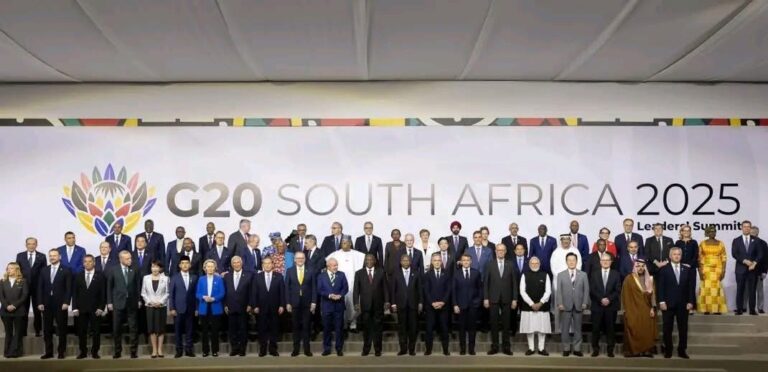
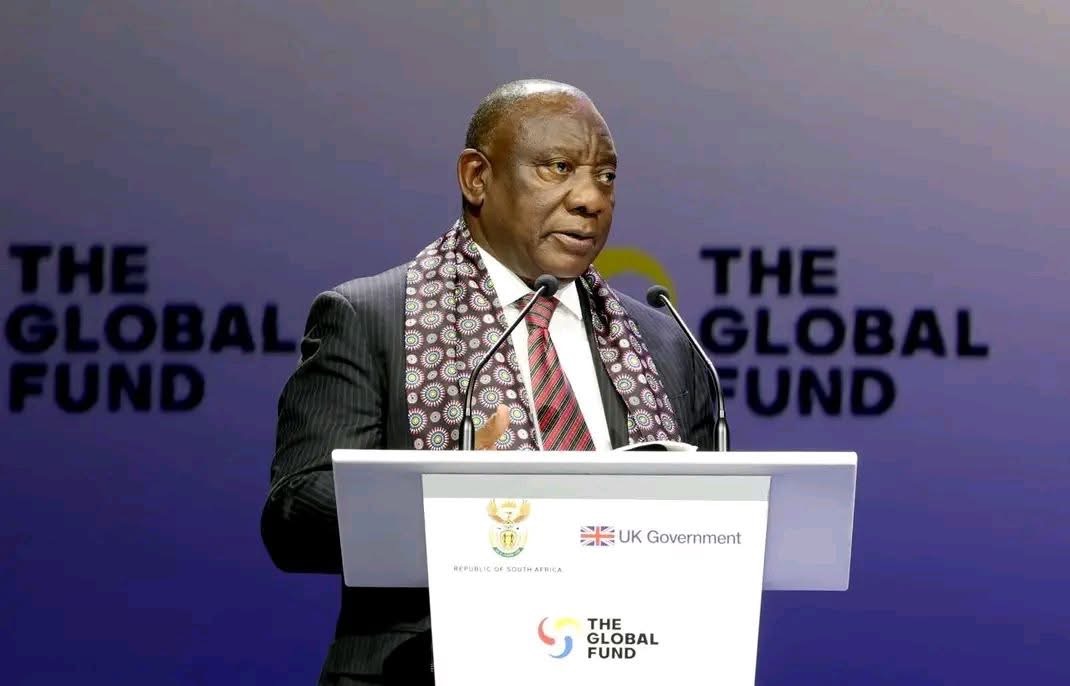
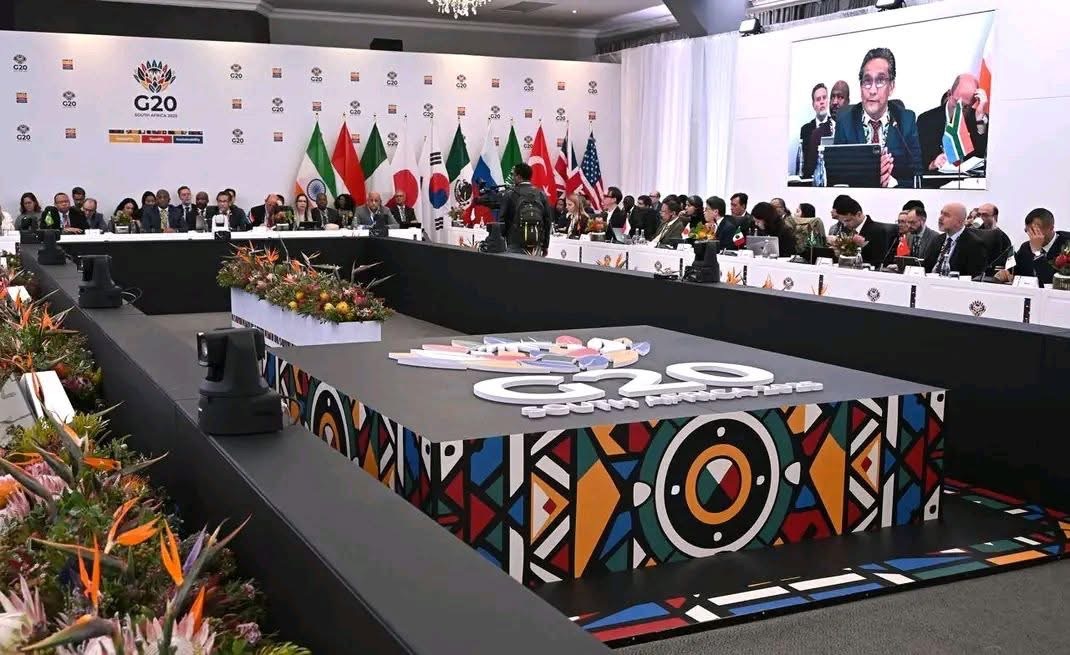
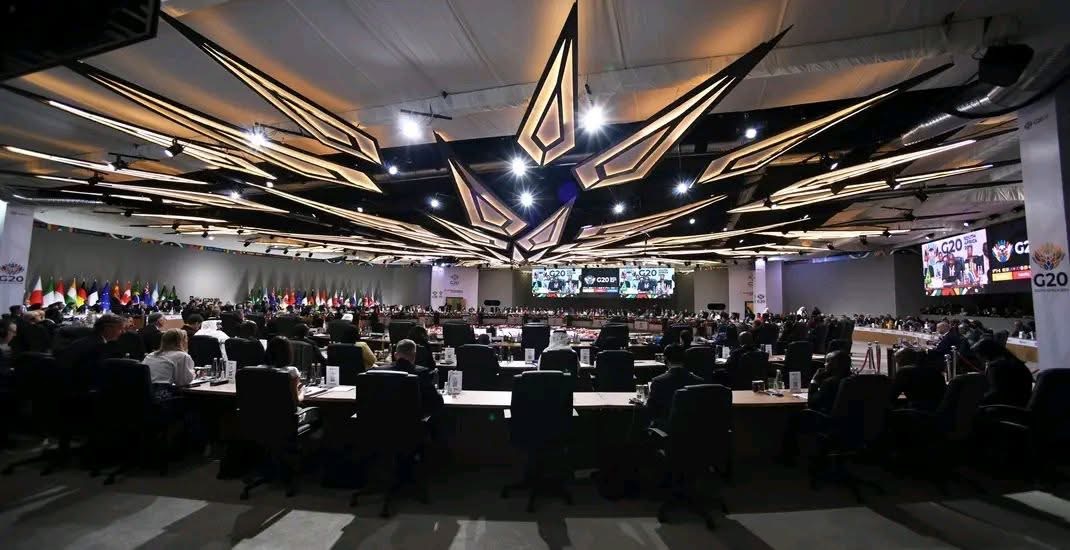
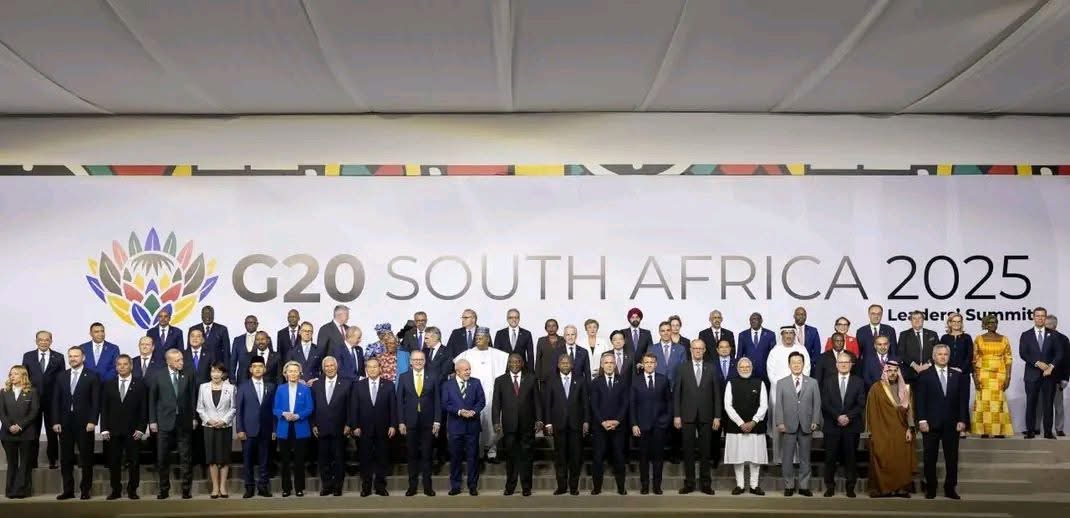
JOHANNESBURG—South Africa successfully hosted the historic G20 Leaders’ Summit on November 22-23, 2025, marking the first time the premier global economic forum has convened on African soil. Under the theme “Solidarity, Equality and Sustainability,” President Cyril Ramaphosa used the platform of the G20 presidency to forcefully champion the interests of the Global South, declaring Africa’s economic needs to be central to any discussion of global progress.


Despite a complex geopolitical backdrop, including a notable boycott by the United States and the absence of several other major leaders, the summit culminated in the adoption of a joint declaration that reaffirmed multilateral cooperation and secured consensus on key African priorities.


Redefining the Global Agenda

President Ramaphosa’s government, which assumed the G20 Presidency in December 2024, successfully reframed the group’s agenda around four linked priorities that resonate deeply across the African continent:


  1. Debt Sustainability: Pushing for significant debt relief for developing and low-income nations, arguing that the current international financial architecture unfairly constrains growth in the developing world.


  2. Climate Financing: Demanding stronger commitments from developed nations to scale up climate finance from all sources to support a just energy transition and enhance disaster resilience in vulnerable countries.


  3. Global Inequality: Commissioning the first-ever G20 report on global inequality and advocating for reforms of international financial institutions, like the UN Security Council and development banks, to better represent the voices of the Global South.


  4. Critical Minerals: Leveraging Africa’s vast critical mineral resources for inclusive industrialization rather than just raw material export.


In his closing remarks, President Ramaphosa stated, “Today, we have adopted the Leaders’ Declaration… in which we outline the far-reaching actions on which we have agreed to build a better, more equal and sustainable world.”

Leadership Beyond the Global Stage

President Ramaphosa also demonstrated that global advocacy does not ignore domestic struggles. Just days before the summit, he classified gender-based violence and femicide (GBVF) as a national disaster, leveraging the global spotlight to intensify shared national efforts to end what he termed a “pandemic.”


This bold domestic action, coinciding with the G20, proved that South Africa was prepared to tackle the struggles of its people while pushing for global reform, aligning its foreign policy of Pan-African clarity with domestic responsibility.

Securing Africa’s Permanent Seat

The Johannesburg Summit cemented Africa’s increased stature in global governance, following the African Union’s admission as a permanent G20 member during the previous year’s summit.


Even when faced with political friction and attempts by some external players to question South Africa’s worthiness of G20 membership, the nation stood firm. South Africa’s committed presidency ensured the production of a consensus declaration, proving that, as a founding G20 member, it will continue to engage “actively, constructively, and without apology.” The message from Johannesburg was clear: Africa is no longer just the focus of development discussions; it is now an indispensable voice shaping them.

BUSINESS CONFIDENCE SURGES: Nigeria’s BCI Climbs to 111.3 Points, Led by Manufacturing and Trade

0

Nigeria’s business climate maintained its upward trajectory in October 2025, as the NESG–Stanbic IBTC Business Confidence Monitor (BCM) reported a rise in the Business Confidence Index (BCI) to 111.3 points, up from 107.9 points in September.

This steady climb, with the Current Business Performance Index remaining firmly in the expansion zone (above 100), demonstrates renewed optimism among Nigerian firms, driven by improving perceptions of current business conditions, moderating inflationary pressures, and relative stability in the foreign exchange market.

The October reading represents a massive year-on-year surge, climbing 34.5 points from the 76.8 points recorded in the same period of 2024, confirming a significant recovery in business sentiment over the last year.


Sectoral Leaders of the Expansion

The positive momentum was broad-based, with all five major economic sectors recording expansion (above 100 points). However, the Manufacturing and Trade sectors recorded the strongest gains, reflecting improved supply dynamics and rising consumer demand.

Sector October BCI Reading Change from September Key Driver
Trade 115.4 points +7.8 points Easing inflation and greater stability in the Naira exchange rate supported trading volumes.
Non-Manufacturing 115.0 points Modest Increase Sustained activity in the construction and natural gas sub-sectors.
Agriculture 111.4 points +4.1 points Bumper harvests and government input support programmes boosted crop production.
Manufacturing 111.3 points +8.8 points Improved access to finance and relatively stable power supply lifted production.
Services 111.0 points +2.5 points Sustained growth, though at a slower pace than other expansionary sectors.

The robust rebound in Manufacturing is particularly significant, with key sub-sectors like Food, Beverage & Tobacco and Cement returning to expansion after earlier struggles.

Future Expectations Remain Upbeat

Despite the sustained positive performance, business managers remain highly optimistic about the future. The Future Business Expectation Index settled at 132.9 points for October, reflecting sustained confidence that the positive trend will continue over the next one to three months.

This optimism is largely supported by anticipated seasonal economic activity, the continuation of key policy reforms, and the belief that macroeconomic stability—particularly concerning the exchange rate and inflation—will deepen.

Lingering Constraints Dampen Full Potential

While the BCI shows strong resilience, the report warns that several structural constraints continue to temper enthusiasm and limit potential growth:

  • Financing Constraints: Limited access to affordable credit remains a major bottleneck for businesses.

  • High Operating Costs: Elevated commercial property and rental costs continue to strain profit margins.

  • Insecurity & Power: Persistent insecurity and erratic power supply remain core challenges that erode operational efficiency.

The NESG and Stanbic IBTC stress that for Nigeria to fully unlock its economic potential, policy clarity must be improved, and structural bottlenecks must be resolved to sustain the high confidence levels demonstrated in the October BCM.

Ghana’s Inflation Plunges to 6.3% in November 2025

0

Ghana’s consumer price inflation rate decelerated sharply to 6.3% year-on-year in November 2025, according to the Ghana Statistical Service.1 This marks the eleventh consecutive month of decline and represents the lowest inflation rate since the country’s rebasing exercise in 2021.

The significant drop from 8.0% in October brings Ghana’s inflation rate not only within the Bank of Ghana’s medium-term target band of 3$8\% \pm 2\%$ (6%–10%) but closer to the lower boundary, signaling a successful, broad-based economic recovery from its recent crisis.

Key Drivers Behind the Disinflation

The sustained fall in the headline inflation rate is attributed to a successful combination of tight domestic policies and favorable external market conditions.5


1. Slowdown in Food Prices

The primary factor driving the significant disinflation was a broad slowdown in food inflation.

  • Food Inflation Eased: The food and non-alcoholic beverages inflation rate eased sharply to 6.6% in November, down from 9.5% in October.

    Key Subgroups: This decline was most pronounced in categories such as vegetables, tubers, fish, and fruits, which had previously driven up household budgets.

2. Currency Strength and External Conditions

The Ghanaian cedi’s strong performance throughout 2025 played a critical role in controlling imported inflation.

  • Cedi Appreciation: A substantial rally in the cedi’s value (supported by high gold and cocoa prices) against the U.S. dollar sharply reduced the cost of imported goods, easing pressure on consumer prices.

  • Imported Inflation: As a result, inflation for imported items dropped significantly to 5.0% in November, down from 11$7.8\%$ in October.

  • Global Stability: Stabilizing external market conditions, including moderating global oil prices and improved trade terms, further supported the domestic disinflationary trend.

3. Monetary and Fiscal Discipline

The sustained decline is also a direct result of coordinated policy efforts:

  • Bank of Ghana (BoG) Policy: The Bank of Ghana’s commitment to a tight Inflation Targeting (IT) framework and multiple interest rate cuts throughout the year (as inflation moderated) helped to anchor inflation expectations.

  • Fiscal Consolidation: The government’s ongoing implementation of fiscal consolidation measures under its IMF-supported recovery program has restored investor confidence and stabilized the macroeconomic framework.

Economic Implications

The inflation figure has profound implications for the Ghanaian economy and its future policy direction:

  • Interest Rate Easing: With inflation well within the target band, the BoG is expected to have sufficient flexibility to continue easing its Monetary Policy Rate (MPR), encouraging more lending to the private sector and supporting economic growth.

  • Improved Real Returns: The disinflation trend improves the real rate of return on investments, making Ghanaian assets more attractive to both domestic and international investors.

  • Structural Stability: The slowdown is broad-based, affecting both locally produced and imported goods, suggesting that the trend is structural and sustainable, reinforcing Ghana’s path out of its severe economic crisis.


Reps Demand FG Publicly Name and Prosecute Terror, Kidnap Financiers

0

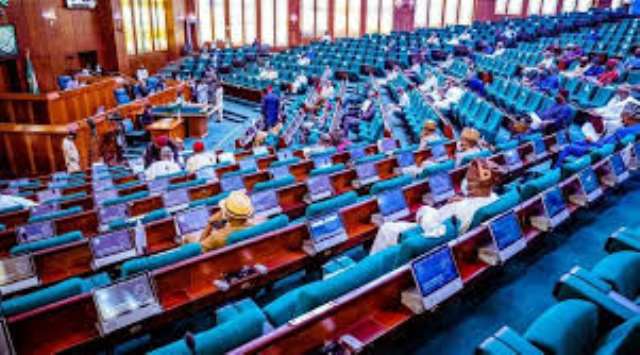
Nigeria’s House of Representatives has passed a critical resolution demanding that the Federal Government publicly identify, sanction, and prosecute all individuals and entities involved in funding terrorism, banditry, and kidnapping across the country.

The resolution, adopted during Wednesday’s plenary session, followed the comprehensive consideration of the report generated from the chamber’s three-day special security debate held last week. Lawmakers argued that shielding these financiers only emboldens criminal networks and undermines national efforts to achieve stability.

Key Mandates for Enhanced Justice and Security

The final report, which contains over 40 recommendations and will be forwarded to the Senate for concurrence before transmission to the President, security agencies, and state governments, focused heavily on strengthening both the investigative and judicial response to Nigeria’s insecurity crisis.

1. Public Naming and Prosecution of Financiers

The central demand urges the executive arm to prioritize the unmasking and prosecution of those bankrolling criminal activities. Key recommendations included:

  • Public Identification: That financiers of terrorism, banditry, and kidnapping be publicly named, sanctioned, and prosecuted.

  • Transparency: That terrorism-related prosecutions be open, expeditious, and transparent to build public confidence in the justice system.

2. Judicial and Legal Reform

Acknowledging the slow pace of current terrorism trials (often known as the Kainji Mass Trials), the House called for significant judicial reforms to ensure swifter justice:

  • Special Court: Establishment of a special court dedicated solely to terrorism, banditry, and kidnapping cases. This is intended to ensure faster, more coordinated judicial proceedings.

  • Stricter Penalties: The parliamentarians mandated that the penalties for arms trafficking and illegal possession of weapons should be strengthened and strictly enforced to stem the flow of illicit arms fueling insecurity.

3. Peace and Reconciliation

Beyond immediate prosecution, the House also recommended the establishment of a Truth, Justice, and Reconciliation Commission to address extremist, communal, and religiously motivated violence, aiming for a long-term resolution to conflict drivers.

SECURITY REFORM: NEC Approves ₦100 Billion for Total Overhaul of Police Training Facilities

0

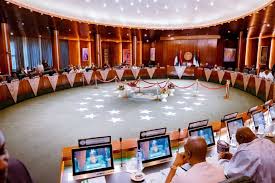
The National Economic Council (NEC) has given a major approval for security sector reforms, endorsing a significant allocation of ₦100 billion for the comprehensive overhaul of training centers belonging to the Nigeria Police Force and other security agencies nationwide.

The decision comes after a critical assessment revealed that the current facilities are in a state of severe disrepair, hindering the federal government’s efforts to strengthen the technical and operational capacity of its national security apparatus.

Massive Investment in Human Capacity

The ₦100 billion allocation is designated for the phased renovation and modernization of physical infrastructure, including hostels, classrooms, parade grounds, and firing ranges at major training academies across the country. The goal is to create world-class environments conducive to effective modern policing and security training.

In addition to the infrastructure overhaul, the NEC also endorsed a separate sum of ₦2.6 billion specifically for consultancy services. This allocation will cover project management, supervision, and expert technical advice necessary to ensure the ₦100 billion infrastructure project meets global standards for security training facilities.

NEC’s Push for Enhanced Security

The approval signals a renewed commitment by the federal government, driven by the NEC—which includes the Vice President, state governors, and key ministers—to address systemic weaknesses in national security.

Experts have long pointed out that poor training facilities contribute directly to low morale, inadequate tactical skills, and an inability to adapt to modern security challenges, such as cybercrime, insurgency, and complex urban policing.

The investment is expected to facilitate a curriculum upgrade, allowing the police and other security agencies to integrate modern technology and specialized training into their programs, ultimately leading to a more professional, effective, and community-oriented security force.