

Home Blog Page 175

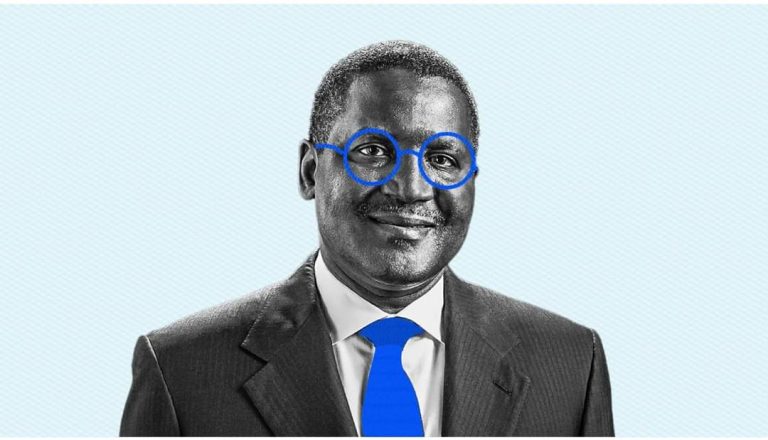
A Sunday with Aliko Dangote

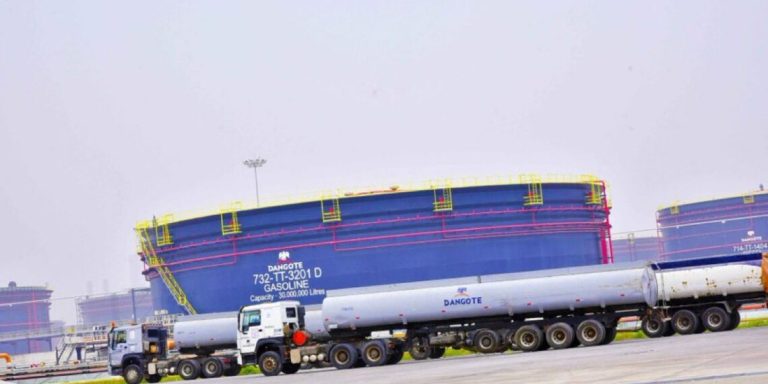
I was one of the 102 senior journalists invited from all over the country to tour the Dangote Fertilizer and Petrochemical Refinery Complex last Sunday and it turned out to be an unbelievably humbling and revealing experience. Unmistakably visible to us was the power of vision, determination to succeed in the face of many hurdles and one man’s love for country. We were reminded that it is only we, Nigerians, that will develop our country; not some mythical ‘foreign investors’ that our leaders have been looking for. The visit lasted 11 hours during which we went around every corner of the massive complex, occupying 2,635 hectares of land (seven times the size of Victoria Island, Lagos). It is located in the Dangote Industries Free Zone (different from Lekki Free Zone which is owned by the Lagos State government). In all, we probably covered most of the 112km of road network crisscrossing the vast compound (some journalists termed it ‘The Dangote Planet’), walking and being driven.


On hand to lead the tour were Aliko Dangote himself (Group President); Edwin Devakumar (Group Vice President, Oil & Gas) and Fatima Dangote (Group Executive Director, Commercial).


Dangote informed us that the fertilizer, petrochemical and refinery business would be quoted on the stock exchange on or before the first quarter of 2025 in what could be one of the biggest IPOs in recent years; that the NNPCL has only 7.2 per cent stake in the refinery, not 20 per cent as stated previously. “Although we had offered them 20 per cent, they could not pay for all of that and so we had to reduce it to 7.2 per cent, which they paid for,” he said matter-of-factly.


He spoke on the politics and economics of crude oil supply from the NNPCL; the $100 million payment to Lagos State government; his encounters with shrines during construction and the role of Ooni of Ife; why he did not build the refinery in the Niger Delta region which is the nation’s hydrocarbon base and why Ogun State lost out as the initial location choice; why he has no home outside Nigeria and his plans to reconstruct the Lekki expressway. He also announced that the company will soon move into its 18-storey towers on Alfred Rewane Road, Ikoyi, not far from its current location.


We arrived at the refinery complex about 9.30am after a two-hour ride from the corporate headquarters of Dangote Industries Limited (DIL), Falomo, Ikoyi. The first port of call was a facility called Land Fall Point (LFP). “Twenty-five kilometres from here into the ocean we have our three Single Point Mooring (SPM) where ships discharge crude oil into our subsea pipes,” Devakumar said.


An SPM is a floating buoy anchored offshore that allows the handling of liquid cargo in areas where dedicated onshore facility for loading and unloading cargo is unavailable.


From LFP we went to the port and quays constructed by DIL with a load bearing capacity of 25 tonnes/sq metres to bring heavy and large cargoes close to the site to handle liquid cargoes. Soon, we were off to the fertilizer plant where the pungent smell of urea welcomed us. The plant has an installed production capacity of three million tons/yr, but it’s currently producing at half the capacity due to inadequate gas supply – the same problem that is plaguing Nigeria’s electricity supply and impeding production at NLNG.


The fertilizer plant is the largest in Africa and the second largest in the world. Nigeria consumes one million tonnes of fertilizer per year; meaning that Dangote is able to meet local demand while excess is exported to USA, Brazil and other places.


From the fertilizer plant, we dashed to the conference room where Dangote gave detailed and comprehensive briefings on his businesses, right from its inception, detailing his transition from commodity trading in 1978 to a well-diversified conglomerate comprising cement, crude oil and gas exploration, agriculture, fertilizer and petrochemical refinery. He appeared disarmingly simple; mild-mannered and convincing. His voice was gentle and there was no iota of indication that this was Africa’s richest man. I sat close to him, with Kayode Komolafe of Thisday (we call him KK) sitting between us.


Even though I knew what the answer might be, I asked Dangote why he didn’t site the refinery in the Niger Delta. He said that would have made the investments less expensive, but he was frightened away by the volatility in the region. “But Sir, Akwa Ibom State is peaceful. There’s no violence there. You should have come to Akwa Ibom,’’ I pushed.


Others chuckled, but Dangote contemplated my pitch briefly and said, “Yes. I know your governor. I saw him last week in Lagos …”


We left the conference room to tour the refinery, the labs and the control rooms. I didn’t know what to expect, but suffice it to say that the refinery is just a labyrinth of big pipes, running overhead in the open skies, without roofs, and on the ground and beneath the ground. It is a network of big and small pipes bending, twisting and contorting all over the place from its beginning at the Single Point Mooring 25km offshore to the loading bay where refined products are pumped into tankers. As we walked around, I tapped Mr. Devakumar at a point and asked, “Do you have an idea of the total lengths of all these pipes. I’m sure they’d run into thousands of kilometres?” “Yes,” he answered. “We are inviting Guinness World Records to register it.” Dangote chipped in: “They will have to come and audit it before they register and announce it.”


We continued walking. This is the world’s largest single-train refinery with capacity to process 650,000 barrels of crude per day. It will meet all of our needs for refined products with enough for exports. “It is a game changer,” exclaimed Devakumar.


After the refinery, we returned to the Conference Room for more briefing, Q&A and lunch. There were questions on varied topics, including the impact of energy transition on the sustainability of the refinery; title documents from Lagos State and NNPC shareholding. One cheeky journalist asked if the Dangote Refinery will also undergo the kind of turnaround maintenance that government-owned refineries have been experiencing and another queried if Dangote knew why the Port Harcourt refinery has refused to work despite the billions of dollars pumped into its overhaul. The underlying mischief behind the two questions was obvious and we all had a good laugh. I asked two questions on the politics of supply of crude oil to the refinery by the NNPCL and whether he will take the refinery to the capital market. I had earlier made a note to ask Dangote about his relationship with the Tinubu administration given the dramatic and embarrassing visits from the EFCC last year. But I changed my mind and dropped the question. Dangote addressed the questions one after the other.


He said fossil fuels will be around for some time to come despite the drive for renewable energy and explained the need for NNPCL to supply domestic refineries with crude. He is optimistic that the guidelines recently announced by the NNPCL on crude supply will make a difference, adding, “I hope the IOCs will respect the guidelines. Right now, we are paying $6 premium on every barrel we buy from them, but luckily, our refinery was designed to refine different grades of crude and so we can actually buy from everywhere. But importation brings in poverty and ships out jobs.”


He said that the Lagos State government had insisted on being paid for the land in dollars and he willingly paid the $100 million price. Although the government promptly issued the title documents, construction was delayed because of community issues. “You know they have a lot of shrines here,” he said. We laughed heartily. “But I must thank the Ooni for his kind interventions which quickly resolved the issues,” he added. The delay cost him $60 million in interest charges from the banks.


The refinery was initially scheduled to be sited in Ogun State, but the state government had delayed in providing the land because the governor then was making unethical demands. Dangote walked away and approached the Lagos State government. But the delay cost the company about $500 million in interest payments. That’s one of the negative outcomes of corruption.


By now we were all tired, but nobody complained. The mood was convivial and the conversation was interesting. The refinery currently employs 30,000 people, of which 97 per cent are Nigerians. The figure will go up to 100,000 as production ramps up. The plant will meet all of our domestic demands for liquid products (gasoline, diesel, kerosene and aviation fuel). Currently, it is producing diesel and aviation fuel; petrol will be pumped out next month, Dangote assured.


The Group President said his refinery has been able to bring down diesel price and may also moderate petrol prices at the pump, depending on variables like source and price of crude and exchange rate.


The event closed with a passionate vote of thanks from Ms. Fatima Dangote. She praised her father’s energy, commitment and love for Nigeria and thanked Nigerians for their unceasing love to daddy. We rushed back to our hotels to watch the England-Spain Euro final football game!


Culled from The Guardian
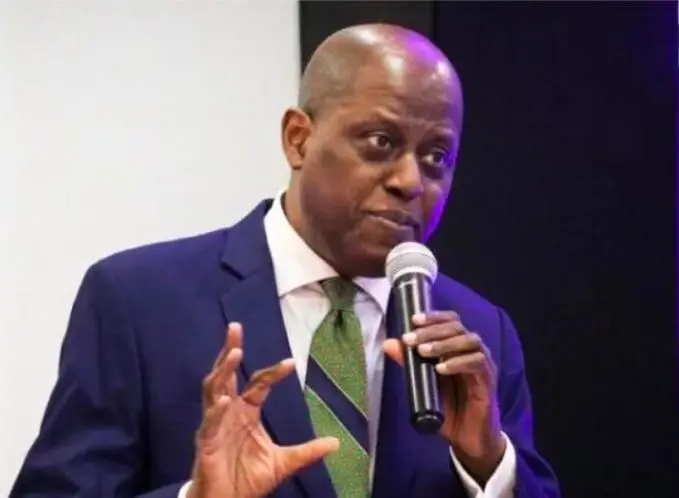
CBN To Take Over All Dormant Accounts For Treasury Bill Investments

The Central Bank of Nigeria (CBN) has issued new directives to banks and financial institutions regarding dormant accounts. The CBN will now take over funds in these dormant accounts and reportedly invest them in treasury bills and other securities.


The announcement was made in a circular released on Friday by John S. Onojah, Acting Director of the Financial Policy and Regulation Department. The circular is titled “Guidelines on Management of Dormant Accounts, Unclaimed Balances and Other Financial Assets in Banks and Other Financial Institutions in Nigeria“. The guidelines were initially drafted in April but have now been finalised.


The CBN instructed financial institutions to move funds that have been in dormant accounts for up to 10 years to the Unclaimed Balances Trust Fund (UBTF) Pool Account. The UBTF Pool Account is the designated CBN account for holding unclaimed balances from eligible accounts. The funds will be invested in Nigerian treasury bills and other approved securities. The principal and any interest accrued will be refunded to the beneficiaries within ten working days upon request.


To reclaim funds from dormant accounts, account owners must complete an “Asset Reclaim Form” at any financial institution branch. They must provide proof of account ownership, valid identification, proof of residence, and an affidavit confirming the information. Financial institutions will verify claims within ten working days and forward them to the CBN, which will process the refunds.


Note that dormant accounts are bank accounts that have remained inactive for a specified period, typically at least one year. This inactivity means there have been no deposits, withdrawals, or other transactions initiated by the account holder during that time.


The apex bank has claimed that the new guidelines for such accounts ensure transparency and efficiency in reclaiming funds. According to the directive, information on unclaimed balances will be made available on financial institutions’ websites, the CBN’s website, and through newspaper publications. The interest payable on unclaimed balances will be determined periodically by the CBN, and the CBN will also set the profit and loss ratio for non-interest banks.

I will pay new minimum wage —Adeleke 

0

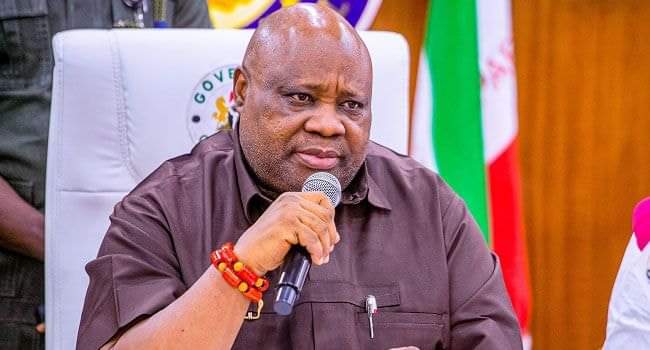
Osun State governor, Senator Ademola Adeleke, on Friday pledged that his administration will not be among defaulters in the payment of the new minimum wage.


Adeleke said after the National Assembly might have passed the bill and finalised with every other things on it, the state government would abide by the rule because “it has become a law”.


The governor who made this known in Osogbo, through the Commissioner for Information, Mr. Kolapo Alimi, expressed commitment to implementing the N70,000 minimum wage for civil servants in the state.


“Our governor is a lover of workers; his first agenda is to prioritise the welfare of workers both active and non-active.


“Governor Adeleke will not be among defaulters of the new minimum wage. Osun State will never deviate from the law on minimum wage.”


The governor stressed that the welfare of workers is a top priority for his administration and he will not deviate

Agribusiness institute begins operations September – FG

0

The Federal Government, on Friday, announced that the first National Agricultural Land Development Authority Institute of Agribusiness and Entrepreneurship would begin operations in September this year.


It said the institute would be established in the six geopolitical zones of Nigeria, adding that the first institute would commence activities in Aba, Abia State in the next two months.


The Executive Secretary, NALDA, Paul Ikonne, who disclosed this to journalists in Abuja, explained that the establishment of the institute was to support the growth and development of agribusiness in the country by transforming agriculture into a modern and appealing career path for the youth.


This, he said, is through a combination of practical training, specialised curriculum, cutting-edge technology and entrepreneurial education in the field of agribusiness and agronomic practices.


“This will enable the country to attain food security and ensure a stable and sufficient food supply for the nation in line with President Bola Tinubu’s food security agenda,” Ikonne stated.


Related News

On the already established facility in Abia State, he said the campus is fully equipped with facilities needed to build a formidable agribusiness school.


According to him, the institute in Aba boasts a completed 600-capacity student sports complex, two administrative blocks, libraries and laboratories, and a clinic, among others.


Ikonne added, “We came up with NALDA Institute of Agribusiness and Entrepreneurship that has the approval of Mr. President. And today, that school is taking off in September. We have students that are going to start in September. The one in Abia is fully ready and commencing the 2024/2025 academic session this September.


“The one in Ogun is 99 per cent to completion and they will commence academic session by next year. The institute in Katsina is 89 per cent complete. So, these are projects that we initiated with the idea and knowledge that if we don’t catch them young into agriculture, agricultural production and agribusiness, we will lose farmers as the current generation of farmers is ageing and retiring.


“This is why we came up with the NALDA Institute of Agribusiness and Entrepreneurship from primary to secondary to OND level.”

Refinery: Dangote defends product quality, says diesel 80% better than imported ones  

0

Dangote Industries Limited (DIL) has condemned an online report criticizing the quality of its products, adding that its refined diesel is 80% superior to those currently imported into Nigeria.


In a statement released by the company’s spokesperson, Anthony Chiejina, on Friday, Dangote Industries Limited called reports of producing high-sulfur diesel “mischievous and aimed at tarnishing our reputation.”


Recall that reports circulating online, made by NMDPRA CEO Farouk Ahmed, claim that local refineries, including the Dangote refinery, are producing inferior products compared to imports.


Reacting to this report, Dangote said the allegation was false, baseless, and mischievous.


What Dangote is Saying

The spokesperson said the refinery is designed to produce top-quality petroleum products that meet strict international standards.


“The false and misleading allegations made by some media outlets that the Dangote Refinery is producing substandard diesel which is why it reduced the price by 37%, is baseless and mischievous.


“Until late last year, diesel imports into Nigeria were up to 7,000 parts per million (ppm) of Sulphur which has been going on for many years. Our diesel is produced currently at significantly lower levels of Sulphur; as such, we find baseless the allegation that the reason for the reduction is linked to quality. What we are producing is 80% of what is being imported into the country.


“Another inaccurate assertion is that Medium Level Sulphur diesel is meant for off-road use. This is a completely false statement as this would have invariably meant that all the imports for the last 20 years have been damaging equipment.


“Thirdly, diesel imports for the high Sulphur grade have been at significantly higher prices until we started operation. If indeed high Sulphur diesel is sold at lower prices how come we never saw the lower prices until now?” the spokesperson said.


Chiejina affirmed that the real reason behind the Dangote diesel price reduction was principally due to the patriotism of the management to the nation as well as prevailing market dynamics of supply and demand.


What you should know


The Vice President of Oil and Gas at Dangote Industries Limited, Devakumar Edwin, said the indiscriminate licensing from the regulator made it possible for there to be inferior products in Nigeria.


According to Edwin, despite Dangote’s effort to meet ECOWAS standards, the authority gives licenses to traders to import high-sulfur petrol from Russia into the country.


He explained that since the US and UK have issued a cap on Russia’s petroleum products, these products are now dumped in Nigeria’s market by various traders.


In addition, the leadership of the mega refinery also accused International Oil Companies (IOCS) of price manipulation, aimed at undermining and sabotaging the refinery in the market.

Rema’s ‘HEIS’ bold experiment divides Afrobeats fans

0

Rema’s sophomore album, HEIS, dropped on July 11th, 2024, and it has divided Afrobeats fans because of its experimental sound adoption.


HEIS, an 11-track album, breaks the mould from how it was released. The album was released on a Thursday, breaking away from the typical ‘New Music Friday’ – a recently adopted culture of music artists releasing their projects on Fridays.


This showcased Rema’s desire to push boundaries and explore uncharted sonic territories. The album’s lead single, ‘Hehehe,’ offered a taste of this experimentation. A blend of gothic rock and Afrobeats, the song is unlike anything the Nigerian music industry has heard of. Rema positions himself as a dominant force, declaring his place among the industry’s elite.


This isn’t just a creative leap for Rema; it’s a strategic one. According to Spotify data, his tracks have been added to over 28.1 million playlists in the past year alone and saved to user libraries 24.3 million times. His audience skews slightly female, with a core demographic of young adults between 23 years and 34 years old. This dedicated fanbase positions Rema for audacious experimentation.


HEIS (a Greek word signifying ‘number one’, ‘first’, ‘unity’, and ‘supremacy’), reinforces this self-assured stance.


Producer Peace Aderogba Oredope, popularly known as P.Priime, becomes a co-conspirator in this sonic rebellion. Tracks like ‘March Am’, ‘Azaman’, ‘Yayo’, and the album titled track HEIS, weave gothic and death rock elements into the familiar tapestry of Afrobeats. Imagine Apala infused with gothic vibes, Hausa urban court music given a death rock makeover, Amapiano colliding with punk rock, or a sped-up Tanzanian Taraab sound merging with Indian flutes and drums – that’s the sonic kaleidoscope HEIS offers.


A track like ‘Ozeba’ leans towards Afro-punk rock, with Rema echoing the aesthetics of Travis Scott’s ‘FE!N’, where the song title becomes the driving force of the chorus. The featured artists, ODUMODUBLVCK on ‘War Machine’ and Shallipopi on ‘Benin Boys,’ further emphasise Rema’s commitment to sonic diversity. Each brings their signature sound to the table, ensuring a different experience.


Joey Akan, a Nigerian music journalist and founder of Afrobeats Intelligence, said on his X handle, “The culture has been subsisting on Amapiano, to the point of local erosion in the dance circuit. Instead of fighting DJs to stop spinning, our artists are cooking up a better replacement. ‘HEIS’ is just the first salvo of reclamation.”


Akan also suggests that Rema might be tired of being misunderstood. Despite the success of his debut album, ‘Rave & Roses,’ there seems to be a lingering question about his place in the industry.


This experimentation can be seen as a reaction to the current dominance of the Amapiano wave. Fans are yearning for a return to originality and songs that leave a lasting impact. Artists like Odumodublvck and Shallipopi have carved their niche by embracing unconventional sounds, and Rema seems to be following suit.


However, change isn’t always easy. Some fans, accustomed to the Amapiano-infused soundscape, have criticised HEIS on social media. A comment like @ThaBoyYom’s “There has to be a backstory… under no circumstance should a body of work sound like this” reflects this resistance to change.


But for others, like DJ Damifresh, this is exactly the point. HEIS is a challenge to conformity, a ‘reset button’ for the Afrobeats soundscape.


Motolani Alake, an expert on Afrobeats music, hailed HEIS as a masterpiece. He saw it as a diary of Rema’s extravagant lifestyle, a bold artistic statement, and a necessary evolution for the genre.


“It’s also a BOLD album, in its experimentation and Rema’s need to do something different. The soundscape has been crying out for someone to do exactly that since the turn of the year, and I’m glad it’s him that did it,” Alake added.


Alake highlights that the album is inherently Nigerian in character, rejecting claims that it caters to a foreign market.


“If there was ever an album that suits someone’s identity, it is HEIS and Rema. I’m one of those who stand by Afro-Rave not being a genre. And it’s still not, because it has no unique genre DNA and identifier. But now, I can call it a style,” Alake said.


HEIS might not be for everyone. The fast-paced, genre-bending tracks can be overwhelming. But for those seeking innovation and a break with the norm, HEIS is a sonic adventure. According to Rema Stats on X, HEIS recorded 1.8 million streams on its third day of release on Spotify Nigeria.


It is an album that pushes boundaries, challenges expectations, and sparks conversation about the future of Afrobeats. Whether a masterpiece or a misstep, HEIS is undeniably a bold experiment that will leave its mark on the music scene, say analysts.

Mali, Niger, Burkina Faso, 51 Other Countries To Send Troops To Nigeria For African Military Games

0

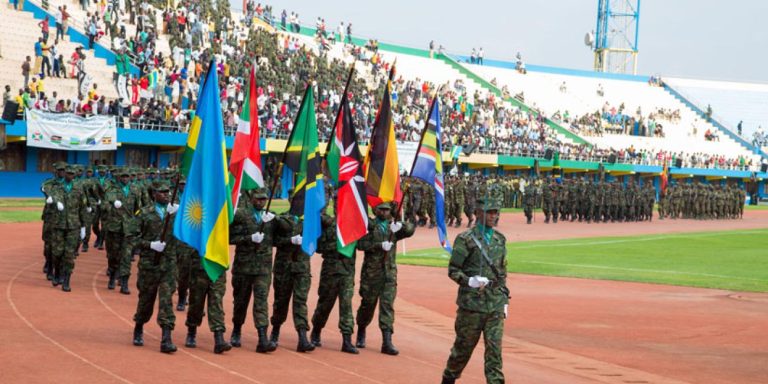
The two-week event will feature military athletes from 54 African nations, including Mali, Niger, and Burkina Faso, who have recently announced their exit from the Economic Community of West African States (ECOWAS).


The Defence Headquarters (DHQ), Abuja, has announced that it has completed arrangements to host the 2nd Africa Military Games, scheduled to be held in Abuja in November 2024.


The two-week event will feature military athletes from 54 African nations, including Mali, Niger, and Burkina Faso, who have recently announced their exit from the Economic Community of West African States (ECOWAS).


The Director of Sports at the Defence Headquarters, Air Vice Marshal (AVM) Abidemi Marquis, shared this information during a media briefing.


He noted that despite the ongoing tension within ECOWAS, military athletes from Mali, Niger, Burkina Faso, and Guinea had expressed their interest in participating in the games, which would take place from November 5 to 18 at the Moshood Abiola National Stadium in Abuja.


Marquis highlighted that the event, themed “Enhancing Military Cooperation in Africa Through Sport,” would provide an opportunity for African countries to interact and sustain good relationships. Both male and female athletes will compete in 19 sporting events.


President Bola Tinubu, Commander-in-Chief of the Armed Forces of Nigeria, would serve as the grand patron of the games, with Minister of Defence, Mohammed Badaru, as the patron.


The Chief of Defence Staff, General Christopher Musa, will be the chief host, while the service chiefs will act as co-hosts.


Marquis emphasised that the games aimed to strengthen camaraderie and cooperation among African countries and enhance security on the continent.


He noted that 43 nations had already submitted their preliminary agreements to participate in sports such as badminton, boxing, basketball, combat swimming, football, golf, judo, kickboxing, obstacle crossing, shooting, squash, table tennis, lawn tennis, taekwondo, volleyball, and wrestling.


He also pointed out the significant benefits of hosting the games, including boosting tourism and stimulating the economy.


“For Nigeria, hosting these games will increase tourist arrivals, project Nigeria to the world, and boost economic growth through spending on accommodation, food, transportation, souvenirs, and other goods and services,” Marquis said.


Additionally, he mentioned that the games would spur infrastructure development, such as hotels, improving the lives of citizens.


Major General Abdullahi Maikano, President of OSMA, added that OSMA, a non-political organization, aims to unite all African militaries through sports.


He mentioned that Nigeria was granted the hosting rights after 24 years due to its capability and expressed confidence that the event would be a success.


Maikano also highlighted that athletes from other African countries, such as Ghana, have already entered camp and indicated their interest in participating.


The Ambassador of Burkina Faso has assured that their military athletes will also participate.


“Our aim is to have all 54 member nations of Africa participate, under the motto ‘Peace in Africa.’ Nigeria will play a significant role in achieving peace in Africa through this event,” Maikano said.


Despite the ongoing crisis, the Sudanese military has shown interest in participating, and Maikano stated he would continue to campaign for more countries to join.


Seplat, ExxonMobil $1.28 billion divestment deal shows Nigerian government understands what business means – Dumo Lulu Briggs 

0

Nairametrics previously reported Seplat Energy Plc’s announcement in February 2022 of its intention to acquire all shares of MPNU from Exxon Mobil Corporation for $1.28 billion.


Transition Period for Nigeria’s oil and gas sector

Briggs told newsmen at the sidelines of his sixty years birthday event, attended by Nairametrics, that while several divestment deals are still an ongoing process, the nation is making a headway in that regard.


“What you would have noticed is that the international oil companies, the IOCs are exiting their onshore assets and small independent companies and companies like Seplat, you know, are stepping in.


“So all of these processes, you know, are going on. It’s a transition period, ” Briggs said.


He also noted that a win-win situation is emerging in the oil and gas sector because Nigerians have taken over the management of several oil and gas industries in the country.


He added that the Petroleum Industry Act(PIA) signed into law by the Nigerian government has provided the legal framework that will help to further regulate the industry towards better efficiency.


He maintained that if relevant stakeholders are able to do their due diligence properly, then indigenous oil and gas companies ” can do quite well. “


“You have a government that is constantly trying to see how to make things better, you know. So with us in our industry, I feel that we’re quite excited.


“We think that they(federal government) understand what business means, ” he added.


What you should know

The deal between Exxon Mobil Corporation and Seplat involved the takeover of ExxonMobil Nigeria’s offshore shallow water operations.


However, NNPC decided to invoke its Right of First Refusal (RFR) regarding the sale of these assets.


In May 2022, *the federal government declined to approve the transaction, citing overriding national interest among other reasons for its decision.


Nairametrics also reported that President Bola Tinubu later met with ExxonMobil president Liam Mallon and other executives, assuring them of a quick resolution of the agreement between ExxonMobil and Seplat.


This development marked a significant step in the ongoing efforts to conclude ExxonMobil’s divestment plan announced two years ago, which has been the subject of intense legal and regulatory scrutiny.


Two weeks ago, the Nigerian Upstream Petroleum Regulatory Commission (NUPRC) announced that Oando PLC has completed the acquisition of 100%  shares of Nigerian Agip Oil Company Limited (NAOC Ltd).


For the Seplat proposed takeover of ExxonMobil Nigeria’s offshore shallow water operations, the Commission disclosed that the “company(Seplat) expressed commitment to proceed to apply for Ministerial Consent to NUPRC.”

Glo Reassigns Active NIN-Linked SIMs to New Users

0

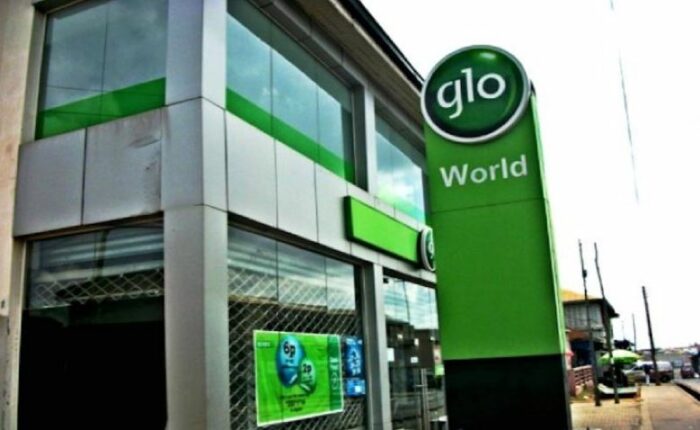
Globacom Ltd., the Nigerian telecommunications company known as Glo, is reassigning active ’ National Identification Number (NIN)-linked SIM cards to new users.


FIJ saw some subscribers complain about suddenly losing access to their phone numbers on Wednesday.


One of the affected subscribers has been a Glo user for 20 years.


Dewunmi Lagos, a photographer, took to social media to announce that his father’s Glo SIM stopped working in the second week of July for no reason.


“My dad has been using his Glo SIM for over 20 years. He bought the sim for N11,000 when it came out. He travelled out for six months and came back; his Glo SIM was still working until last week Tuesday,” Dewunmi posted on X.


“He got to their office in Ikorodu today and they told him someone called Abass Yusuf has re-registered the line since 2014 in Abuja and he has been using it. Saying my popman can’t get his number back, and this is after linking his NIN to it.


“I’m trying to understand how a network glitch of just last week routed this man’s number to another.”

https://www.facebook.com/share/p/a5U3R4u53gBreF6G/?mibextid=oFDknk

Dewunmi said that his father’s Glo SIM came in this pack

On Wednesday, Simeon Awodele, another Glo subscriber, posted on Facebook that Glo told him he had forfeited ownership of his SIM.


Awodele insisted that he had registered the SIM with his NIN.


Someone else indicated in the comment section that MTN, another telecommunications company, sold off their SIM. They did not provide more information about this.


Dewunmi has since shared more details about his father’s SIM. He included pictures of the Glo SIM card packaging and claimed that the SIM had never been inactive for over two days.


Telecommunications companies operating in Nigeria only lock SIMs whenever they stay inactive for 90 days.


Dewunmi said that Glo had not acknowledged his messages on social media. He has now approached the Federal Competition and Consumer Protection Commission (FCCPC) and the Nigerian Communications Commission (NCC) for recourse.


“I’m officially filing a complaint with FCCPC, NCC, and the lawyers will begin their court process,” Dewunmi announced on his Facebook page.


“This number was registered and all the necessary information were[sic] documented with Glo in their Lagos office. How Abbas Yusuf got hold of this number and registered it within Tuesday and today and Glo keeps telling us that the person registered it in 2014 will either be explained to where I’m filing my complaints.


“This number is what my dad has on all his documents and anything that has to do with his life. You want him to throw that away?”

Lagos announces 90-day repairs, diversion at Odo Iya Alaro bridge

0

The Lagos State Government says traffic will be diverted at the Odo Iya Alaro Bridge starting July 22.


The diversion is to enable emergency repairs of the asphalt pavement and expansion joints of the bridge.


The Commissioner for Transportation, Mr Oluwaseun Osiyemi, said this in a statement on Thursday in Lagos.


Osiyemi noted that the repairs would be carried out in two phases, for 90 days.


He said that the first phase of the repairs would cover the Ojota-bound lane, while the second phase would cover the Yaba/Ojuelegba/Maryland-bound lane.


He said that consequently, alternative routes had been mapped out for each phase of the repairs.


“For the first phase: motorists heading to Ojota from Maryland/Yaba will be diverted into a counterflow on the lane inbound Maryland, while motorists heading to Yaba from Ojota will continue their journeys on the same lane.


“Alternately, motorists from Berger, Magodo, and Tollgate along Lagos-Ibadan Expressway are advised to go through Alapere/Ogudu axis inward Gbagada/Anthony Oke Bridge to descend the ramp and access Ikorodu Road to continue their journeys.


“Motorists coming from Ikeja, Oregun and Kudirat Abiola Way are advised to use Opebi Link Bridge to connect Mobolaji Bank Anthony Way inwards Sheraton through Maryland to access Ikorodu Road and navigate their ways.


“Motorists from Jibowu are advised to make use of Ikorodu Road Service lane by Mobil Fuel Station/Bertola Engineering Equipment Company to access Gbagada/Ogudu axis to continue their journeys,” he said.


Osiyemi said that if they miss the turning by the Mobil Fuel Station and Bertola Engineering Equipment Company, they could also use Theodolite to link Anthony Oke Ramp and join Ikorodu Road again to access Town Planning Way inwards Gbagada/Ogudu/ Alapere axis to proceed with their journeys.


He added that motorists from Jibowu heading to Ikeja, Magodo, Berger, and Lagos Ibadan Expressway could use Maryland inwards Mobolaji Bank Anthony to link Sheraton/Opebi to Allen Avenue/Obafemi Awolowo Way and access Nurudeen Olowopopo Road to continue their journeys.


He said that alternately, after going through the Opebi Link Bridge, they could also make use of Kudirat Abiola Way to access Ikosi Road inwards Mobolaji Johnson Avenue/7up to connect Nurudeen Olowopopo Road and access their desired destinations.


“For the second phase: motorists inward Maryland/Yaba from Ojota will be diverted into a counter flow on the lane inbound Ojota while motorists from Maryland will continue their journey on the same lane.


“They can also use the following alternative routes; motorists from Berger, Magodo, and Toll gate can use Alapere inwards Gbagada to link the Anthony Oke Ramp to connect Ikorodu Road and access their desired destinations.


“Similarly, motorists coming from Ikorodu/ Ketu can utilise Ojota ramp bridge to link Alapere and continue their journeys as explained above.


“Motorists from Ikeja, Oregun and Kudirat Abiola Way are advised to use Opebi Link Bridge inwards Mobolaji Bank Anthony/ Sheraton and come out at Maryland to enter Ikorodu Road and continue their journeys.


“The aforementioned alternative routes for motorists heading to Ikeja, Magodo, Berger and Lagos Ibadan Expressway from Jibowu during the first phase is also available during the second phase of the repairs,” he said.


Osiyemi assured that sufficient traffic management personnel would be on ground across Lagos to minimise the forecasted discomfort and ensure steady flow of traffic.


He appealed to the people of the state, especially motorists, to cooperate and embrace the interventions put in placed uring the course of the repairs. (NAN)