


Home Blog Page 209

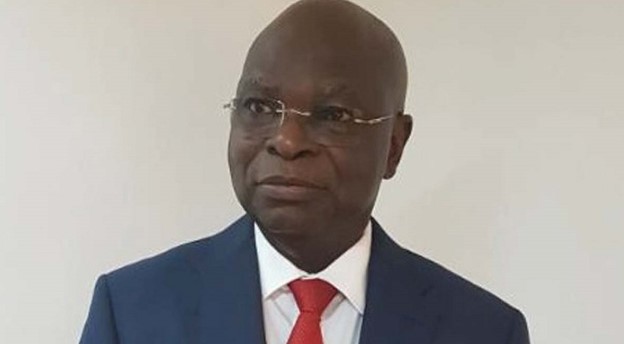
Africa requires human capital investment to nurture next generation of leaders – EU

0

“Young people must involve themselves in driving policy that shapes the future. The first EU Youth Action Plan is thus a toolbox to engage, empower, and connect youth around the world.”


She also stated that the EU is aware of Africa’s rising prominence on the global stage evident in its growing diplomatic involvement, expanding presence in multilateral forums, and increasing demand for representation in institutions like the UN Security Council.


This trend is underscored by the recent visits of high-ranking officials from the US, China, and Russia to the continent, she noted.


Recognizing Africa’s escalating significance, she pinpointed the EU’s commitment to substantial resources to the continent through initiatives like the €300 billion “Global Gateway,” with a significant portion allocated specifically for Africa.


Africa’s growth

According to her, Africa’s growth is predicated on the report that indicates that, by 2030, the continent will constitute 20% of the world’s population, with a majority under the age of 20.


This demographic dividend presents both opportunities and challenges, necessitating the creation of millions of jobs annually and emphasizing the importance of education and skills development.

Urpilainen stated that Africa is experiencing growth, which is crucial for the EU to take notice.

For instance, in less than seven years, the African population is projected to represent 20% of the world’s 8.55 billion people. Over 55% of the continent’s population will be under the age of 20, and 75% of the world’s under-35 population will reside in Africa.

Consequently, Urpilainen said that this demographic shift implies the need to create approximately 20 million jobs annually, impacting mobility patterns in pursuit of education and improving living standards.

She said that by 2030, Africa could surpass both China and India in terms of employed population.


Up-skilling Africa’s workforce

However, the advantage of Africa’s youthful demographic can only be realized through education and skill development.


She posited that enhanced education not only stimulates market growth but also boosts incomes and facilitates the mobility of skilled labour. If leveraged through education, skills, and job training, this untapped workforce has the potential to transform from a demographic challenge into a valuable resource driving sustainable human development.


A well-educated and skilled workforce not only drives economic growth but also fosters stability and resilience against radicalization and external interference.


Partnering with African youths

Beyond economic considerations, the EU emphasizes education and engagement with African youths as fundamental aspects of this partnership.

For example, the EU Youth Action Plan, part of the Global Gateway initiative, aims to empower young Africans to shape their own futures, acknowledging the pivotal role of Africa’s youthful demographic in shaping global dynamics.

Despite existing EU-Africa partnerships and training programs, such as Erasmus Mundus and Erasmus+, the EU trails behind other global players like the US and China in investing in African youth leadership development. Initiatives like the Young African Leaders Programme demonstrate promising potential but require increased funding and scalability to meet the demand.

It has therefore become imperative to close the gap between strategic intentions and actionable initiatives for realizing the full potential of EU-Africa cooperation.

Investing in Africa’s youth not only secures a prosperous future for the continent but also strengthens Europe’s global standing. Collaborative efforts to equip young Africans with the necessary skills and resources for effective leadership have the potential to enhance the influence of both continents on the world stage.


IRC Report: An estimated 16% of Nigerians to face “severe” food insecurity by June 2024

0

IRC Report: An estimated 16% of Nigerians to face “severe” food insecurity by June 2024

The latest report from the International Rescue Committee (IRC) and its partners says that around 16% of Nigerians will face severe food insecurity or hunger between June and August 2024.


The figure for 2024 is higher when compared to the report for 2023 and denotes the increasing spate of hunger and the worsening living conditions across not just Nigeria but West and Central Africa.


According to the report, the total number of people across West and Central Africa to face food insecurity during the period also referred to as the lean season stands at a staggering 52 million- about 12% of the analysed population.


For Nigeria, the report noted that around 32 million people will face severe hunger put at crisis level or emergency food insecurity.


It states,


“Looking ahead, the projected outlook for the period June-August 2024 appears even more severe: nearly 52 million people across the 17 analyzed countries are anticipated to face phases 3 to 5 during the lean season of June-August. This translates to 12% of the analyzed population struggling to meet their basic food and nutrition requirements.”


“These countries include Mauritania (656 652, 14%), Burkina Faso (2 734 196, 12%), Niger (3 436,892, 13%), Chad (3,364,453, 20%), Sierra Leone (1,569,895, 20%), and Nigeria (31,758,164, 16%).”


States to be affected

Furthermore, the report noted that food insecurity would be more severe in the northern states of Sokoto and Zamfara where the IPC analysis described the situation as critical, with over 15% of children experiencing acute malnutrition.


Recommended reading: 10 food items with over 100% increase in the last one year!

Causes

The IRC attributed the cause of the severity of food insecurity across the Sahelian region to insecurity, climate change, and worsening macroeconomic conditions, especially on the inflationary front.


In January 2024, the average inflation rate in the region stood at 21%- an increase from 18% recorded in the same period of 2023. Worse still are countries like Sierra Leone which have seen inflation levels rise to 54%.


What you should know

Earlier in the year, the World Bank, in its food security report for Nigeria, projected that seven states in the North will face severe food security problems with the spate of food inflation and insecurity across the food-producing states.


While the Boko Haram insurgency greatly affected food production in the Northeast leading to the destruction of farmlands, the farmer-herder crisis and banditry have significantly affected food production across the Northwest and Northcentral regions.

Insecurity coupled with disruptions in global food supply chains has pushed food inflation in Nigeria to 40.01% in the month of March.

Recommended reading: Inflation: Able Nigerians beg to survive economic hardship


Shell Nigeria paid $1.09 billion tax, royalties to FG in 2023- Official

Shell has revealed that it paid the sum of $1.09 billion in corporate taxes and royalties to the Federal Government in 2023, highlighting its significant financial contribution to Nigeria’s economy.


Shell’s Media Relations Manager, Mrs. Abimbola Essien-Nelson, disclosed this on Tuesday in Lagos based on reports by News Agency of Nigeria


Essien-Nelson highlighted that these payments were made through the operations of two key subsidiaries: the Shell Petroleum Development Company of Nigeria Ltd. (SPDC) and the Shell Nigeria Exploration and Production Company of Nigeria Ltd. (SNEPCo).


According to her, SPDC contributed $442 million, while SNEPCo remitted $649 million, reflecting a substantial fiscal contribution from both entities. Comparatively, in 2022, similar payments from these companies totaled $1.36 billion.


“These payments are Shell exclusive and do not include those made by our partners,” remarked Managing Director and Country Chair, Shell Companies in Nigeria, Osagie Okunbor.


Okunbor reiterated Shell’s dedication to fostering economic development and supporting local businesses, reaffirming the company’s longstanding presence in Nigeria, where it has invested for over six decades.


What to know

Essien-Nelson further elaborated that the 2023 Shell briefing notes provide a comprehensive overview of the progress made by various Shell subsidiaries in Nigeria, including SPDC, SNEPCo, Shell Nigeria Gas, and Daystar Power. These reports underscore the companies’ concerted efforts to drive socio-economic development, foster stakeholder collaboration, and provide cost-effective and environmentally friendly energy solutions.


Emphasizing Shell’s ongoing commitment to Nigeria’s energy sector, Okunbor stated, “It is important to emphasize that Shell is not leaving Nigeria and will remain a major partner of the country’s energy sector through its deep-water and integrated gas businesses.” He reiterated the company’s unwavering focus on maintaining safe operations and prioritizing the well-being of its workforce.


Shell’s disclosure of its significant tax and royalty payments reiterates the pivotal role played by multinational corporations in contributing to national revenue and economic development, while also highlighting the complex interplay between corporate interests and governmental fiscal policies.


Backstory

Nairametrics initially reported that in 2023, Shell was a major contributor to Nigeria’s revenue, with the country emerging as the top recipient of payments from the oil giant.


The figures reveal that Nigeria received a substantial sum of approximately $4.92 billion from Shell, encompassing various financial components such as company income taxes, fees, royalties, and production entitlements stemming from diverse projects within the country.


This notable figure represented a significant uptick from the $4.52 billion disbursed to Nigeria by Shell in the preceding year, marking a $408 million increase in payments.


Shell’s financial contributions extended beyond Nigeria, with the company’s total payments to governments across 27 countries reaching approximately $29.51 billion in 2023. Following Nigeria, Oman and Norway emerged as the second and third highest recipients, receiving payments of $4.09 billion and $3.81 billion respectively.


Shell’s Integrated Gas and Upstream Director, Zoe Yujnovich, confirmed this in a statement earlier in the year, where he highlighted the significance of the deal, emphasizing the company’s focus on streamlining its portfolio and directing disciplined investments towards deepwater and integrated gas ventures in Nigeria.


This move aligns with Shell’s strategic objective to exit the challenging operating environment i in the Niger Delta region.

Ethiopia earns $835 million in nine months from coffee export

An Ethiopian industry institution has revealed that coffee exports have earned the African country over $835 million in revenue over the past nine months.


According to the East African, the country exported 174,596 tons of coffee to the international market during the first nine months of the current Ethiopian 2023/24 fiscal year that started on July 8, 2023, the Ethiopian Coffee and Tea Authority (ECTA) said.


Ethiopia in this fiscal year has also managed to create new markets outside of its traditional coffee-importing countries, according to Shafi Oumer, ECTA Deputy Director-General.


Data from the ECTA revealed that China, the United Arab Emirates and Sudan are becoming top destinations and massive importers of Ethiopian coffee.


Ethiopia’s traditional coffee importers include Saudi Arabia, South Korea, the United States, Germany and Japan. They have been the major destinations of Ethiopia’s coffee exports over the years.


Ethiopia is globally recognized as the home of Arabica coffee, a distinct strain of coffee found almost exclusively in the country. The country remains Africa’s largest producer and exporter of coffee.


Ethiopia’s economy is led by its agricultural sector, and coffee production is the backbone of the agricultural sector in the country.


Ethiopia is globally recognized for its production of rich coffee quality and flavor ranging from winy to fruity and chocolatey. The country’s coffee is in great demand across the globe.


During the previous fiscal year of 2022/2023, the country earned a whopping $1.3 billion in revenue from exporting about 240,000 tonnes of coffee.


The ECTA responsible for coffee’s export revenue, however, noticed a notable drop as compared to the previous fiscal year when the country recorded a record high of $1.4 billion from the export of about 300,000 tons of coffee.


Experts in the Ethiopian coffee sector have pinpointed the lack of value addition to Ethiopia’s coffee sector as a major setback that hinders the country from fully benefitting from its rich coffee resources as the country only exports raw coffee beans to the global market.


What to know

Ethiopia’s main exports are gold (21 per cent of total exports) and coffee (19 per cent). Others include live animals, oilseeds, flowers, and khat. Ethiopia’s main export partner is Switzerland (21 percent of total exports) mainly for export of gold.

Agriculture remains a critical part of Ethiopia’s economy, accounting for 40 per cent of the gross domestic product (GDP), 80 per cent of exports, and an estimated 75 per cent of the country’s workforce.

Ethiopian coffee is globally renowned for its richness and variety, making it a hot demand in countries like China, Saudi Arabia, South Korea, the United States, Germany, and Japan.

Explainer: Is CBN’s cybersecurity levy 0.5% or 0.005%?

On May 6, 2024, the Central Bank of Nigeria (CBN) issued a directive for banks and other financial institutions to start deducting a cybersecurity levy, as stated in a circular by the CBN’s directors.

The levy, set at 0.5% of the value of all electronic transactions, was introduced under the newly enacted 2024 Cybercrime (Prohibition, Prevention, etc.) Amendment Act, intended to fund national cybersecurity efforts managed by the Office of the National Security Adviser.

The implementation has confused the public due to a discrepancy in the percentage rate between the former and the new act, sparking discussions on the need for clearer communication and possible revisitation of the legislation.

This was disclosed in a circular to different categories of banks, mobile money operators, payment service providers, and others signed by the apex bank’s Director of Payments Systems Management, Chibuzor Efobi, and Director of Financial Policy and Regulation, Haruna B. Mustafa.


According to the circular, the deduction and collection of the cyber security levy is the sequel to the enactment of the 2024 Cybercrime (prohibition, prevention, etc) Amendment Act of 2024, which provides for a 0.5% deduction of the value of all electronic transactions to the National Cyber Security Fund, which would be administered by the office of the NSA.


Furthermore, the circular noted that the deduction would be described as Cybersecurity Levy and the relevant financial institutions should begin deduction in two weeks following the secular.

It stated,

“Following the enactment of the Cybercrime (Prohibition, Prevention, etc) (amendment) Act 2024 and pursuant to the provision of Section 44 (2)(a) of the Act, a levy of 0.5% (0.005) equivalent to a half percent of all electronic transactions value by the business specified in the Second Schedule of the Act, is to be remitted to the National Cybersecurity Fund (NCF), which shall be administered by the Office of the National Security Adviser (ONSA).”


“Accordingly, all Banks, Other Financial Institutions and Payments Service Providers are hereby required to implement the above provision of the Act as follows:”


“Calculate the levy based on the total electronic transfer origination, then deducted and remitted by the financial institution.”


“The deducted amount shall be reflected in the customer’s account with the narration: ‘Cybersecurity Levy’.”


Origin of the confusion on the levy

With the announcement of the levy, some Nigerians are wondering whether the rate to be deducted is 0.005% or 0.5%.


The confusion is due to the provisions of the repealed Cybercrimes (prohibition, prevention, etc) Act, 2015 as well as a 2018 CBN circular, which stated the rate as 0.005%.

Also, Section 44 (2) (a) of the repealed act noted “a levy of 0.005 of all electronic transactions by the businesses specified in the second schedule of this act”, which is expected to be credited into the “National Cyber Security Fund”.

In a 2018 CBN circular in March 2018, the apex bank said “All banks are hereby directed to comply with the statutory provision for the collection and remittance of the 0.005% levy on all electronic transactions by the businesses specified in the second schedule of the Cybercrime (Prohibition, Prevention, etc.) Act.”


However, in a follow-up circular in June 2018, the CBN excluded the % and stated that “the levy shall be 0.005 of the service charge (exclusive of all tax effects) from all electronic financial transactions occurring in a bank, a mobile money scheme or other payment platforms.”


What changed?

The 2015 Act is currently being replaced by the Cybercrimes (prohibition, prevention, etc) (Amendment) Act, 2024.


In the new act, the provisions of Section 44 of the principal act were amended, nullifying the previous regulation.


The new provision states clearly “a levy of 0.5% (0.005) equivalent to a half per cent of all electronic transactions value” to be made by “the business specified in the Second Schedule to this Act.”


The amended act did not only state the decimal value of the levy (0.005) like the previous one, but it also introduced the percentage equivalent (0.5%) of the levy. Therefore, the levy is not 0.005% but 0.5%.


What they are saying

Speaking with Nairametrics, a legal practitioner based in Abuja, Damilola Victoria Alabi, said:


“A cursory look at the introductory paragraph of the CBN memo reveals that the conversation on the imposition of a ‘cybersecurity levy by banks on the instruction of Nigeria’s apex bank’ is not a new conversation.


“The conversation dates back to as far as 2018. While there are several issues to unpack as to the legality or otherwise of this imposition, whether the CBN is acting within its statutory mandate and in fact whether the office of the National Security Adviser has now become a ‘revenue generating body’, the major concern for me as a legal practitioner is how ignorant we are about the existence of certain laws and regulations.


“If the recent expression of displeasure about the now reintroduced cybersecurity levy had not occurred, most Nigerians may have, in fact. been unaware that the Cybercrime (Prohibition, Prevention, etc) (Amendment) Act 2024 had in fact happened.”


She further noted the complications around the exemptions, saying:


“Number 2 on the list of exemptions in Appendix 1 of the memo excludes salary payments from the application of this deduction.


“How will this be adapted to suit informal sector workers who earn wages and not salaries, especially for a country that has a huge percentage of its populace in the informal sector? Are initiators of electronic transfers now required to tag any money they desire to transfer to which they do not wish to pay the levy as ‘salary payment’?”


Meanwhile, the Nigeria Labour Congress (NLC) has opposed the Central Bank of Nigeria (CBN)’s directive for all financial institutions to impose a 0.5% cybersecurity tax on every electronic transaction.


In a statement on Tuesday, NLC President, Joe Ajaero, criticized the directive, calling it “an additional burden on hardworking Nigerians.”


Ajaero also demanded that the policy be reversed and a new cybersecurity measure that does not impose another financial burden on the Nigerian people be introduced.


Also, the Centre for the Promotion of Private Enterprise, (CPPE) criticized the law stating that the newly introduced cybersecurity levy and other numerous taxes imposed by federal, state, and local governments in Nigeria are impeding the capacity of businesses to drive economic growth, leading to job losses and inflation across the country.


Optics: The Central Bank of Nigeria’s directive on the new cybersecurity levy highlights an essential update in the country’s financial regulatory framework.


Despite the intended clarity in the amended Cybercrime Act, which sets the levy at 0.5% rather than the previously misunderstood 0.005%, confusion persists.

This ongoing uncertainty highlights the need for a comprehensive review of the legislation, ensuring that all stakeholders are clearly informed and the law aligns with both technological advancements and public expectations.

Why Nigerian fintech firms are facing regulatory issues – AFN president

President of the Africa Fintech Network (AFN), Dr. Segun Aina, has said that some of the regulatory issues facing fintechs in Nigeria are due to the dynamic nature of their technology-enabled business.


Speaking in an interview with Nairametrics against the backdrop of the recent clampdown on some fintechs by the Central Bank of Nigeria (CBN), Dr. Aina said governments and regulators globally are struggling to regulate technology because it moves at a very fast pace.


While noting that regulations may create impediments for the fintechs at the beginning, he said in the end, it would benefit them and the financial system. He, however, warned against policies that could stifle innovation.


Innovation vs regulation

Pointing to the fact that innovation is always ahead of regulation, Dr. Aina said:


“One of the fastest and most dynamic sectors today is technology because it continues to change. So, the regulators and governments have to struggle to cope with how to regulate fintech because when you say innovation, these are things that did not exist before.

“Regulation may create some encumbrances for those who are in the business, but eventually it’s going to benefit the system because it will make everyone better at the business.

“What is important is that the policies must be friendly, must recognize that there is a need to innovate, and the policymakers must make sure that they carry along all the stakeholders so that they don’t just come up with a policy that will stifle innovation because that is worse.”

Corporate governance issue

Dr. Aina said fintechs are also having challenges due to corporate governance issues. According to him, because most fintechs are small businesses, they do not have corporate governance structures that could compare to that of a commercial bank.


However, he noted that as they grow over time, they will begin to put the right structure in place. He said the first set of Nigerian fintechs that are moving to other markets are putting in place proper corporate governance.


The AFN President said the issue of corporate governance has now become a focal point for all fintech stakeholders in Nigeria as that is expected to spark the next stage of fintech growth in the country.


The backstory

The CBN recently directed four fintechs – OPay, Palmpay, Moniepoint, and Kuda Bank – to stop onboarding new customers over the suspicion that their platforms are being used by criminal elements to maneuver foreign exchange through crypto trading.


Earlier, a court order had been obtained by the Economic and Financial Crimes Commission (EFCC) to freeze at least 1,146 bank accounts belonging to different people and businesses that were allegedly engaged in illicit foreign exchange dealings.


Some of the fintechs have argued that while 90% of the accounts in question were commercial bank accounts, only the fintechs were asked to stop onboarding customers. However, industry analysts said the ease with which new fintech accounts can be opened with little KYC instigated the CBN’s action against the companies.

US to deploy cybercrime advisor in Nigeria to combat fraud scams, sextortion

The United States has announced that it plans to deploy a cybercrime advisor in Nigeria.


The advisor is poised to facilitate cooperation between the two nations, offering essential training, equipment, and technical assistance to bolster Nigeria’s capacity to address cyber threats, including fraud scams and sextortion.


The decision to deploy the advisor, expected to be funded by the International Narcotics and Law Enforcement Affairs (INL), was disclosed in a joint statement released by the Governments of the United States of America and Nigeria during the sixth U.S.-Nigeria Binational Commission held in Abuja on April 29-30, 2024.


The statement, published by the US Department of State on Monday and seen by Nairametrics, revealed the shared concerns regarding the adverse impacts of cybercrime on peace, prosperity, and security.


Reinforcing efforts against cyber-enabled money laundering, fraud

The joint statement emphasized the imperative to reinforce efforts against cyber-enabled money laundering and fraud, underscoring the importance of leveraging technology and international cooperation mechanisms such as extradition and mutual legal assistance.


The United States, recognizing Nigeria’s progress, also commended the country for acceding to the Budapest Convention on Cybercrime in 2023 and its active participation in various cybercrime forums.


The Budapest Convention, also known as the Convention on Cybercrime, is the first international treaty seeking to address Internet crime by harmonizing national laws, improving investigative techniques, and increasing cooperation among nations.


In Nigeria, the Cybercrimes (Prohibition, Prevention etc.) Act 2015 was introduced as the legal framework for the codification of criminal activities in cyberspace. There are ongoing plans to amend this Act.


The joint statement read:

“Nigeria and the United States shared concerns regarding the threats that cybercrime poses to mutual peace, prosperity, and security. Nigeria identified its several efforts and capabilities for combatting cybercrime, presenting many avenues for bilateral cooperation. The United States commended Nigeria for acceding to the Budapest Convention on Cybercrime in 2023 and Nigeria’s collaboration in several fora on cybercrime. The United States and Nigeria pledged to work together on combatting cybercriminals who target citizens of both countries.


“To that end, the United States announced the upcoming deployment of an INL-funded cybercrime advisor in Nigeria to facilitate that cooperation and provide training, equipment, and technical assistance to build Nigeria’s capacity for cybercrime, including fraud scams and sextortion. Both sides understand the need to reinforce efforts to combat cyber-enabled money laundering and [cyber-enabled] fraud and to make greater use of both technology and international cooperation mechanisms such as extradition and mutual legal assistance.”


What You Should Know

Nigeria has been ranked 5th in a global report on sources of cybercrime activities, coming behind Russia, which ranked number one, and Ukraine, China, and the United States, which occupied the second, third, and fourth positions respectively.

The Central Bank of Nigeria (CBN) on Monday ordered banks to enact the process of deduction of cyber security levy to be administered by the office of the National Security Adviser (NSA).

According to the statement, the deduction and collection of the cyber security levy is the sequel to the enactment of the 2024 Cybercrime (prohibition, prevention etc) Amendment Act of 2024 which provides for a 0.5% deduction of the value of all electronic transactions to the National Cyber Security Fund which would be administered by the office of the NSA.

However, although the levy is to be charged on all electronic transactions and applied at the point of transfer origination, the CBN in an appendix to the circular, listed 16 transactions exempted from the levy.

EXCLUSIVE: NGX Group downsizes, 25 staff members affected

The Nigerian Exchange Group (NGX) conducted a significant downsizing shortly after its annual general meeting in Lagos, officially terminating 25 employees, contrary to earlier reports of 40. Affected positions include regulatory officers, compliance managers, and high-level executives such as the chief financial officer.

The restructuring, influenced by a PricewaterhouseCoopers (PwC) audit, was implemented by Group Managing Director/CEO Mr. Temi Popoola, following recommendations to reduce operating costs and align staff roles with organizational needs.

Despite a sharp increase in profits, reported at N5.2 billion in 2023, primarily from its holdings in CSCS Plc, the downsizing has been met with demands for reinstatement and financial compensation from affected staff, who claim the layoffs lacked transparency and clear criteria.

The Nigerian Exchange Group (NGX) has relieved some staff members of their jobs days after its annual general meeting (AGM) which was held in Lagos.


Multiple sources told Nairametrics that over 40 staff members of NGX Group were affected, with top shots in the organization asked to go.


However, sources at the NGX informed Nairametrics that the official figures were 25 full-time employees.


Staff affected

The affected staff members, according to sources, include regulatory officers, compliance managers, audit managers, the investment team, the chief finance officer, and the general counsel of NGX, among others.


The overhaul was led by PricewaterhouseCoopers (PwC), a multinational professional services firm, Nairametrics understands.


The PwC carried out a staff audit and made recommendations to Group Managing Director/Chief Executive Officer of Nigerian Exchange Group, Mr Temi Popoola, who implemented the downsizing, a source said.


“Mr Popoola knew that he was in a position to be the next Group CEO when Oscar Onyema (former NGX Group CEO) left. So, as soon as he assumed office, he contracted PwC to overhaul NGX Group,” an affected senior staff member told Nairametrics.


“However, several times, PwC asked about job responsibilities from the Human Resources (HR) Department. In preparation for the AGM, as Holdco managers, we were in charge of organizing the AGM and we did a lot of leg work to ensure that we got enough proxy shareholders so as to secure enough percentage required to rectify Popoola as GMD.”


The ex-staffer said after the AGM, same day around 5 pm, a virtual meeting was held with all staff members of the group, where the Group Managing Director said that he had got feedback from PwC and that he was going to scrap offices and allow staff members that were no longer relevant to the organization to go.


Mr Popoola noted that he was going to send termination letters to affected staff the same day and have their emails blocked for access, the ex-staff member said.


News continues after this ad


“He didn’t give the affected people the opportunity to ask questions. He said consultants did a transparent job but he did not show the results of the review to anybody,” another affected ex-staff member said.


“We didn’t know the criteria that were used to come to the conclusion of the sacks. That aside, we have a high staff attrition rate, not to forget that the payout to the board level is extremely high.”


Another affected staff member said the decision of the NGX to downsize was greeted with pessimism, noting that there were no clear criteria for the dismissal.


Currently, the affected staff members are demanding reinstatement, emphasizing their contributions and lack of justification for their terminations.


Some are seeking financial compensation, while others are advocating for reinstatement.


The NGX Group did not comment officially on the downsizing.


NGX Headcount

Official information contained in the company’s financial statement reveals that NGX Group (the parent company of the NGX Exchange Ltd) has about 132 staff members, down from 139 a year earlier.


At the Group level, the total headcount is about 23 versus 21 same period a year earlier.

However total salaries and defined benefits for 2023 were N3.1 billion (N3.14 billion in 2022) which represents around 37.8% of Group revenues, slightly above NGX’s wide average of 30% per Nairametrics research.

The Group with just 23 employees also has an annual salary and defined benefits of N911.4 million up from N5111.8 million a year earlier, a whopping 78.2% increase year on year.

Also included in the salaries is N607.3 million for board members, with executive compensation accounting for N388.4 million. Sitting allowance alone gulped N72 million.

Executive compensation relates to compensation paid to Chief Executive Officer and Executive Directors other than Board members, according to company filings.

“No big deal”

Downsizing is not new as it is common in several organizations. Recruitment experts say downsizing is sometimes necessitated by economic downturns, lack of productivity, and redundancies, among others.


“Downsizing is not always a big deal,” said a recruitment expert, Dan Agim.


“It is forced upon organizations when there is low productivity or over-recruitment. Sometimes, it is caused by economic downturns, but that is mainly for corporates.


“At times, it is driven by disloyalty for a new sheriff in town or when a new CEO feels that those around are loyal to the previous CEO. It may also be caused by the perception of imbalance, such as when it is perceived that the majority of people in the organization are from one religious, ethnic, or religious group,” he said.


Sources with knowledge of the matter also opine that the move was informed by directors of the NGX who lamented the high operating costs at NGX, demanding the implementation of recommendations for corporate restructuring.


According to one source, roles that were previously designated for Senior Managers were downgraded to manager roles to align with role expectations.


Other sources suggest that consultants also recommended a Group structure for the NGX, which bloated the workforce and overhead. “The same consultants are now the ones asking for a downsizing,” the source opined.


The NGX Group reported a profit after tax of N5.2 billion in 2023, a ninefold increase from the N591.5 million posted a year earlier. Most of the profits came from its crown jewel, CSCS Plc. The NGX owns 44% of the company.


Update: This article has been revised to reflect new information. Contrary to the earlier report of 40 staff members being dismissed, sources at NGX have confirmed the actual number is 25.


Femi Adebayo Awarded N25m against Media House for Film piracy

The Nigerian film industry has experienced exponential growth over the years, but we haven’t been able to maximise the true dividends of this business because of dare devil pirates who benefit where they didn’t sow.

The guts with which they even perpetrate this evil is so alarming. This is a major reason why investors find it hard to commit their funds to filmmakers. However, through persistence and the use of the legal framework covering intellectual property, we can bring their activities to a gradual halt.


Femi shares that, “Several times, I have been a victim of movie pirates and I never spare them. I recently concluded a legal battle with a notable media company that owns a big radio station and also engages in youtube content distribution.


During the cinema run of “Survival of Jelili” in 2019, my movie was gathering good numbers at that time. They decided to use my movie poster and title to promote a movie on their platform, thereby deceiving fans and diverting revenue accrued to me.”


He explains that It took 3 years to get this done, “But my trust in the legal and justice system remained unwavering. With the dedication of our legal team, Bola Adebowale & Co Legal Practitioners, who are seasoned professionals with wealth of experience in handling such cases. They presented undeniable evidence, put up a strong argument, and took the case to trial. Their promptness, efficiency, and attention to detail played a huge part in the direction of the case. We won and were awarded a total of Twenty Five Million Naira.”


“This isn’t just my win as a filmmaker and content producer but a while for all of us. We need to be ready to fight IP theft and piracy at all levels. Every win brings us closer to protecting and getting the true economic value of our works.” He added.

I Felt Revealing My Son Might Affect My Chances Of Finding A Man’ – Nollywood Actress, Eniola Ajao

Nollywood actress, Eniola Ajao, has revealed her reason for shielding her 21-year-old son, Ayomide Daniel, away from social media.


reports that the movie star, in an interview with celebrity journalist, Seun Oloketuyi, said she felt worried that revealing her son might affect her chances of finding a partner.


Eniola said the decision to keep her son a secret was taken even before she ventured into the movie industry, stressing that it was supposed to avoid the stigma attached to being a single mother.


The thespian added that she eventually revealed her son’s existence to the public after being perceived as a “young girl” by her colleagues.


She said, “It was something I decided a long time ago before I even considered pursuing a career in the entertainment industry.


“When I had him, I worried that no man would want to marry me with a child, so I decided to keep it private. I kept many aspects of my life out of the public eye, including my son.”