


Home Blog Page 267

Nigeria secures a $2.7 billion World Bank loan under Tinubu’s leadership

0

Nigeria acquired a total of $2.7 billion in loans from the World Bank during President Bola Tinubu’s administration, raising concerns about the nation’s escalating external debt servicing expenses.

The approved loans include $750 million for the power sector, $500 million for women’s empowerment, $700 million for girls’ education, and $750 million for renewable energy.

Loan Details:

1. Power Sector ($750 million):

Approved on June 9, 2023, this loan aims to boost Nigeria’s power sector through additional financing for the power sector recovery performance-based operation.

2. Women’s Empowerment ($500 million):

On June 27, the World Bank approved a $500 million loan to support women’s empowerment in Nigeria, providing scale-up financing for the Nigeria for Women Programme.

3. Girls’ Education ($700 million):

In September 2023, a $700 million loan was approved to enhance educational opportunities and empowerment for adolescent girls through the ‘Adolescent Girls Initiative for Learning and Empowerment’ (AGILE) project.

4. Renewable Energy ($750 million):
Approved on December 14, the World Bank granted a $750 million loan for the Distributed Access through Renewable Energy Scale-up (DARES) project, aiming to improve electricity access for over 17.5 million Nigerians through distributed renewable energy solutions.

Additional Insights:

– Nigeria was the top recipient of World Bank loans in 2022, receiving $2.9 billion, followed by Tanzania with $2.7 billion.
– As of September 30, 2023, Nigeria’s total debt owed to the World Bank is $14.58 billion.
– Concerns have arisen due to the significant increase (277.64%) in Nigeria’s spending on external debt servicing in Q3 2023.
– The World Bank highlighted the impact of high debt service costs on developing countries, emphasizing the need for coordinated action to prevent a potential crisis.

Nigerian firms amass an enormous cash reserve of N2.3 trillion, marking the largest accumulation in recent history

0

Nigerian corporations entered the last quarter of the year boasting a record-breaking cash reserve of N2.3 trillion, marking the highest balance in recent memory.

This information was gleaned from an analysis of over 30 major companies listed on the Nigerian Exchange, spanning from January to December of the calendar year.

The compiled data excludes commercial banks and insurance companies, given their capacity to handle cash on behalf of their clientele.

The cash balances of the considered companies witnessed a substantial 27% surge from the N1.8 trillion reported as cash and cash equivalents at the close of 2022.

Notably, these entities collectively reported total revenues amounting to N8.05 trillion during the reviewed period.

This robust cash position serves as a testament to the liquidity of Nigerian businesses amidst a challenging year fraught with macroeconomic hurdles and subsequent monetary policy adjustments.

Furthermore, the nation experienced its highest-ever money supply, surpassing N66 trillion by the close of September 2023.

Data from the 28 largest companies listed on the Nigerian Exchange (NGX) reveals that the total cash reserves at the conclusion of the third quarter soared to N2.3 trillion from N1.8 trillion at the close of 2022.

On a year-on-year basis, the total cash balance was N1.3 trillion as of September 2022, compared to N1.8 trillion in December 2021.

In terms of cash flow from day-to-day operations, these companies accumulated revenues of N1.7 trillion by the third quarter of the year.

Impressively, all but seven of the 30 reviewed companies generated a positive operating cash flow, indicating their ability to convert sales into cash despite economic challenges and ensuring that the collected cash adequately covered operating expenses.

Dangote Cement, Seplat, MTN, and Dangote Sugar emerged as the frontrunners with the largest cash reserves.

Despite increased net cash from operations, some companies resorted to debt financing for survival.

As of the third quarter, the total outstanding debt for the reviewed companies stood at N4.9 trillion, up from N3.3 trillion at the end of 2022.

These substantial financial reserves offer both companies and investors a robust foundation amid ongoing macroeconomic challenges.

Investors can anticipate potential dividends and resilient share performance, given the increased cash reserves and the companies’ ability to navigate economic headwinds.

Looking ahead to 2024, these substantial cash holdings could serve as a strategic war chest, enabling companies to navigate uncertainties in a tightening monetary policy environment and capitalize on growth opportunities without excessive reliance on debt markets.

For companies, the decision to distribute cash as dividends or reinvest in operations and growth initiatives will be pivotal, shaping their ability to sustain performance and capitalize on an eventual economic upturn.

The noteworthy cash reserves provide a dual advantage: shielding against short-term macroeconomic turbulence and serving as a springboard for long-term strategic investments.

Companies that adeptly manage these reserves, balancing shareholder returns with strategic reinvestments, are likely to emerge as frontrunners as the economy stabilizes and enters a more secure phase in 2024.

Investors, in turn, will keenly observe and align with entities demonstrating fiscal prudence and strategic acumen in the face of prevailing economic conditions.


Zenith Bank clinches the title of the top bank for digital solutions

0

Zenith Bank Plc clinched the prestigious title of ‘Best Bank for Digital Solutions in Nigeria’ at the esteemed 2023 Euromoney Awards for Excellence.

In a Wednesday statement, the bank highlighted the significance of the award, emphasizing its role in acknowledging the bank’s pioneering efforts and remarkable achievements in delivering state-of-the-art digital financial solutions.

Expressing his delight, Dr. Ebenezer Onyeagwu, the Group Managing Director/Chief Executive Officer of Zenith Bank, remarked, “We are thrilled to be recognized as the Best Bank for Digital Solutions in Nigeria.

This award validates Zenith Bank’s trailblazing initiatives, integrating advanced technology into Nigeria’s financial services sector.

Our steadfast commitment to expanding the horizons of digital financial services remains unwavering, and we will persist in our efforts to innovate and deliver enhanced value to our customers and stakeholders.”

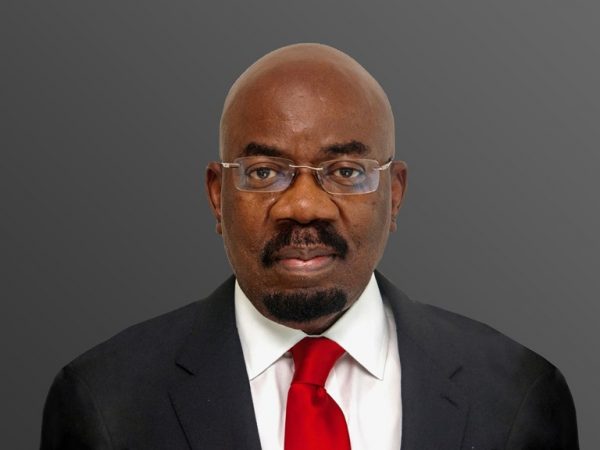
Onyeagwu dedicated the award to the founder and chairman of Zenith Bank, Jim Ovia, commending his visionary approach to technology integration in banking.

He acknowledged Ovia for establishing an exemplary model for service delivery during a time when the full potential of technology in banking had yet to be realized.

Onyeagwu asserted, “Technology now stands as the cornerstone of the financial services sector.”

Grateful for the support received, the bank boss extended thanks to the clientele for their loyal patronage, the board for their guidance, and the staff for their unwavering dedication to building a formidable financial institution.

Euromoney’s Awards for Excellence, initiated in 1992, recognize outstanding achievements in the global banking industry.

The latest edition, featuring a record number of submissions, encompassed more than 50 regional awards and best bank awards across 100 countries in its regional and country awards program.


COP28: Development Bank secures a $400,000 accolade

0

The Development Bank of Nigeria clinched the prestigious 2022 Arab Gulf Programme for Development Prince Talal International Prize for Human Development, securing the top spot in the ‘Sustainable Development Goal 8 – Decent Work and Economic Growth’ category.

Outperforming more than 100 competing projects, the bank earned the coveted grand prize of $400,000.

The award recognized applicants who showcased how their initiatives fostered decent work and spurred economic growth in their communities, aligning with the global commitment of achieving Sustainable Development Goal 8 by 2030.

During the award ceremony at COP28 in Dubai, Dr. Tony Okpanachi, the Managing Director and Chief Executive Officer of DBN, attributed the success to the bank’s unwavering dedication to global green and sustainability initiatives.

He expressed excitement about the grant, highlighting its harmony with DBN’s mission to be a leading development finance institution, fostering growth through MSME finance and driving sustainable socio-economic development in Nigeria’s technology, agriculture, health, education, and job creation sectors.

Acknowledging the AGFUND’s Prince Talal International Prize organizers and international partners, Okpanachi emphasized the funds’ pivotal role in addressing identified financing gaps in the MSME segment and enhancing capacity for impactful, viable, and financially sustainable green projects.

Regarding Green Financing in Nigeria, Okpanachi underscored the nation’s need for approximately $122 billion by 2030 to advance the green sector and achieve Sustainable Development Goals. He emphasized DBN’s role in spearheading efforts to bridge funding gaps and drive sustainable investment in Nigeria.


Governor Akeredolu of Ondo State has passed away

0

The late Rotimi Akeredolu, Governor of Ondo State, has reportedly passed away at the age of 67.

Unconfirmed reports suggest that the deputy, Lucky Aiyedatiwa, is poised to be sworn in.

The state government has not issued an official statement, and attempts to verify the information with the Alagbaka Government House have been unsuccessful.

The Chief Press Secretary, Mr. Richard Olabode, and the Commissioner for Information and Orientation, Mrs. Bamidele Ademola-Olateju, have not responded to inquiries at this time.


FG assures a consistent power supply throughout the festive season

0

On Wednesday, the Nigerian Federal Government reassured citizens of a reliable power supply during Christmas and New Year celebrations.

The Minister of Power, Chief Adebayo Adelabu, conveyed this commitment, emphasizing the ongoing efforts by the Federal Ministry of Power to enhance the nation’s power infrastructure.

Despite persistent instability in Nigeria’s power supply, the minister assured citizens of diligent initiatives to provide stable electricity, with a focus on improving the overall power experience.

Adelabu extended Christmas greetings, emphasizing unity and compassion among Nigerians during the festive season.

The Federal Government is considering new regulations for O-pay, Moniepoint, and other payment platforms

0

The Federal Government, through the Federal Competition and Consumer Protection Commission (FCCPC), plans to introduce additional regulations for the digital lending sector in 2024.

These regulations aim to enhance methods for loan recovery amid a surge in default rates.

Mr. Babatunde Irukera, the CEO of the Commission, emphasized the need to address the challenge of loan defaults without resorting to unethical practices.

The forthcoming regulations in 2024 will focus on promoting responsible borrowing and lending practices, seeking a balanced approach to protect consumers while ensuring the viability of digital money lenders in the market.

Irukera envisions a future where even landlords can contribute to a centralized credit system, providing information about tenants, students, and parents’ fiscal responsibility for a comprehensive understanding of creditworthiness.

Despite challenges, the FCCPC has made significant strides in reducing harassment and defamatory messages in the sector, with lessons being shared with other countries grappling with similar issues such as India, Kenya, Brazil, Ghana, and Uganda.


ACCA emphasizes that it is crucial for finance professionals to take the lead in risk management

0

The Association of Chartered Certified Accountants urges finance professionals to spearhead risk management in the public sector.

A recent ACCA survey pinpointed financial challenges and the inability to meet evolving public demands as top risks for public sector organizations.

The survey highlighted that finance professionals and other public sector workers play a crucial role in a global economy grappling with substantial risks, often lacking the necessary tools.

Concerns were expressed about funding, adapting to changing service demands, and attracting skilled talent.

The research, involving individuals in finance, risk, audit, and service delivery roles across the public sector, identified the top risks as follows: financial challenges (49%), meeting changing service expectations (35%), talent deficit (35%), poor organizational culture (28%), and ineffective leadership (26%).

In response, ACCA’s new guide, “Calculated Risk,” advocates for finance professionals to take a leading role in the risk management process.

Despite possessing relevant skills, the survey revealed that many public sector organizations underutilize finance professionals in risk management, with only 55% regularly involved in identifying and reviewing operational risks.

ACCA’s Senior Subject Manager for the Public Sector, Mark Johnson, emphasized the importance of leveraging frontline staff insight, stating that a collaborative approach to identifying risks is critical for a comprehensive understanding.

Johnson highlighted the need for a departure from business as usual in the face of challenging public finances and stressed the finance function’s pivotal role in recognizing and addressing risks across the organization.

The survey concludes that building organizational resilience involves developing skills and capabilities.

Johnson asserts that public sector finance professionals, well-versed in risk threats and opportunities, play a crucial role in fostering more resilient public services.


The International Labour Organization emphasizes the need for workers’ unions to formulate impactful social agreements

0

The International Labour Organisation emphasizes the pivotal role of workers’ organizations in crafting effective and sustainable social contracts, as outlined in the 2023 edition of the International Journal of Labour Research.

The Bureau for Workers’ Activities at the ILO explores the theme “Achieving Social Justice in an Era of Accelerating Change:

A New Social Contract” to delve into the engagement of workers’ organizations in the multilateral and national discourse. Stressing the urgency, the journal advocates for a new social contract rooted in decent work and social justice, addressing international labour standards.

It underscores the pressing need to tackle global decent work deficits and inequalities, with Maria Andre, Director of ACTRAV, emphasizing the acceleration of social cohesion deterioration due to factors like climate and technological changes.

Andre urges workers’ organizations, as significant ILO constituents, to advocate for an adaptive and effective social contract that reflects evolving realities.

The call is for a comprehensive approach, incorporating international labour standards and promoting global solidarity to address geopolitical tensions and the decline of democracy.

The envisioned new social contract prioritizes reducing inequalities and aligns with the fundamental principles and rights at work outlined by the ILO.


Egoras introduces a tricycle powered by gas

0

Egoras Technology, an innovative firm focusing on sustainable transportation solutions, has unveiled the Egoras Dual-Fuel Tricycle—a gas-powered three-wheeler.

Ugoji Harry, the CEO, emphasized in a statement that this tricycle was crafted to tackle challenges arising from recent subsidy removals.

Highlighting its dual-fuel capabilities, Harry expressed how the tricycle seamlessly operates on both petrol and liquid purified gas, offering a versatile and eco-friendly option for commuters in urban and rural areas.

Noteworthy is the user-friendly design of the Egoras Dual-Fuel Tricycle, making maintenance easy for operators.

Operating in various states across the North, South, and South, the tricycle stands out as a reliable and powerful vehicle with impressive technical specifications.

Constructed from high-quality materials like aluminum, steel, and carbon fiber, it ensures durability and reliability on diverse terrains.

With a robust 10 horsepower engine, the tricycle combines strength and efficiency, reaching a top speed of 60 kmph—providing users with a swift and dependable mode of transportation.

Emphasizing safety, rigorous testing has been conducted to ensure compliance with industry standards, assuring riders and pedestrians of a secure and efficient mode of transportation.

Harry reiterated the firm’s dedication to fostering positive change in Nigeria’s transportation landscape, citing the dual-fuel tricycle as a significant step toward this goal.

Encouraging communities to embrace this sustainable solution, he added that the company provides fleet management services to assist tricycle owners.

Customers can sign agreements with the company, ensuring a hassle-free and comprehensive support system for their tricycle ownership, with drivers from the company’s fleet using the tricycles until ownership is transferred after an agreed-upon period.