Home Blog Page 268

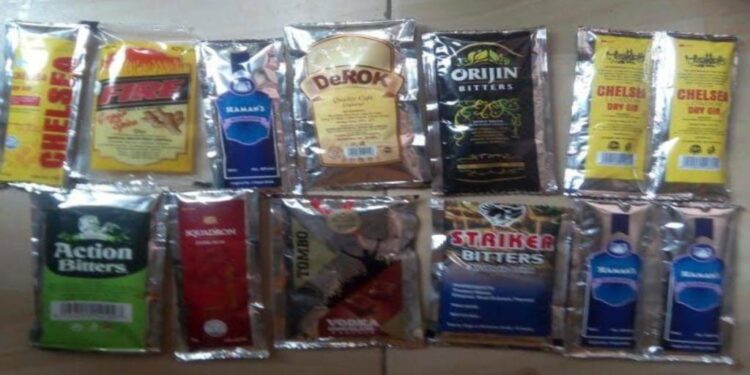
Sachet alcohol prohibition raises concerns among manufacturers about potential job losses totaling 5.5 million

0

The Distillers And Blenders Association Of Nigeria warns of significant consequences if the Federal Government maintains the recent ban on sachet and PET bottle alcohol production and sales, estimating losses exceeding N1.2tn and potential unemployment for 5.5 million workers.

DIBAN, a sub-sector of the Manufacturers Association of Nigeria, expressed its concerns in a letter to President Bola Tinubu, disputing NAFDAC’s justification for the ban and emphasizing the absence of evidence linking alcoholic beverages in sachets and pet bottles to hard drugs.

DIBAN, with a conglomerate membership of over 24 corporate organizations, urges the president to lift the ban and advocates for increased monitoring rather than an outright prohibition to safeguard investments and jobs.

The introduction of the CBN FX gateway by the bank could potentially affect the liquidity of other banks, according to Fitch

0

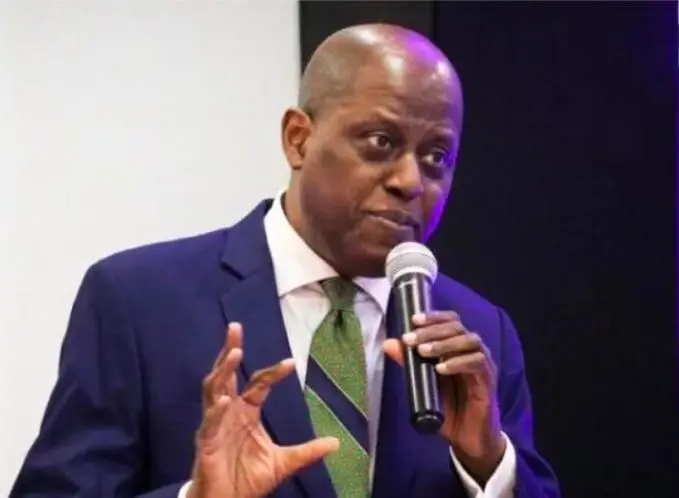
Fitch Ratings has expressed concerns about the potential negative impact on the liquidity of Nigerian banks due to the Central Bank of Nigeria’s proposed foreign currency gateway bank.

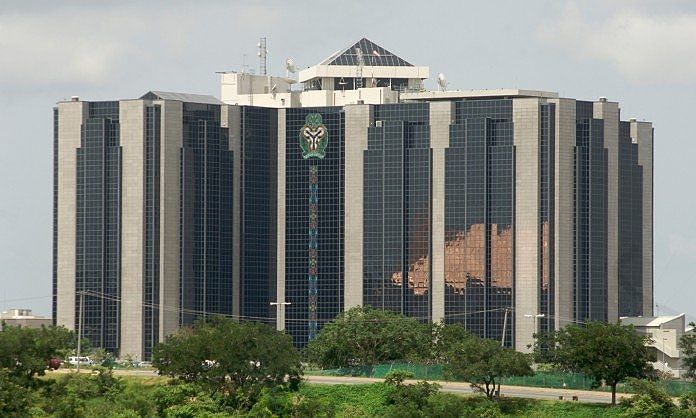
The apex bank’s plan, disclosed by Governor Dr Olayemi Cardoso, aims to address the country’s forex crisis by centralizing correspondent banking activities. Fitch believes these measures may adversely affect the banking sector’s foreign currency liquidity.

Additionally, the recent devaluation of the local currency is expected to result in an accelerated increase in impaired loans within the banking sector.

Fitch also notes that the CBN’s circular prohibiting banks from holding net long foreign currency positions could lead to a further moderate depreciation of the naira, exposing banks’ capital positions to potential risks.

Despite these challenges, the move away from a managed exchange rate regime is seen as beneficial in the long term, though it presents short-term macroeconomic risks, including heightened inflation and potential impacts on economic growth and the banking sector.

As of February 13, the naira experienced a significant devaluation, reaching 1,516/$, reflecting a 40% devaluation since the official market closed at 899/$ at the end of the previous year.

The evolving foreign currency market dynamics, as indicated by Fitch, underscore the need for careful monitoring of economic indicators and potential risks in the financial sector.

Atiku’s proposal is poised to bring Nigeria back to the era of Emefiele, according to the Presidency

0

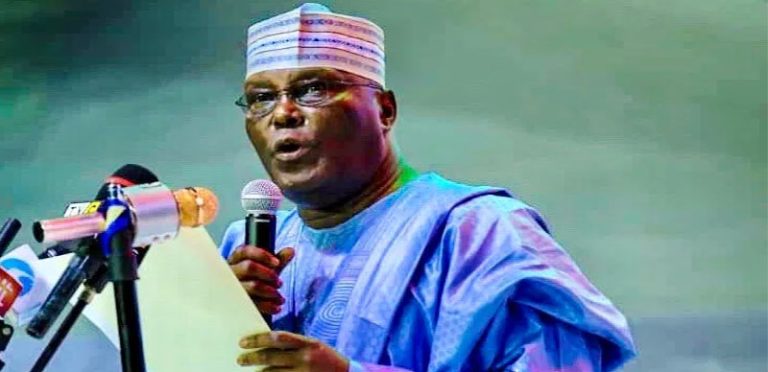
The Presidency contends that adopting a controlled floatation of the naira, as suggested by Atiku Abubakar, would mirror the economic approach of the former Central Bank of Nigeria Governor, Godwin Emefiele.

They argue that Emefiele’s policy, involving a monthly expenditure of about $1.5bn to support the naira, led to financial malpractices and adversely affected the economy.

The Special Adviser to the President, Bayo Onanuga, rebuts Atiku’s criticism of President Tinubu’s economic policies, emphasizing that the recent fluctuations in the naira’s value were discussed in the context of food supply during a meeting last Thursday, not as Atiku claimed.

Onanuga asserts that the government’s approach, avoiding interference with the Central Bank and promoting a managed-floating system, contrasts with Atiku’s proposal.

Additionally, Onanuga cites positive results, such as a 66.27% increase in capital inflow recorded in Q4 2023, as evidence of investor confidence in Nigeria under President Tinubu’s administration.

He concludes by asserting that Atiku’s suggested controlled floatation of the naira resembles the policy of Godwin Emefiele and implies that the PDP, which produced Emefiele, bears responsibility for the current financial challenges in Nigeria.


Nigeria and Brazil witness a surge in trade volume to $1.6 billion during the AU Summit, marked by discussions between Tinubu and Lula da Silva

0

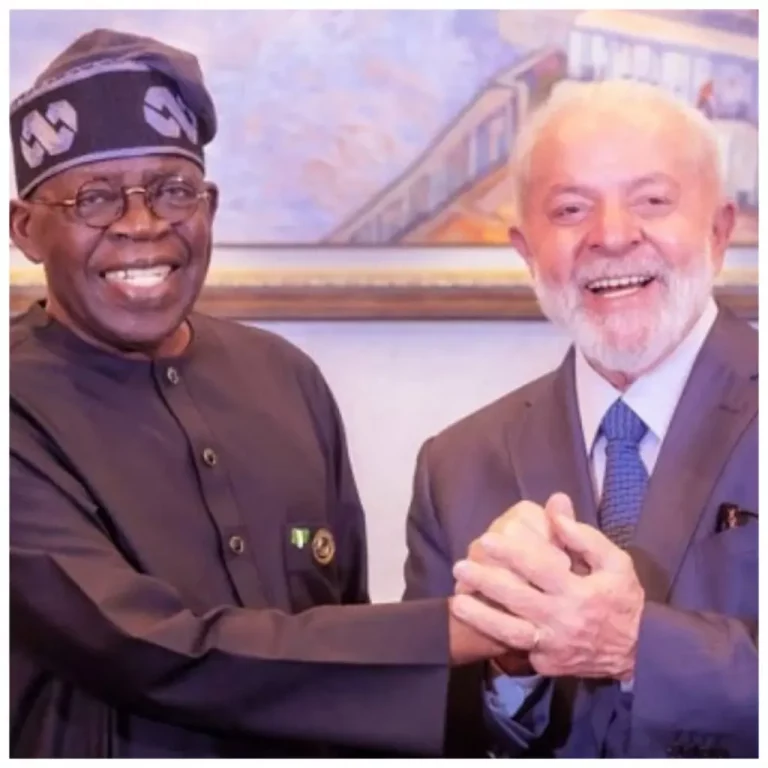
As the ongoing African Union summit gains momentum, President Bola Tinubu and Brazilian President Luiz Inácio Lula da Silva convened in Addis Ababa, Ethiopia, on Sunday.

Ajuri Ngelale, Special Adviser to President Tinubu, highlighted the fruitful discussions, focusing on comprehensively strengthening bilateral ties across various fields.

President Lula da Silva noted the decline in trade volume between Nigeria and Brazil from over $10 billion to $1.6 billion and expressed his determination to fortify bilateral relations.

President Tinubu, underscoring Nigeria’s economic potential, emphasized ongoing reforms, removal of business obstacles, and investments in critical sectors like healthcare, education, and agriculture.

Lula da Silva, recognizing the shared history of Nigeria and Brazil, expressed his commitment to restore strong relations, citing the need for collaboration in academia, culture, commerce, agriculture, industry, and trade.

President Tinubu affirmed Nigeria’s readiness to deepen ties, addressing issues like red tape, corruption, and the implementation of reforms, highlighting parallels between the nations’ progressive legacies.

Both leaders agreed on the necessity of direct air links, forming committees for joint planning and expressing eagerness to capitalize on opportunities for partnership in various sectors.

President Tinubu acknowledged the similarities between Brazil and Nigeria, expressing a commitment to learn from Brazil’s agricultural success and collaborate on mechanizing food production.

The leaders, representing the largest democracies in Africa and South America, agreed to work out the modalities for President Tinubu’s state visit to Brazil, following an invitation extended by President Lula da Silva.


Banks offload $3.3 billion amid the Central Bank’s efforts to counter a recent decline in the value of the naira

0

The naira experienced a fresh decline in both the official and parallel foreign exchange markets on Friday.

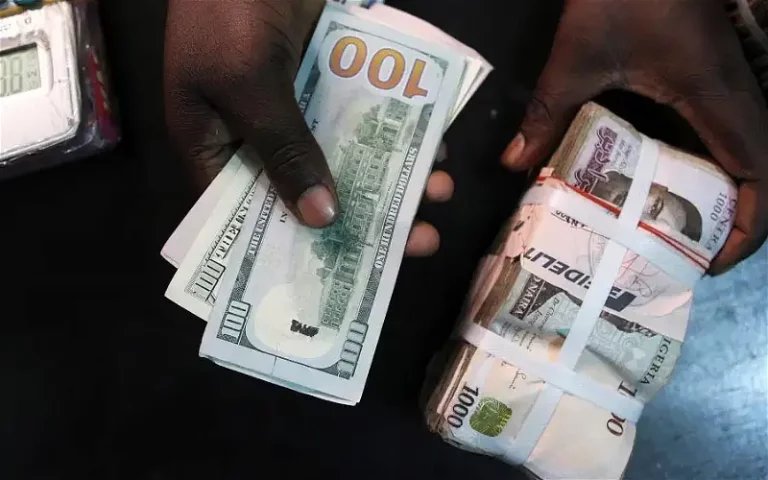
The national currency dropped to N1,670/$ at the parallel market and closed at an official rate of N1,537/$, creating a N133 gap between the official and parallel markets.

Despite increased dollar supply totaling $3.83 billion in eleven days through the Nigerian Autonomous Foreign Exchange, concerns about round-tripping persist.

The Central Bank’s efforts to improve liquidity through directives for banks to sell excess dollars have led to increased forex transactions, but challenges remain as the gap widens, raising worries about potential round-tripping activities.

The naira’s fluctuation in both markets is attributed to strong demand for dollars by speculators and individuals traveling for various purposes.

The NACCIMA urges the government to address the challenges of naira devaluation and inflationary pressure, emphasizing the importance of stabilizing the currency for affordable agricultural inputs and increased consumer purchasing power.

The association supports recent resolutions to boost local food production but highlights the multifaceted nature of rising food costs, including the impact of the depreciating value of the naira.

The plea for enhanced security and infrastructure in farming communities aims to mitigate risks faced by farmers and increase efficiency in the agricultural value chain.

The call for fair trade practices aligns with the need for competitive pricing without compromising the welfare of local producers and consumers, amidst a backdrop of prolonged inflationary pressure and exchange rate challenges in the Nigerian economy.


EFCC directs a task force to address illicit forex trading and misuse of the naira

0

The Economic and Financial Crimes Commission (EFCC) has formed a task force to address the issues of illegal forex trading and abuse of the naira, responding to the ongoing depreciation of the naira against the US dollar.

FMDQ data reveals the naira’s decline to N1,537.96 per US dollar, prompting the EFCC’s intensified efforts.

Previously, the EFCC apprehended numerous suspects involved in illegal forex trading and naira abuse, including the arrest of 87 forex dealers in Abuja, Lagos, and Kano in December 2022.

The commission also secured the conviction of an actress, Oluwadarasimi Omoseyin, for stepping on and spraying naira notes, with a sentencing of six months imprisonment or a N300,000 fine.

Reiterating its commitment, the EFCC urged the public to report illegal forex trading and naira mutilation, providing toll-free numbers.


Meanwhile, the Olu of Owode, Oba Kolawole Sowemimo, confirmed his two-month suspension without salary by the Egba Traditional Council for alleged abuse of the naira during a public event with a popular musician.

The suspension was reduced from three months following his apology and acknowledgment of the council’s decision.

Lagos airport runway reopens after undergoing 11 months of repairs

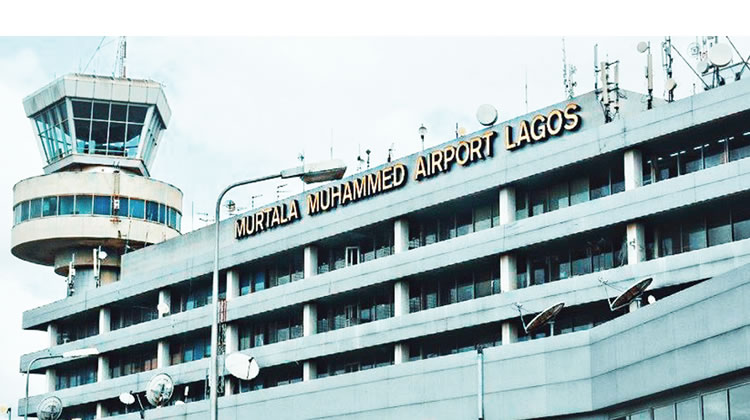
The Federal Airports Authority of Nigeria has officially reopened the 3.9km Runway 18R/36L at the Murtala Muhammed International Airport, Lagos, following nearly 11 months of maintenance repairs.

Initially scheduled for an eight-week closure starting in March 2023, the maintenance extended beyond expectations, causing disruptions to air traffic and airline schedules.

Throughout the repair period, both international and local airlines had to use the shorter Runway 18L/36R designed for domestic flights.

Now, with the operational status of Taxiways 2 and 3, international airlines have an additional option besides the domestic runway.

Measuring 3,900 m in length and 60 m in width, the reopened Runway 18R/36L welcomed Kenya Airways and Qatar Airways, marking its return to service with ceremonial landings.

Despite a Notice to Airmen announcing the runway’s opening after midnight on February 15, last-minute issues delayed the reopening. Finally, after over 24 hours, airlines received clearance to use the runway.

The reopening offers relief to both local and foreign airlines relying on the airport.

FAAN’s Managing Director, Olubunmi Kuku, expressed determination to minimize further delays, emphasizing ongoing collaborative efforts involving the Nigeria Airspace Management Agency, Nigeria Civil Aviation Authority, and Airline Operators of Nigeria.

MMIA, Nigeria’s busiest airport, operates two runways, with the domestic runway facing limitations for over 14 years.

The recent installation of airfield lighting and other components enabled the domestic runway to resume full 24/7 operations in November 2022.

Despite challenges posed by runway closures, experts highlight the financial impact on both airlines and airports, affecting landing charges and revenue streams during such disruptions.

FAAN remains committed to mitigating additional delays, ensuring a seamless resumption of operations at the vital airport.


CBN divides a $134 million bank transfer to prevent any infractions, according to the AuGF report

0

The recent Auditor General of the Federation report reveals that the Central Bank of Nigeria, during the previous administration, divided a $134 million transfer to the UK branch of a Nigerian bank to avoid breaching its own guidelines on offshore deposit placement.

The 2020 audit report, delayed by two years, highlights alleged misconduct and a failure in the CBN’s internal control system.

The report suggests that this non-compliance could be viewed as diverting public funds and exposing the CBN to unnecessary risks.

The CBN defends itself, asserting that the exposure to the bank was within approved limits, and the deposit splitting was for liquidity planning, not violation purposes.

The Auditor General directs the CBN to justify its actions to the Public Account Committee of the National Assembly, warning of potential sanctions for gross misconduct as per financial regulations.


Denrele Edun addresses his struggle with stroke

0

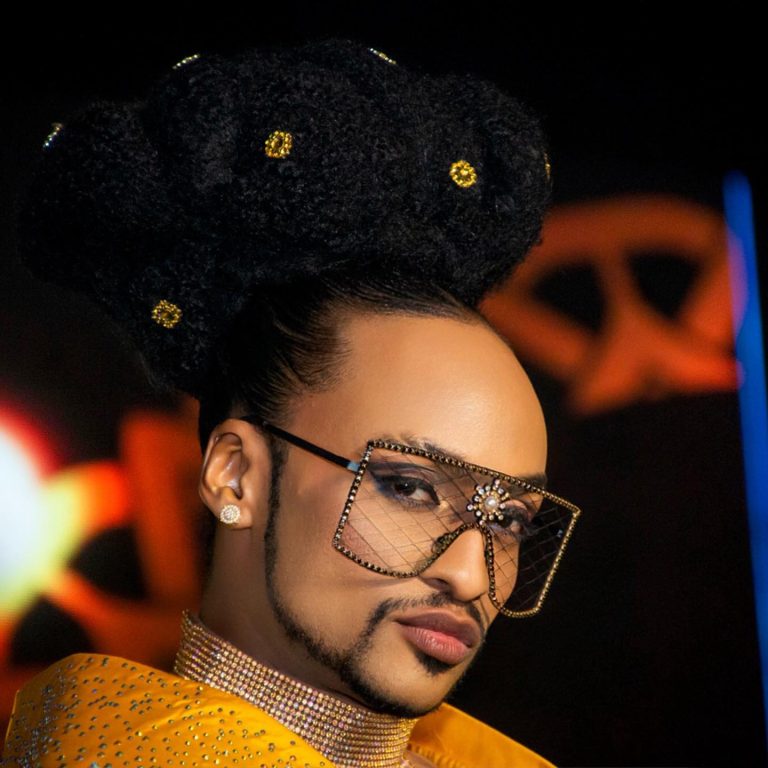
Denrele Edun, a renowned Nigerian crossdresser and media personality, recently shared insights into a challenging period in his life, revealing his battle with stroke.

In a widely circulated interview with Channels TV, he bravely detailed the impact of the stroke, narrating how it affected half of his face.

During this trying time, he experienced significant health issues, with his left eye closing, noticeable facial shifts, and difficulties in basic functions like drinking water.

Despite these challenges, Denrele continued working, adapting to the situation by creatively concealing the affected side with his unique hairstyles.

Actress Bisola Aiyeola declined certain movie offers due to her commitment to her child

0

Reality TV personality and Nollywood actress, Bisola Aiyeola, has shared insights into how her role as a mother influences her choices in the entertainment industry.

As a single mother, she carefully considers the impact of her acting roles on her growing child, mindful of the potential positive or negative effects.

Bisola emphasized the importance of being cautious with certain storylines, taking into account the long-term perception it might create for her daughter.

Despite being in the industry for years, she maintains a patient approach and prioritizes her daughter’s well-being, highlighting her passion as the driving force behind her career.