



Home Blog Page 29

Adidas Unveils Ancient Egypt–Inspired F50 Boot for Mo Salah

0

Adidas has introduced a special edition of its iconic F50 football boot, created exclusively for Liverpool star and Egypt captain Mohamed Salah. The custom design draws inspiration from Ancient Egypt, blending timeless cultural symbols with the sharp, modern look of one of Adidas’ fastest boots.

The boot features details that reflect Egypt’s rich heritage, from patterns reminiscent of ancient art and hieroglyphics to a colour palette that echoes the tones of desert sands and royal gold. Each element is crafted to tell a story, linking Salah’s roots to his rise as one of football’s most feared attackers.


Beyond its visual appeal, the F50 remains a performance-driven boot, built for speed, precision, and explosive movement. By pairing elite technology with cultural storytelling, Adidas reinforces the idea that this is not just equipment, but a statement piece made for a player of Salah’s stature.

For Salah, the design is a tribute to both identity and legacy. As one of Africa’s most successful footballers and a global sports icon, he has become a symbol of pride for millions of Egyptians and fans across the continent. This special edition celebrates that role, honouring his journey from local pitches in Egypt to the biggest stages in world football.


The Ancient Egypt–inspired F50 stands as a bold fusion of past and present, capturing heritage, excellence, and ambition in one design, while underscoring Salah’s place not only in the game, but in the story of modern Egyptian pride.

PayPal’s Africa Shift: From a Half-Open Door to a Global Gateway

0

For years, PayPal’s presence in Africa has felt like an invitation without full entry. Professionals across the continent could open accounts and, in theory, receive payments. In practice, accessing those funds was another matter. Withdrawals were often limited or unavailable, links to local banks were weak, and working with overseas clients came with friction that made global business harder than it should be.


The platform offered just enough to participate, but not enough to compete. For many African freelancers, creators, and small businesses, PayPal became a symbol of what was possible elsewhere, yet out of reach at home.


After more than a decade and a half of that reality, a shift is on the horizon.


PayPal has announced plans to roll out PayPal World across Africa in 2026. The initiative points to a change in strategy. Rather than forcing African users into payment models built for other markets, PayPal World is designed to connect local wallets and bank systems directly into global payment networks. The goal is simple in theory: let money move in and out of Africa as easily as it does in more mature markets.


If delivered as promised, the impact could be far-reaching. Freelancers could invoice international clients and withdraw earnings without workarounds. Content creators could receive support from fans abroad with fewer barriers. Exporters and digital businesses could settle cross-border transactions faster and at lower cost. In a continent where digital talent is growing faster than financial access, such a system could change how African professionals participate in the global economy.


Yet the announcement also invites a deeper question: why now?


PayPal has operated in African markets for over sixteen years, long enough to understand the gaps and frustrations users face. During that time, local fintech companies stepped in, building mobile wallets, payment gateways, and cross-border solutions tailored to African realities. Competition has intensified, and Africa’s digital economy has matured. Today, millions of young professionals earn online, sell services abroad, and expect tools that match their ambition.


PayPal World may be the company’s response to that shift. It reflects a recognition that Africa is no longer a peripheral market, but a central part of the future of digital payments.


Still, much depends on execution. Promises of integration must translate into reliable access, fair fees, and coverage that extends beyond a few major cities or countries. African users have learned, through years of limited functionality, to be cautious.


If PayPal follows through, 2026 could mark a turning point. The half-open door that defined PayPal in Africa may finally open wide, offering creators, freelancers, and businesses a clearer path into global commerce. If not, it will be another reminder that access delayed is opportunity denied.

Actress and Agripreneur Chy Nwakanma Graduates from Lagos Business School

Nigerian actress and agripreneur Chy Nwakanma has reached a new milestone in her growing career, graduating from Lagos Business School (LBS), widely regarded as one of Africa’s foremost institutions for executive and entrepreneurial education.

Renowned for her strong screen presence and selective approach to roles, Chy’s academic achievement signals a deeper commitment to building impact beyond the film industry. She completed a programme in Agribusiness Management, a step that further reinforces her work as a director at East Goshen Farms, where she champions sustainable farming practices and encourages youth participation in agriculture.

With a foundation in Performance and Communication from the University of Illinois, Chicago, Chy has steadily shaped a reputation as a multidimensional creative. She balances acting with enterprise and advocacy, driven by a belief that talent gains lasting value when guided by structure, sound strategy, and a clear long-term vision. Her decision to pursue formal business education reflects this outlook and her resolve to build ventures that endure.

Rather than rely on public statements, Chy allows her work to speak for her. From film sets to farmlands and now to boardrooms, she is redefining the image of the modern African woman in the public space, one who blends grace with intellect and storytelling with measurable impact. Her journey mirrors a new generation of creatives who are deliberate about legacy and social value.

Beyond Lagos Business School, Chy holds certifications from leading global institutions, including the United Nations Institute for Training and Research (UNITAR), the Food and Agriculture Organization (FAO), and EdX, with a focus on sustainability and agripreneurship. These credentials underscore her dedication to practical solutions in food security, rural development, and inclusive growth.

Her graduation from LBS is more than a personal success. It is a statement of possibility for African creatives to lead conversations not only in the arts, but also in innovation, enterprise, and sustainable development.

As Chy Nwakanma continues to evolve across multiple fields, her story stands as one shaped by purpose, discipline, and quiet strength, a narrative of beauty and power unfolding with intention at every stage.

“Ogbori-Elemoso” Remake: Between Legal Formalism and Cultural Legacy

0

The on-going controversy surrounding the proposed remake or new film on Soun Ogunlola, “Ogbori-Elemoso,” and the vehement objections by legendary actor Chief Lere Paimo presents a profound paradox in Nigerian intellectual property law. It reveals the stark tension between the clean, formalistic logic of statutory copyright and the messy, human-centric principles of moral rights and cultural legacy. While the new producers, Fewchore Studios, advance a technically coherent legal argument, a deeper jurisprudential analysis suggests that dismissing Chief Paimo’s claims on purely formal grounds would be a grave misapplication of the full spirit of copyright law.


To be clear, the position of Fewchore Studios rests on a bedrock copyright principle: facts, history, and titles are in the public domain. They correctly assert that no one can own the historical narrative of Soun Ogunlola, the founder of Ogbomoso. Their project, they state, is an original work derived from independent research, not a frame-by-frame remake of Chief Paimo’s original film. They further highlight a significant evidentiary point: there appears to be no registered copyright or trademark for “Ogbori-Elemoso” in Chief Paimo’s name. From a narrow, formalist perspective, this appears a compelling case. If they copy no protected expression, they arguably infringe no economic copyright. This strict legal logic frames the interaction with Chief Paimo – including the offer and subsequent refund of a ₦7.5 million “goodwill gift” – as a courtesy, not a legal necessity.


However, to stop the analysis at pure legalism is to ignore the very heart of intellectual property law in Nigeria: the protection of the creator’s persona and reputation. This is where the doctrine of moral rights, as enshrined in section 14 of the Nigerian Copyright Act 2022, becomes paramount. Moral rights under the provision cover, amongst others, audiovisual works (previously termed “cinematograph films” under the 2004 repealed Act).


In Nigeria, as in most countries, copyright protection is automatic. It is not necessarily protected by any requirement of registration or formality (copyright is different from patent or trademark). Thus, the moment an idea is expressed in a “fixed” form such as writing a story on paper, printing/typing electronically as I am doing now, writing a song, making a video or film, or saving a digital file, copyright – including moral rights – attaches to that work immediately. The moral rights in this context consist primarily of two aspects: the right of paternity (the right to be identified as the author) and the right of integrity (the right to object to derogatory treatment of the work).


Without a doubt, Chief Paimo’s life is inextricably woven into the fabric of “Ogbori-Elemoso” and Soun Ogunlola. It has earned him, amongst many recognitions, the chieftaincy title “Are Arobajo of Ogbomoso,” national honour (MFR), and his enduring screen persona “Eda Onile Ola”. Therefore, any new or remake film on the same historical figure, produced without his connection or against his will, arguably constitutes a severe violation of his moral right of paternity protected by section 14 of the 2022 Act. Such violations clearly disconnect the work from its most iconic author in the public mind. Furthermore, if the new film or remake were to distort the narrative in a way he finds objectionable, his moral right of integrity could also be engaged.


The legal protection for Chief Paimo extends beyond statutory copyright into the common law tort of passing off. This action protects the goodwill a producer has built with the public. For decades, the name “Ogbori-Elemoso” in the context of film has communicated one thing to the Nigerian, nay global, public: Chief Lere Paimo’s seminal performance. This is the “goodwill” attached to that creative expression. If the new film creates a “misrepresentation” in the marketplace – leading a significant portion of the public to believe it is a remake, revival, or is endorsed by the legend himself – it could be “calculated to injure” his legacy and goodwill, which is the core of a passing-off claim. The producers’ argument that they are only using the historical title is legally thin if public perception firmly associates that title with a specific artistic source.


Therefore, the payment of ₦7.5 million, framed as a “gift,” is a fact that cuts against the producers in a deeper legal analysis. In litigation, this could be presented not as mere generosity, but as tacit recognition of a pre-existing claim to legitimacy and association that they felt compelled to acknowledge. Chief Paimo’s subsequent refund of the money upon legal advice reinforces the position that this was not a settlement of rights, but a rejection of the attempt to sideline his moral and legacy-based claims.


Ultimately, this dispute transcends a simple copyright checklist. It is a clash between custodianship of history and custodianship of legacy. His Royal Majesty, Oba Ghandi Olaoye, the Soun of Ogbomoso, is rightfully the custodian of the historical facts and lineage of Soun Ogunlola. However, Chief Lere Paimo has, through a lifetime of artistry and sacrifice, become the cultural custodian of a specific, powerful, and beloved interpretation of that history. The 2022 Act, through its provision for moral rights, is sophisticated enough to protect this. To reduce this to a binary question of “who owns history?” is to ignore the layered reality of how culture is made and sustained. A truly just and culturally respectful resolution would not side-step the veteran artiste but would find a way to honour the throne while fully respecting the irreplaceable legacy of the artiste who first brought this history to life for generations of Nigerians. The law, in its highest application, should facilitate this harmony, not legitimise its rupture.


Hopefully, HRM Oba Ghandi Olaoye, the Soun of Ogbomoso, will hasten to descalate yet another controversy that is now inextricably linked to him.


– Misbau Alamu Lateef, Ph.D.

Press Release: Formal Clarification on Public Statements Concerning “Ogbori Elemoso”

PRESS RELEASE.

FOR IMMEDIATE RELEASE.

Formal Clarification on Public Statements Concerning “Ogbori Elemoso”

Fewchore Studios has noted recent media reports alleging that it unlawfully remade Chief Olalere Osunpaimo’s work, purportedly with the backing of the Soun of Ogbomosoland.


In the interest of factual accuracy and public clarity, Fewchore Studios places the verified facts on record.


The name and narrative of Ogbori Elemoso are not the intellectual property of any individual.


Ogbori Elemoso refers to Soun Ogunlola, the founder and first king of Ogbomoso and forms part of established history.


Under Nigerian and international copyright law, historical facts, titles and folklore are in the public domain, freely available for research and creative interpretation, provided that no one copies another’s specific literary or cinematographic expression.


Accordingly, no individual can lawfully claim exclusive ownership over the history of a town or its founding monarch.


Fewchore Studios confirms that it has not remade or reproduced any film, script, or creative work by Chief Olalere Osunpaimo, nor used any of his proprietary materials.


The project is an original historical film developed from independent research and any copyright held by Chief Osunpaimo remains limited to his own prior work, none of which has been used or adapted.


Fewchore Studios is executing the project with the express written authorisation of Oba Ghandi Afolabi Olaoye, the Soun of Ogbomosoland and custodian of its history, to promote Ogbomoso’s cultural heritage, encourage indigene engagement, stimulate cultural tourism and support long-term socio-economic development through responsible historical storytelling.


It is necessary to clarify that two distinct engagements occurred.


At an initial meeting at the Palace of the Soun of Ogbomosoland—documented on audio and video—Chief Olalere Osunpaimo expressed satisfaction with the project’s objectives and indicated willingness to participate, leading to provisional production dates being fixed.


A separate meeting later held at his residence resulted in his request for ₦30 million, following which Fewchore Studios offered ₦15 million strictly as a goodwill gift in recognition of his past contributions and interest in the project.


This was accepted, formally documented in signed minutes confirming it was a gift and not payment for rights or history, with ₦7.5 million paid as an initial instalment in the presence of witnesses.


Subsequently, following correspondence from Chief Osunpaimo’s legal representatives, alleging copyright infringement and demanding discontinuance, Chief Olalere Osunpaimo withdrew from the agreed-upon production dates and refunded the ₦7.5 million that had been received earlier.


Fewchore Studios reiterates that the project has been conducted transparently and respectfully at all times, based on documented engagements, and not through coercion, exploitation, or unlawful appropriation.

Contrary to public insinuations, there is no registered copyright or trademark in the name Ogbori Elemoso in favour of Chief Olalere Osunpaimo at the Nigerian Copyright Commission or any trademark registry.


Appeals to political or religious figures cannot create rights where none exist in law.


Fewchore Studios is concerned by narratives that omit signed records and mischaracterise a lawful historical project as infringement.


While respecting Chief Osunpaimo’s age and contributions to Nigerian cinema, the Company affirms that no individual can claim ownership over a town’s history.


As we advance, Fewchore Studios remains committed to responsible Yoruba historical storytelling and will engage honourably while firmly defending itself against false or misleading claims.


Aniekan Equere

Managing Director

Fewchore Studios

Preserving History. Creating with Integrity.

Lagos Fashion Week: How Nigerian Style Was Built into a Global Force

0

Lagos Fashion Week has become the premier fashion event on the African continent. Since its founding in 2011 by Omoyemi Akerele, the platform has done more than showcase clothing. It has redefined how Nigerian and African design is produced, understood, and traded on the world stage.

At its outset, Lagos Fashion Week faced real challenges. There were few precedents for a major fashion week in West Africa. Infrastructure, industry networks, and global interest were limited. Despite this, Akerele and her team persisted, building not just an annual show but the structure of an industry. Over years, Lagos Fashion Week brought in international buyers, media, and collaborators, creating sustained attention on Nigerian style.

The platform’s influence grew steadily. Designers such as Orange Culture, Kenneth Ize, Emmy Kasbit, and others moved from local recognition to international clientele. Runway shows at the Federal Palace Hotel now draw more than 70 designers and over 15,000 attendees, making Lagos Fashion Week a critical launchpad for talent. Its runway programming places cultural heritage at the centre of contemporary design, blending traditional motifs with modern techniques.

From early editions marked by power fluctuations and logistical hurdles, the event has matured into a full ecosystem supporting business development. Initiatives such as Green Access and Woven Threads reflect this evolution. Green Access, launched in 2015, identifies and trains emerging designers in sustainable practice, pairing mentorship with practical business guidance. Woven Threads, introduced in 2020, focuses on circular design, craft preservation, and waste reduction, turning challenges into actionable industry strategies.

The push toward sustainability has become a defining trait of Lagos Fashion Week. Designers participating in the event must show commitment to environmental responsibility, from sourcing materials to production methods. This emphasis extends beyond the runway to consumer education and industry standards. Lagos Fashion Week has encouraged innovations such as the use of natural dyes, upcycled materials, and traditional textiles reimagined for modern markets.

In 2025, this long-term commitment to sustainability culminated in global recognition. Lagos Fashion Week was awarded the Earthshot Prize in the “Build a Waste-Free World” category, recognising its work in transforming fashion through circular design and ethical production. The award, presented in Rio de Janeiro, is one of the most prestigious environmental honours in the world and comes with funding to scale impact. Lagos Fashion Week is the first African fashion platform and first fashion ecosystem globally to receive this prize.

Omoyemi Akerele has framed the prize not as a personal accolade but as recognition of a community. She has said the platform’s success reflects the designers, artisans, and young people whose creativity and resilience have shaped Africa’s fashion narrative. With the Earthshot Prize funds, Lagos Fashion Week plans to establish a circular fashion hub in Lagos that will extend to other African cities, turning textile waste into materials, livelihoods, and new business opportunities.

Today, Lagos Fashion Week operates at the intersection of creativity, culture, commerce, and sustainability. It supports local supply chains, revives indigenous techniques, and fosters economic opportunities in fashion and related industries. Its sustained growth over fifteen years demonstrates how consistent vision, strategic development, and community focus can elevate a local idea into global leadership in design and sustainability.


ALH. WASIU AYINDE ADESANYA: THE OLORI OMOBA AND POTENTIAL BABA AWUJALE OF IJEBULAND

0

Controversy surrounds Alhaji Wasiu Ayinde’s claim of connection to the Fusengbuwa Ruling House, with some questioning his royal descent and title eligibility, while others defend him, pointing out his previous chieftaincy appointments as the Otunba AFIDIPOTE and OLORI OMOBA of Ijebuland respectively. Many non-Ijebus mistook the rejection of K1’s claim as rejection of his entire royal descent from Ijebu and contributions to Ijebuland, but this is not the case.

K1 is widely admired in Ijebuland, and his popularity transcends Ruling Houses. He is a proud ambassador of Ijebu, loved by many, including those in the Fusengbuwa Ruling House. Alhaji Wasiu Ayinde consistently promotes Ijebu Ode and Ijebuland in his music and public appearances. He is a unifying figure, mobilizing Ijebu talents and supporting local initiatives for over 20 years, earning him the Otunba AFIDIPOTE and Olori Omoba title.


Despite rumored skepticism about his interpersonal skills, he has maintained friendships across boards over the years and inspired many, particularly young Ijebus and Yoruba people. He is arguably the greatest Ijebu ambassador of his time.


The Ijebus’ very recent scrutiny of Alhaji Wasiu’s claim should not overshadow their appreciation for his contributions. They love and accept him as one of their own – a son, brother, father, and leader who embodies hard work and perseverance.

The controversy surrounding Olori Omoba Alhaji Wasiu Ayinde’s claim needs to be addressed. Though his connection to the Fusengbuwa Ruling House was incorrect, it is an honest error, not a deliberate attempt to deceive. The Fusengbuwa Ruling House rejected his claim based on principle, without personal bias against K1. It is generally acknowledged within the Ijebu community that had it be the turn of Fidipote, Alhaji Wasiu Ayinde’s Ruling House, to produce the Awujale, he would have being rallied round for the throne. However, the law is the law, it is the turn of the Fusengbuwa Ruling House.


Instead of being criticized, the Ijebus should be commended for protecting their history. They prevented a distortion, even if it came from their own son, the Olori Omoba of Ijebuland. Keeping silent would have led to historical inaccuracies and embarrassment. Historical records, like Robin Law’s 1977 book: The Oyo Empire, c. 1600 -c. 1836, support their stance. An extract of the book is reproduced below;


“It may be noted that the Alaafin whose reign ended in the early 1730s was, like Moyegeso, Ojigi by name.

Oyo tradition alludes to the intervention of Alaafin Ajagbo in Ijebu dynastic squabbles during the seventeenth

century. It just could be that this event refers properly to Ojigi’s intervention on behalf of Moyegeso in the early

1730s, and that it created an ill-feeling in Ijebu (as Ojigi became an alias for Moyegeso) resulting in an attempt to prevent Moyegeso’s offspring from the kingship. Setejoye, presumably the last surviving son of Moyegeso, had to find a way to forestall this eventuality of the loss of the family’s royal status”


This record confirms that there is no link between Awujale Setejoye and Awujale Jadiara or Fusengbuwa, contrary to K1 and Otunba Ayodeji Osibogun’s understanding. Alhaji Wasiu Ayinde would have probably been misled by inaccurate information. It is trite that age, position, or status do not define historical knowledge. What is key is having insight, research skills, and access to credible records. K1 is loved by the Ijebu people, and they will continue to be proud of him.


CLARIFICATION


Those who misled Alhaji Wasiu Ayinde about his connection to the Fusengbuwa Ruling House either did not know about his potential kingmaker role in the current Awujale throne contest or deliberately altered history to fuel his ambition.


The Fidipote Ruling House and a male lineage within the Fusengbuwa Ruling House have a shared matrilineal line, traced to Oke Lusote Quarters, Ago Iwoye but different patrilineal ancestors, in Ijebu Ode. K1 was misled into claiming Obaship under the wrong house. With proper info, he could have endorsed a maternal relative within the Fusengbuwa Ruling House, making him a potential kingmaker.


Conclusion


Alhaji Wasiu Ayinde’s case shows that history can not be altered when evidence is clear and people are protective of their heritage.


By


Olawunmi Samuel Omo’ba Anikinaiya


#amebonewshub

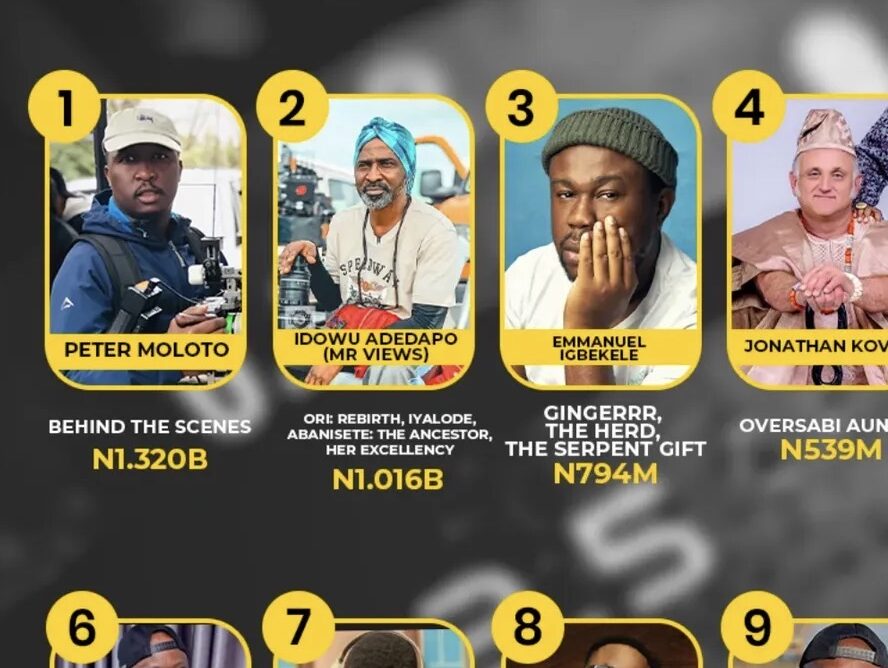
BON Awards 2025: Seven Doors Leads the Night as a New Generation of Stars Shape Nollywood’s Honours Roll

0

The 17th edition of the Best of Nollywood Awards took place on Sunday, December 14, 2025, at the Wole Soyinka Centre for Culture and the Creative Arts, Iganmu, Lagos, reaffirming its standing as Nollywood’s most authentic and trusted awards system.

Hosted by Bukunmi “KieKie” Adeaga-Ilori and VJ Adams, the ceremony brought together filmmakers, actors, producers, and key industry stakeholders for a night dedicated to recognising excellence across film, television, and indigenous cinema. The event maintained its long-held reputation for focusing on merit, craft, and cultural relevance rather than popularity or sentiment.

One of the standout moments of the night was the recognition of emerging talent. UK-based actor Raz Adoti was named Most Promising Actor for his lead performance in Son of the Soil, a role praised for its emotional depth and disciplined execution. The female counterpart award went to Lina Idoko for her compelling performance in I Am Anis, a role that marked her as one of the industry’s most exciting new voices.


Beyond individual wins, the ceremony reflected the breadth of Nollywood’s evolving creative landscape, honouring achievements in acting, directing, writing, production design, cinematography, and technical execution. The awards continued to highlight indigenous language films and regionally rooted storytelling, reinforcing the importance of cultural identity within the industry’s growth.


Widely regarded as Nollywood’s most credible awards platform, the Best of Nollywood Awards is founded and coordinated by Seun Oloketuyi. Over the years, it has built a reputation for consistency, transparency, and respect for the craft of filmmaking. The 2025 edition further strengthened this legacy by recognising work that demonstrated artistic integrity, technical excellence, and meaningful contribution to the industry.


As Nollywood continues to expand its global footprint, the Best of Nollywood Awards remains a reliable benchmark for honouring those who shape the industry both on screen and behind the scenes, serving as a record of excellence and a standard against which creative achievement is measured.

Here is the full list of winners from the 17th Best of Nollywood (BON) Awards 2025, held on Sunday, December 14, 2025, at the Wole Soyinka Centre for Culture and the Creative Arts, Lagos. Reporting confirms major category winners across performance, technical, and special recognition awards.


Main Awards

• Movie of the Year: Farmer’s Bride

• Director of the Year: Farmer’s Bride – Director (name to be confirmed)


Performance Categories

• Best Actor: Gideon Okeke (Black Out)

• Best Actress: Padita Agu (Black Out)

• Most Promising Actor: Raz Adoti (Son of the Soil)

• Most Promising Actress: Una Idoko

• Best Supporting Actor: Taye Ayimoro (Son of the Soil)

• Best Supporting Actress: Mercy Aigbe (My Mother Is a Witch)

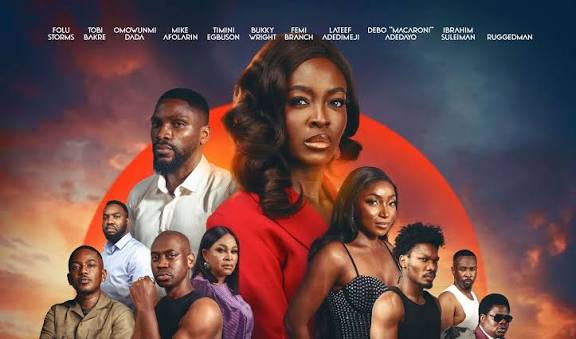
• Best Kiss (On-screen Chemistry): Tobi Bakre & Folu Storms (Red Cycle)

Technical and Production Awards (led by Seven Doors )

• Best Production Design: Seven Doors

• Best Special Effect: Seven Doors

• Best Series: Seven Doors

• Best Cinematography: Seven Doors


Indigenous & Thematic Categories

• Best Indigenous Film: Abanisete


Special Recognition Awards

• Special Recognition: Steve Ayorinde

• Special Recognition: Funke Akindele

• Special Recognition: Shaibu Husseini


Dr Folorunso Alakija Donates 250-Bed Medical Research and Training Hospital to Osun State University

0

Billionaire philanthropist and business leader, Dr Folorunso Alakija, has donated a fully equipped 250 bed medical research and training hospital to Osun State University, marking a major expansion of the institution’s health and academic infrastructure.

The newly completed facility was formally inaugurated by former Vice President, Professor Yemi Osinbajo, at a ceremony attended by university officials, government representatives, medical professionals, and community leaders.

Designed as a teaching and research driven hospital, the centre is expected to strengthen medical education at Osun State University by providing students with direct access to modern clinical training, advanced research facilities, and real world patient care experience. Beyond its academic role, the hospital will also serve as a critical healthcare hub for residents of Osogbo and surrounding communities, improving access to specialist medical services.

Speaking at the inauguration, stakeholders described the project as a timely intervention that bridges the gap between medical training and healthcare delivery in the region. The hospital is positioned to support capacity building for healthcare professionals, encourage medical research, and raise the standard of care available within the state.

The donation underscores Dr Alakija’s long standing commitment to education, healthcare development, and social investment in Nigeria, while reinforcing Osun State University’s growing role as a centre for medical excellence in the South West.

J’odie and the Cost of Innocence: How a Gifted Voice Was Lost to Love, Trust, and Exploitation

0

A recent interview with J’odie, the singer whose voice and songwriting once defined the innocence of early 2000s Nigerian pop, offers a sobering reflection on talent, vulnerability, and the hidden costs of fame. She spoke briefly, carefully choosing her words, yet the weight of her story came through with quiet force.

“The person who wrote Kuchi Kuchi was a shy person,” she said. “But the one sitting here can face anything because she has realized that life is not a bed of roses.” In that single statement lies the arc of her journey. It is the movement from innocence to experience, from youthful trust to hard-earned wisdom. It is the sound of a woman who has lived through the consequences of choices made before she fully understood the world she was stepping into.


For many listeners, J’odie returned to public memory through Lucky Udu, and with him came the familiar opening lines. When I wake up in the morning, I see your lovely face. The excitement was instant. Kuchi Kuchi remains an evergreen record. The lyrics were tender, the melody effortless, the performance sincere. Few would dispute that the song’s creator possessed a rare musical gift. With the right guidance, protection, and partnerships, J’odie’s career should have followed a very different path. That unanswered question sits at the heart of this story. What happened to J’odie.


At the center of her account is a relationship that blurred the line between love and exploitation. As a young and gifted woman, she met a man she trusted and married. What she did not know was that this relationship would become the instrument through which her talent was taken from her. According to J’odie, the father of her child, from whom she is now divorced, continues to receive royalties from Kuchi Kuchi, while she receives nothing.


At the height of the song’s success, he proposed that they release an album together and include the hit record. In love and emotionally invested, J’odie agreed. She went further by funding the album herself. Today, she says, he is the one benefiting financially from that project. The creator of the song has been cut off from its rewards.


The personal cost went beyond finances. The marriage ended when their child was barely two months old. He left, claiming she had mental health issues. Yet he did not take the child with him, nor did he seek help for the woman he was leaving behind. He walked away from both mother and child, leaving her to carry the weight alone. Any speculation about what followed cannot fully capture the pain of that abandonment, especially when paired with the knowledge that the fruits of her labor continue to enrich someone else.


This story raises uncomfortable questions about power, trust, and the lack of protection for young creatives. How much can one life endure. A single individual exploited emotional vulnerability, benefited from artistic labor, and walked away at the moment support mattered most. Meanwhile, the artist herself was left to rebuild with little acknowledgment of her contribution.


The lesson here is not limited to women, though women often bear the sharper edge of such experiences. Any young person with visible talent and early success will attract attention of all kinds. Opportunity rarely arrives alone. It brings admirers and helpers, but it also draws opportunists, manipulators, and those who mistake proximity for entitlement. In such moments, coming from a family that is alert, informed, and protective becomes a quiet privilege.


Talent invites attention, and attention invites everything. Support and envy. Genuine care and concealed greed. Some people come to nurture what they see. Others come to take it. Not everyone drawn to light is drawn by goodwill.


The responsibility to protect the next generation cannot be overstated. Parents must shield their children, prepare them, and stay present long after success arrives. The example of fiercely protective figures like Bose Ogulu reminds us that guidance is not control, but defense.


Discernment is not optional for anyone with a shining path. It is survival. Not every smile means safety, and not every promise carries honor. J’odie’s story is not only about loss. It is a warning, a reminder, and a call for vigilance in a world that can be both generous and cruel at the same time.