Home Blog Page 321

NICA leverages its authority to foster a robust credit system

0

The National Institute of Credit Administration is firmly committed to transforming the economy from its reliance on a cash-based system to a dynamic credit-based system.

Moreover, it eagerly anticipates celebrating the newly acquired statutory authority granted by the NICA Act number 26 of 2022.

This act empowers the institute with control, supervision, and regulation over the credit management profession in Nigeria.

In an official statement, the institute emphasized that these newfound powers encompass several critical aspects, such as the ability to confer professional qualifications and certifications to qualified candidates post-examination.

Additionally, the institute will actively promote and safeguard the interests of business credit providers and grantors across various sectors of the economy.

Prof. Chris Onalo, the Chief Executive Officer of the National Institute of Credit Administration, expressed that this upcoming event, slated for October 2023, will serve as a gathering point for influential figures both within and outside the Institute.

The primary objective of this event is to foster meaningful interactions and exchange ideas, all centered around the institute’s role as Nigeria’s national authority for overseeing and regulating the credit management profession.

Professor Onalo also emphasized the historical significance of this occasion, as it marks the first time that institute members are coming together to uphold the responsibility initially undertaken by its founding fathers for the credit industry in Nigeria.

He stated, “It’s a moment to acknowledge exceptional contributions and for members to collectively embrace the future of their Institute.”

Furthermore, it’s noteworthy that NICA, as a chartered institute, holds the distinction of being recognized as the third largest statutory credit management professional body globally, following in the footsteps of the United States of America and the United Kingdom.


UBA nurtures the talents of emerging African professionals

United Bank for Africa Plc, known as Africa’s Global Bank, proudly announces the successful launch of its inaugural Graduate Management Accelerated Programme, designed to nurture the next generation of professionals across the African continent.

In a press release issued by the bank, it is revealed that more than 700 recent graduates have been welcomed into the UBA Tribe following an intensive six-month hands-on learning experience.

This initiative, accredited by the Chartered Institute of Bankers of Nigeria and inspired by the globally acclaimed Graduate Training Programme, aims to equip fresh graduates with the skills and knowledge needed for rapid career advancement into leadership and key roles.

The statement highlights that these graduates, hailing from UBA’s 19 African subsidiaries, completed a rigorous capacity-building curriculum, which seamlessly combined theoretical learning with practical on-the-job training.

This was achieved through rotations across various departments and units within the bank.

Tony Elumelu, Chairman of UBA, emphasized the significance of investing in human capital development and lauded the program for producing talented and promising professionals poised to elevate the bank to new heights.

He expressed his optimism in seeing future CEOs emerge from this program and the vital role it plays in addressing unemployment across Africa.

In addition, Oliver Alawuba, Group Managing Director, expressed his pride in the dedication, resilience, and commitment exhibited by GMAP participants.

He underscored UBA’s commitment to providing equal opportunities for individuals regardless of age, tribe, gender, or background, emphasizing the critical role these individuals play as catalysts for the bank’s vision of transforming Africa.

In conclusion, UBA’s Graduate Management Accelerated Programme is not only a testament to the bank’s commitment to nurturing talent but also a significant step in fostering growth and development throughout the African continent.

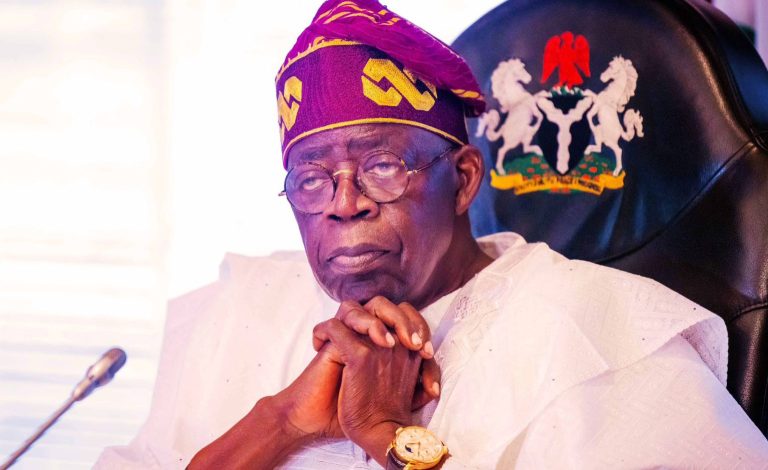
Clarifying Tinubu’s Credentials: Setting the Record Straight

0

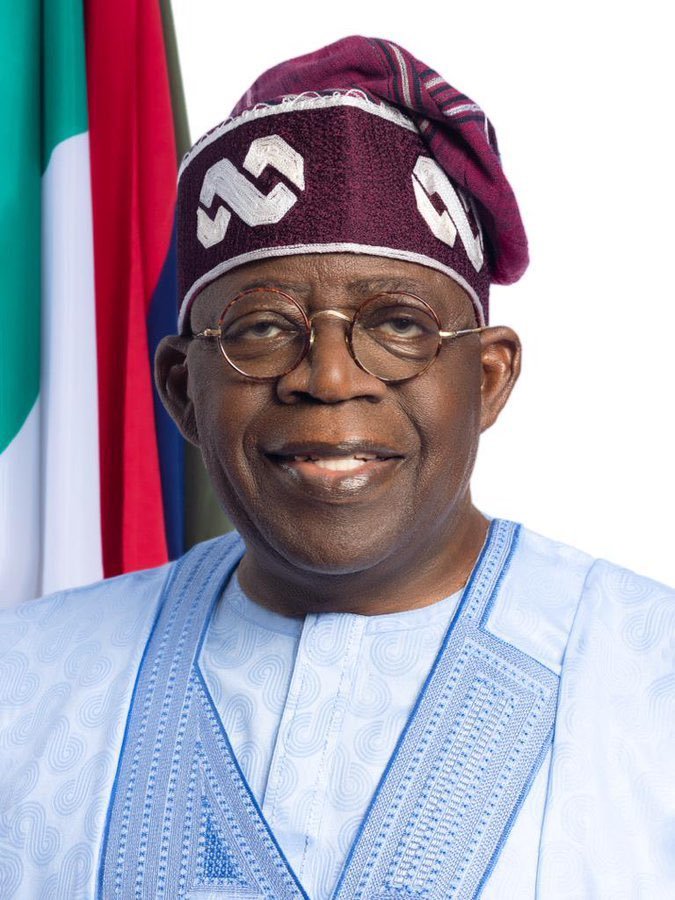
The ex-Vice President and defeated presidential candidate, Alhaji Atiku Abubakar, presented a pitiful image as he sat disheartened at the Shehu Yar ‘Adua Centre in Abuja after a so-called world press conference.

He had embarked on a futile journey to the United States in pursuit of President Bola Tinubu’s certificate, an endeavor that cost him dearly.

During the press conference, Atiku failed to unearth any incriminating evidence against the President and appeared to engage in political maneuvering, attempting to portray his trip as a quest for truth and accountability.

However, his credibility was called into question given his past, including his involvement in a bribery case in 2009 and allegations of corruption during his tenure in Customs.

Furthermore, claims of President Tinubu’s certificate being forged lacked substantial evidence, as the university registrar confirmed his attendance and graduation.

Atiku’s actions were seen as those of a sore loser, unlikely to achieve his objectives through this overseas venture, ultimately adding unnecessary tension to the political landscape.

Fuel imports have been halted by marketers, leading to gas stations running out of fuel, and long queues of customers have resurfaced

Seven oil marketers who had imported Premium Motor Spirit, commonly known as petrol, approximately a month ago, have ceased their imports, resulting in localized fuel shortages across some regions of the country.

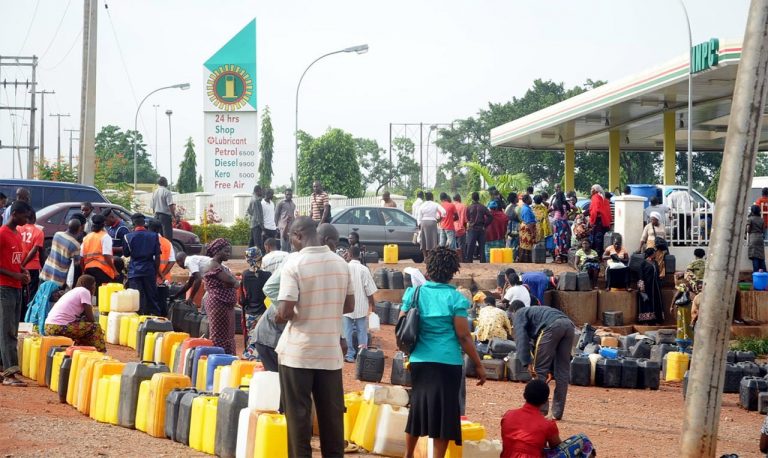
As of now, the sole importer of PMS is the Nigerian National Petroleum Company Limited (NNPCL), causing many depots and filling stations to run dry, leading to long queues at fuel dispensing outlets.

Petrocam, the last private dealer to import petrol into Nigeria, is unable to sell due to the reinstatement of subsidies on the product and the NNPCL’s refusal to raise the pump price.

Before last month, oil marketers used to negotiate with the NNPCL to raise the price in line with the landing cost when they imported the product.

This practice changed after President Bola Tinubu announced the end of subsidy payments on petrol.

At that time, the cost of the commodity increased twice to reflect the actual pump price, prompting marketers to resume importation.

However, due to the challenging economic conditions in the country and threats from labor unions to disrupt the economy if petrol prices were increased again, the government, through the NNPCL, stopped raising the product’s cost.

Consequently, marketers discontinued their imports, leaving only the NNPCL to handle the imports.

Marketers report that depots are now depleted, and for over a month, no other importer has brought in the product except the NNPC.

The National President of the Natural Oil and Gas Suppliers Association of Nigeria, Benneth Korie, confirmed the depletion of depots’ stocks.

Regarding whether other marketers were importing the product alongside the NNPCL, it was mentioned that several marketers, including Emadeb, Nipco, and Petrocam, brought in products, not solely the NNPC.

However, they were not breaking even because the NNPC was no longer adjusting its price when marketers imported products.

Despite the current landing cost being approximately N720/litre, the NNPC continued selling at prices between N580 and N617, depending on the location, due to government subsidies.

The current petrol price is being sustained by government subsidies, and for over a month, no marketer has imported the product due to the reintroduction of subsidies.

Regarding whether the NNPC has sufficient products to meet the country’s needs since marketers have stopped imports, it was noted that the NNPC also faces challenges. With an increased number of retail outlets, even some NNPC stations don’t have products, limiting their ability to supply third parties.

The situation has already led to queues in Lagos, and if it continues, it could result in massive queues nationwide.

Regarding the way forward, the oil marketer emphasized that the government should plan strategically, as subsidy has effectively been back for over a month, and measures need to be taken.

Additionally, the NNPCL refuted claims of planning to increase the pump price of petrol and assured customers that there were no intentions to do so, urging customers to purchase quality products at affordable prices at NNPC Retail stations nationwide.

Atiku requests permission from the Supreme Court to submit new evidence against Tinubu

0

On Friday night, Atiku Abubakar, the presidential candidate of the Peoples Democratic Party, made a formal request to the Supreme Court.

He sought permission to introduce new evidence aimed at substantiating his claim that President Tinubu had submitted a counterfeit certificate to the Independent National Electoral Commission.

The evidence Atiku wished to present included academic records from Chicago State University, which had been provided to him just days earlier.

Atiku based his request on legal provisions such as Order 2, Rule 12(1) of the Supreme Court Rules 1985, Section 137(1) of the Constitution of the Federal Republic of Nigeria (1999 as amended), and the inherent jurisdiction of the court granted by Section 6(6)(a) of the Constitution of the Federal Republic of Nigeria (1999 as amended).

Dated October 5 but filed on October 6, Atiku’s application specifically asked the apex court for permission to present new and additional evidence.

This evidence consisted of a sworn deposition from Caleb Westberg, representing Chicago State University, dated October 3, 2023.

In this deposition, Chicago State University disavowed the certificate submitted by the 2nd respondent, Bola Ahmed Tinubu, to the Independent National Electoral Commission.

Israel and Gaza plunged into conflict following an unexpected offensive by Hamas

0

Fierce gun battles raged well into the night after the Palestinian militant group Hamas launched a surprise large-scale attack against Israel on a Saturday.

This attack involved firing thousands of rockets from Gaza and deploying fighters to target and abduct soldiers and civilians.

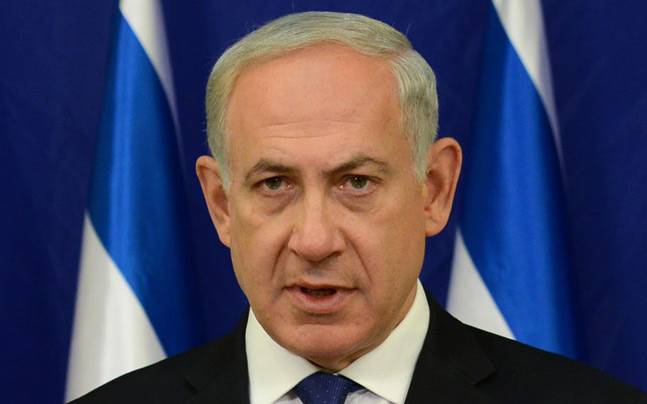
Israeli Prime Minister Benjamin Netanyahu declared, “We are at war,” as the Israeli army responded by striking various targets in the blockaded Gaza Strip, resulting in the destruction of several residential tower blocks.

In the wake of this conflict, about 80 people lost their lives in Israel according to medical services, while Gaza authorities reported a death toll of 232, marking one of the deadliest escalations in years, with hundreds on both sides sustaining injuries.

As global concerns mounted and the United Nations Security Council scheduled an emergency meeting for Sunday,

President Joe Biden expressed unwavering support for the United States’ ally, Israel, cautioning any other parties against taking advantage of the situation to harm Israel.

Throughout the night, the Israeli army reported ongoing gun battles in 22 different locations within Israel, as part of their operation referred to as “Swords of Iron.” Reservists were being mobilized to support the effort.

Hamas released images of several Israelis they had taken captive, and an Israeli army spokesman confirmed the presence of kidnapped soldiers and civilians.

The situation escalated further with a severe hostage situation reported in the Negev desert communities of Beeri and Ofakim east of Gaza.

Hamas initiated a multi-pronged attack early in the morning, launching thousands of rockets that reached as far as Tel Aviv and Jerusalem, some bypassing the Iron Dome defense system and causing damage to buildings.

Hamas fighters used various means, including ground vehicles, motorized paragliders, and boats, to breach Gaza’s security barrier and attack nearby Israeli towns and military posts, opening fire on residents and bystanders.

Major General Ghasan Alyan of the Israeli army warned that Hamas had unleashed a catastrophic situation.

In Gaza, a residential tower with 100 apartments was targeted, leading to smoke billowing from its remains.

Israel’s military claimed to have issued evacuation warnings before striking multi-story buildings used by Hamas.

Amidst the escalating violence, Israel’s state-run electricity company cut power to Gaza, and army flares illuminated the night sky.

This conflict followed months of increasing violence, particularly in the occupied West Bank, as well as mounting tensions around Gaza’s border and contested holy sites in Jerusalem.

Before this outbreak of violence, there had already been casualties on both sides this year, with at least 247 Palestinians, 32 Israelis, and two foreigners losing their lives, including combatants and civilians.

Hamas named its attack “Operation Al-Aqsa Flood” and called upon resistance fighters not only in the West Bank but also in Arab and Islamic nations to join the battle.

The armed wing of Hamas claimed to have fired over 5,000 rockets, while Israel reported more than 3,000 incoming rockets during the day.

Hamas leader Ismail Haniyeh expressed confidence in a televised address, stating they were on the verge of a significant victory on the Gaza front.

He emphasized the need to complete the cycle of uprisings and revolutions to liberate their land and prisoners held in Israeli jails.

Air raid sirens rang out across southern and central Israel, as well as in Jerusalem, where incoming rockets were intercepted by air defense systems.

Tel Aviv witnessed a building with a gaping hole, prompting residents to flee to safety.

Rocket attacks also targeted Ashkelon, north of Gaza, causing major disruptions at Tel Aviv airport with numerous flight cancellations.

Schools in Israel remained closed on Sunday.

It’s important to note that Hamas took control of Gaza in 2007, leading to Israel’s stringent blockade of the densely populated enclave of 2.3 million people.

Israel and Hamas have engaged in several wars since then, with the last major military exchange occurring in May, resulting in casualties on both sides.

On this Saturday, in northern Gaza, hundreds of people evacuated their homes, carrying food and blankets.

Violence also erupted across the West Bank, including annexed east Jerusalem, where clashes with Israeli forces and settlers resulted in the deaths of five Palestinians and over 120 wounded, according to Palestinian medical services.

While Western capitals condemned Hamas’ wave of attacks, considering it a terrorist group, other adversaries of Israel, including Iran’s supreme leader and the Lebanese militant group Hezbollah, expressed support for what they called a “heroic operation.”

The UN Middle East peace envoy cautioned against a dangerous precipice and called on all sides to step back from the brink.


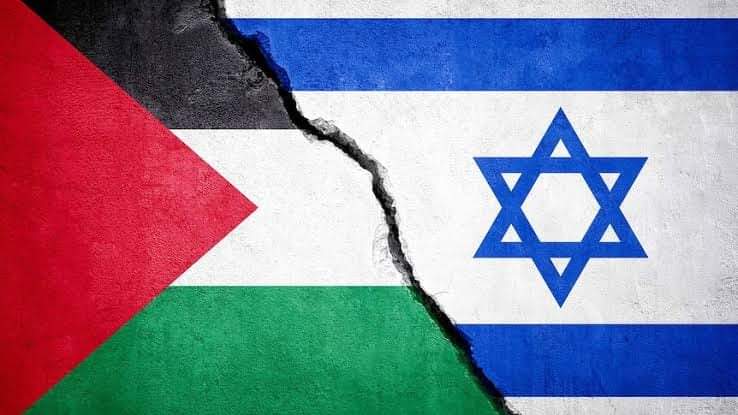
The Israeli–Palestinian conflict

0

If you don’t know why Israel and Palestine are fighting, heres

The Israeli–Palestinian conflict is one of the world’s longest-running conflicts, with roots dating back to the late 19th century. The core of the conflict is the competing claims of Israelis and Palestinians to the same piece of land, the Holy Land.


Background


In 1947, the United Nations proposed a partition plan to divide the British Mandate of Palestine into two states, one Jewish and one Arab. The Jewish community accepted the plan, but the Arab community rejected it. In 1948, the State of Israel was declared, and the surrounding Arab countries launched a war to try to prevent its creation.


The war ended in 1949, with Israel in control of most of the territory of the former Mandate of Palestine. Hundreds of thousands of Palestinians were displaced during the war, and many fled to neighboring countries.


The current situation


Today, Israel controls the West Bank, the Gaza Strip, and East Jerusalem. The West Bank and Gaza Strip are considered to be Palestinian territories under international law, but Israel has maintained a military occupation of these territories for over 50 years.


The Palestinian people have limited self-government in the West Bank and Gaza Strip, but they are not sovereign. The Israeli government has built settlements in the West Bank, which are considered illegal under international law. These settlements have fragmented the West Bank and made it more difficult for the Palestinians to establish a viable state.


There have been numerous attempts to resolve the Israeli–Palestinian conflict, but none have been successful. The most recent peace talks broke down in 2014.


The international community has generally supported the two-state solution, which would involve the creation of a Palestinian state alongside Israel. However, there are significant disagreements about how to achieve the two-state solution, such as the borders of the two states, the status of Jerusalem, and the right of return for Palestinian refugees.

Indigenous Yoruba pottery is an ancient art that is as old as the origin of the Yoruba race. 

0

Indigenous Yoruba pottery is an ancient art that is as old as the origin of the Yoruba race.

It is mainly practiced by the womenfolk, and passed from mothers to their children and from one generation to the other. Traditionally, men are not involved in indigenous pot makingbutthey do assist their wives in clay prospecting and digging, male children also collect clay, water, firewood and straws for their mothers. The indigenous potting activities usually take place in a workplace commonly referred to as ebu.The Pottery making consists of pots, dishes and receptacles that are hand-built with clay and fired in a clamp or open fire to make them functional, durable and permanent.

indigenous pottery in Iganran-Isale town in Ogun State Nigeria, demands nineteen distinct stages which are digging (wíwú), collecting it (gbígbé), cutting (sísá), soaking (ríré), mashing (títè), kneading (rírún), opening (títú), coiling (rírán), consolidating the rim (bíbò), expanding the belly (wíwó), shaping the pot (fífì), scraping the pot (fífá), smoothening of the pot (dídán), drying (fisóde or fisóòrùn), colour application (ferowo),

pre-heating (finfin), stacking (tito), actual firing (munaa), and lastly off-loading of pots (yerun).

These successful production of pots can only be achieved by

potters who are intelligent and physically Stable.


The pottery wares used for manufacturing purposes

included; ládìrò which is used in soap making and dyeing industries, frying pot (agbada) and big storage pot (odù) are used in cassava processing industries.

The household utensils included the pitcher (kete),local stove (àdògán), water pot, (àmù),sieve (ajere), cooking pot (ape), soup pot (ìsáàsùn), pap cup (kólòbó èko), and local

oil lamp (fìtílà) to mention but a few. Pots were extensively used for therapeutic (herbal pots) and religious purpose.

Indigenous Yoruba pottery in the recent past served significant functions in the daily lives and activities of the Yoruba people.

The functions ranged from domestic, economic, religious to socio-cultural, and as such, potters were respected in the society and regarded as the custodians of culture and tradition. The relevance of pottery

wares in the pre-colonial periods cannot be overemphasized.Credit : Umoru-Oke Nanashaitu (PhD)


Article: The Indigenous Yoruba Pottery: Processes and Products

FG plans to roll out a $617 million investment initiative in November

The Federal Government has unveiled plans to launch the i-DICE (Investment in Digital and Creative Enterprises) program in November 2023, backed by a substantial budget of $617.7 million. This program, initially initiated in March under the past administration of President Muhammadu Buhari, is designed to foster innovation and job creation within the technology sector

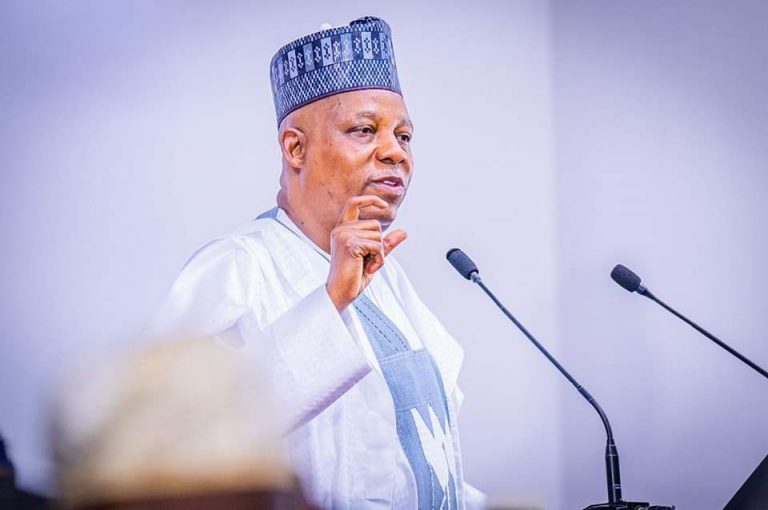
Vice President Kashim Shettima, in a meeting at the Presidential Villa, instructed the i-DICE Steering Committee to ensure that the program commences by the end of November.

He emphasized the importance of responsible fund management and highlighted the transformative potential of this $617.7 million initiative.

Shettima stressed the urgency of addressing the country’s unique challenges, particularly youth unemployment, and urged program partners to work together to achieve nationwide coverage.

He also expressed his commitment to providing support and resources, citing President Bola Tinubu’s dedication to transforming the country

Minister of Finance, Wale Edun, underscored the program’s significance in fulfilling President Bola Tinubu’s commitment to creating 1.2 million digital jobs for youth.

He noted that the project prioritizes inclusivity, with a target of 50% participation by women.

Minister of Communications, Innovation, and Digital Economy, Bosun Tijani, emphasized the government’s desire for Nigeria to lead globally in technology and creativity.

He highlighted the importance of investing in technology startups to achieve this goal.

Managing Director of the Bank of Industry, Kayode Pitan, disclosed that Vice President Kashim Shettima has instructed them to kick-start the project next month.

He also revealed that funding arrangements have been finalized with the African Development Bank.

Pitan emphasized that the program is tailored for youth below the age of 35, offering grants, loans, and equity, with the government hoping to nurture new unicorns in the startup ecosystem through this initiative.

Full List: 11 recently authorized independent electricity distribution network operators

0

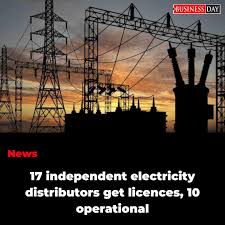
Earlier this week, the Federal Government announced the issuance of licenses to 17 Independent Electricity Distribution Network operators, with 11 of them currently operational.

This information was disclosed by the Federal Government in the 2022 Market Competition Report, which was released on Tuesday by the Nigeria Electricity Regulatory Commission, an agency under the Federal Government.

According to the report, “The commission has also granted licenses to 17 Independent Electricity Distribution Network operators, and 11 of them are currently operational.

The 11 operational operators are as follows:

1. Gateway Electricity Limited
2. Energy Company of Nigeria Plc
3. PIPP LVI Disco Limited
4. Bodituv Nigeria Limited
5. Uraga Power Distribution Company
6. Ariaria Independent Energy Distribution Network Ltd
7. Ladol Integrated Logistics Free Zone Enterprise
8. Babcock Consulting Limited
9. Constant Independent Electric Power Distribution Company Ltd
10. Alausa Distribution Limited
11. Notore Industrial City Limited.