


Home Blog Page 81

Tinubunomics’ Under Scrutiny as SMEs Struggle with Rising Costs

0

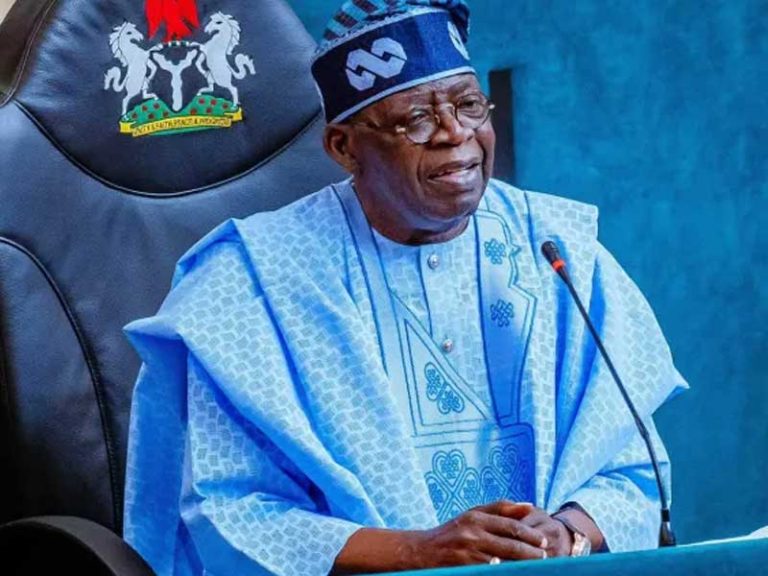
Small and medium-sized enterprises (SMEs) across Nigeria are voicing concern over what they describe as the harsh impact of current economic policies, popularly dubbed “Tinubunomics.”

Operators say that while reforms introduced by the administration of President Bola Tinubu were intended to stabilize the economy, they have instead triggered escalating costs of production, dwindling profit margins, and increasing threats to business survival.

A cross-section of SME owners interviewed by reporters cited rising fuel prices, high electricity tariffs, multiple taxation, and the weakening naira as key challenges compounding the cost of doing business. Many noted that imported raw materials have become more expensive, while local demand has slowed due to reduced consumer purchasing power.

“Every day it gets harder to keep the business running. The cost of inputs has doubled, but customers cannot pay more. Many of us are just hanging on,” one manufacturer in Lagos said.

Trade associations and business groups have also raised alarm that without targeted relief measures, more small businesses could shut down, leading to job losses and reduced contributions to the economy. SMEs currently account for over 80 percent of employment in Nigeria and form the backbone of local production and services.

Economists acknowledge that recent policy moves — including fuel subsidy removal and foreign exchange unification — were necessary to address long-term structural imbalances. However, they argue that cushioning policies such as access to affordable credit, tax incentives, and infrastructure support must follow to ease the burden on smaller enterprises.

The Federal Government has pledged interventions through the Bank of Industry and other channels, but many SMEs say the measures have yet to reach them in meaningful ways.

As economic pressures mount, analysts warn that the success of “Tinubunomics” will be judged not only by macroeconomic stability but also by the survival and growth of the country’s small businesses.
 

PETROAN Urges FG to Partner Foreign Firm in Managing Port Harcourt Refinery

0

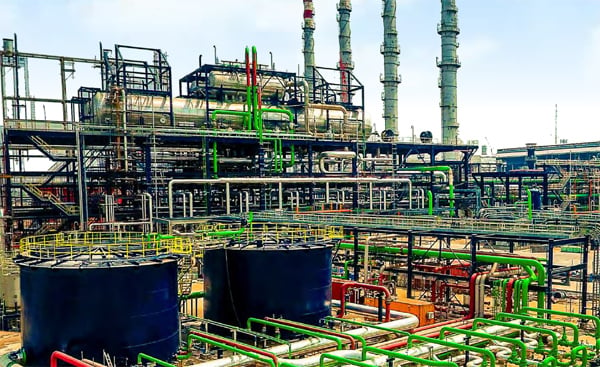
The Petroleum Products Retail Outlets Owners Association of Nigeria (PETROAN) has called on the Federal Government to consider partnering with a reputable foreign company in the management of the Port Harcourt Refinery.

Speaking on Sunday, PETROAN President, Dr. Billy Gillis-Harry, said such a partnership would guarantee efficiency, transparency, and sustainable operations once the refinery resumes production.

He noted that the country’s previous experience with poorly managed refineries underscored the need for international expertise to ensure that the Port Harcourt plant delivers on its mandate of reducing Nigeria’s dependence on imported petroleum products.

According to Gillis-Harry, bringing in a globally recognized operator with a strong track record in refinery management would help transfer technical know-how, strengthen accountability, and attract further investment to the downstream sector.

“Refineries are complex operations that require precision and consistent efficiency. Partnering with an experienced foreign firm will ensure that this critical national asset does not relapse into the cycle of inefficiency that has defined our refining history,” he stated.

The Port Harcourt Refinery, which has undergone multi-billion-naira rehabilitation, is expected to play a central role in addressing Nigeria’s energy supply challenges and in cutting the huge cost of fuel imports.

PETROAN also urged the government to adopt transparent policies that encourage collaboration with the private sector, stressing that sustainable refinery operations remain vital for energy security, job creation, and economic stability.

CPPE Urges CBN to Ease Monetary Policies to Boost Credit Flow to SMEs, Key Sectors

0

The Centre for the Promotion of Private Enterprise (CPPE) has called on the Central Bank of Nigeria (CBN) to adopt more flexible monetary measures aimed at stimulating credit availability, particularly for small and medium-sized enterprises (SMEs) and other critical sectors of the economy.

In a policy advisory released on Sunday, CPPE’s Chief Executive Officer, Dr. Muda Yusuf, urged the apex bank to recalibrate its monetary stance by reducing the Cash Reserve Ratio (CRR) and the Monetary Policy Rate (MPR). He noted that recent signs of moderating inflation provide room for a shift in policy direction.

“The CBN should calibrate CRR and MPR downward as inflation moderates to create a more enabling credit environment,” Yusuf said. “It is also important to complement monetary tightening with supply-side interventions that address structural drivers of inflation.”

Yusuf explained that the current high-interest-rate regime has made borrowing extremely difficult for businesses, stifling investment and hindering economic growth. He stressed that SMEs, which account for a large share of jobs and production in Nigeria, are the worst hit by restrictive credit conditions.

The CPPE further argued that while tight monetary policies may help stabilize prices, they risk suppressing private sector growth if not balanced with measures that stimulate productivity and ease financing pressures.

The group urged the CBN to prioritize interventions that will unlock access to affordable funding, strengthen real sector growth, and position Nigeria’s economy on a more sustainable path.

The advisory comes as businesses continue to grapple with rising operational costs, weakened consumer demand, and foreign exchange challenges, even as government reforms aim to stabilize the macroeconomic environment.

Breaking: MTN Confirms Network Outage in Parts of Lagos

0

Telecommunications giant MTN Nigeria has confirmed a network outage affecting subscribers in parts of Lagos State.

The disruption, which began earlier on Monday, left many customers unable to make calls, send messages, or access mobile data services.

In a brief statement, the company acknowledged the technical fault and assured subscribers that its engineers were working to restore full connectivity as quickly as possible.

“We are aware of the service disruption currently being experienced by some customers in Lagos. Our technical team is already addressing the issue, and normal services will be restored soon. We regret the inconvenience caused,” the statement read.

Reports from users indicated that the outage was more pronounced in areas such as Ikeja, Surulere, and Lekki, where several businesses and individuals rely heavily on MTN’s services for daily operations.

The Nigerian Communications Commission (NCC) has yet to issue an official statement on the development, but industry observers say the incident underscores the need for improved network resilience in the country’s telecommunications sector.

MTN, Nigeria’s largest mobile network operator with over 70 million subscribers, has in recent months invested in expanding its infrastructure to improve service delivery.


Seplat Energy Sets $1 Billion Dividend Payout Target by 2030

0

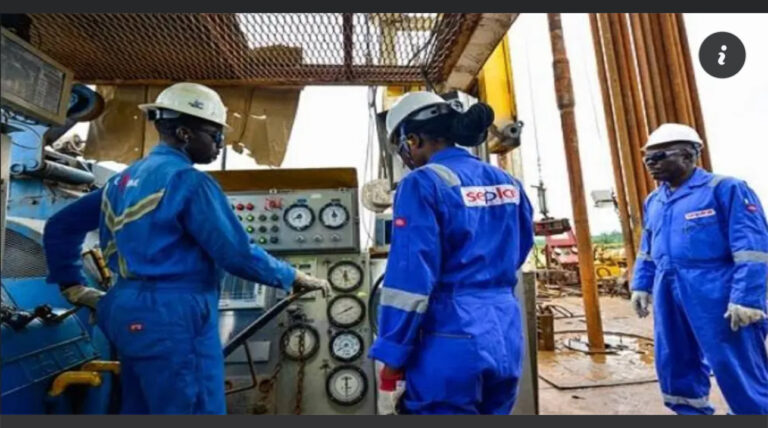
Seplat Energy Plc has announced an ambitious plan to deliver a cumulative dividend payout of $1 billion to its shareholders by the year 2030.

The target, unveiled by the company’s management, underscores its long-term commitment to rewarding investors while pursuing growth in both oil and gas production and new energy ventures.

According to Seplat, the strategy is anchored on sustaining strong cash flows, improving operational efficiency, and investing in cleaner energy projects that align with Nigeria’s energy transition goals. The company said it intends to balance expansion with consistent shareholder returns.

Seplat has in recent years maintained a steady dividend policy despite global oil price volatility and domestic sector challenges. Industry analysts view the new $1 billion target as a signal of confidence in the company’s resilience and growth prospects.

The company noted that its diversified portfolio, which includes upstream oil and gas assets as well as investments in gas-to-power and renewables, would provide the financial backbone to achieve the payout goal.

Shareholders have welcomed the announcement, describing it as a positive move that strengthens investor confidence and positions Seplat as a leader in Nigeria’s energy market.

With the 2030 horizon, Seplat Energy said it would continue to focus on creating long-term value while contributing to national energy security and economic growth.

Otedola Says DAPPMAN’s Outdated Model Cannot Compete with Dangote Refinery

0

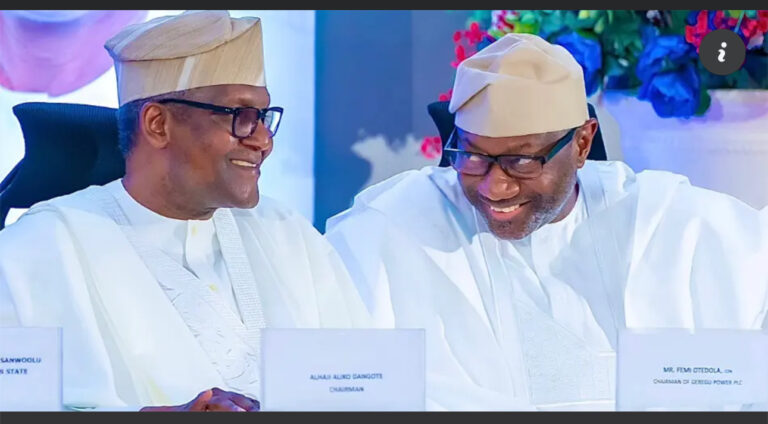
Billionaire businessman and investor, Femi Otedola, has predicted that the business model of the Depot and Petroleum Products Marketers Association of Nigeria (DAPPMAN) will soon collapse in the face of competition from the newly operational Dangote Refinery.

Otedola made the remarks in a statement on Sunday, stressing that DAPPMAN’s reliance on import-dependent fuel distribution is no longer sustainable, especially with the refinery poised to transform Nigeria’s downstream oil sector.

According to him, the Dangote Refinery’s capacity to supply locally refined petroleum products at scale will render obsolete the long-standing model of marketers who depend heavily on imports to remain in business.

“DAPPMAN’s outdated business approach cannot withstand the competitive advantage of a 650,000 barrels per day refinery. The refinery changes everything — from supply dynamics to pricing structures — and will ultimately reshape Nigeria’s energy market,” Otedola stated.

He further argued that continued reliance on imported products exposes marketers to foreign exchange volatility, rising freight charges, and global price shocks, all of which undermine stability in the sector.

Industry observers note that the Dangote Refinery, which recently began operations, is expected to meet Nigeria’s domestic fuel demand and create surplus for export, significantly reducing the need for imports that have long drained the country’s foreign reserves.

Otedola urged marketers to rethink their strategies, invest in modern infrastructure, and explore partnerships that align with the refinery-driven supply chain, warning that failure to adapt could lead to large-scale business failures in the downstream sector.

The comments have sparked debate within the industry, with some experts agreeing that the refinery marks a turning point, while others argue that distribution networks still provide DAPPMAN with relevance in the market.


BBNaija Week 8 Social Chart Is Here!

0

The housemates are keeping social media buzzing with nonstop content!

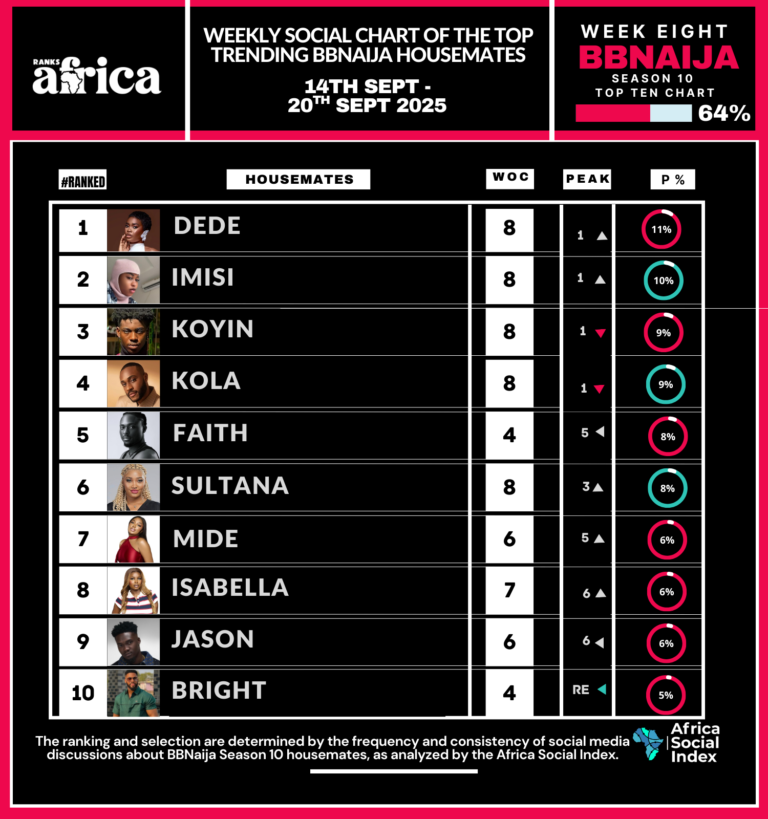
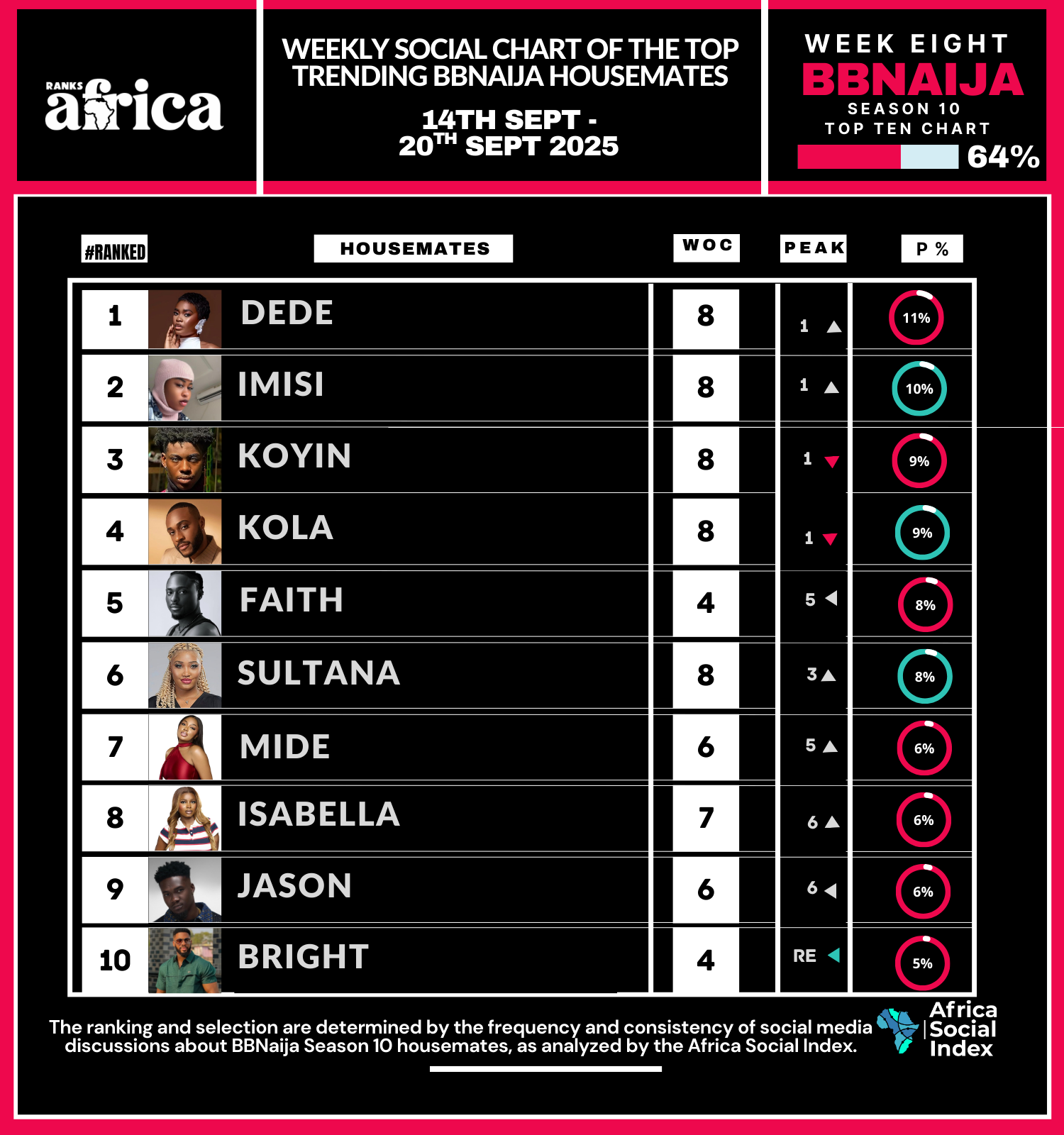
Leading the trend this week is Dede, reclaiming the No. 1 spot, followed closely by Imisi and Kola. Koyin and Faith continue to hold their ground on the trend table.

Also making waves on the Week 8 chart are Sultana, Mide, Isabella, Jason, and Bright, making a strong return — keeping conversations alive as some of the most talked-about housemates across Africa.

The game is heating up, and the fanbases are getting louder than ever! 🚀

👉 Who’s your favorite so far?

Ghana Retains Position as Africa’s Leading Gold Producer, Ranks Sixth Globally

0

Accra, Ghana – Ghana has reaffirmed its position as the largest gold producer in Africa, surpassing South Africa and other mineral-rich nations on the continent. The West African country also ranks sixth globally in gold output, underscoring the strength of its mining sector on the international stage.

Gold mining has been a cornerstone of Ghana’s economy for centuries, dating back to the pre-colonial era when the region was famously known as the “Gold Coast.” Today, the industry remains one of the nation’s most critical economic drivers, generating substantial export revenue, employment opportunities, and foreign investment.

According to recent data, Ghana’s gold production not only outpaces traditional African rivals such as South Africa, Sudan, and Mali but also secures the country a place among the world’s top ten producers. The nation’s consistent output reflects both the presence of large-scale multinational mining operations and a vibrant small-scale artisanal mining sector.

Industry experts note that while gold production has buoyed Ghana’s economy, challenges remain, including concerns over environmental sustainability, illegal mining activities, and the need for improved regulatory frameworks to ensure that local communities benefit more equitably from the sector.

Despite these hurdles, Ghana’s mining industry continues to be a pillar of the national economy, contributing significantly to GDP and government revenue. With global demand for gold showing resilience amid economic uncertainty, analysts believe Ghana’s prominence in the sector is unlikely to wane in the near future.


Mali Files Case Against Algeria at International Court of Justice Over Downed Drone

0

Bamako/Algiers – A diplomatic dispute between Mali and Algeria has escalated to the international stage, as Mali has filed a petition before the International Court of Justice (ICJ) accusing Algeria of shooting down a Malian army drone earlier this year.

According to Malian authorities, the incident occurred on April 1, when an unmanned aerial vehicle belonging to the Malian armed forces was allegedly destroyed while flying over Malian territory. Bamako has argued that the act represents a violation of its sovereignty and has sought redress from the ICJ, the United Nations’ highest judicial body, headquartered in The Hague, Netherlands.

In a statement released on Friday, September 19, the ICJ confirmed that it has formally received Mali’s request against Algeria. This marks a rare move by Mali to pursue legal action against a neighboring state through the world court.

Algeria has firmly rejected the accusations, maintaining that its air defense systems intercepted a reconnaissance drone that had entered Algerian airspace without authorization. Algiers stated that radar data from its defense ministry “clearly establish the violation of Algeria’s airspace” by the Malian drone, dismissing Bamako’s claims as baseless.

The case highlights growing tensions between the two countries, whose relations have been strained by regional security issues and divergent positions on the political crisis in Mali. Analysts warn that the dispute could further complicate regional cooperation at a time when the Sahel faces mounting challenges from insurgent violence and economic instability.

The ICJ will now review Mali’s application and determine the next steps in the proceedings. However, experts note that cases brought before the court often take years to resolve, leaving immediate questions of responsibility and accountability unsettled.

For now, both Bamako and Algiers remain firm in their opposing accounts of the April incident, setting the stage for a protracted legal and diplomatic battle.


Vice President Shettima to Represent Nigeria at 80th UN General Assembly in New York

0

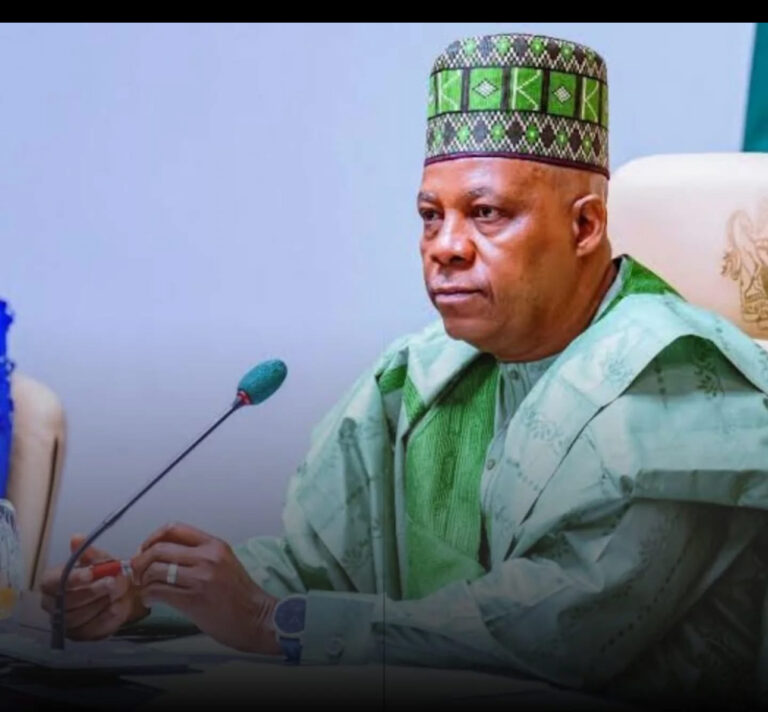
LAbuja, Nigeria – Vice President Kashim Shettima will lead Nigeria’s delegation to the 80th session of the United Nations General Assembly (UNGA) in New York, stepping in for President Bola Ahmed Tinubu. The high-level meetings will take place from September 22 to 28, 2025.

According to official sources, Shettima is scheduled to deliver Nigeria’s national statement on September 24 during the General Debate, where world leaders will outline their countries’ positions on pressing international issues. The Vice President will also participate in a series of high-level engagements, including special events focused on climate action, sustainable housing, and global development.

Nigeria’s participation at the UNGA is expected to highlight the country’s role in addressing challenges of climate change, economic growth, and peacebuilding in Africa. Observers say Shettima’s presence underscores Abuja’s commitment to multilateralism and global cooperation, even as the Tinubu administration continues to push its Renewed Hope agenda at home.

The UN General Assembly, the world’s largest annual diplomatic gathering, will bring together heads of state, government representatives, and international organizations to deliberate on issues ranging from security and human rights to sustainable development.

This year’s session comes at a time of heightened global concern over conflicts, economic recovery, and environmental crises. Nigeria is expected to use the platform to reaffirm its positions on regional stability in West Africa, reforms in global governance, and support for international climate initiatives.