Home Blog Page 88

Iyabo Ojo Welcomes Grandson, Prince Rakeem, to Nigeria in Grand Style

0

Nollywood actress and filmmaker Iyabo Ojo has melted hearts once again as she rolled out a lavish reception to welcome her daughter, Priscilla Ojo, her Tanzanian husband, Juma Jux, and their newborn son, Prince Raheem Ayomide Mkambala (Rakeem), to Nigeria.

The actress, who is now officially a proud grandmother, went all out to mark the family’s arrival, earning her the unofficial title of “Grandma of the Year” among fans and colleagues.

The heartwarming celebration follows the birth of baby Rakeem on August 24, 2025, in Canada, where Priscilla and Juma Jux welcomed their first child. The couple had previously hinted at their return to Nigeria for an upcoming public appearance, sparking excitement among their followers.

Upon their arrival, Iyabo Ojo spared no effort in organizing a grand homecoming at her Lagos residence. In a video shared on her Instagram page, the actress was seen joyfully receiving the new parents and her grandson with a colourful display of dancers, drummers, and worshippers, creating a festive atmosphere that reflected pure joy and pride.


The event drew several notable faces from the entertainment and social circles, including actress Semilore Pweety, celebrity entrepreneur Chioma “Good Hair” Ikokwu, and other close friends of the family who came to celebrate the joyous occasion.


Fans flooded social media with congratulatory messages, praising Iyabo Ojo for her warmth and expressing admiration for the touching family moment.


With this memorable welcome, Iyabo Ojo not only celebrated the arrival of baby Rakeem but also showcased her signature flair for love, family, and grand celebrations.

ONLY DIRECT DESCENDANTS HAVE THE RIGHT TO AWUJALE THRONE — FUSENGBUWA RULING HOUSE DECLARES

0

The Fusengbuwa Ruling House, direct descendants of the late Awujale of Ijebuland, Alayeluwa Oba Theophilus Adenuga Tunwase, popularly known as Folagbade and the last monarch from the Fusengbuwa lineage, has reaffirmed that only his immediate family holds the legitimate right to present candidates for the vacant Awujale stool.

Addressing the controversy surrounding succession to the revered throne, the family described as “misleading and unfounded” recent claims by some distant relatives who now parade themselves as members of the Fusengbuwa Ruling House.

In an exclusive interview on Frontline, a current affairs programme on Eagle 102.5 FM, Ilese-Ijebu, on Tuesday, the Secretary of the direct descendants, Omoba Adekunle Adenuga, and the grandson of the late Awujale, Omoba Adelaju Adenuga, shed light on the controversies surrounding the ongoing succession process, clarifying the lineage, traditions, and legality of the royal transition.

Omoba Adekunle stated that, according to the regent, Dr. Sonny Kuku, the kingmakers have not yet been constituted. He explained that “what we have currently is just the Council-in-Chief to take care of the affairs of the palace and other administrative duties, not as kingmakers currently.”

He added that the regent had clarified that transition matters are not part of the council’s function, stressing that “the governor constituted an administrative Council-in-Chief, which means that their rights may not have been breached until they are now officially recognized as kingmakers. Some of the people presently in the Council-in-Chief are not kingmakers.”

He explained that, traditionally, the kingmakers are not specially appointed but emerge naturally upon the passing of a monarch. “The kingmakers are not constituted specially; they know themselves. Once a king dies, it’s like they enact themselves into existence,” he said.

He further recalled that the last council of kingmakers was headed by Chief Timothy Otutola, the Ogbeni Ooja, while the Olisa had played a similar role in earlier periods.

On internal alignments, Omoba Adekunle explained that while various branches of the royal lineage might trace their ancestry to the Fusengbuwa line, only the direct descendants of the late Awujale, Oba Theophilus Adenuga Tunwase, are legally recognized under the existing succession declaration.

According to him, “If you are looking at the Fusengbuwa Ruling House descendants, Ajidagba is a member, possibly Fasi Yusuf is a member, but when we are talking of what the law says, the repository position has always been the last king that is being referenced. When you mention the president of Nigeria now, you mean President Ahmed Tinubu. But if you mention president in 1979, you’re referring to Shehu Shagari. So also, the ruling house varies with generation.”

He stressed that while different families may trace their origin to Fusengbuwa, only the line directly descending from the last king retains the right to nominate successors. “Are you going to separate Tunwase from his son, that the son is not a member of his family, or Tunwase from Fusengbuwa? It’s never done,” he remarked.

He likened such arguments to separating Abraham from Isaac or Jacob, describing them as both illogical and contrary to Ijebu tradition.

Omoba Adekunle added that although other families within the broader lineage have fused identities over generations, the Fusengbuwa-Tunwase line remains distinct and indivisible. He maintained that the name “Fusengbuwa” is generic but historically tied to the reigning monarch of the lineage.

Explaining the confusion surrounding multiple claimants, he said the divisions were fueled by self-interest and political interference. “Some people are financing factions to present candidates for their interests. You see, some prominent names are now surfacing, claiming to be part of the ruling house even when they are not directly from the late Awujale’s line,” he noted.

The secretary also raised concerns over the selling of nomination forms within the royal family, describing it as a desecration of custom. “One would have expected that you don’t need to sell a form to your child to put his name forward,” he said, stressing that such commercialization of tradition undermines the sanctity of the stool.

On the matter of women joining the contest, he clarified that it was not a gender issue but a matter of law and tradition. “The law says that when there is no male, a woman can come forward, but if there are males contesting, she doesn’t have a chance at all,” he explained.

Omoba Adelaju Adenuga, the grandson of the late Awujale, also dismissed the claims of multiple Oloriebis emerging from different factions, describing them as mere social clubs without authority. “They’re not the ones who are given the authority to present Omobas. That’s why you see all this commotion and selling of application forms. They are trying to buy the crown. That’s not the way forward,” he said.

He further explained that the family’s position is not to alter existing traditions but to preserve the integrity of the succession process as enshrined in the 1959 Declaration and Ogun State’s Chieftaincy Law.

According to him, “We would expect that the local government chairman will not take that step until he is aware that the full constitution of the kingmakers has been placed, because there’s no sense starting the process when the people to receive nominations are not yet complete.”

On possible redress should the process deviate from established norms, Omoba Adekunle said, “Redress can only be done in court. Ifa is another way, divinity is another way, but divinity will not give order; only the court can.”

He noted that while traditional mechanisms have their place, the Nigerian constitution guarantees the right to seek judicial redress in cases of injustice.

Omoba Adelaju, however, emphasized the need for unity and adherence to due process, urging all parties to respect tradition. “We have only just come out of the mourning period. Therefore, it’s not something we have already started discussing and preparing for,” he said, stressing that the family would act collectively under the guidance of their Olori Ebi when the time comes.

He also warned against the rising number of self-proclaimed princes and princesses jostling for the stool, describing it as “unheard of and unbecoming of Ijebu royal heritage.”

According to him, “It’s become like a lottery. Any prince who calls himself a prince thinks he can buy the crown, and that’s not what our forefathers stood for.”

The Fusengbuwa Ruling House reaffirmed that the legitimate process for choosing the next Awujale rests with the direct descendants of the last monarch and the duly recognized kingmakers once properly constituted.

As the mourning period ends, the Ogun State Government and traditional authorities are expected to oversee the next phase of succession, ensuring a process rooted in law, lineage, and legacy.


Daily Flowers for Muyiwa Ademola — Because Ori: Rebirth Belongs in Nigeria’s Cultural Hall of Fame

0

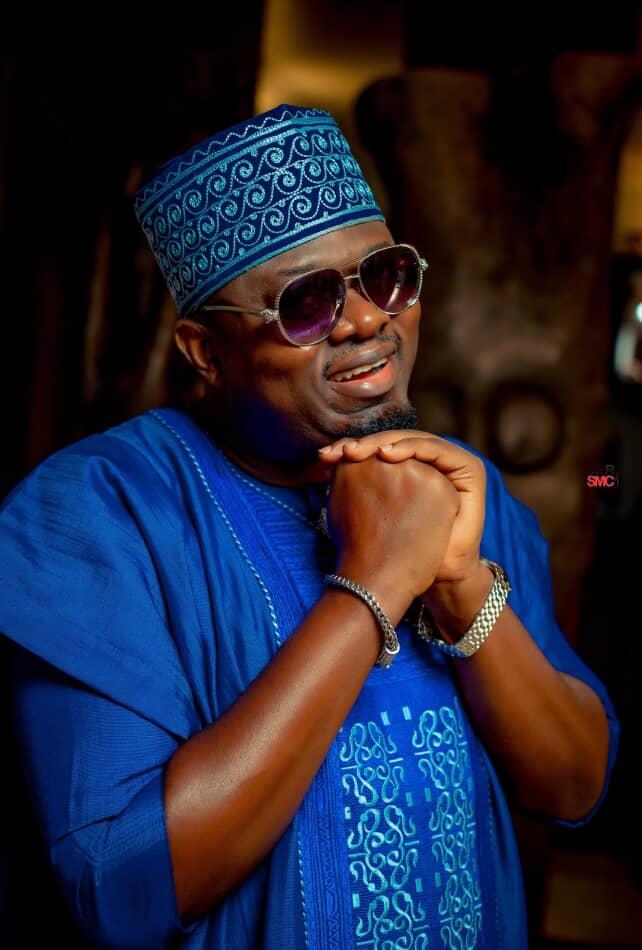
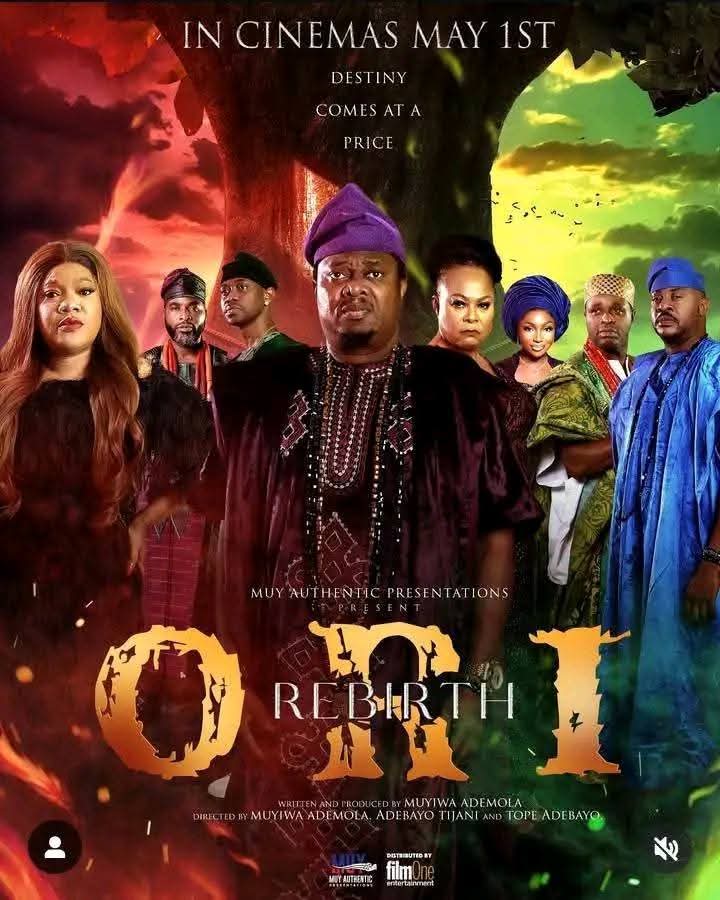
In the dusty dawn of Nollywood’s cassette era, when stories flickered like candlelight on grainy VHS tapes, one man didn’t just tell tales—he ignited revolutions. Muyiwa Ademola. Not your average filmmaker. Nah, he’s the architect of eras, bridging the chasm from bootleg cassettes to shiny CDs, from smoke-filled cinema halls to the endless scroll of streaming screens. While others chased trends, Muyiwa built the runway. Talent? Check. Creativity? Overflowing. Hard work? The kind that carves mountains into masterpieces. This isn’t hype—it’s history etched in celluloid.

He showed us that talent, creativity, and relentless hard work aren’t optional — they’re essential.

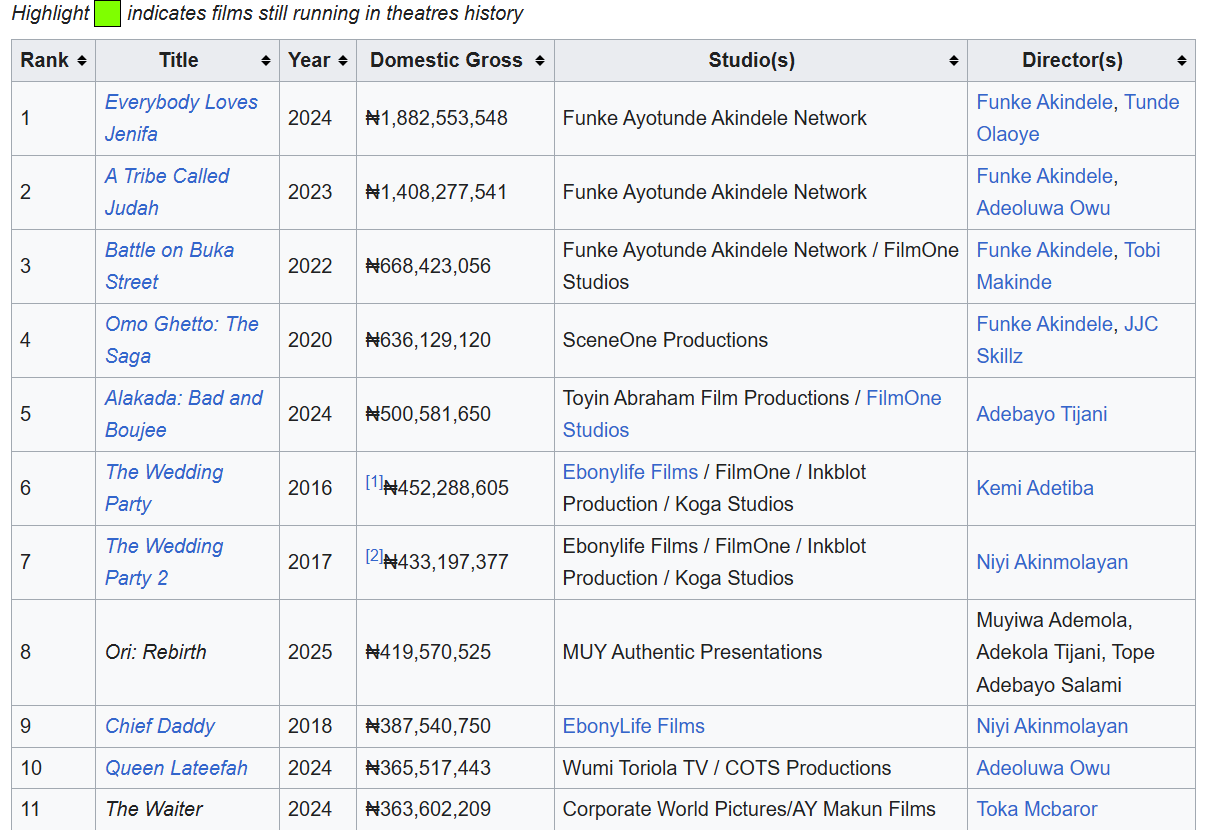
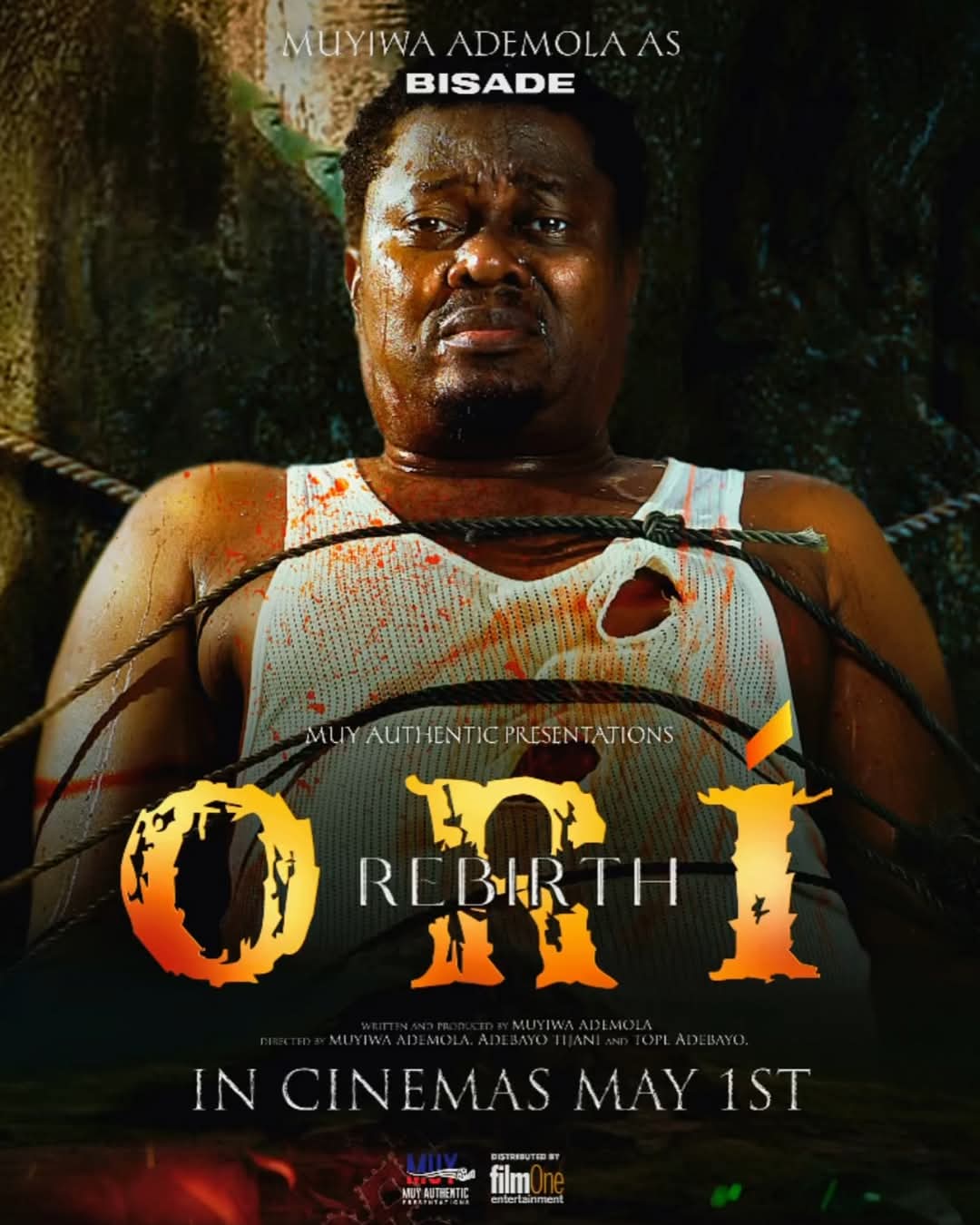
And in 2025, the industry finally caught up to his brilliance. With just one cinema release, Muyiwa broke records. His film Ori: Rebirth grossed a staggering ₦419.5 million, making it the 8th highest-grossing Nollywood film of all time. That’s not just success — that’s seismic. SEE HERE

List of highest-grossing Nigerian films

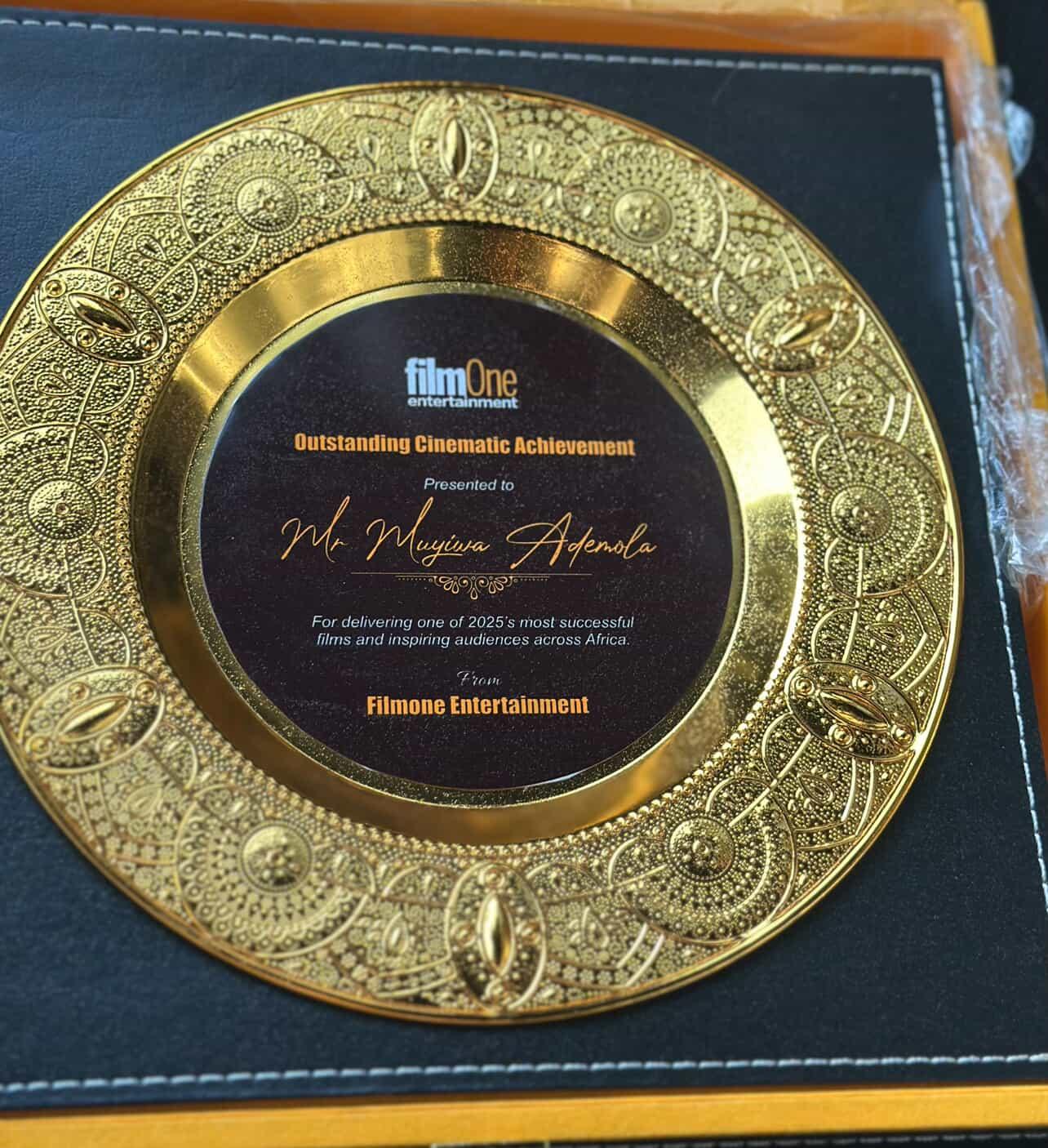
Fast-forward to now, and the universe is finally catching up. Just days ago, at the glittering 2025 FilmOne Exhibitors’ Showcase, Muyiwa scooped the inaugural Outstanding Cinematic Achievement Award for his seismic smash, Ori: The Rebirth. FilmOne didn’t just hand him a trophy—they crowned a king. Because with one cinema drop, he shattered the box office like thunder cracking the Naija sky: ₦419.5M+ grossed, rocketing straight to Nollywood’s highest earner of 2025 and clinching the 8th spot on Nigeria’s all-time highest-grossing films list. One movie. One visionary. Record-breaking sorcery. How? Magic? Nah—pure, unfiltered Ademola alchemy.

Presented by FilmOne Entertainment, the award celebrates Ori for its exceptional storytelling, superior production values, and artistic contribution to the promotion of indigenous-language cinema. The recognition underscores the film’s success in bridging traditional narratives with contemporary cinematic techniques, resonating deeply with both local and international audiences.

Speaking on the achievement, FilmOne praised the film’s creative depth and audience reach, noting that Ori exemplifies the evolving sophistication of Nigerian filmmaking and the rising global appeal of homegrown stories.

“Ori represents the power of authentic storytelling and the strength of indigenous cinema,” FilmOne stated. “Its success reinforces our commitment to celebrating the filmmakers who continue to shape the identity of Nigerian cinema.”

For director Muyiwa Ademola, the honour marks another high point in a career defined by creative excellence and cultural advocacy. Known for his consistent dedication to Yoruba-language film production, Ademola has long been regarded as one of Nollywood’s most respected creative forces.

“This award is a testament to the enduring relevance of our culture and the passion of everyone who worked on Ori,” Ademola said. “I’m deeply grateful to the fans who made this film a success and to the industry for recognizing the value of our stories.”

The recognition also highlights FilmOne Entertainment’s ongoing efforts to amplify indigenous filmmakers and diversify Nigeria’s cinematic landscape, ensuring that regional languages and cultural identities continue to thrive on the big screen.

With its record-breaking box office performance and critical acclaim, Ori stands as a landmark achievement for Nollywood — a reminder that Nigerian audiences are increasingly embracing films that reflect their languages, heritage, and shared experiences.

Ori: Rebirth — A Film Worthy of a Museum Tour:

But let’s talk Ori: The Rebirth—this isn’t a film; it’s a cultural relic, a phoenix rising from the ashes of the original Ori that bewitched early 2000s audiences.

This isn’t just a movie. It’s a cultural artifact. Ori: Rebirth deserves to be placed in a museum, studied in film schools, and toured across Nigeria in partnership with the Ministries of Arts and Culture in every state. It’s a cinematic sermon — a story that speaks to destiny, spirituality, and the soul of the African experience.

Muyiwa didn’t flood social media with hype. He didn’t chase virality. He let the work speak — and offline, the people responded. In homes, in cinemas, in conversations, Ori: Rebirth became a mirror. A reminder of what storytelling can do when it’s rooted in truth.

Ranks Africa has officially selected Ori: Rebirth as one of the Top African Films of the Year — and we’re watching closely to see if it lands in the final top list. But even without the trophy, Muyiwa’s impact is already etched in gold.

He’s the kind of filmmaker who deserves flowers daily — not just for what he’s done, but for what he’s made possible. For every movie lover, every aspiring storyteller, and every believer in African excellence, Muyiwa Ademola is the blueprint.

Movie lovers, rise up! Muyiwa Ademola isn’t owed flowers—he’s owed forests. Daily bouquets for the man who proved grit outshines glamour, who turned “what if” into “watch this.” He’s not in the game; he redefined the board.

Saga Adeolu’s Falling Notes Hits Hard — Ranked Among 2025’s Must-Watch Films

0

In a city where dreams drop like Lagos rain, Saga Adeolu — the multi-talented storyteller and creative disruptor — officially launched his debut full-length movie, Falling Notes, on his YouTube channel. And since then, the industry hasn’t stopped buzzing.

Saga Adeolu just delivered the ultimate crescendo. His latest cinematic symphony, Falling Notes, didn’t just premiere — it exploded onto the scene last weekend, turning the red carpet into a runway for Naija’s brightest lights. Produced, directed, and infused with that signature Adeolu magic, this heart-tugging tale of love, loss, and second chances isn’t your average flick. It’s a vibe, a visual poem that reminds us why stories still make us feel alive. And now? It’s streaming free on YouTube, ready to serenade the world. Drop everything and hit play — your heart (and playlist) will thank you.

Saga, channeling his inner ’90s heartthrob with effortless cool, rolled out the velvet rope for an A-list orchestra of talent. We’re talking Y2K icons rubbing shoulders with fresh BBNaija firebrands — all under one roof to celebrate a film that’s as soulful as it is stylish.

From red-carpet struts that screamed “vintage revival” to candid chats spilling tea on the creative grind, the night was a masterclass in Naija glamour. Saga himself stole the spotlight in an exclusive interview, dishing on the film’s roots:

“It’s about those moments when life drops a note you can’t ignore — love that falls, rises, and remixes everything.”

BBNaija’s breakout sensation Koyin Sanusi lit up the carpet in a look that screamed “star boy energy,” fresh off her reality TV glow-up, turning heads and sparking X frenzy.

Then there’s the “most sought-after man of the season,” Kaybobo (aka the Kaybobo brand ambassador himself), who showed up with his ride-or-die Imisi — keeping it platonic but popping with that effortless friend-chemistry cruise.

Add in nods to ’90s and Y2K superstars like Eteffiong (fresh from his own The Herd buzz) and a parade of Nollywood vets, and you’ve got a premiere that felt less like an event and more like a family reunion for dreamers.

Spot your faves in the reels — Mario D’s fun captures had everyone tagging and double-tapping like it was 1999 all over again.

Falling Notes: The Film That’s Falling for Your Soul

At its core, Falling Notes is Saga Adeolu’s love letter to the remix of life — a romantic drama where melodies collide with mishaps, and every heartbreak hides a harmony.

Think lush visuals of Lagos nights, a soundtrack that slaps harder than your fave Afrobeats playlist, and performances that pull you in like a slow jam. Saga didn’t just produce — he poured his multi-hyphenate soul into it: actor, director, vibe curator extraordinaire.

In Falling Notes, Saga Adeolu and Sophia Chisom don’t just act — they orchestrate emotion. Saga, wearing multiple hats as producer, director, and lead actor, delivers a performance that’s magnetic, vulnerable, and deeply human. He doesn’t just play Toye — he becomes the rhythm of the story. And then there’s Sophia Chisom, whose portrayal of Zachi is nothing short of cinematic poetry. She brings soul to silence, fire to heartbreak, and grace to every frame. Together, they create a chemistry that’s raw, real, and unforgettable — the kind of screen magic that turns a good film into a timeless experience. This is first-class acting, and Falling Notes is the proof.

Critics (and early viewers) are already calling it his boldest leap yet — blending nostalgia with now in a way that hits different.

“From red carpet smiles to fun moments inside,” one attendee gushed, “it’s the kind of film that lingers like your favorite chorus.”

Tune In Now: Your VIP Ticket Awaits on YouTube

Missed the premiere? No sweat — Falling Notes officially premiered on October 19 at 2 PM WAT, and it’s live right now on the Saga Adeolu TV YouTube channel. Full flick, no skips, zero cost.

Whether you’re vibing solo or hosting a watch party, this is your cue to fall into the feels. Pro tip: grab popcorn, dim the lights, and let Saga’s notes take over.

Meet the Cast of Falling Notes — A Symphony of Talent
  • Saga Adeoluwa as Toye — A gifted but struggling musician whose journey to stardom tests the limits of love, loyalty, and identity. Saga brings depth, vulnerability, and magnetic charm to the role, proving he’s more than a creator — he’s a leading man.
  • Sophia Chisom (Soso) as Zachi — The emotional anchor of the film. Sophia’s portrayal of Toye’s devoted girlfriend is raw, radiant, and unforgettable. She doesn’t just act — she resonates. Her performance is a masterclass in quiet power and soulful delivery.
  • Eso Dike — Adds gravitas and charisma, playing a pivotal role that challenges Toye’s rise and emotional balance. His screen presence elevates every scene he’s in.
  • Folaremi Agunbiade — A rising star whose nuanced performance adds texture and tension to the storyline.
  • Inegbenebor Oserem — Brings subtlety and strength, portraying a character that bridges the emotional and musical arcs of the film.
  • Inem King — Delivers a standout supporting role, adding rhythm and realism to the ensemble.
How to Join the Movement
  • Watch: Head to Saga Adeolu TV on YouTube
  • Engage: Like, comment, and share your favorite scenes
  • Tag: Use #FallingNotes to join the conversation
  • Support: Subscribe and celebrate homegrown excellence

Saga Adeolu isn’t just making films — he’s making history. And Falling Notes is only the beginning.

Survey Metrics: Why Falling Notes Is a Must-Watch

Metric Category Description Sample Rating Scale (1–5) Justification Highlights
🎬 Storytelling Impact Emotional depth, originality, and narrative flow 1 = Flat, 5 = Deeply moving Blends romance, Lagos rhythm, and second chances with soul
🎥 Production Quality Cinematography, editing, sound design, and visual aesthetics 1 = Amateur, 5 = Cinematic Lush visuals, crisp editing, and Afrobeats-infused scoring
🌟 Performance Strength Acting delivery, character chemistry, and emotional resonance 1 = Forgettable, 5 = Powerful Cast delivers with authenticity and heart
📱 Digital Accessibility Ease of access, streaming quality, and platform reach 1 = Limited, 5 = Seamless Free on YouTube, mobile-friendly, global reach
🚀 Buzz & Engagement Social media traction, premiere impact, and viewer interaction 1 = Low, 5 = Viral Red carpet launch, influencer presence, trending hashtags
🎭 Cultural Relevance Connection to Nigerian identity, themes, and societal resonance 1 = Generic, 5 = Deeply rooted Reflects urban life, love, and Lagos soul
🧠 Creative Direction Vision, originality, and execution by Saga Adeolu 1 = Basic, 5 = Visionary Multi-hyphenate creator with bold digital-first strategy
💬 Viewer Sentiment Audience reviews, emotional reactions, and word-of-mouth 1 = Mixed, 5 = Overwhelmingly positive Described as “a film that lingers like your favorite chorus”
🏆 Award Potential Suitability for nominations, festival buzz, and critical acclaim 1 = Unlikely, 5 = Strong contender Ranked by Ranks Africa as one of 2025’s top digital releases

FG Borrows ₦6.17 Trillion from Domestic Market in H1 2025 — DMO Report

0

The Federal Government of Nigeria (FG) raised a total of ₦6.17 trillion from the domestic debt market within the first half of 2025, according to newly released data from the Debt Management Office (DMO).

The funds were sourced primarily through Federal Government Bonds (FGN Bonds), Nigerian Treasury Bills (NTBs), and Promissory Notes (P-Notes), which collectively make up the bulk of Nigeria’s domestic debt instruments.

According to the DMO’s data, ₦4.48 trillion was raised in the first quarter of 2025, followed by an additional ₦1.70 trillion in the second quarter, representing a modest 2.26% increase compared to the previous quarter.

This brought Nigeria’s total domestic debt stock to ₦76.59 trillion as of June 30, 2025, underscoring the government’s growing reliance on local borrowing to finance budgetary obligations and sustain economic operations.

Analysts note that the surge in domestic borrowing reflects ongoing fiscal pressures, as oil production levels remain below the 1.8 million barrels per day benchmark, while non-oil revenues continue to underperform. With revenue shortfalls constraining fiscal space, the government has increasingly turned to the debt market to fund capital projects, service obligations, and maintain public spending.

The trend also aligns with the fiscal projections contained in the Medium-Term Expenditure Framework (MTEF), which estimated that the Federal Government would raise over ₦13 trillion from the domestic market in 2025 to bridge its widening budget deficit. However, given the current borrowing pace, that target may be surpassed before the end of the fiscal year.

Economists have expressed concern about the sustainability of Nigeria’s debt profile, warning that the increasing dependence on domestic borrowing could crowd out private sector credit and raise debt servicing costs.

Despite these concerns, government officials maintain that borrowing remains necessary to stimulate growth and sustain key infrastructure investments amid revenue constraints.

The DMO has consistently emphasized that the administration is pursuing a balanced borrowing strategy, combining both domestic and external financing to manage liquidity, minimize refinancing risks, and support Nigeria’s long-term fiscal stability.

Saga Adeolu’s Falling Note Surpasses 200,000 Views Within Days of Release

0

Nollywood actor Saga Adeoluwa’s latest YouTube film, Falling Note, has achieved a major milestone, surpassing 200,000 views just days after its release last weekend. The romantic drama, which premiered on Saga Adeolu’s official YouTube channel (@Sagadeolu), has quickly captured viewers’ attention with its emotional storytelling and powerful performances.

Starring Saga Adeoluwa, Sophia Chisom (Soso), Eso Dike, Folarin Agunbiade, Inegbenebor Oserem, and Inem King, Falling Note tells a moving story about music, love, and the sacrifices that come with fame.

The film follows Toye (played by Saga Adeoluwa), a talented but struggling musician, and Zachi (Sophia Chisom), his ambitious and devoted girlfriend. When Toye’s music career unexpectedly skyrockets to stardom, the pressures of his record label force him to choose between his love life and his newfound fame.

To preserve his “single” public image, Toye distances himself from Zachi — a decision that sets off a series of painful misunderstandings and emotional consequences. The film delves deep into themes of ambition, loyalty, betrayal, and the emotional toll of celebrity life, exploring whether true love can survive fame’s harsh spotlight.

Directed with cinematic flair and emotional depth, Falling Note blends romance and suspense, offering audiences a modern reflection of the challenges young couples face in the pursuit of success.

Since its release last Sunday October 19 2025, the movie has drawn widespread praise for its authentic dialogue, strong performances, and production quality — particularly from viewers applauding Saga Adeolu’s evolution as both an actor and storyteller in the Nigerian film space.

The fast-rising success of Falling Note underscores the growing influence of YouTube as a key distribution platform for Nollywood filmmakers, providing direct access to global audiences and allowing creators like Saga Adeolu to tell deeply relatable African stories on their own terms.

With over 200,000 views and climbing, Falling Note is positioning itself as one of the standout YouTube film releases of the year — a testament to the audience’s appetite for heartfelt, character-driven Nollywood dramas.

click here to watch: https://youtu.be/U75xWRwKXGI?si=ZjMz8jaupgPEyA_I


Remo Stars Owner Kunle Soname: “We Can’t Compete Financially with South African Clubs”

0

Owner of Remo Stars Football Club, Kunle Soname, has spoken candidly about the financial realities limiting Nigerian clubs’ ability to compete with their South African counterparts, emphasizing that lack of adequate funding remains a major obstacle in domestic football.

Speaking during a recent media interaction, Soname lamented that the Nigerian Premier Football League (NPFL) operates on a budget far below that of leagues in Southern Africa, making it increasingly difficult for local teams to attract or retain top talent.

“There isn’t enough money in our league to compete. Lack of funding is a major concern,” Soname said.

He explained that while the NPFL continues to produce talented players, the financial disparity between Nigerian and South African clubs heavily tilts the competitive balance.

“Players in the Nigerian Premier League earn ₦500,000, ₦700,000, or maybe a maximum of ₦800,000 monthly. Meanwhile, you’re playing against clubs where players earn $4,000 to $5,000. On the balance of probabilities, they will beat you seven out of ten times because they have better-quality players,” he stated.

Soname further highlighted the challenge of player retention, noting that many of Nigeria’s most talented footballers leave the league each season in search of better financial opportunities abroad.

“Nigerian clubs can’t retain their best players every season. The best players in our league today won’t be here next season — those teams will come and buy them. So, how do you expect us to compete?” he asked.

His remarks underscore broader concerns about the sustainability and competitiveness of Nigerian football in continental tournaments. Despite efforts by the Nigeria Premier Football League (NPFL) board and the Nigeria Football Federation (NFF) to attract sponsorships and improve player welfare, clubs continue to struggle with funding gaps, inadequate infrastructure, and limited commercial investment.

Industry analysts believe Soname’s comments reflect a wider call for increased private sector involvement and policy reforms to strengthen local football, enhance financial stability, and make the NPFL more globally competitive.

Remo Stars, based in Ikenne, Ogun State, have been among the more progressive clubs in recent years, known for their modern facilities, youth development programs, and disciplined management. However, as Soname’s remarks reveal, financial imbalance remains a significant hurdle in Nigerian clubs’ quest to dominate African football.

From Harare to History: Tafadzwa Mandiwanza Becomes Ireland’s First Female Paediatric Neurosurgeon

0

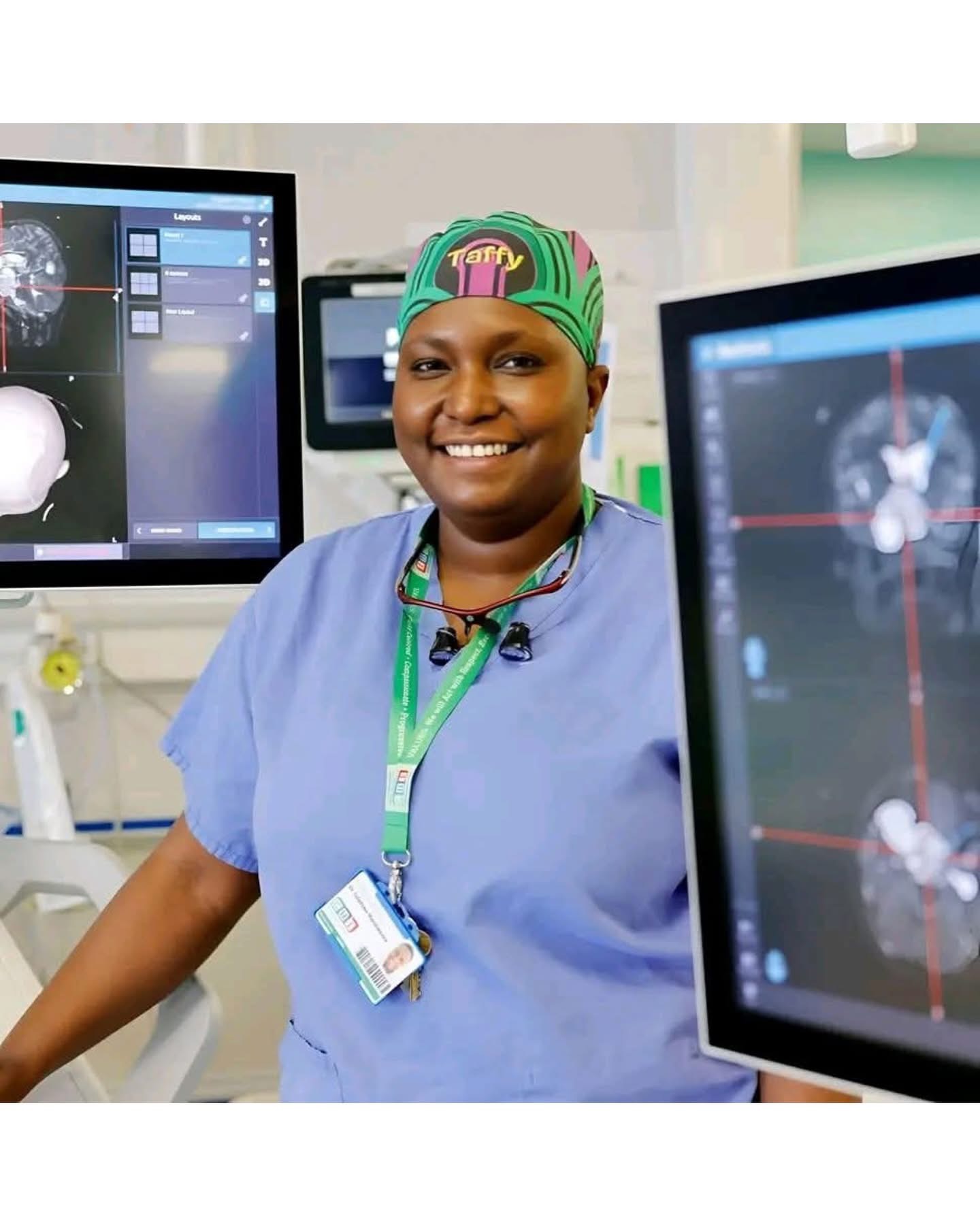
From the bustling streets of Harare, Zimbabwe, to the cutting-edge surgical theatres of Ireland, Dr. Tafadzwa Mandiwanza’s journey is a story of resilience, brilliance, and groundbreaking achievement. Her rise to become Ireland’s first female paediatric neurosurgeon is not just a personal milestone — it is an inspiration to women and girls across continents who dare to dream beyond limits.

Born and raised in Zimbabwe’s capital, Mandiwanza’s ambition was shaped early by her mother, a dedicated nurse whose compassion and strength deeply influenced her. Watching her mother care for patients with quiet dignity instilled in young Tafadzwa a deep desire to make a difference through medicine.

“My mother showed me that healing goes beyond medicine — it’s about empathy, patience, and courage,” she has said in past interviews.

At just 19 years old, she left her homeland for Ireland, carrying little more than determination and a dream. She enrolled at University College Cork (UCC), where her academic excellence and discipline set her apart. After completing her medical degree, she continued her specialist training in Dublin and Cork, navigating one of medicine’s most demanding disciplines — neurosurgery — with unwavering focus.

Her talent and dedication earned her a prestigious fellowship at Great Ormond Street Hospital in London, one of the world’s foremost centers for paediatric neurosurgery. There, she honed her expertise in treating complex neurological conditions in children, mastering delicate surgical techniques that save and transform young lives.

Returning to Ireland, Dr. Mandiwanza shattered a glass ceiling that had stood unbroken for generations, becoming the first woman ever appointed as a paediatric neurosurgeon in the country’s history. Her appointment not only marks a historic achievement in Irish medicine but also highlights the growing diversity and global influence of African-born professionals contributing to healthcare innovation worldwide.

Colleagues describe her as calm under pressure, deeply empathetic with patients, and fiercely committed to excellence. Her work involves performing intricate brain and spinal surgeries on children — operations that demand precision, compassion, and courage in equal measure.

Beyond the operating room, Dr. Mandiwanza is passionate about mentorship and representation. She frequently advocates for gender equality in medicine, encouraging young women to pursue careers in science and surgery — fields still largely dominated by men.

“There’s nothing extraordinary about being a woman in surgery,” she once remarked. “What’s extraordinary is when you believe you can, and you do.”

Her remarkable journey — from Harare to Cork, from a dream to history — stands as a powerful reminder that talent knows no borders and that determination can defy even the most entrenched barriers.

Today, as Dr. Tafadzwa Mandiwanza continues to heal young patients and inspire future generations, her story resonates far beyond Ireland and Zimbabwe — a testament to how courage, purpose, and compassion can change not only one life but the course of history itself.

Mike Tyson Returns to Kinshasa, Reconnects with Ancestral Roots During 50th Anniversary of ‘Rumble in the Jungle’

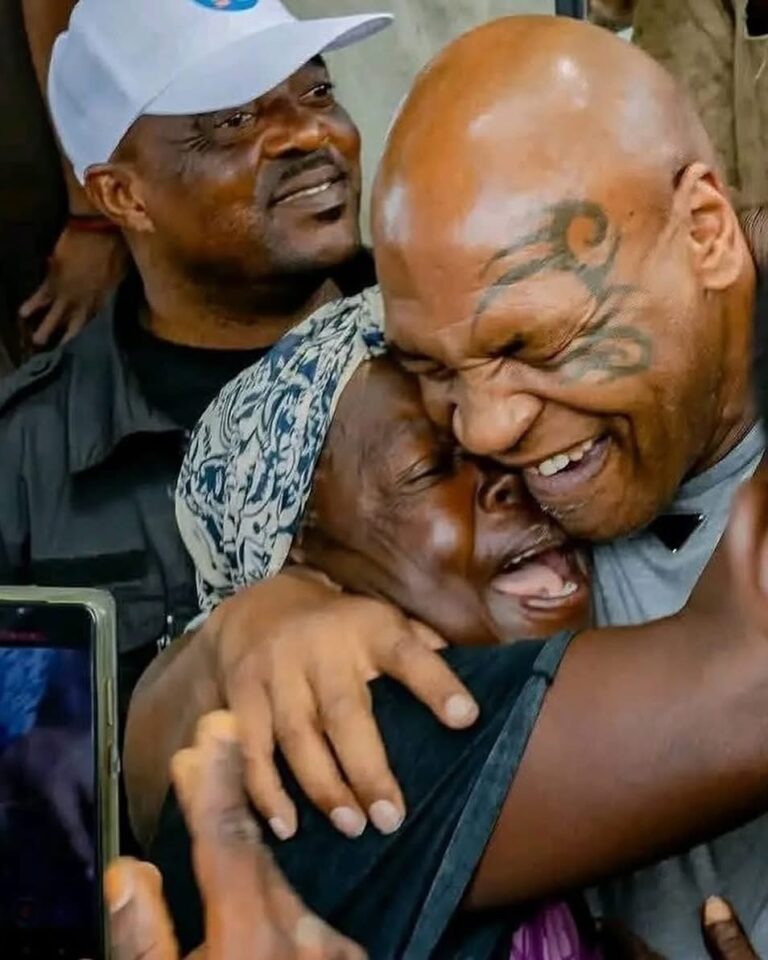
In a historic homecoming filled with emotion and pride, boxing legend Mike Tyson returned to Kinshasa, the capital of the Democratic Republic of Congo (DRC), where he confirmed his ancestral roots trace back to the Central African nation. The visit coincided with the 50th anniversary celebrations of the iconic “Rumble in the Jungle” — the 1974 heavyweight title fight that saw Muhammad Ali triumph over George Foreman, forever etching Kinshasa into global boxing history.

Tyson’s arrival drew widespread excitement, with fans, local officials, and cultural performers turning out to welcome him “home.” The former heavyweight champion was received as a prodigal son, symbolically bridging the past and present of African boxing heritage.

Speaking at a ceremony organized to commemorate the golden jubilee of Ali’s legendary victory, Tyson expressed deep pride in reconnecting with his ancestral homeland.

“To stand here in Kinshasa, where one of boxing’s greatest moments took place, feels like coming full circle,” Tyson said. “This land holds power, history, and pride — and I feel it in my spirit.”

The event — attended by sporting icons, historians, and dignitaries — featured musical performances, traditional dances, and tributes to Muhammad Ali, whose 1974 triumph transcended sport to become a symbol of African resilience and identity.

Organizers of the anniversary celebration said Tyson’s participation added a powerful emotional layer to the occasion, linking generations of boxing greatness. His discovery of Congolese roots, confirmed through genealogical tracing, further deepened the cultural resonance of his visit.

“Mike Tyson’s return is not just about boxing — it’s about heritage, belonging, and the unbreakable connection between Africa and its global sons and daughters,” said Jean-Claude Mbuyi, a member of the DRC Boxing Federation.

Throughout his stay, Tyson visited key historical sites and met with young Congolese athletes, encouraging them to pursue their dreams with discipline and pride.

The “Rumble in the Jungle”, staged in Kinshasa’s Stade du 20 Mai (now Stade des Martyrs) on October 30, 1974, remains one of the most celebrated sporting events in history. Ali’s knockout victory in the eighth round over Foreman not only reclaimed his world heavyweight title but also symbolized a moment of unity and pride for postcolonial Africa.

Fifty years later, Tyson’s return to the same soil — carrying the weight of his own storied career and a rediscovered ancestry — reaffirmed the enduring bond between boxing, Africa, and the spirit of resilience that defines both.

₦419.57 Million Box Office Hit “Ori” Wins “Outstanding Cinematic Achievement” at 2025 FilmOne Exhibitors’ Showcase

0

The blockbuster movie ‘Ori’, produced by veteran filmmaker Muyiwa Ademola and direct by Tope Adebayo and Adebayo Tijani has been honoured with the “Outstanding Cinematic Achievement” award at the 2025 FilmOne Exhibitors’ Showcase, a prestigious annual event that celebrates excellence and innovation in Nigerian cinema.

The film, which has grossed an astounding ₦419.57 million at the Nigerian box office, holds the record as the highest-grossing indigenous film of 2025, reaffirming the growing commercial and cultural impact of locally produced, language-driven storytelling in Nollywood.

Presented by FilmOne Entertainment group CEO Kene Okuwosa, the award celebrates Ori for its exceptional storytelling, superior production values, and artistic contribution to the promotion of indigenous-language cinema. The recognition underscores the film’s success in bridging traditional narratives with contemporary cinematic techniques, resonating deeply with both local and international audiences.

Speaking on the achievement, FilmOne praised the film’s creative depth and audience reach, noting that Ori exemplifies the evolving sophistication of Nigerian filmmaking and the rising global appeal of homegrown stories.

“Ori represents the power of authentic storytelling and the strength of indigenous cinema,” FilmOne stated. “Its success reinforces our commitment to celebrating the filmmakers who continue to shape the identity of Nigerian cinema.”

For producer Muyiwa Ademola, the honour marks another high point in a career defined by creative excellence and cultural advocacy. Known for his consistent dedication to Yoruba-language film production, Ademola has long been regarded as one of Nollywood’s most respected creative forces.

“This award is a testament to the enduring relevance of our culture and the passion of everyone who worked on Ori,” Ademola said. “I’m deeply grateful to the fans who made this film a success and to the industry for recognizing the value of our stories.”

The recognition also highlights FilmOne Entertainment’s ongoing efforts to amplify indigenous filmmakers and diversify Nigeria’s cinematic landscape, ensuring that regional languages and cultural identities continue to thrive on the big screen.

With its record-breaking box office performance and critical acclaim, ‘Ori’ stands as a landmark achievement for Nollywood — a reminder that Nigerian audiences are increasingly embracing films that reflect their languages, heritage, and shared experiences.