


Home Blog Page 89

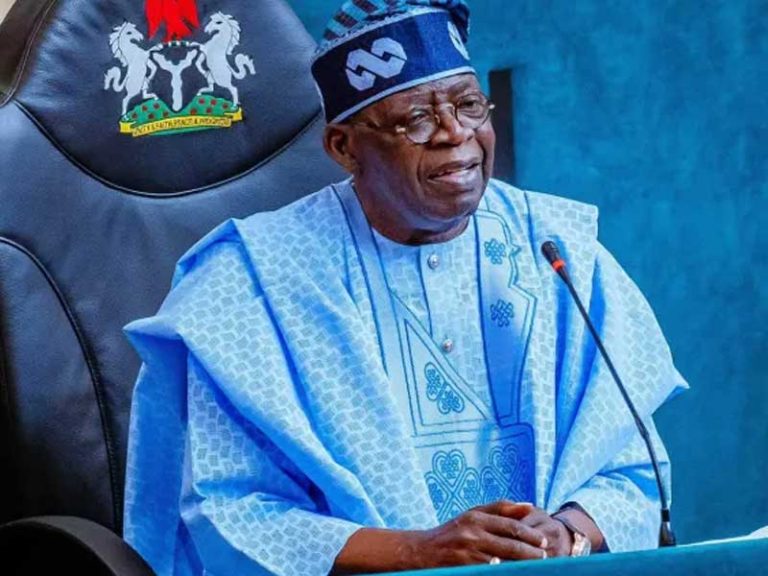
EFCC Recovered ₦500 Billion, Secured 7,000 Convictions Under My Watch — President Tinubu

0

President Bola Ahmed Tinubu has disclosed that the Economic and Financial Crimes Commission (EFCC) has recovered more than ₦500 billion and secured over 7,000 convictions within the first two years of his administration, underscoring what he described as a renewed commitment to accountability and transparency in governance.

The President made the revelation during his keynote address at the 7th EFCC-NJI Capacity Building Workshop for Justices and Judges, held on Monday, October 20, 2025, at the National Judicial Institute (NJI) in Abuja. The event, themed “Enhancing Justice in the Fight Against Economic and Financial Crimes,” brought together key figures in the judiciary and anti-corruption institutions to deliberate on strengthening Nigeria’s justice system.

Represented by Vice President Kashim Shettima, President Tinubu commended the EFCC under the leadership of its Executive Chairman, Ola Olukoyede, for what he called “remarkable strides in asset recovery and conviction efficiency.”

“As an administration, we have prioritized public accountability by strengthening anti-corruption agencies and granting them the independence needed to carry out their statutory duties,” Tinubu said. “This enabling environment is reflected in the results we have seen — with the EFCC securing over 7,000 convictions and recovering assets worth more than ₦500 billion.”

The President further noted that proceeds from recovered assets have been reinvested into critical national programs, including the Students’ Loan Scheme and the Consumer Credit Initiative, which are designed to expand access to education and financial inclusion for Nigerians.

Tinubu emphasized that his government remains resolute in ensuring the independence of anti-corruption institutions, noting that the EFCC’s achievements are proof of what can be accomplished when political interference is minimized and due process is upheld.

“Our fight against economic and financial crimes is not just about punishment; it is about building a culture of integrity, justice, and accountability,” he added. “We will continue to support the EFCC and other anti-graft agencies to ensure that public trust in government institutions is fully restored.”

EFCC Chairman Ola Olukoyede, in his remarks, reaffirmed the Commission’s dedication to intensifying the war against corruption, money laundering, and financial crimes. He also called for continued judicial collaboration to ensure timely and fair adjudication of corruption cases.

The workshop, jointly organized by the EFCC and the National Judicial Institute (NJI), is part of ongoing efforts to strengthen the judicial arm in handling economic crimes and promote greater synergy between the bench and anti-corruption bodies in Nigeria’s broader quest for transparency and good governance.

President Tinubu Urges Judiciary to Embrace Crypto Literacy in Fight Against Financial Crimes

0

President Bola Ahmed Tinubu has called on members of the Nigerian judiciary to enhance their understanding of cryptocurrencies and emerging digital financial technologies, emphasizing that such knowledge is now essential in effectively combating modern economic and financial crimes.

The President made the remarks while delivering his keynote address at the 7th EFCC-NJI Capacity Building Workshop for Justices and Judges, held on Monday, October 20, 2025, at the National Judicial Institute (NJI) in Abuja. The event, themed “Enhancing Justice in the Fight Against Economic and Financial Crimes,” was organized by the Economic and Financial Crimes Commission (EFCC) in collaboration with the NJI.

Represented by Vice President Kashim Shettima, President Tinubu said the rapid evolution of technology and the growing use of digital currencies have created new opportunities for both innovation and illicit financial activities. He stressed that the judiciary must stay informed and adaptable to ensure that justice delivery keeps pace with global financial realities.

“The world of finance is changing rapidly, and so are the methods used to commit economic crimes,” Tinubu stated. “Cryptocurrency and blockchain technology have redefined global transactions, and we must equip our judiciary with the knowledge and tools necessary to understand and adjudicate cases involving these technologies.”

The President noted that crypto-related crimes, cyber fraud, and digital money laundering are becoming increasingly complex, requiring legal practitioners and judges to be well-versed in the digital economy. He urged judicial institutions to integrate financial technology (fintech) education and cryptocurrency literacy into their training programs to ensure accurate interpretation and enforcement of relevant laws.

Tinubu reaffirmed his administration’s commitment to strengthening the institutional and operational capacity of the EFCC and other law enforcement agencies to address both traditional and emerging financial crimes.

“Our administration remains determined to build a justice system that is not only fair and firm but also forward-looking,” he added. “We must bridge the knowledge gap between technology and the law to ensure that no crime goes unpunished simply because it was committed in a digital space.”

EFCC Chairman Ola Olukoyede, in his address, echoed the President’s call, noting that the rise of cryptocurrency-based transactions has made financial crime investigations more sophisticated. He pledged continued collaboration with the judiciary to develop specialized training programs on digital forensics, blockchain analysis, and cybercrime prosecution.

The workshop brought together justices, judges, prosecutors, and anti-corruption experts to discuss the evolving nature of financial crimes and the need for judicial adaptation in an increasingly digital world.

Analysts say Tinubu’s call marks a significant step toward aligning Nigeria’s justice system with the realities of the global financial ecosystem, where digital literacy is becoming a vital tool in safeguarding economic integrity.

Nigeria Unveils $410 Billion Clean Energy Investment Plan to Become Africa’s Renewable Energy Hub — VP Shettima

0

Vice President Kashim Shettima has announced a bold $410 billion clean energy investment strategy aimed at transforming Nigeria into Africa’s leading renewable energy hub by 2060, as part of the Federal Government’s long-term energy transition agenda.

Shettima made the announcement while delivering his keynote address at the Nigerian Renewable Energy Innovation Forum (NREIF) 2025, held on Monday in Abuja, where policymakers, industry leaders, and global energy stakeholders gathered to chart pathways for sustainable energy development in the country.

According to the Vice President, the clean energy roadmap — anchored on the Nigeria Energy Transition Plan (ETP) — seeks to harness the country’s abundant renewable resources, including solar, wind, hydro, and bioenergy, to accelerate industrial growth, economic diversification, and environmental sustainability.

“Nigeria is blessed with vast renewable energy potential, and our goal is to turn that potential into prosperity,” Shettima said. “The government has developed a comprehensive investment framework that will mobilize $410 billion by 2060 to ensure energy security, create jobs, and drive inclusive development.”

He noted that in the short term, Nigeria requires $23 billion in targeted investments to expand energy access for millions of citizens still living without reliable electricity — a key step toward reducing energy poverty and stimulating rural development.

The Vice President emphasized that the plan focuses on building public-private partnerships, strengthening clean energy infrastructure, and promoting local manufacturing of renewable technologies such as solar panels, batteries, and electric vehicle components.

“Our strategy is not just about clean energy; it’s about economic transformation,” he added. “We are creating new industries, developing local capacity, and positioning Nigeria to lead Africa’s renewable energy revolution.”

Shettima reaffirmed the Tinubu administration’s commitment to decarbonization, climate resilience, and inclusive economic growth, stressing that Nigeria’s energy transition will be both pragmatic and people-centered.

He also called on international development partners, investors, and climate finance institutions to collaborate with Nigeria in achieving its net-zero emission target by 2060, noting that global cooperation will be critical to bridging the country’s financing and technology gaps.

Participants at the NREIF 2025, which included representatives from the African Development Bank (AfDB), World Bank, and leading energy firms, commended the initiative as a transformative step toward sustainable development.

With the announcement, the Federal Government has reaffirmed its vision to make Nigeria a continental leader in renewable energy, aligning with global climate goals while driving industrial innovation and social progress.

ChatGPT Users in Nigeria to Pay More as OpenAI Introduces 7.5% VAT on Subscriptions

0

Starting November 1, 2025, Nigerian users of ChatGPT will see an increase in their subscription costs as OpenAI, the company behind the popular artificial intelligence chatbot, begins applying a 7.5% Value Added Tax (VAT) to all its paid services in compliance with Nigerian tax regulations.

The new VAT charge means that subscribers to ChatGPT Plus — previously priced at ₦31,500 ($20) per month — will now pay approximately ₦33,862.50 ($22.43). The adjustment applies to all OpenAI’s billable offerings available to Nigerian customers, including premium and enterprise services.

In a notification sent via email to Nigerian users, OpenAI explained that the decision aligns with Section 10 of the Value Added Tax Act, Laws of the Federation of Nigeria (2004, as amended) and the Federal Inland Revenue Service (FIRS) Information Circular 2021/19, which mandate foreign digital service providers to collect and remit VAT on transactions involving Nigerian customers.

“From November 1, 2025, a 7.5% VAT will be added to your ChatGPT Plus subscription fee in accordance with Nigerian tax laws,” the company stated. “This ensures compliance with local tax regulations governing non-resident service providers.”

The implementation of VAT on OpenAI’s products follows Nigeria’s growing efforts to expand its digital tax net and ensure that foreign technology companies operating in the country contribute to tax revenues. Since 2022, the FIRS has enforced digital service taxes on global platforms such as Netflix, Google, Meta (Facebook and Instagram), and Spotify.

The move is part of the Federal Government’s broader strategy to increase non-oil revenue by taxing the digital economy — a rapidly expanding sector with millions of Nigerian users.

While some users have expressed concern over the increased subscription cost amid Nigeria’s rising inflation and weakening currency, analysts note that the price adjustment is a reflection of global compliance trends as more countries move to tax cross-border digital services.

With this change, OpenAI joins the growing list of international tech companies adhering to Nigeria’s VAT framework, reinforcing the government’s resolve to regulate and capture value from the booming digital economy.

Banks’ Fee Income Surges 23% to ₦986.5bn in H1 2025 Amid Rising Fintech Competition

0

Despite growing competition from fintech companies, Nigerian banks recorded a strong 23 percent increase in fee and commission income, reaching ₦986.5 billion in the first half of 2025, according to data compiled from the half-year financial statements of leading deposit money banks (DMBs).


The performance underscores the resilience of traditional banks in sustaining non-interest income growth amid a rapidly evolving digital finance landscape.


Analysts attribute the surge to higher transaction volumes, increased electronic banking fees, and growth in account maintenance charges, card services, and remittance transactions. The rollout of new digital platforms and revised tariff structures also contributed significantly to the improved earnings.


Major Tier-1 banks, including Access Holdings, Zenith Bank, GTCO, UBA, and FBN Holdings, led the rally, collectively accounting for over 70 percent of the total fee income. Access Holdings topped the chart with robust gains from electronic channels and trade services, while GTCO and Zenith Bank reported strong recoveries in digital transaction fees and credit-related commissions.


Industry watchers note that while fintech startups such as Opay, PalmPay, and Moniepoint continue to capture younger and unbanked demographics with lower-cost digital services, traditional banks have responded by expanding their mobile platforms and improving customer experience to retain market share.


“Banks are aggressively monetizing their digital ecosystems while leveraging scale and trust to maintain profitability,” said a Lagos-based financial analyst. “Fintech competition has forced innovation rather than erosion of value.”


The Central Bank of Nigeria (CBN)’s push toward a cashless economy and rising adoption of instant payment channels have further boosted transaction-based revenues.


However, experts warn that the rapid shift toward digitalization could intensify pricing pressure as fintechs continue to offer cheaper, more flexible options to customers.


With the second half of 2025 underway, market observers expect the upward trend in fee income to continue, supported by seasonal spending, growing e-commerce activity, and increased cross-border remittances.


In summary, the ₦986.5 billion fee income reported across the banking sector signals that Nigerian banks are not only surviving but also thriving in the face of fintech disruption—by innovating, diversifying, and monetizing their vast digital ecosystems.


Dangote Refinery Confirms Over 310 Million Litres of Petrol Ready for Loading, Opens Supply to All Marketers

0

Amid mounting concerns over rising petrol prices across Nigeria, the Dangote Petroleum Refinery has announced that it currently holds over 310 million litres of Premium Motor Spirit (PMS)—commonly known as petrol—ready for distribution. The company has assured that it is fully prepared to supply marketers nationwide and stabilize fuel availability.

Speaking in Lagos, the Vice President of Dangote Industries Limited, Devakumar Edwin, disclosed that the refinery is now operating at sufficient capacity to meet Nigeria’s domestic petrol demand and still maintain export commitments. He extended an open invitation to all licensed petroleum marketers, urging them to “bring their trucks” and lift products directly from the facility.

“We have over 310 million litres of petrol in our storage tanks, ready for immediate loading,” Edwin said. “The refinery is fully open to all marketers—major, independent, and depot owners. We are ready to supply enough products to meet Nigeria’s needs and even export to neighbouring countries.”

The announcement comes amid a period of nationwide anxiety over fluctuating fuel prices, long queues at filling stations, and concerns about product scarcity. Many Nigerians have expressed frustration over the rising cost of petrol, which has affected transportation, electricity generation, and the overall cost of living.

Edwin emphasized that the Dangote Refinery, Africa’s largest integrated refining complex, was established precisely to end such crises by ensuring local production and reducing reliance on imported petroleum products.

Industry observers see the refinery’s readiness to supply as a potential turning point for Nigeria’s energy market, which has long struggled with unstable supply chains and foreign exchange pressures tied to fuel imports.

Located in the Lekki Free Zone, Lagos, the 650,000 barrels-per-day Dangote Refinery officially began refining operations earlier this year and has since produced diesel, aviation fuel, and now petrol for commercial use.

Edwin assured that the company remains committed to transparency and collaboration with all stakeholders in the downstream sector, stressing that pricing will be competitive and guided by prevailing market conditions.

He further reiterated the refinery’s long-term goal of achieving energy self-sufficiency for Nigeria while positioning the country as a major exporter of refined petroleum products within Africa.

Analysts believe that if the refinery sustains consistent distribution and fair pricing, it could significantly ease the burden on consumers, stabilize fuel supply, and contribute to the federal government’s efforts to strengthen the nation’s energy security.

Saudi Arabia to Build World’s First ‘Sky Stadium’ as Part of Futuristic NEOM City Project

0

Saudi Arabia has announced an ambitious plan to construct the world’s first “sky stadium”, a revolutionary sporting arena that will be suspended 350 meters (1,150 feet) above ground level within its cutting-edge urban development, The Line, part of the $500 billion NEOM megacity project.

Officially named the NEOM Stadium, the project represents another bold step in Saudi Arabia’s ongoing effort to redefine architecture, sustainability, and global sports infrastructure under its Vision 2030 development agenda.

Designed to seat 46,000 spectators, the NEOM Stadium will be a marvel of modern engineering — blending state-of-the-art technology, advanced environmental design, and futuristic aesthetics. The stadium is expected to be powered entirely by renewable energy, reflecting NEOM’s commitment to clean energy and sustainable urban living.

According to project details released by the NEOM management team, the sky-high arena will “redefine the experience of live sports,” offering panoramic views of the linear city below and an immersive digital environment that integrates artificial intelligence, augmented reality, and cutting-edge acoustics for spectators.

Construction is projected to be completed by 2032, two years before Saudi Arabia hosts the 2034 FIFA World Cup, during which the NEOM Stadium is expected to stage matches up to the quarterfinal stage.

The innovative design places the stadium within The Line’s vertical urban structure, seamlessly integrating it into the city’s architecture rather than occupying traditional ground space. This approach aligns with NEOM’s vision of building compact, eco-efficient urban systems where work, leisure, and living coexist in harmony.

Beyond football, the NEOM Stadium is expected to serve as a global entertainment hub, hosting concerts, esports tournaments, and major cultural events, making it one of the most versatile and technologically advanced venues in the world.

Saudi officials say the sky stadium will not only symbolize the country’s growing influence in global sports but also demonstrate its capacity to blend innovation with sustainability on a scale never before attempted.

Once completed, the NEOM Stadium is poised to become a landmark of 21st-century architecture—a fusion of sport, technology, and environmental consciousness—cementing Saudi Arabia’s reputation as a rising powerhouse in the global sports and entertainment industry.

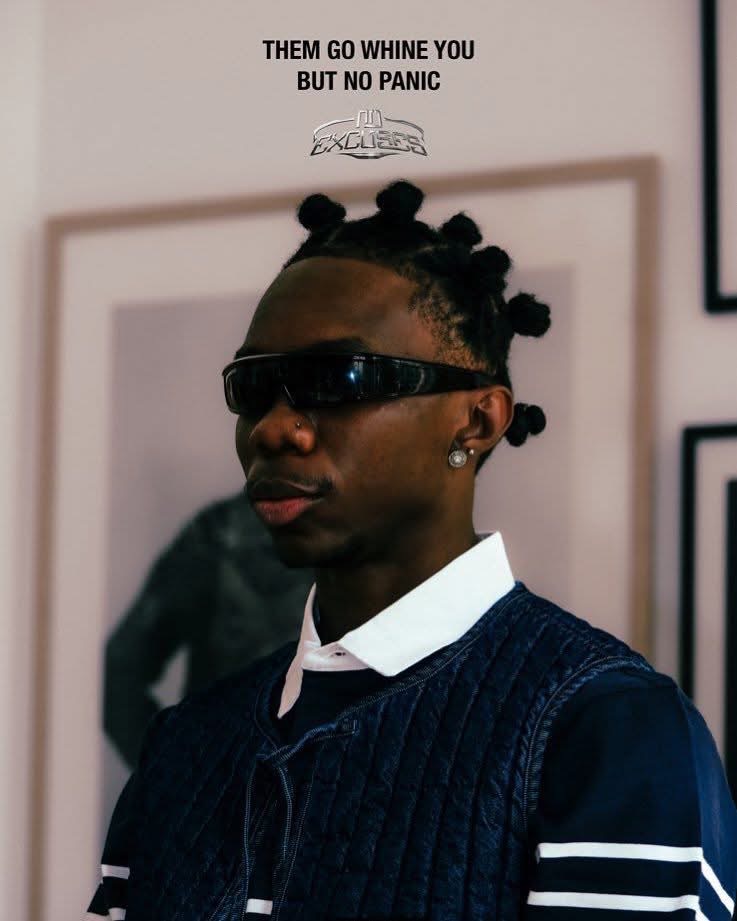
Blaqbonez Drops “No Excuses” Album Amid Ongoing Hip-Hop Feud with Odumodublvck

0

Blaqbonez Drops “No Excuses” Album Amid Ongoing Hip-Hop Feud with Odumodublvck

By Emmanuel Daraloye

Nigerian rapper Blaqbonez, signed to Chocolate City Records, has released his highly anticipated album “No Excuses”, a bold addition to his growing catalogue of projects. The 14-track body of work arrived yesterday, marking another milestone in the rapper’s decade-spanning career and reinforcing his reputation as one of Nigeria’s most consistent and experimental Hip-hop acts.

The release comes at a tense time in the Nigerian rap scene, as Blaqbonez remains locked in a heated feud with fellow rapper Odumodublvck. The rivalry, which has dominated conversations across social media—especially on X (formerly Twitter)—has been more lyrical and personal than musical. Interestingly, both artistes dropped new albums just days apart and share the same collaborators: Pa Salieu, Telz, and Ayo Maff, fueling comparisons and competitive tension.

On “No Excuses,” Blaqbonez confronts the controversy head-on. On the fourth track, “ACL,” he takes direct shots at Odumodublvck, calling him a “50-year-old clout chaser.” The jabs continue subtly across the project, suggesting that the feud has deeply influenced his creative process.

The album, his seventh project since rising to prominence, sees Blaqbonez exploring an array of sounds—from Drill and Dancehall to Afrobeats and R&B—while maintaining his trademark wit and confidence.

The project opens with the high-energy “Everlasting Taker,” where Blaqbonez proclaims his sonic dominance. The song transitions into “Consistency,” a dancehall-infused collaboration with AJ Tracey, as both rappers celebrate their achievements with effortless swagger.

The log drum-heavy “Aura 4 Aura,” featuring Pa Salieu, leans into Drill but suffers slightly from uneven mixing and mastering. On “Bizzy Body,” Blaqbonez merges Dancehall with Afrobeats, featuring Valiant and The Kazez—though the guests outshine him. He quickly regains his footing on the Olamide-assisted “Nati,” a track that bursts with confidence but fades after its strong opening verse.

Themes of hedonism, love, and personal struggles dominate the album. On “Despacito,” rising star Fola brings a velvety R&B tone that complements Blaqbonez’s heartfelt delivery. “Just Hustlin” pays homage to 1990s Hip-hop, reflecting on ambition and the pursuit of wealth, while “Good Time” attempts soulful introspection, though it is marred by poor mastering.

“Mary Mary” tells the story of a woman who trades affection for financial security, while “Go Crazy” and “W for Wetego”—featuring Phyno, Young Jonn, and DJ 808—bring back the bravado. Phyno’s verse stands out as one of the album’s lyrical highlights.

On “California Issues,” Blaqbonez reminisces about fleeting love, while “Prayer Up” fuses Afrobeats with Trap influences. The emotive “Louder,” featuring Ayo Maff and Bella Shmurda, explores ghetto struggles and resilience, offering one of the album’s most poignant moments.

The penultimate track, “Stacks,” featuring Barry Jhay, dives into introspection—touching on religion, the music industry, and self-awareness. The album closes with “Starlife,” featuring Zinoleesky (uncredited on some platforms) and background vocals from Oxlade. The song reflects on the pressure of fame, ending beautifully with a crisp trumpet outro.

Despite occasional flaws—such as inconsistent sound engineering and some seemingly forced collaborations—“No Excuses” stands out as a cohesive and ambitious project. It captures Blaqbonez’s versatility, lyrical bravado, and evolution as an artist who continually pushes the boundaries of Nigerian rap.

With nearly two decades in the industry, Blaqbonez reaffirms on “No Excuses” that his artistry is still evolving—and the best may yet be to come.

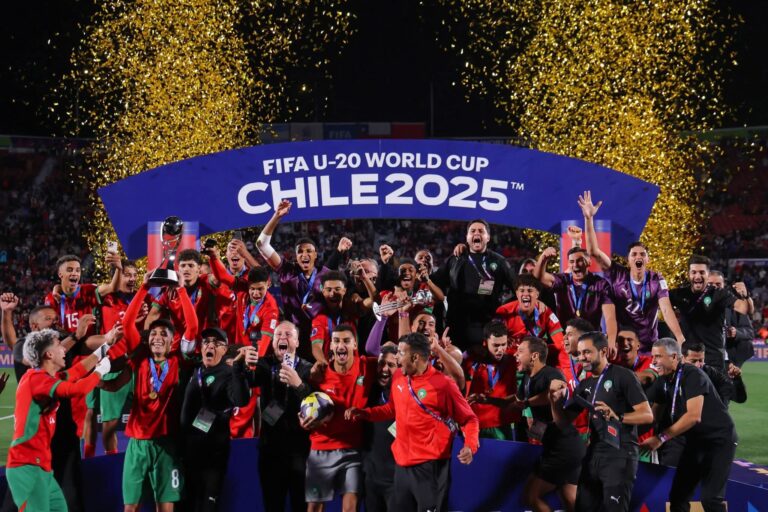
Morocco Make History, Defeat Argentina 2–0 to Win First-Ever FIFA Title at U-20 World Cup in Chile

0

In a moment of historic triumph, Morocco’s U-20 national team have been crowned world champions after defeating Argentina 2–0 in the final of the FIFA U-20 World Cup held in Chile. The victory marks Morocco’s first-ever FIFA title, a groundbreaking achievement for the North African nation and a proud milestone in African football history.

The young Atlas Lions delivered a composed and disciplined performance to outclass six-time champions Argentina in front of a packed stadium in Santiago. The breakthrough came early in the 12th minute when Zabiri curled a powerful free-kick from the edge of the penalty box that struck the post before ricocheting into the net, giving Morocco a deserved lead.

Argentina struggled to find rhythm against Morocco’s compact and organized defense, and the North Africans doubled their advantage in the 28th minute. A lightning-fast counterattack saw Othmane Maamma, who was later named Player of the Tournament, deliver a pinpoint cross to Zabiri, who calmly slotted home his second goal of the night.

Despite Argentina’s efforts to mount a comeback in the second half, Morocco maintained control of the game, displaying tactical maturity and resilience beyond their years. Goalkeeper Amine Benrhozil made several crucial saves to preserve the clean sheet and secure a famous victory.

At the final whistle, celebrations erupted across the stadium and back home in Morocco, where fans poured into the streets to mark the country’s historic achievement. The triumph not only crowns Morocco as the U-20 world champions but also cements their status as one of Africa’s fastest-rising football powers.

With the win, Morocco become the first North African nation to lift the FIFA U-20 World Cup, signaling a new era of promise for Moroccan football following the senior team’s impressive run to the semifinals of the 2022 FIFA World Cup in Qatar.

The victory also underscores the success of Morocco’s long-term investment in youth development through the Mohammed VI Football Academy — a model now widely regarded as a blueprint for nurturing world-class talent across the continent.

Courage, Charisma & Class — The Dede Ashiogwu Era Has Begun

26

If Precious Dede Ashiogwu isn’t crowned the new Queen of Aura, Confidence, Fashion, and Class, then honestly—who deserves it now, or moving forward? From the moment she stepped into the BBNaija house, Dede exuded an effortless blend of grace and power that set her apart. Her confidence wasn’t loud; it was magnetic. Her fashion choices redefined elegance, blending boldness with sophistication. Every move, every word, every look became a statement—one that spoke of a woman who knows her worth and isn’t afraid to own it. Post-show, she’s continued to embody the same charm and class that made her unforgettable, proving that her reign extends far beyond the house. Dede isn’t just a contestant; she’s a movement—a timeless reminder that true queens don’t wait for crowns, they create them.

From the moment she strutted into that house, Dede wasn’t just a housemate – she was a full-on phenomenon, serving charisma, confidence, and class on a silver platter. One of the best things to happen to BBNaija 10/10 was Dede: a bold, beautiful, self-assured Black woman who didn’t just play the game – she redefined it. Day One? Unmatched content, electric presence, and energy that kept the vibes alive through every twist and eviction. Her journey? Pure impact – courage under fire, authenticity that cut through the noise, intelligence that sparked debates, and grace that turned heads. Top 2 wasn’t luck; it was destiny in stilettos.

Let’s talk numbers because Dede doesn’t do subtle. She blasted onto Ranks Africa’s Social Chart from Week 1 and holding that throne as one of the most talked-about star all season long. She gave us the real trinity: content that had us glued, confidence that inspired, and conversations that echoed way beyond the house. While others chased drama, Dede built a legacy of quiet power, emerging as the nation’s princess and the undisputed Queen of Aura.

But honey, the real glow-up? Post-show Dede is showing us what we’ve been missing in fashion – and trust, we’re not ready for the takeover. Fame didn’t change her; it unleashed her. Every Insta drop (@dede_ashiogwu) is a masterclass: ethereal dresses that scream high fashion, power suits that command boardrooms, and bold statements that blend Naija flair with global chic. She’s not just posting pics; she’s crafting a narrative – effortlessly turning red carpets into runways and every outing into a brand moment. From her rave-ready slay that had fans gushing “Dede will always serve us beauty and fashion” to those outrageous winner’s night fits that sparked TikTok frenzy, her style game is 10/10, unapologetically bold, and already turning heads in the industry. She’s building bridges into fashion, lifestyle, and entertainment, with whispers of hosting gigs and self-discovery projects on the horizon. As she spilled in a recent chat: “I’m trying to breathe right now… everything that has to do with fashion.”

Dede’s magic? That rare personality that walks into a room and becomes the show. Grateful queen energy – “Top 2 isn’t the worst position for me because I never expected to win, but I’m here and grateful” – mixed with a creative spark that’s already unveiling masterpieces. Trolls? They tried. But Dede? She flips scripts into silk. Post-show, she’s cashing in on diaspora love (hello, gift from all corners!) and proving why she’s the face of courage, class, and that unbreakable Black girl glow.

Whatever lane Dede chooses – strutting Paris runways, launching her own line, or dominating screens – she’s already that girl. The top babe of the season, the breakout star we’re all manifesting for. BBNaija might be over, but Dede’s era? Just ignited. Get your popcorn (and your fashion inspo board) ready – the Queen’s about to conquer. Who’s riding with Dede? WE ARE!