Home Blog Page 193

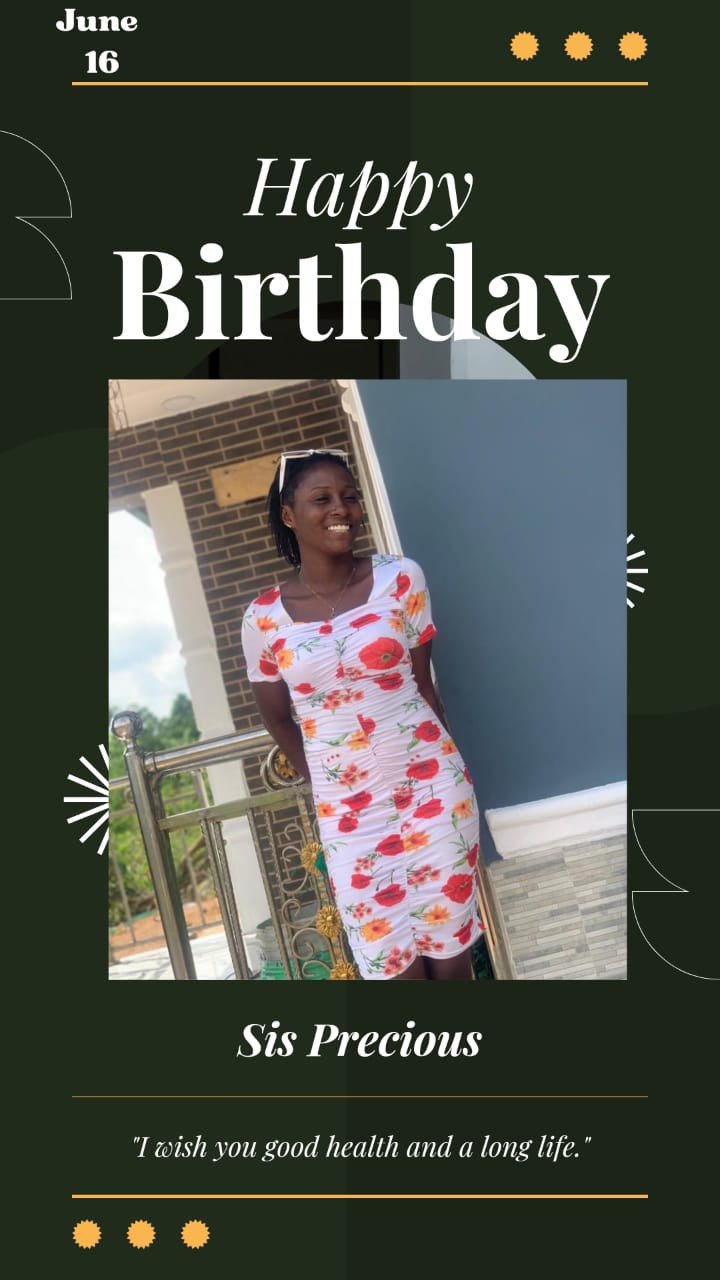
Introducing the queen on her birthday as she celebrates another year of wisdom and grace today.

On this day 16th of June, a radiant young woman entered the world into the loving family of Abiodun, hailing from Oyo state in Ogbomosho.

Blessed with a unique charm, her passions include immersing herself in books and embracing moments of sleeping.

Her fondness for the colors white and blue mirrors her serene spirit of modelling, while her delight lies in the savory combination of jollof rice and egg.


Holding an NCE qualification, we gather today to honour and celebrate the journey of this remarkable young lady as she transitions into another year of her life.

Here’s to wishing her a joyous birthday filled with boundless success in all her future endeavors.

Cheers to you and your radiant path ahead!

Happy Birthday To You, Long Life And Prosperity Sis. Precious.

Courtesy of JLM Youth Department

Watch The Video:


PRESIDENT TINUBU MEETS FBI DIRECTOR, CALLS FOR STRONGER COLLABORATION TO FIGHT CYBERCRIME AND TERRORISM

0

President Bola Tinubu has called for stronger collaboration between Nigeria’s law enforcement agencies and the United States’ Federal Bureau of Investigation (FBI) in the fight against cybercrime, terrorism, and other related crimes.

The FBI is the domestic intelligence and security service of the United States of America, and its principal federal law enforcement agency.


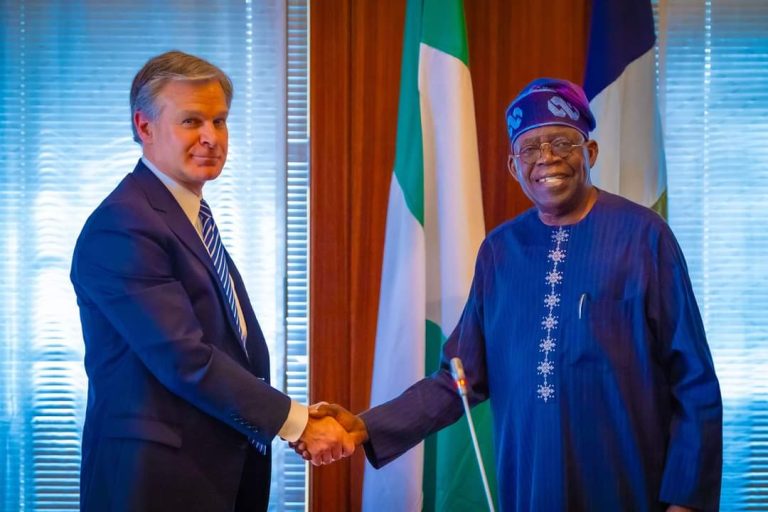
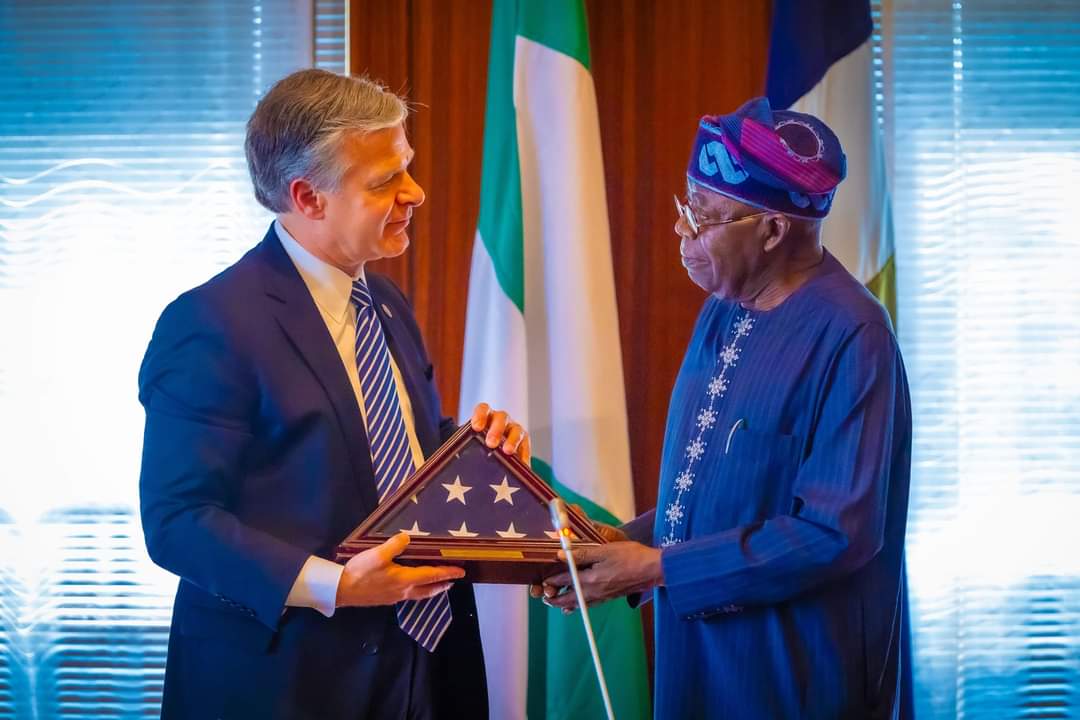
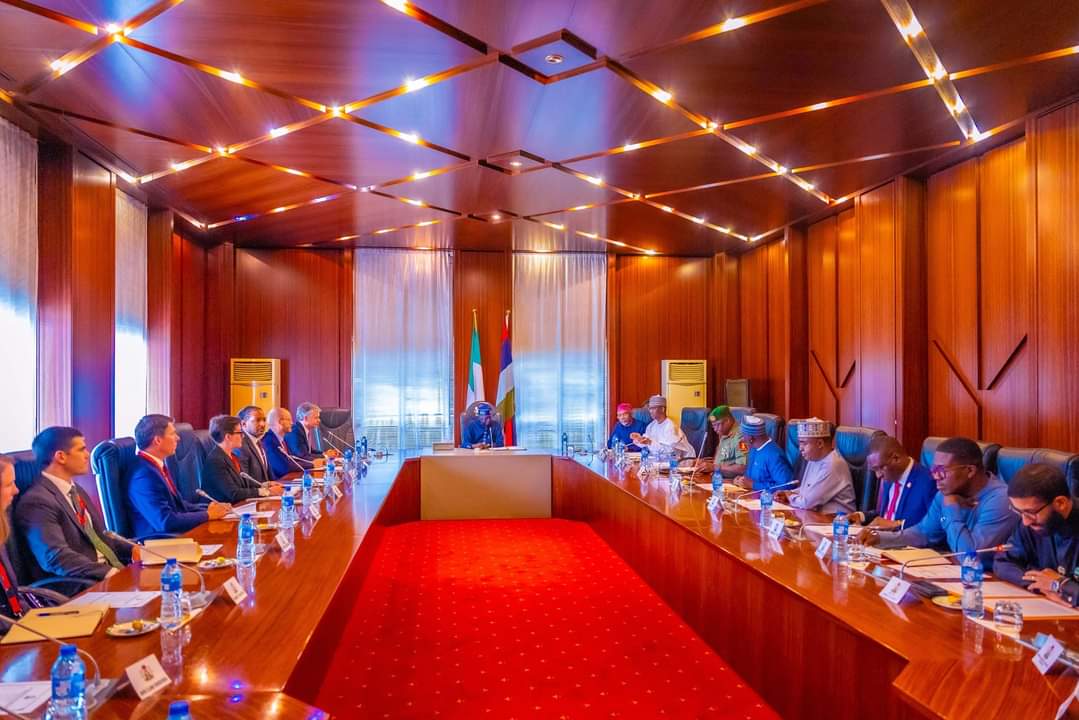
The President spoke during a meeting with FBI Director, Christopher Asher Wray, at the State House in Abuja.

Security chiefs who attended the meeting include the National Security Adviser, Mallam Nuhu Ribadu; Inspector-General of Police, Kayode Egbetokun; Director-General of the Department of State Services (DSS), Yusuf Magaji Bichi; the Chairman of the National Drug Law Enforcement Agency (NDLEA), Brigadier-General Mohamed Buba Marwa (Rtd); Chief of Defence Intelligence Agency (DIA), Major-General Emmanuel Undiandeye; Chairman of the Economic and Financial Crimes Commission (EFCC), Olanipekun Olukoyede; and the National Coordinator of the National Counter Terrorism Centre (NCTC), Major-General Adamu Laka.


President Tinubu described the presence of the FBI Director alongside his team in Nigeria as a recognition of the enduring partnership between Nigeria and the United States in the fight against financial crimes and terrorism.


”It is an honour for me to receive Director Christopher Wray, the leader of an organization that has demonstrated consistent procedural sophistication and a reputation for excellence over several years. Your visit conveys the importance of Nigeria and Nigerian partnership in the work of America’s law enforcement institutions and vice-versa. For us, it is a recognition of what stage we are at, who we are, and the level of interest both countries share in eliminating crimes locally and globally.


”We cannot achieve this important feat of eliminating crimes without collaboration. Incidentally, as the Chairman of ECOWAS, Nigeria is also collaborating with other West African countries to fight economic and other related crimes,” the President said.


President Tinubu told the FBI Director that his administration has prioritized education as a tool against poverty, which is generally believed to be a driver of criminal activities.


”We are working hard to eliminate terrorism, cybercrimes, sextortion, and I am glad that we have a good number of agencies that are involved in reducing these crimes to the barest minimum, and they are also well represented at this meeting,” the President said.


Noting that no single country can combat financial crimes in isolation, President Tinubu called on the United States to support developing countries with the requisite technology and knowledge transfer required to combat complex international crimes.


In his remarks, Director Wray said he was in the country to enhance the “outstanding partnership” that exists between the government of Nigeria and the government of the United States.


He lauded President Tinubu for supporting the growing partnerships between various agencies of government and the FBI in order to protect the citizens of both countries.


”We appreciate the President’s vision in countering terrorism in the region, which is a dangerous threat, not only to the countries in the region but also to the United States.


”We appreciate your vision in re-engineering the role of the Office of the NSA to effectively coordinate efforts on counter-terrorism, and this has already started to bear fruits in terms of the success you are recording against ISIS in West Africa and other terrorist groups.


”We appreciate your support and collaboration on cyber-enabled crimes and sextortion, which has unfortunately resulted in a few tragic deaths in the United States.


”I want to assure you of our support whether it is on counter-terrorism, cyber-enabled crimes, kidnapping, joint investigations, and intelligence sharing. Our relationship with Nigeria is a very important one,” the FBI Director concluded.


Chief Ajuri Ngelale

Special Adviser to the President

(Media & Publicity)

June 14, 2024

Exclusive: Meta to shrink Lagos office after 2023 layoffs affected Nigeria

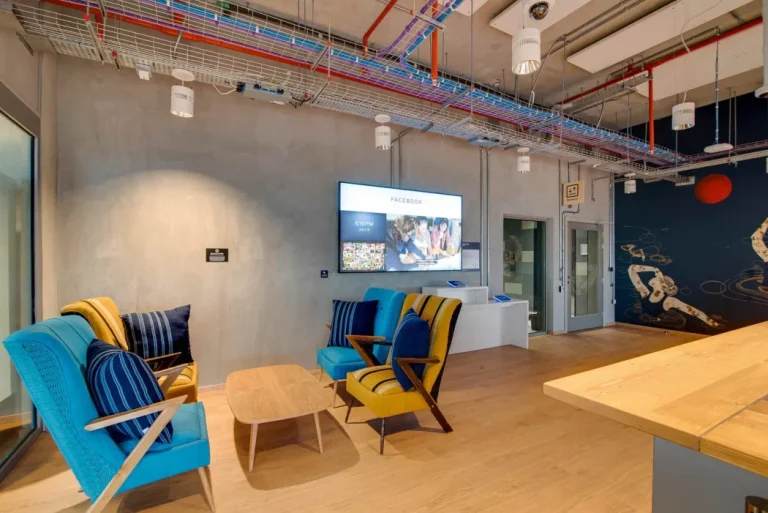
Meta, the parent company of Facebook, Instagram, and WhatsApp, will reduce its office space in Lagos after global layoffs in mid-2023 affected its Nigerian team. At least 35 people were affected by those layoffs, three people with knowledge of the matter said. The company’s engineering team, which had 24 employees according to a 2022 report, was laid off.


“Engineers continue to serve the region from a number of our global engineering hubs outside of Nigeria,” a company spokesperson told TechCabal via email, declining to specify how many Nigerian employees were affected by 2023 layoffs that reduced global headcount by 20,000.


The reduction in team size has prompted the social media giant to begin renegotiating its tenancy agreement for its office space in the 15-story Kings Tower building in Ikoyi, Lagos. A key part of that renegotiation will be to reduce its office space. Per one publication, Kings Tower has an asking price of $800/sqm/per annum.


Meta opened its Lagos office in 2022

“We regularly review our office spaces to ensure they suit the needs of the business, and the office in Nigeria is no different,” Meta said in a statement.


“As we shrink our real estate footprint, we’re transitioning to desk sharing for people who already spend most of their time outside the office.”


While Meta rejects any characterisation of the decision as scaling back, it is a remarkable about-face for a company that has consistently invested in Nigeria and has spoken about prioritising the West African nation.


In March 2024, Nick Clegg, Meta’s President of Global Affairs visited Nigeria and announced the company would begin offering monetisation to creators in Q3 2024. During his visit, he spoke about the recognition Nigerian creators have garnered globally and their use of Meta’s platforms to build communities. Per Statista data, there are an estimated 43 million Facebook users in Nigeria.


Yet, it is difficult to measure if these numbers have translated into meaningful revenue growth. The company reports Africa revenue as part of its “Rest of World” cohort.


Meta is not the only big tech company to make operational changes in Nigeria. Microsoft closed the African Development Centre and cut at least 100 engineering jobs in May 2024. While the company insists it remains operational in Nigeria, it picked Kenya for a multi-billion dollar investment in data centers.


Dangote to venture into steel production, targets meeting demand in West Africa

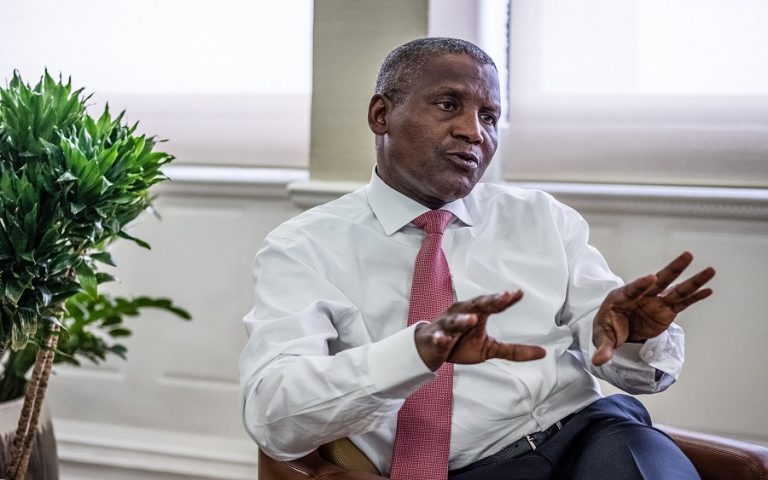
Africa’s richest man, Alhaji Aliko Dangote has mooted plans to delve into steel production in the near future stating that he wants to ensure that every steel used in West Africa comes from Nigeria.


The industrial mogul stated this during an interview at the ongoing Afreximbank Afro-Caribbean Trade & Investment Forum in Nassau, The Bahamas.


When asked if he is taking a break after the refinery, he noted that the next venture after the refinery project would be in Steel manufacturing and ensure that all Steel products used in West Africa comes from Nigeria.


He also encouraged African leaders to take agriculture and solid mineral development seriously lamenting the fact that food imports cost the continent dearly by increasing unemployment and poverty.


He said, “What we need to do that is missing is actually to concentrate and pay more attention to agriculture and solid minerals. I don’t like people coming to take our solid minerals to process and bring the finished product. We should try and industrialise our continent and take it to the next level.”


“I told somebody we are not going to take any break. What we are trying to do is to make sure at least in West Africa, we want to make sure that every single steel that we use will come from Nigeria”


Efforts to revive Nigeria’s steel industry

Nigeria has tried unsuccessfully to become a leader in the steel manufacturing industry with a handful of failed projects like the Ajaokuta steel plant, Delta Steel Company, Osogbo and Jos rolling mills even under government and private ownership.


Like the oil refineries, the federal government under different administrations has spent billions trying to put the local steel plants to work but has been unsuccessful. The administration of President Bola Tinubu had promised during the campaigns to ensure steel production starts in the multi-billion-dollar Ajaokuta steel complex.


The federal government in the 2024 appropriation act budgeted around N4.45 billion for the plant but hopes to raise around N35 billion from private investors to bring the plant to life for the first time in its history.


However, the Minister of Steel Development, Shuaibu Audu has also stated that reviving the plant could cost around $2 billion to $5 billion.


Potentials in Nigeria’s steel industry

According to the National Steel Raw Materials Exploration Agency (NSRMEA), total steel consumption in the country averages around 10 million metric tonnes of which 70% is imported. The current Minister of Steel Development had earlier stated that Nigeria spends around $4 billion on steel imports annually despite having around 74 steel plants and fabricators across the country.


Nigeria is home to significant iron-ore deposit- a critical raw material in steel production found in Kogi state.


Credit scheme: FG to integrate credit score into NIN, targets 80 million Nigerians

0

The Federal Government has said it would leverage the National Identification Number (NIN) to document the credit behaviour of every Nigerian under its consumer credit scheme.


The Chief Executive Officer of the Nigerian Consumer Credit Corporation (CREDICORP) Uzoma Nwagba, stated this during a TV interview.


According to him, every Nigerian who is economically active would have their credit score written on their NIN.


Nwagba added that the scheme is targeting about 80 million Nigerians, who are economically active and are earning income.


He said the aim is to ensure that every Nigerian who earns a modest income is able to acquire things that can improve their lives such as a car, house, quality education, and laptop, among others, and pay for it over a long period.


Identity problem

The CREDICORP CEO noted that the major challenge of the credit system in Nigeria has been the lack of data and proper identity. He, however, expressed the confidence that with the NIN, every creditor will be properly identified.


“My first job is to strengthen the credit infrastructure of the country. It means that every Nigerian who is economically active will have a credit score written on their NIN so that they cannot run away from their credit behaviour,” he said.


While registration for the NIN has been slow over the years, the National Identity Management Commission (NIMC) recently disclosed that over 107.3 million Nigerians have been registered as of April this year.


N180 trillion credits needed annually

According to him, Nigeria needs to be doing about N180 trillion in consumer credits per annum but the banks are not willing to give out the money because they are afraid of losing it.


“The government cannot fund that. In the financial system, the people who are already doing lending today are the ones who have the capital. They have the money, they’re just afraid because they cannot put their money out there and lose it.”


“The CBN is quite a strong partner on this journey with us, as well as credit registries and credit bureaus. Once we have been able to establish the trust, the N180 million we are looking for will go away from all these flights to safety and start lending to Nigerians,” he said.


He added that the CREDICORP will also be working with all institutions that are committed to advancing consumer credits such as microfinance, fintechs, and even cooperatives. He said the Corp would enable them to do more and give them credit guarantees for specific industries and specific targets.


What you should know

President Bola Tinubu announced the launching of the first phase of the Consumer Credit Scheme on April 21, a programme designed to offer credit facilities to working citizens in the country.


The President’s special adviser on media and publicity, Ajuri Ngelale, said the first phase of the scheme will begin with civil service members before extending to the main public.

Ngelale emphasized that consumer credit plays a pivotal role in modern economies, empowering individuals to elevate their standard of living by acquiring goods and services upfront and responsibly managing payments over time.

The scheme facilitates vital investments like housing, transportation, education, and healthcare, crucial for sustaining stability and pursuing personal aspirations.


Dangote Refinery to set up terminal in the Caribbean for export of petroleum products 

0

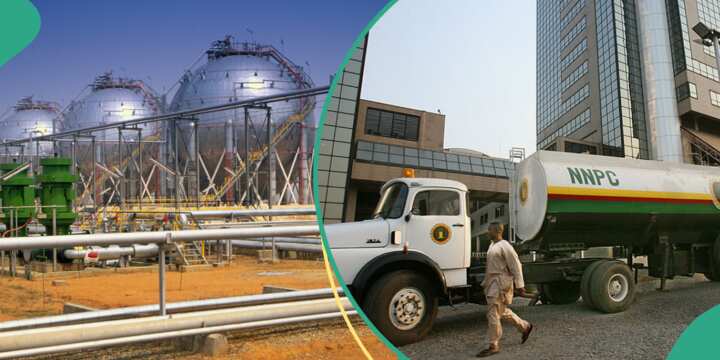
Dangote Refinery is planning to set up a terminal in the Caribbean to export petroleum products to countries in the North American region.


Aliko Dangote, the president and CEO of the refinery, made this disclosure on Wednesday at Afreximbank’s Trade and Investment Forum in The Bahamas.


The business mogul said the company can easily supply petroleum products to the region within 18 to 20 days.


According to Africa’s richest man, the company will sign a bilateral agreement with the region to construct the terminal for the exportation of its petroleum products.


“I know the price in the Caribbean in terms of petroleum products is very high. We produce it cheaply. We can always bring it here. We can set up a terminal and we’ll be able to fix their needs.


“We will have a bilateral agreement with them and also bringing in stuff from there is not more than 18 to 20 days maximum. And then we need to set up a terminal.


“Once we set up a terminal, they will have a very cheap oil. They will have cheap energy. And by having cheap energy, their own economy will grow faster,” Dangote said.


Dangote to also export Cement to the Region

In addition, the CEO of the $20 billion refinery mentioned that the conglomerate is not only seeking to invest in petroleum products in the region but also in cement.


Dangote stated that the company’s cement production capacity is nearly 52 million tons and will increase to about 62 million tons by the end of next year.


He added that the firm can meet the demand of the Caribbean market, creating a win-win situation for both parties.


“It’s not only about the oil. We now have a capacity of almost 52 million cement capacity. By the end of next year, we will be at 62 million of cement capacity. We are not only saying that we can bring in from Nigeria or from Africa.


“If they have limestones, we can also produce what can satisfy them. We’ve done that before in Africa and we should be able to free them up from the shackles of other people.


“If we the ingredients like the limestones etc, it’s a 28 months maximum. They can all be self-sufficient. It will be a win-win between us and them,” Dangote said.


What you should know

The Dangote refinery with a 650,000 barrel refining capacity has been described as the “game changer” of the oil and gas sector.

The refinery will be the largest in Africa and Europe once it begins full operation later next year.

According to reports, the $20 billion petroleum facility is expected to disrupt the $17 billion Africa-European market and reduce the continent’s dependence on imported petroleum products from Europe.

In addition, Dangote stated that the company is also eyeing the Brazilian market and other North American countries to supply refined products from the refinery.

“Our capacity is too big for Nigeria. It will be able to supply West Africa, Central Africa and also Southern Africa,” Dangote said in a panel discussion in Rwanda a few weeks ago.

Why African startups need to launch in multiple countries – Tizeti CEO

0

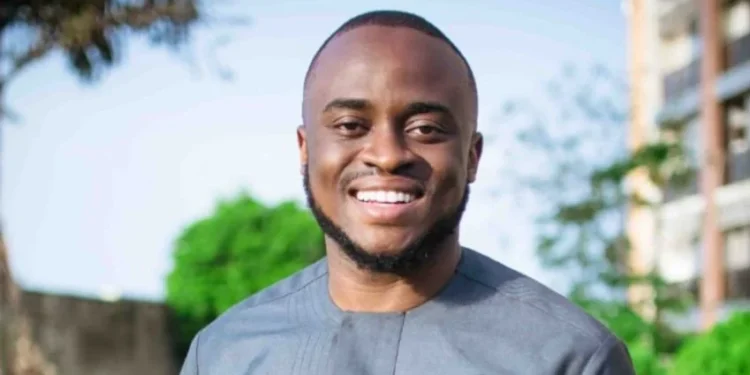
The Chief Executive Officer of Tizeti, Kendall Ananyi has said that African startups will need to explore launching in multiple countries to hedge against currency risks.


Ananyi stated this while sharing his experience investing in over 40 startups in the last eight years via a blog post.


According to him, skyrocketing exchange rate has been a major issue for African startups, especially, when they have to provide their investor updates in USD.


He noted that by diversifying their geographic presence, startups could mitigate the impact of currency volatility from any single market, adding that this would also help them to stabilize their financial results when consolidated.


Justifying the need for launching in multiple countries for African startups, he said:


“Hedging currency risk is difficult and startups should explore additional geographies and launch in multiple countries once they are in the growth stage so the effect of one currency doesn’t weigh down their results when consolidated.


“For example, the Nigerian Naira might be down in a year when the Ghanaian Cedi is having a great year, or you might get stability from expanding to Francophone Africa and earning FCFA/XOF. The MENA region is also an area to consider to mitigate currency risks as a startup further.”


Startup challenges

In his post, Ananyi also identified several hurdles startups must overcome, such as co-founder conflicts and crisis management. He urged founders and entrepreneurs to move on from crises by taking stock, re-strategizing, and continuing to build, emphasizing that mature investors base their decisions on growth and market potential rather than press coverage.


While noting that African startups are now facing increased scrutiny due to a lack of governance structure, Ananyi advised startups that are receiving significant investment to adhere to proper governance policies and hold regular board meetings with experienced board members where feasible.


Sharing his experience in this regard, he said:


“Out of 40+ investments, I only had one startup not launch or show any visible traction. I got no updates and had to chase down the founder to get the documents months after the investment.


“One out of 40 is 2.5%. It is a small number but it does exist and has resulted in increased scrutiny of African startups. Naming and shaming haven’t really worked and it’s an open conversation, proper governance should help keep it at the historic low %.”


Startup exits

While Ananyi is optimistic about exits in Africa, he noted they may be rare because the majority of current startups were founded after the Paystack exit to Stripe and are less than three years old, or have higher valuations than pre-2021.


With this, he said investors are expected to stay longer to see significant returns.


He explained that the current young startups need more time to mature and prove their business models before they can attract lucrative exit opportunities.


According to him, the inflated valuations seen during the investment frenzy of 2021 and 2022 mean that investors may need to be more patient, holding on to their stakes longer to achieve substantial returns.


What you should know

Tizeti, founded by Ananyi, is one of the leading Internet Service Providers in Nigeria with operations in Ghana and Cote d’Ivoire. The company last year secured an undisclosed amount in debt financing from Chapel Hill Denham’s Nigeria Infrastructure Debt Fund (NIDF) to expand its business across West Africa.


As a startup founder, Ananyi has continued to invest in other startups.


His diverse portfolio spans sectors such as energy, education, financial services, healthcare, food delivery, internet, and space, including companies like BuyPower, Helium Health, Kuda, Brass, Edukoya, Curacel, Topship.


Despite a broad portfolio, Ananyi has successfully exited four companies: Paystack, Flutterwave, Reliance Health, and Oxio.


Minimum Wage: FG Urges Labour to Settle For What Will Not Undermine Economy, Lead to Mass Retrenchment 

0

Minimum Wage: FG Urges Labour to Settle For What Will Not Undermine Economy, Lead to Mass Retrenchment


Abuja—Minister of Information and National Orientation, Mohammed Idris, has urged Organised Labour to settle for a national minimum wage that will not undermine the national economy and lead to mass retrenchment of workers.


Idris who appealed while declaring open the 2024 Synod of the Charismatic Bishops Conference of Nigeria in Abuja on Wednesday, emphasized the need for a realistic and sustainable wage system that balances workers’ needs with the country’s economic realities.


He acknowledged the government’s commitment to reviewing the minimum wage but cautioned against demands that could harm the economy.


Idris highlighted the government’s efforts to reduce the cost of living and increase Nigerians’ purchasing power through programs like the Presidential CNG initiative, which aims to cut transportation costs by 50%.


He said: “As I have repeatedly said, the Federal Government is not opposed to the increase of wages for Nigerian Workers but we keep on advocating for a realistic and sustainable wage system for the workers – a wage system that will not undermine the economy, lead to mass retrenchment of workers and jeopardize the welfare of about 200 million Nigerians.


“We want the Labour Unions to understand that the relief that Nigerians are expecting, and that they fully deserve, will not come only in the form of an increase in wages.


“It will also come as efforts to reduce the cost of living and to ensure that more money stays in the pockets of Nigerians. And this is where programs like the Presidential CNG initiative come in. By replacing or complementing petrol usage with CNG, that program alone will cut transportation costs by as much as 50 percent.”


The minister appealed to the clergy to support President Bola Ahmed Tinubu’s vision for Nigeria’s renaissance and to pray for wisdom and guidance as the country navigates its current challenges.


“Indeed, the Church, throughout our nation’s history, has been a steadfast partner to the government in championing social causes and the provision of essential social services such as hospitals and schools, as well as the inculcation of values in our citizens.


“Even as we go through the temporary but necessary hardship, the President is not resting on his oars. He is determined to ensure that as many relief and palliative measures as possible are rolled out for the benefit of every segment of the Nigerian population.


“Now, this is where you, as Clergy, as deeply respected religious leaders and influential voices, come in. As a Government, we need your support, your advice, and your feedback.


“Very importantly also we need you to be aware of the efforts being made, and the challenges being faced, so that you can help us communicate these to your congregations and the general public.”


Noting that President Tinubu stepped into power at the most challenging time for Nigeria, Idris said that the president is working assiduously to ensure sustainable development across the country.


He said: “There is no doubt in anyone’s mind that Mr. President stepped up with a great sense of courage and responsibility. In the last year he has been implementing crucial and comprehensive reforms aimed at steering our country back onto the path of growth, prosperity, and sustainable development.


“President Tinubu has never shied away from acknowledging the reality of these pains. In his Democracy Day address delivered to the nation just this morning, President Tinubu summed it up very aptly: “The reforms we have initiated are intended to create a stronger, better foundation for future growth.


“There is no doubt the reforms have occasioned hardship. Yet, they are necessary repairs required to fix the economy over the long run so that everyone has access to economic opportunity, fair pay, and compensation for his endeavour and labour.”


“Indeed, as a nation, we are enduring short-term sacrifice, for long-term benefits. We are inspired by the bigger picture of a Nigeria where no one is left behind.”


He hinted that his Ministry would collaborate with the clergymen in the implementation of the national orientation programme, the National Values Charter.


“Let me, therefore, say that the Federal Ministry of Information and National Orientation will very enthusiastically collaborate with the Charismatic Bishops Conference as we implement our flagship national orientation programme, the National Values Charter, which seeks to ingrain enduring values and morals in the hearts and minds of our citizens”, he said.


He stressed that president Tinubu has availed himself creditably in the implementation of the goals of his Renewed Hope Agenda as Nigerians have continued to witness incremental successes in the various sectors of our economy.


“The President has worked very hard to stabilize the economy through the withdrawal of an unsustainable fuel subsidy and the unification of the Foreign Exchange market, as pivotal steps towards redirecting funds to critical sectors like healthcare, education, and infrastructure”, he said.


Earlier, the National President of the Charismatic Bishop Conference, Arch-Bishop Leonard Bature Kawas, pledged the unalloyed loyalty and support to the administration of President Tinubu, stressing that they would continue to partner with the government to achieve its vision for Nigeria.


He clarified that they invited the Minister, who is a Muslim, to declare their conference open, because they see in him a detribalized Nigerian who harbours no religious differences.


Arch-Bishop Kawas said the conference is being attended by bishops from the 36 states of the federation and 21 countries.


Rabiu Ibrahim

Special Assistant (Media) to the Minister of Information and National Orientation.

June 12, 2024


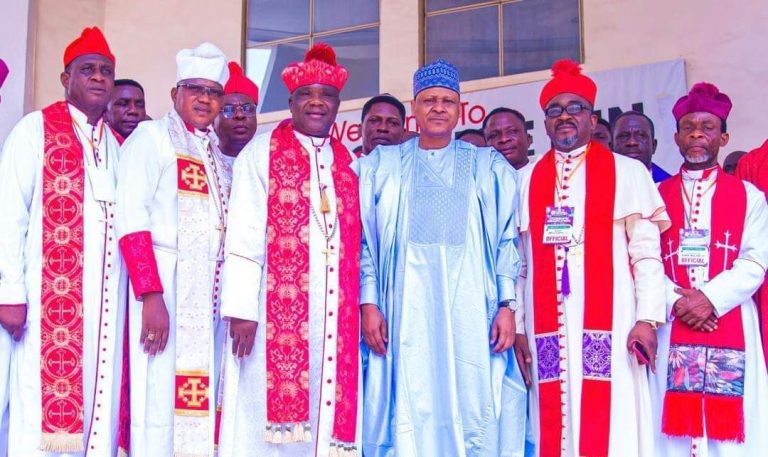
Photo: Minister of Information and National Orientation, Mohammed Idris (third on the right) the National President of the Charismatic Bishops Conference, Archbishop Leonard Bature Kawas and other bishops when the Minister declared open the 2024 Charismatic Bishops Conference in Abuja on Wednesday

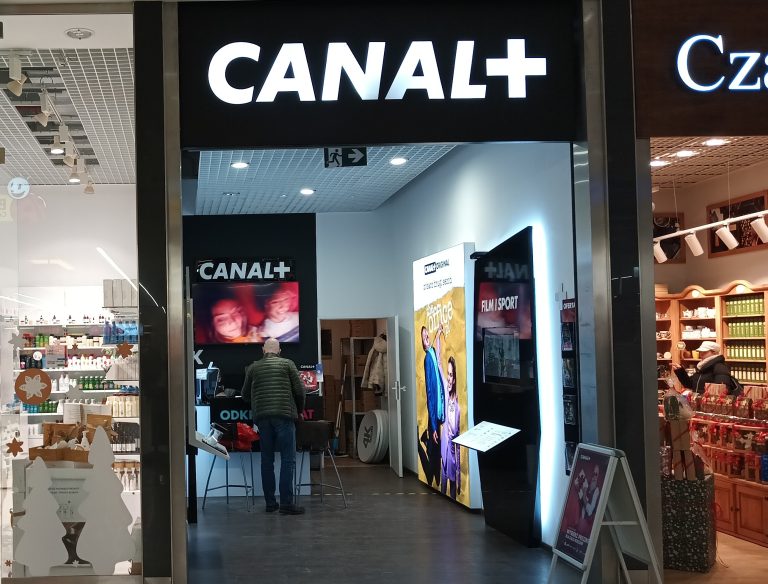
Canal+ intends to maintain MultiChoice’s brands after the takeover.

According to a report, Maxime Saada, Chair and CEO of Canal+, the French media company acquiring MultiChoice, has outlined the company’s plans post-takeover. Saada discussed the future of MultiChoice’s brands like DStv and Showmax, affirming that they will remain unchanged under Canal+’s ownership due to their significant brand value. He stressed the importance of preserving these strong brands unless there is a compelling reason to do otherwise.

“The reality is that we are up against companies like Netflix and Apple, which have a single, powerful brand. However, if you ask me today what I would do, I would definitely not alter the brands. They are highly valued assets,” Saada stated.

The report also indicates that the MultiChoice board has endorsed Canal+’s acquisition bid. This endorsement was confirmed during a press briefing in Cape Town.

Earlier this month, MultiChoice and Canal+ issued a joint statement to shareholders, announcing Canal+’s formal offer to acquire the remaining shares of the South African broadcasting company at R125 per share, marking the next step in the regulatory process overseen by the Takeover Regulation Panel (TRP).

Saada additionally highlighted key distinctions between Canal+ and MultiChoice, underscoring Canal+’s focus on content distribution compared to MultiChoice’s diversification strategy. While Canal+ prioritizes its core business to drive profits, MultiChoice has expanded into sectors such as home security, fintech, insurance, and betting.