

Home Blog Page 210

Nigerians left in shock as CBN, FG clamp down on crypto market

A growing number of Nigerian residents are raising concerns following clampdown on crypto assets via the financial industry


Following the classification of cryptocurrency trading as a national security issue by Nigeria’s National Security Adviser (NSA), at least four fintech startups operating in the country—Opay, Moniepoint, Paga, and Palmpay—will block the accounts of customers engaging in cryptocurrency transactions and report those transactions to law enforcement agencies.


Nigerian fintechs close shop on crypto industry


The Central Bank of Nigeria (CBN) barred prominent fintech companies, including Kuda, Opay, PalmPay, and Moniepoint, from accepting new clients last week.


The apex bank’s action was related to a continuous assessment of the fintech companies’ Know-Your-Customer procedures. These companies have been under investigation in recent months due to worries about money laundering and financing of terrorism.


The African most populated country comes in second for Bitcoin interest globally, even though the FG had forbidden banks from providing services to cryptocurrency customers. The African country, which has long struggled with high inflation, has held the crypto sector party responsible for the recent naira’s depreciation.


Consequently, a court order had been obtained by the Economic and Financial Crimes Commission (EFCC) to freeze at least 1,146 bank accounts belonging to different people and businesses that were allegedly engaged in illicit foreign exchange dealings.


OPay warned in a notification on Friday that it would impose severe penalties on users who disobey its policies, which are in line with the CBN’s position on cryptocurrency trading.


“Please be aware that OPay forbids the trade of any virtual money, including cryptocurrencies, under the instruction issued by the CBN. Any account that engages in these kinds of activities will be closed, and regulatory authorities will receive access to client information.” the fintech firm said.

This looks like a contradiction from the CBN’s previous stance. It had earlier instructed financial institutions to assist with account opening, offer certain settlement services, and serve as middlemen for businesses that transact in cryptocurrency assets in a circular that was published late last year.


Conflicting signals

A two-year restriction on crypto transactions was lifted by the CBN last year, and discussions regarding cryptocurrency licenses were underway between the Securities and Exchange Commission (SEC) and at least three cryptocurrency exchanges.


CBN had previously refuted a report claiming that it had issued an order mandating that all banks and financial institutions identify people or organizations transacting with cryptocurrency exchanges and make sure that those accounts are placed on “Post No Debit” instructions, which are orders from banks or other financial institutions to limit specific transactions on a customer’s account, for six months.


Market leaders see this move as counterproductive as most P2P transactions occur in opaque channels. Most P2P transactions, according to Ray Youssef, CEO of NoOnes, take place on WhatsApp, Telegram, coffee shops, and public spaces rather than on Binance or any other platform.


“On Binance P2P, NoOnes, or any of these other platforms, the majority of peer-to-peer activity does not occur. They take place in coffee shops, on the streets, on Telegram and WhatsApp, and everywhere else.

” Most peer-to-peer communication takes place there. And $60 billion, if I may estimate, passing through the centralized exchanges. Because Nigerians are so resourceful and can find uses for things that weren’t necessarily intended for them, I believe that the majority of that is a peer-to-peer volume that they are also sort of hiding,” he continued.

The FG had previously accused Binance of encouraging currency speculation that caused the naira to plummet in value. It then invited two of Binance’s executives to the nation, whereupon they were detained and one of them managed to flee.


Nigeria has the largest crypto economy in Africa in terms of trade volume, and many of its people use crypto assets amid its very young and vibrant population


However, the newly appointed Director-General of SEC has garnered optimism and confidence from Nigeria’s blockchain community. The pro-crypto history of the new SEC Chair is considered as an additional benefit for the regional crypto sector.


Emomotimi Agama, a former managing director of the Nigerian Capital Market Institute (NCMI), has been named by Nigerian President Bola Tinubu as the new chair of the SEC.j
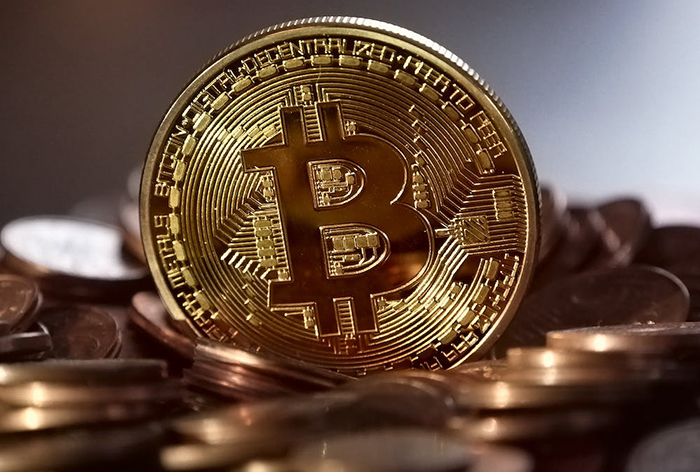

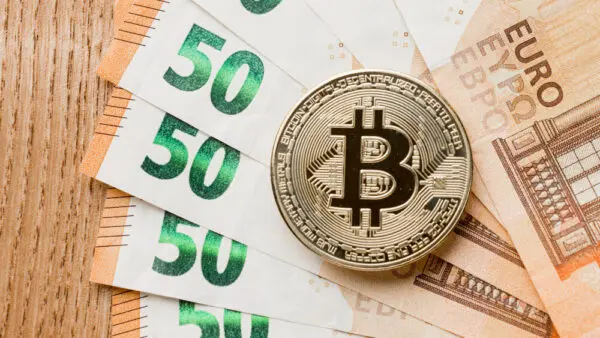
Bitcoin breaks above 63K gain as crypto market turns green  

The crypto market turned green as Bitcoin rebounded strongly on Saturday morning sparking hopes that the worst of the meltdown might be over


BTC surged almost 5% to briefly above $63,000 today’s early trade following a cooler-than-expected U.S. April jobs report that eased concerns about higher interest rates. At press time bitcoin was changing hands at $63,100, up 6% with a market valuation of $1.24 trillion


Arthur Hayes, former CEO of BitMEX, stated that the pioneer crypto asset has probably bottomed out at this week’s low of $56K. However, he cautioned investors not to expect a quick return to the March highs, but rather a gradual increase over the next several months as markets moderate.


“Did bitcoin hit a local low […] earlier this week,” Hayes responded. “Yes,” was his response. “I expect prices to bottom, chop, and begin a slow grind higher.”


He anticipated “a range-bound price action between $60,000 and $70,000 until August.”


In the same time frame, ether recovered the $3,100 mark and saw a 5% increase, while the two largest altcoins, dogecoin and Shiba Inu, saw about 10% increases. In response to the most recent surge in the price of bitcoin, traders anticipated that higher levels would hold as support, making the week’s plunge to two-month lows appear to be an involuntary reaction.


According to the government’s Nonfarm Payrolls data, the U.S. economy added 175,000 jobs in April, fewer below the expert expectation of 245,000 and the 315,000 jobs gained the month before. Additionally, the data revealed that the U.S jobless rate increased somewhat from 3.8% in March to 3.9%, thus elevating the appetite for risk  CME FedWatch data highlighted market participants projected a 68% chance of at least one rate cut by September after the announcement, up from 57% a week earlier.


For the first time, Grayscale Investments have seen net positive inflows for the Grayscale Bitcoin Trust (GBTC). This follows almost four months of nonstop withdrawals following its January conversion to a Bitcoin exchange-traded fund (ETF).


According to Farside’s early data, Grayscale’s GBTC had inflows of $63 million on May 3 after outflows of roughly $17.5 billion since the introduction of the 11 spot Bitcoin ETFs on January 11.


Franklin Templeton’s Bitcoin ETF (EZBC), among the other funds tracked thus far, experienced its largest-ever inflow of $60.9 million.


Bitwise Bitcoin Fund (BITB) ranked second with $102.6 million, followed by Invesco Galaxy Bitcoin ETF (BTCO) with $33.2 million. The day’s top inflows were driven by the Fidelity Wise Origin Bitcoin Fund.


Google faces scrutiny over ads as US trial nears wrap-up 

Google is facing scrutiny over advertising practices amid an antitrust trial by a United States court.


Judge Amit Mehta presided over the final stages of a US antitrust trial concerning Alphabet Inc., parent company of Google, casting a spotlight on the tech giant’s advertising practices.


Over two days of closing arguments, Mehta posed questions to both sides, providing little indication of his eventual ruling.


At the heart of the trial is the allegation that Google has unlawfully maintained a monopoly in online search and advertising, particularly through exclusive multibillion-dollar agreements with companies like Apple Inc. for default search engine placement, according to Bloomberg who reported the news first.


The trial also addressed concerns about Google’s dominance in the advertising sector, with the government arguing that this dominance has allowed the company to raise prices on advertisers unchecked.


News continues after this ad


The proceedings mark the culmination of a case that began six months prior and represents the first antitrust trial involving a US technology company in over two decades. Mehta is expected to deliver a verdict later this year, which could potentially require Google to restructure its business operations.


What to know

In response to the allegations, Google defended its practices, asserting that search ads are just one of many avenues available to advertisers.


However, Justice Department lawyer David Dahlquist contended that Google’s search ads are essential for reaching consumers and that the company has exploited its dominance to increase prices and limit transparency for advertisers.


News continues after this ad


The trial also delved into Google’s document retention policies, with Mehta expressing concern over the company’s practices. Specifically, Google’s “Communicate with Care” program, which automatically deletes chat messages after 24 hours, came under scrutiny.


The Justice Department argued that this policy constituted a deliberate effort to withhold evidence, while Google maintained that the chats were deleted as part of routine practices.


Ultimately, the outcome of the trial could have far-reaching implications not only for Google but also for the broader tech industry. As Mehta deliberates on the case, the tech giant faces scrutiny over its advertising practices and approach to document retention, with potential sanctions looming depending on the judge’s ruling.

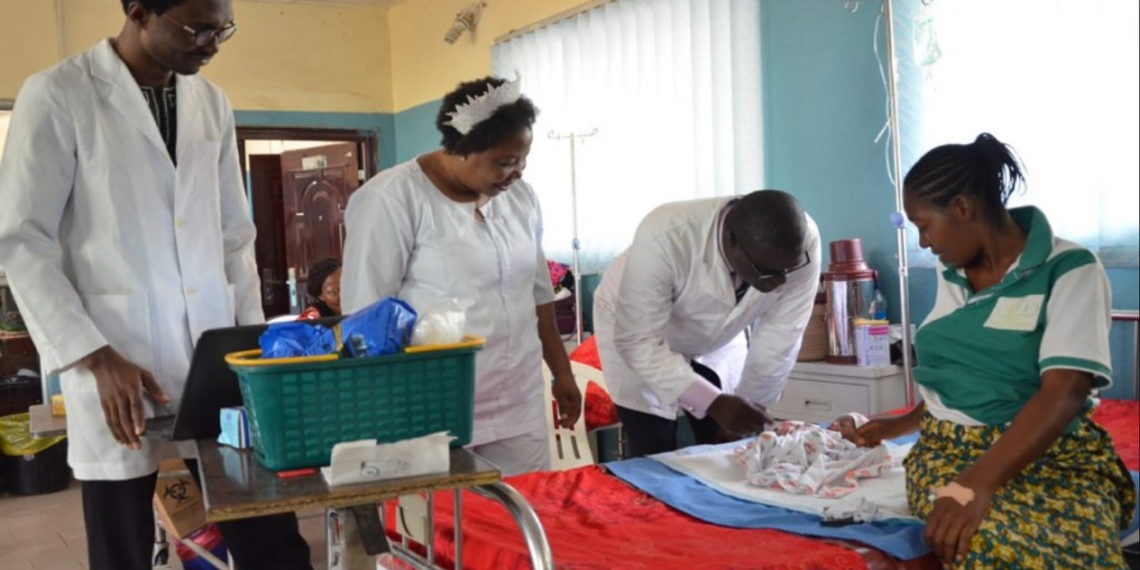
Top 5 African countries with best healthcare systems 2024

0

Enhancing healthcare systems significantly boosts both life quality and expectancy.

By facilitating timely detection and treatment of health issues, access to healthcare services safeguards individuals while improving community resilience and curbing disease transmission.


While Africa has faced challenges in its healthcare sector, varying levels of healthcare provision exist across its nations.


In this piece, we shall examine African countries that excel in delivering quality healthcare services.


Methodology

This compilation draws from Numbeo, a research organization specialising in quality-of-life data, specifically through Healthcare Index.


This index gauges overall healthcare systems quality, encompassing factors such as staff proficiency, equipment availability, and satisfaction rates across seven components. Calculations are conducted using Java programming language.


Nigeria

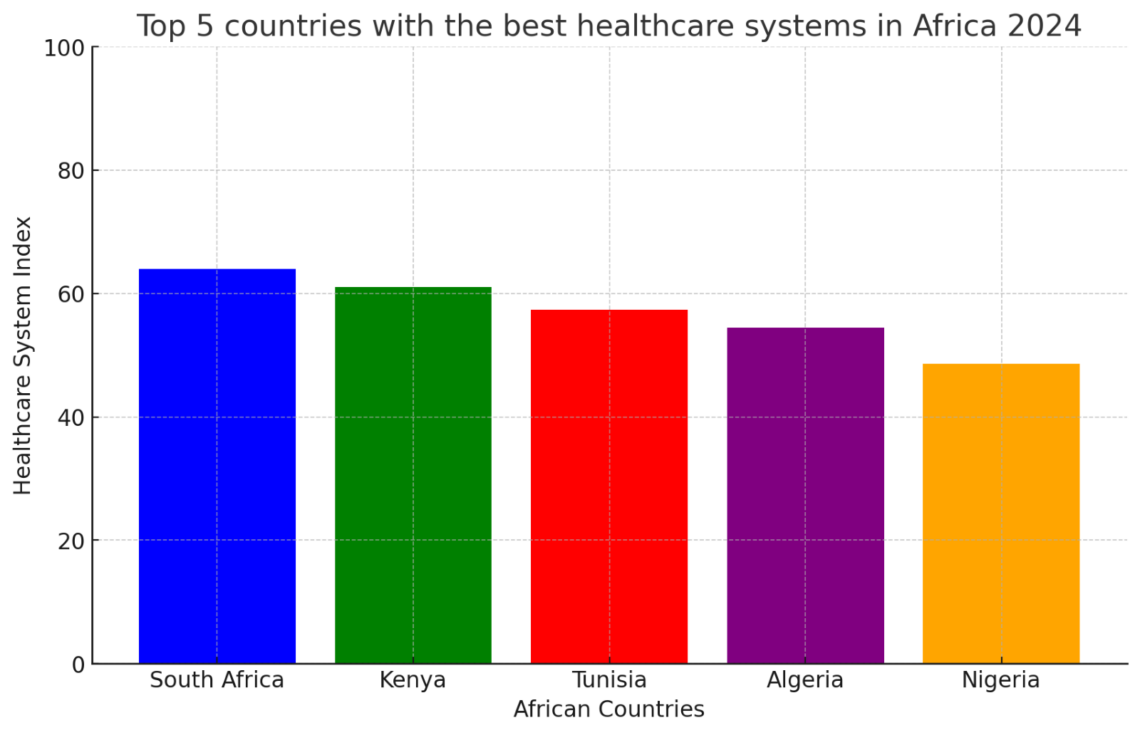
Healthcare system index: 48.6

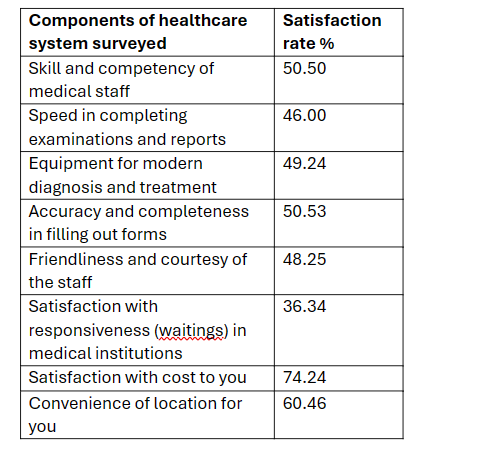
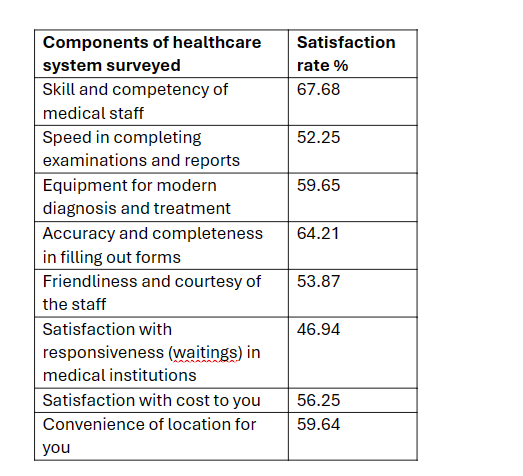
Nigeria stands in fifth place with a healthcare system index of 48.6. Below are the satisfaction rates of residents against key components of the healthcare system.


Algeria

Healthcare system index: 54.42

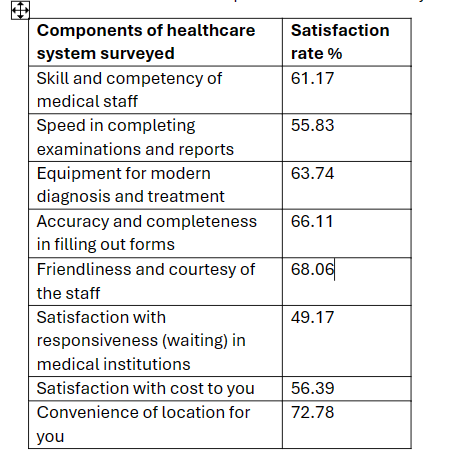
Algeria’s healthcare system index stands at 54.42, reflecting the satisfaction levels across major aspects of healthcare services among its residents.


Tunisia

Healthcare system index: 57.41

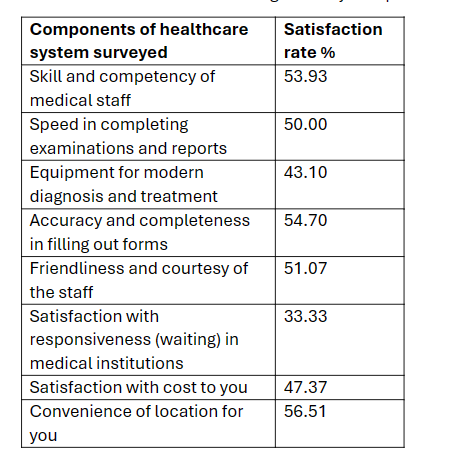
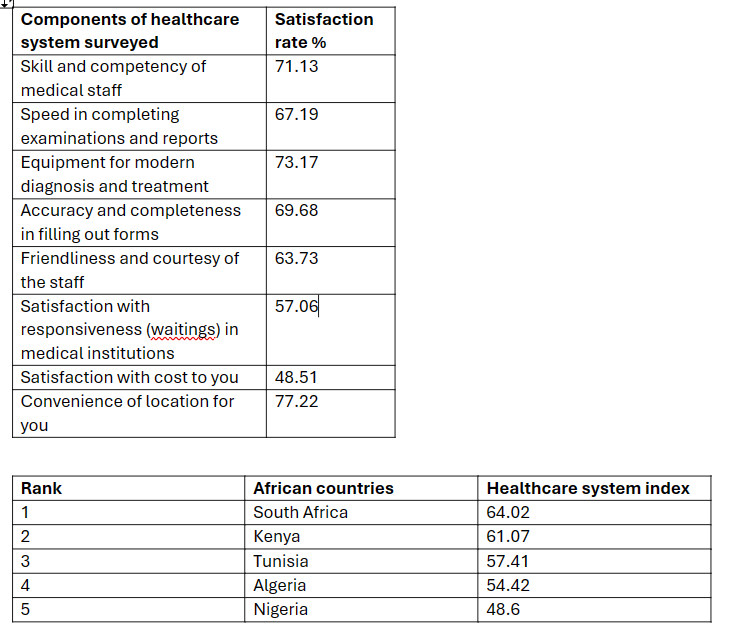
Tunisia, with a healthcare system index of 57.41, holds the third position. Here’s how residents rated the country’s healthcare system.


Kenya

Healthcare system index: 61.07

In second place, Kenya boasts a healthcare system index of 61.07. Residents in Kenya have evaluated various aspects of its healthcare system based on satisfaction rates.


South Africa

Healthcare system index: 64.02

South Africa ranks as the country with the best healthcare system in Africa based on this index.

Currency outside banks surges as Nigerians keep 94% as cash in hand – March 2024 report

Nigerians have increased their hoarding of cash, with as much as 94% of the currency in circulation held outside banks by March 2024.


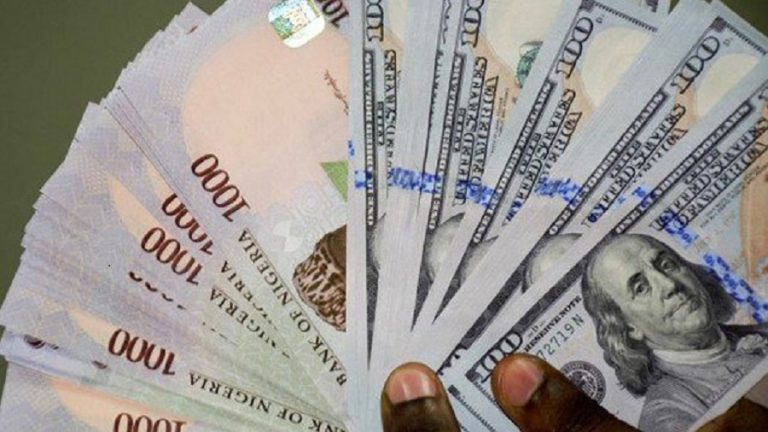
An analysis of the latest money and credit statistics data from the Central Bank of Nigeria (CBN) shows that while currency in circulation was N3.87 trillion, currency outside banks was N3.63 trillion.


Also, the percentage of cash hoarding has been on the rise. January 2024 saw 90% of the currency in circulation being held outside the banking system, climbing to 92% in February, and reaching 94% by March.


This pattern reflects a growing lack of confidence in the banking system or an increased preference for cash transactions, possibly driven by economic uncertainty or other socio-economic factors.


This alarming trend signals a severe liquidity crunch, posing significant risks to the nation’s financial stability and economic growth.

Rise in currency circulation

Data from the first quarter of 2024 shows an alarming rise in the amount of currency in circulation.


In January 2023, the currency in circulation stood at N1.39 trillion, which more than doubled by January 2024 to reach ₦3.65 trillion.


This trend continued with February recording a cash circulation of N982.1 billion in 2023 and a significant jump to N3.69 trillion in 2024.


By March, the figures had escalated further from N1.68 trillion in 2023 to N3.87 trillion in 2024. This March figures show an increase of 130%, suggesting that the CBN has released a substantial amount of cash to address the scarcity created by its earlier currency redesign policy.


Currency outside banks

The currency held outside banks has similarly surged. In January 2023, N792.18 billion was reported outside the banking system, which increased to N3.28 trillion by January 2024. February saw an increase from N843.31 billion in 2023 to N3.41 trillion in 2024.


By March, the amount had grown from N1.45 trillion in 2023 to a staggering N3.63 trillion in 2024, showing an increase of 150%. This increase further means that Nigerians are hoarding cash faster than the CBN has released enough to circulate.


Reason and economic implications

The cash hoarding behavior observed in 2024 can be linked to the extensive cash scarcity experienced by Nigerians in 2023. This scarcity was largely a result of the CBN’s flawed implementation of a naira redesign policy, which was part of a broader initiative to transition towards a cashless economy and combat issues like vote-buying and financial crimes.

In 2023, many Nigerians experienced difficulties accessing cash, leading to widespread economic disruption and a loss of trust in the banking system. This loss of trust, combined with the fear that old naira notes would lose their legal tender status, led people to start hoarding cash.

As a response to the acute cash shortages, people’s reluctance to deposit their money in banks grew, fostering a habit of cash hoarding.

This trend continued into 2024, evidenced by the staggering 94% of currency in circulation being kept outside of banks by March. This behavior reflects an enduring skepticism towards the banking system and the economic policies of the government.

The hoarding of such large amounts of cash outside the formal banking sector poses significant challenges.

It restricts the effective circulation of money, impacting liquidity and reducing the efficacy of monetary policy in regulating the economy.

This situation could lead to higher transaction costs and reduced availability of credit, further slowing economic activity.

How I redefined ‘area boy’ as a kid – Chess master, Tunde Onakoya

0

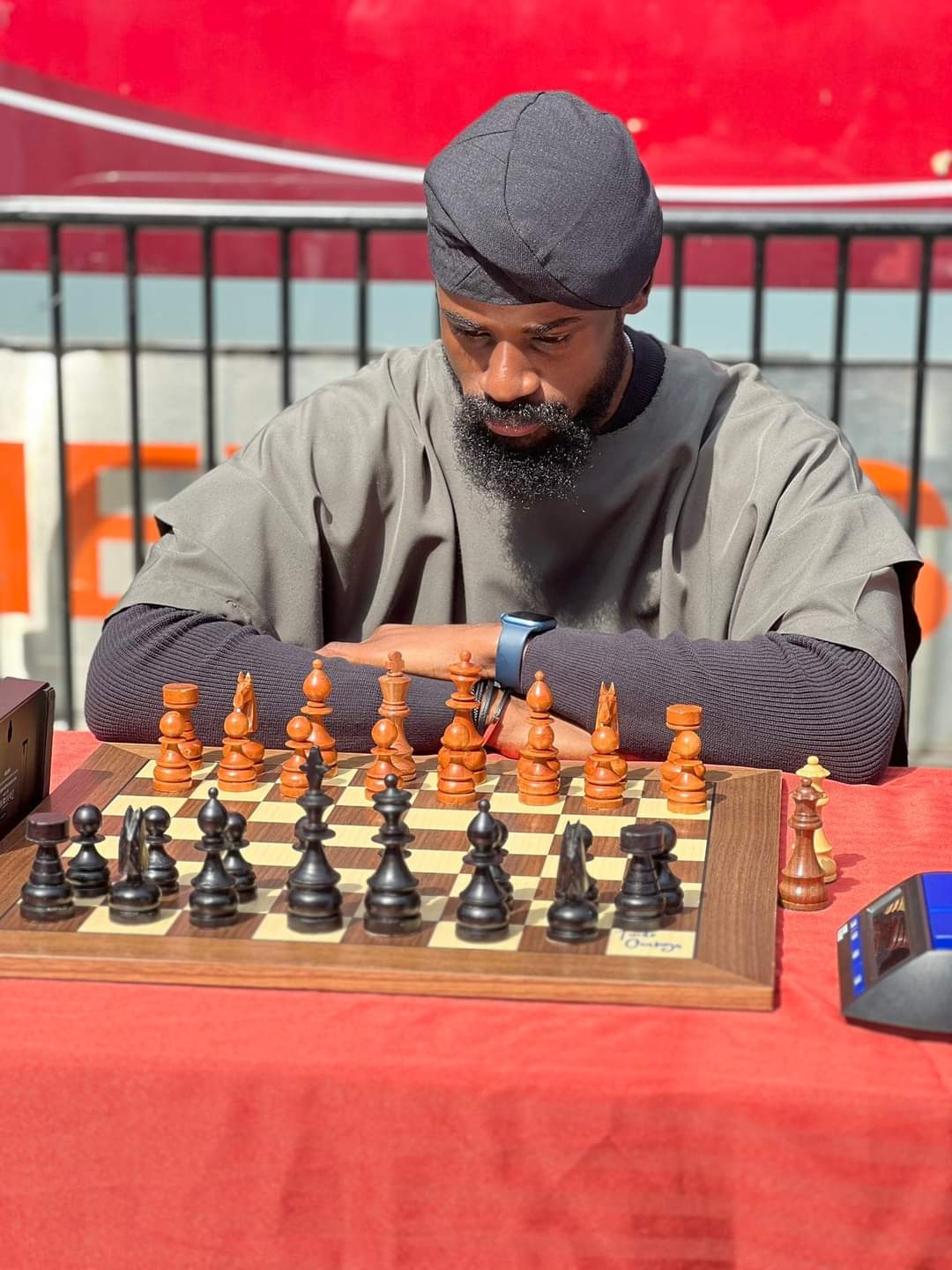
Popular chess master, Tunde Onakoya, said he redefined the word ‘area boy’, believed to be a derogatory term used to refer to a thug or lout.

Speaking at a TEDx Talks event held at the Nile University of Nigeria in 2023, a clip of which went viral on Wednesday, Onakoya said he was also an area boy, and that’s why he is wearing an indigenous cap on a suit.


He said, “I am also an area boy; I mean, for a very long time, the term ‘area boy’ has been known to be a derogatory word that is being used to refer to the thugs, hoodlums and criminals in Lagos. But we’re able to redefine what that meant, and a lot of us became area boys for the sake of some people, and I’ll tell you that story.


“So, some 16 years ago, I was at home, I had just completed my primary school education, and my mom called me and told me that I would have to stop school because they just couldn’t afford tuition anymore, and I had to stay at home so my brother could go to school and that was going to be the end of education for me.


“I wasn’t a very brilliant kid in primary school; I mean, I could not even speak good English at the end of my primary school because the school I went to was a ‘Pako’ one where they taught in Yoruba and we had to sit on the floor. So, I was really struggling, and my teachers would call me ‘olodo’. So it was the easy way out, okay, so no school, so I dropped out of school, and I was at home for two years after my primary school education.”


Onakoya said he was learning how to fix refrigerators as an apprentice, and something happened.


He added, “There was this barbing salon just on the other side of our street, and I would go there to play video games at the end of the day. Then, on one of those days, the barber just brought out a small plastic chess set, and I’d never seen a chessboard before.


“I was a very curious kid, so I asked what this was, and he said it was a chess set. I’d never seen one before, but I was fascinated by the way the pieces were carved, so I told him to teach me because I wanted to learn how to play because I would see him just sit down and talk to himself all right and it would say crazy stuff like well if you play this game you’ll be very intelligent, you’ll be very smart, and I told him to please teach me, and he said no I was too young and he didn’t teach me. So, I was just watching him play with his friends, and with time, because I was a very curious kid, I was able to pick up the rules of the game.


“I learned how to play chess by watching. At the time, it didn’t occur to me that I had made the most important decision of my life, but then it became clear that something had happened, and I went back to school; my mom had to make a sacrifice for me, and I returned.


“Fortunately, the secondary school I attended had chess as a subject, I had never seen that before. We learned chess as a subject and we wrote exams because I think the owner of the school then was the United Nations Ambassador to Kenya and he played competitively when he was younger and that was how I found the gift of chess.


“I kept playing, and I got really good, and my coach discovered that I was a really good, gifted child. I remember my coach telling me that I was gifted, and I believed it. That was the first thing that I learned as a kid who grew up in poverty in the slums of Ikorodu in Lagos. I found an identity, and it wasn’t just any identity; it was an intellectual identity. I began playing professionally, and I was ranked one of the top players in Nigeria, and I finished school in 2015.


“I won a lot of tournaments. I won the Trevor and Chess Challenge, the national friends of chess. I was a really strong player who wanted to become a grand master. I started teaching chess to private schools just like I’d learned, and I’d never thought of it before. But in that period when I thought of teaching chess to children, it made me realize that chess was an important educational resource for children who struggled with their self-esteem and everything else.”


Onakoya added that he thought about using the game to bridge the gap between the rich and the poor kids and decided to take chess boards to the slum to engage the boys believed to be area boys.


“I had challenges with teaching the boys who had never been to school, but believe me, they learnt at an incredible pace. What would take a master a year to learn was learnt by them in a month.


“They beat the other kids from rich schools and won trophies at national and international levels. They even got the toast of notable people to play with them, including the former Manchester United captain, Patrice Evra,” he said.


Onakoya set a new Guinness World Record for the longest marathon chess on Saturday, April 20, 2024.

NGX starts May on bullish note as investors gain N300 billion

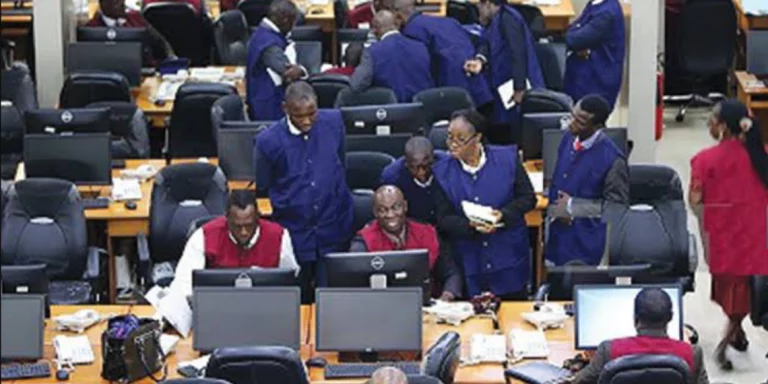
The NGX kicked off the month of May on a bullish note with the All-Share Index appreciating by 0.55%, gaining 537.15 points to close at 98,762.78 points.


Investors gained N300 billion as market capitalization closed at N55.85 trillion, up from N55.55 trillion recorded on April 30th, 2024.


Coming off a month where the market declined by 6.06% and equities lost N3.57 trillion in market capitalization, the positive sentiment in today’s market can be seen as a breath of fresh air.


The trend in today’s market is linked to the overall positive performance of banking stocks, with GTCO gaining 7.03%, FBNH adding 1.10%, and Access Holding gaining 3.86%.


The leading gainers today were PRESCO and Flour Mills of Nigeria, which gained 10%, followed by Sterling Holdco and Dangote Sugar which gained 9.98% and 9.90% respectively.


Recommended reading: Shareholders approve NGX’s proposed N10 billion capital raise

Market Indices

NGX All Share Index: 98762.78 points

Previous ASI: 98,225.63 points

% Day Change: +0.55%

Day’s Lowest: 98,224.53 points

Day’s Highest: 98,763.02 points

% YTD: +32.08%

Market Cap: N55.85 trillion

Volume Traded: 665.18 million units

Value: N5.54 billion

Deals: 8,440

Top Gainers

PRESCO: +10.00% to close at N229.90

FLOURMILL: +10.00% to close at N33.55

STERLINGNG: +9.98% to close at N4.74

DANGSUGAR: +9.90% to close at N42.75

FIDSON: +9.76% to close at N15.75

JAIZBANK: +9.74% to close at N2.14

Top Losers

NASCON: -9.99% to close at N47.30

UPL: -9.29% to close at N2.05

OMATEK: -9.21% to close at N0.69

NEIMETH: -9.09% to close at N1.80

CUTIX: -7.74% to close at N2.86

CHAMS: -7.45% to close at N1.74

Top Traded Stocks

In trading volume, ABBEYBDS led with 362.8 million units, followed by ACCESSCORP (+3.86%) with 54.47 million units, Veritas Capital Insurance (+6.78%) with 38.75 million units, Nigerian Breweries (+0.59%) with 31.21 million units, and TRANSCORP (+4.29%) with 26.62 million units.


In terms of value, Access Holdings topped with N954.62 million, followed by ABBEYBDS with N907.05 million, Nigerian Breweries with N802.4 million, Zenith Bank with N518.1 million, and TRANSCORP with N377.4 million.


SWOOT and FUGAZ Update

Stocks worth over one trillion (SWOOT) recorded a slightly positive trading day, as GTCO (+7.03%) and ZENITHBANK (+2.02%) posted gains. However, other members of the category such as BUA Cement, BUA Foods, Dangote Cement, Seplat Energy, MTN Nigeria, Airtel Africa, Transcorp Power, and Geregu Power recorded no price changes.


Members of FUGAZ (First Bank, UBA, GTB, Access and Zenith) category posted a positive showing as FBN Holdings, UBA, and Access Holdings posted 1.10%, 4.6%, and 3.86% gains respectively.


Follow us for Breaking News and Market Intelligence.

Cartels and cabals working against stable electricity in Nigeria — Power Minister

0

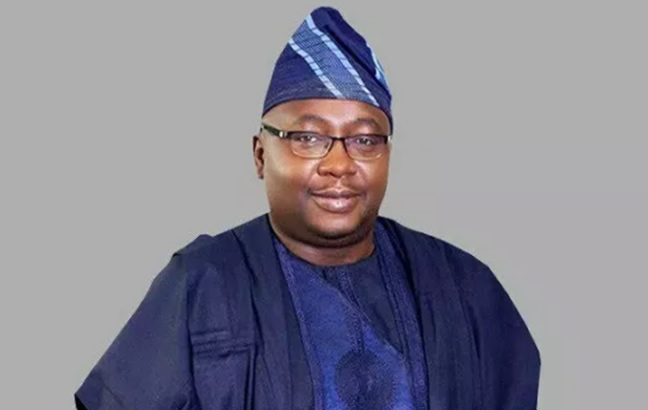
The Minister of Power, Adebayo Adelabu, has claimed cartels and cabals are working against the nation to ensure it does not have a stable power supply.


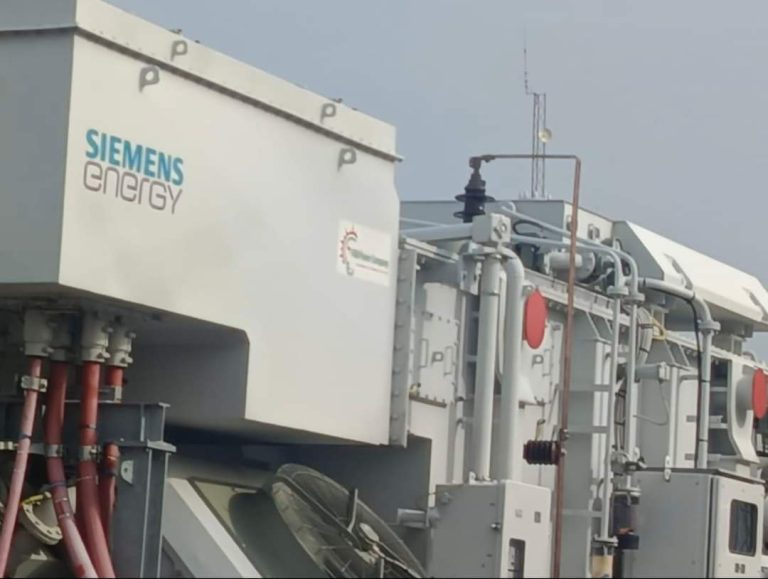
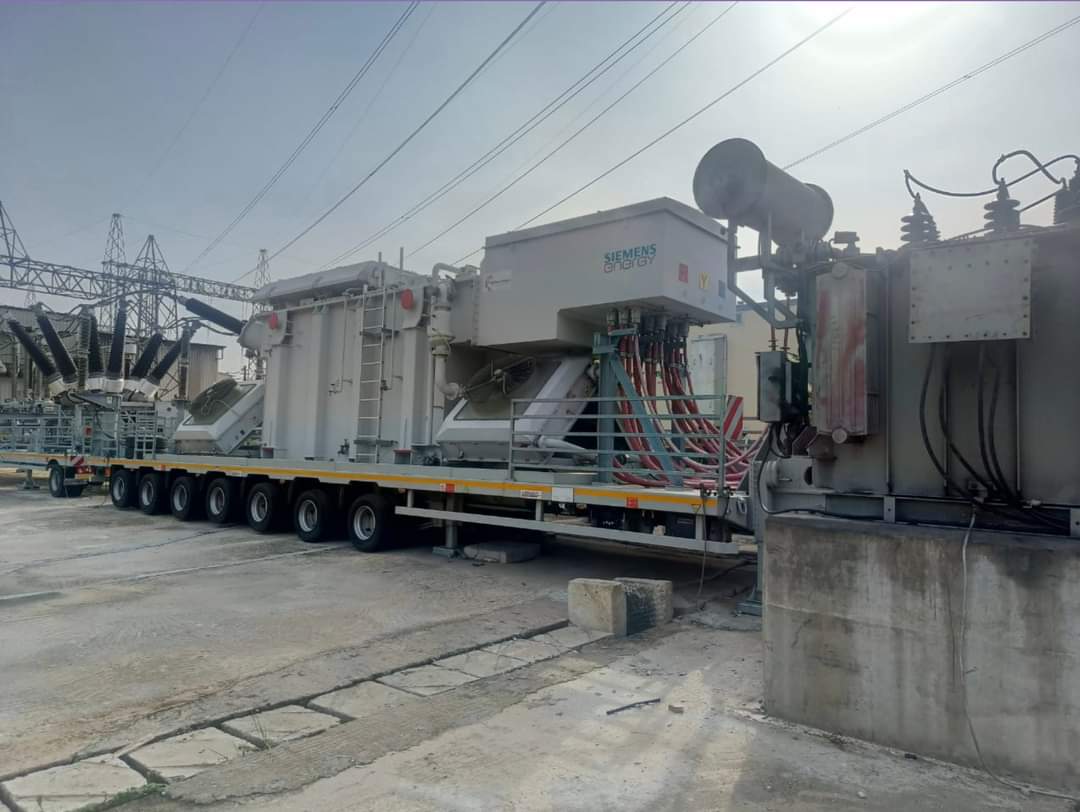
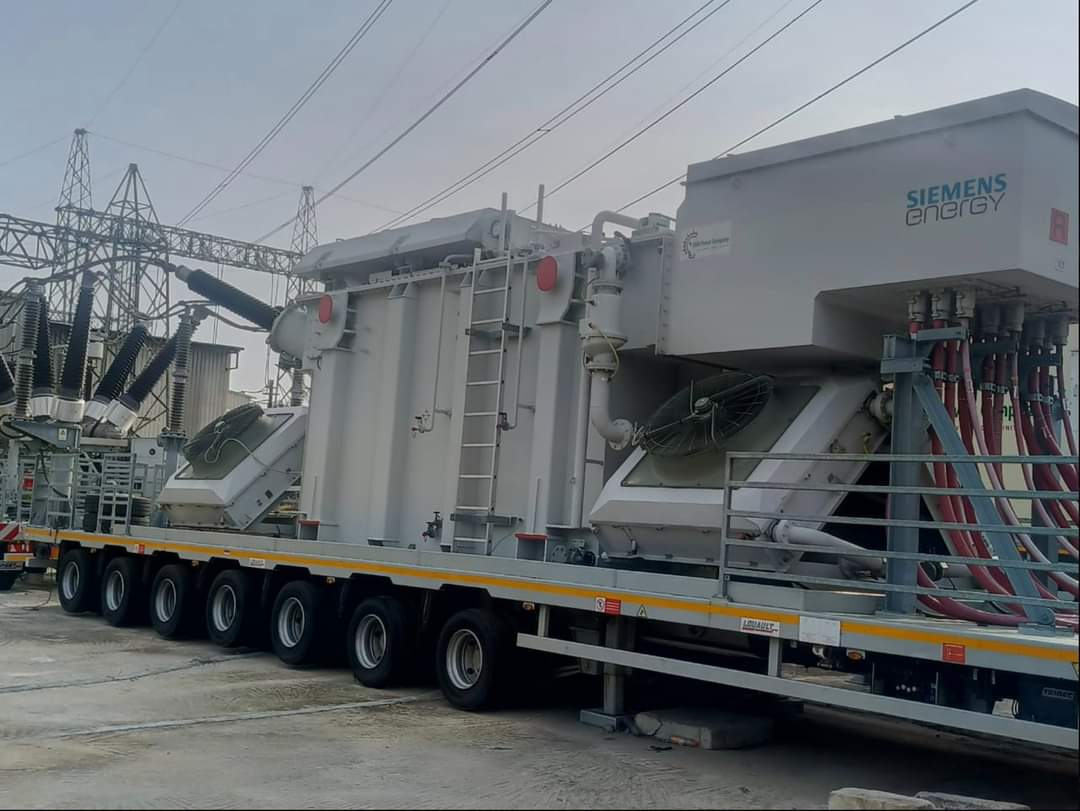
Adelabu disclosed this on Thursday when he was in Ajah, Lagos State to launch a 63MVA, 132/33kV mobile substation installed under Phase 1 of the Presidential Power Initiative by the FGN Power Company in collaboration with Siemens Energy.


Speaking on the cartels preventing power growth, Adelabu asked them to stop being shortsighted, saying there are enough opportunities in the sector.


“I know is that there are cartels and there are cabals in this sector who think their business interest will be negatively affected if we have stable electricity. But they are just being myopic, they’re being shortsighted. There are lots of opportunities available in the sector that will compensate for whatever business loss that they think they are experiencing in their current business. So, it is a win-win.


“I don’t think stabilising the power sector will render anybody jobless or affect the business interest of anybody. It is a matter of you determining where to be because the business moves. The business world is dynamic. A business that is profitable today may not be profitable tomorrow.


“When you see the trend of business moving, you just click into the value chain and it is so huge for everybody such that if local investors are not interested, there are foreign investors interested in this sector,” Adelabu added.


Asked if the cabals are the ones importing generators, he replied: “I did not mention anybody’s name specifically. But whoever knows he belongs to the cartel or cabal should have a rethink and join us in this our transformation journey”.


The ministers maintained that “we are only scratching the surface in this country given the potentials that we have in our human and natural resources,” saying if “we add reliable electricity to it, the sky is our limit.”


He spoke further, “We’ve had over 40 ministers in the past, we are still at this same point. What is that thing that is not allowing us to achieve our plans for the sector? These are the fundamental issues the President Bola Tinubu administration is trying to address. When you are addressing it, of course, there will be resistance.


“There will be frustration because there are some people that do not want this sector to work because of their own personal selfish interest. But we are resolute in this our transformation journey, and we will not be intimidated. We will not be cowed into obscurity.


“Their resistance and abuses are like a tonic to me. The tonic that will incentivise us to do more”.


Earlier, the Managing Director of the FGN, Kenny Anuwe, said the event represented a vital addition to the nation’s infrastructure to enhance transmission wheeling capacity and reinforce the government’s commitment to providing better electricity access for all Nigerians.


“The 63MVA, 132/33kV Mobile Substation plays a critical role in upgrading transmission wheeling capacity and facilitating quick deployment to meet Nigeria’s growing energy demands.


“10 of them were procured and three have been installed while two will be commissioned by next week,” Anuwe said.

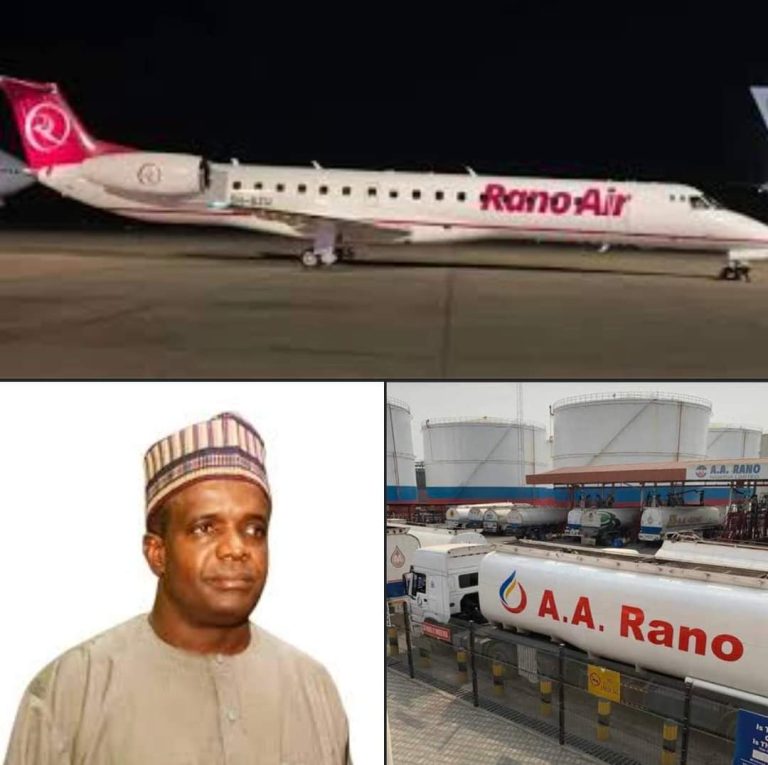
Rano: Ice block seller who became billionaire, owns 120 filling stations, 600 trucks, 60m litre tank farm

0

Rano: Ice block seller who became billionaire, owns 120 filling stations, 600 trucks, 60m litre tank farm


Alhaji Auwalu Abdullahi Rano, popularly known as A.A Rano, transformed from a humble boy from Kano Village into a billionaire magnate, overseeing a conglomerate that includes 200 filling stations across Nigeria.


Born into an average family in Lausu, Kano State, Rano started small, with an ice block and groundnut oil business, including other local items.


Rano has gone into building a multi-billion naira enterprise spanning various sectors of Nigeria’s economy.


Today, Rano owns AA Rano oil & Gas industry in Nigeria with 56 ML Tank farm in Lagos, with 120 retail outlet/ fillng stations across Nigeria and over 600 trucks & LPG terminals as well as acquired vessel (M.T LAUSAU).


His ventures include RanoGaz, a state-of-the-art Liquified Petroleum Gas (LPG) terminal, a rice milling company, Rano Lubricant, Rano Air, Lausu Marine and Logistics, AA Rano Terminal, and AA Rano Road Haulage.

POWER MINISTER INAUGURATES SIEMENS MOBILE SUBSTATIONS IN LAGOS & KEBBI

0

More mobile substations acquired under the Federal Government-Government Siemens deal are being installed in parts of the country to boost the wheeling capacity of the transmission network.

Minister of Power, Adebayo Adelabu who inaugurates the mobile substations in Lagos and Birnin Kebbi, says the infrastructure stands as a beacon of hope for businesses and households towards achieving uninterrupted power supply.

The two Substations installed have a total wheeling capacity of 123 megawatts which is expected to enhance electricity supply.

Minister of Power, Adebayo Adelabu describes the project as a testament to the renewed hope agenda of President Bola Tinubu in accelerating the delivery of the Siemens project thereby transforming the power sector.

The power minister implores Nigerians to safeguard the infrastructure against vandalization as the success of government interventions in the sector hinged on collective responsibility.