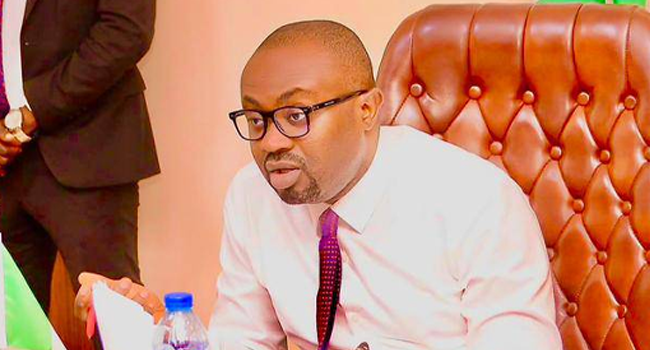
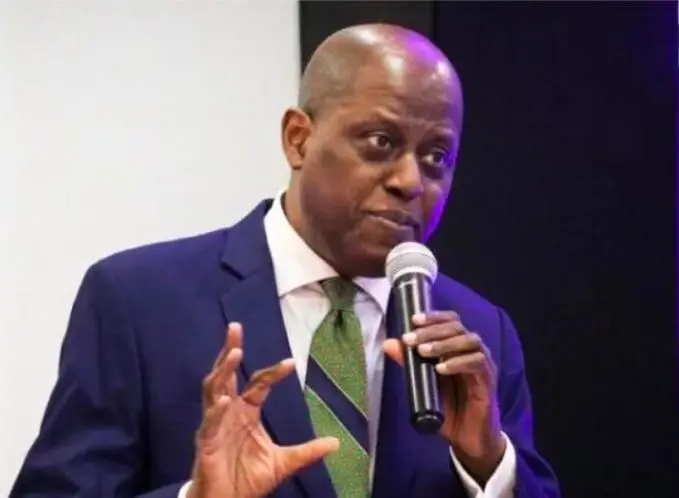
Beauty Queen “Beauty Tukura” indeed looks good in just about anything. But when it comes to posing for a photoshoot, the reality star proves time and again that you can be comfortable, fun, or even tell a beautiful story without uttering words.
Hike in movie ticket prices drives Nigerian cinema’s N2.25B revenue in Q1 2024
The Nigerian cinema industry recorded a revenue of N2.25 billion from ticket sales in the first quarter (Q1) of 2024, reflecting a significant surge compared to the previous year.
This data was revealed in the Nigerian Box Office Year Book for 2023, published by Filmone Entertainment, an independent film distribution and production company, on Monday, according to the News Agency of Nigeria.
The N2.25 billion revenue marks a substantial improvement over the N1.5 billion generated in the first quarter of 2023. This represents a 46% increase in box office revenues year-on-year.
Revenue increase can be tied in part to the increase in ticket prices, which have risen by 52% from an average of N2,479 in Q1 2023 to N3,765 in Q1 2024.
A breakdown
Despite the substantial increase in revenue, the total number of admissions at cinemas saw a slight decline.
The first quarter of 2024 recorded 596,609 admissions, compared to 620,477 admissions during the same period in 2023, indicating a 4% decrease.
This decline in admissions, despite higher ticket prices, suggests a negative correlation between ticket prices and the number of cinemagoers.
The report highlights that Nollywood films dominated the box office, accounting for 56% of the total revenue.
The highest-grossing film for the period was “A Tribe Called Judah,” which alone contributed 27% of the overall Q1 revenue. In contrast, Warner Bros.’ “Aquaman and the Lost Kingdom” accounted for 11% of the quarterly earnings.
In terms of new content, the Nigerian market saw the release of 40 new titles in the first quarter, excluding spillovers from previous periods. This influx of new films underscores the vibrancy and productivity of the local film industry.
What to know
The details provided in the report offer a comprehensive look at the dynamics of Nigeria’s cinema sector. The significant revenue growth, despite a decline in admissions, shows that ehe substantial increases in ticket prices have not deterred overall revenue growth but impacted the number of admissions. This indicates a level of price sensitivity among cinema-goers.
The dominance of Nollywood films, particularly “A Tribe Called Judah,” highlights the strong local preference for indigenous content, which continues to draw significant box office revenues.
The cinema industry’s ability to generate higher revenues in the face of reduced admissions reflects its resilience and the effectiveness of pricing strategies and marketing efforts.
More insight
Looking ahead, the continued performance of the cinema sector will depend on several factors, including the balance of ticket pricing, the quality and appeal of film releases, and broader economic conditions. The robust performance in Q1 2024 sets a positive tone for the rest of the year, suggesting that with strategic adjustments, the sector could continue to thrive despite the challenges posed by fluctuating admission numbers.
Actress Motilola Akinlami has accused her senior colleague, Kunle Afod, of obstructing her career in Nollywood by claiming he blocks her from getting roles.
In an Instagram post on Monday, she claimed that Kunle has consistently undermined her career by preventing producers from reaching out to her for roles in the industry. She also accused the actor’s wife of defaming her.
Her words: “I am boiling inside of me right now. I have kept this thing for over five years. This is the fifth year running. I beg you in the name of God. All the powers that be in this industry already know about this matter. Mr. Kunle Afod please leave me alone. Please leave me and my career. What have I done to you? They will call me for jobs you will say they should remove me if they want to use you.
“Yomi Olorunlaye called me for a job this evening and they said Afod will direct. And I said okay. Only for him to call me back that Afod said he cannot work with me. Afod what have I done? I have told you I no longer want to work with you. For all these years you said they should not call me for jobs any longer.
“When I was working with you, I knew how your wife was running from pillar to post defaming me on Instagram. Go and hold your wife. Leave me alone. You said Femi Adebayo should not come to my set, and he is no longer coming. This is like the tenth time I will be rejected for jobs.
“So many people have been asking me why they have not been seeing me in movies. It is because of Afod. If they call me, he will say they should not call me. The reason is that I no longer want to be friends with him. This was how they did to Junior Pope. They will first blacklist you. He has been waiting to see my RIP for the past five years, but God was with me. You are not God. You have been obstructing me on so many big jobs I ought to have been on,” she said.
The Nollywood biopic “Funmilayo Ransom Kuti” has made a debut of N32 million in its opening weekend following its release on Friday, May 17, 2024.
This was disclosed by the Nigerian Box Office (NBO) via the social media platform X on Monday, May 20, 2024.
According to data from the NBO, the biopic not only topped the weekend box office charts but also set a new record for the highest-grossing opening weekend for a biopic in Nigeria.
“Another huge opening for a Nollywood movie. That makes it 11 weekends out of 21 weekends in 2024 that a Nollywood movie has topped the box office. For context, last year had 14 weeks out of 52. 2022 was just 9 weeks out of 52.” https://x.com/NGAboxoffice/status/1792625846336815348
Directed by Bolanle Austen-Peters, one of Nigeria’s most powerful female personalities in the Nollywood industry, “Funmilayo Ransom Kuti” tells the compelling life story of the late Funmilayo Ransome-Kuti.
A renowned Nigerian educator, political reformer, women’s rights activist, and mother of Afrobeat legend Fela Anikulapo-Kuti, Funmilayo Ransome-Kuti’s legacy is celebrated in this cinematic portrayal.
The biopic stars Kehinde Bankole, the 2024 best actress winner at the recently concluded African Magic Viewers Choice Award event.
The film also features a stellar ensemble cast, including veteran actors Ajoke Silva, Adebayo Salami, Omowunmi Dada, Adunni Ade, Jide Kosoko, Dele Odule, Ibrahim Suleiman, Bikiya Graham-Douglas, Yewande Osamein, and Iyimide Ayo-Olumoko.
“Funmilayo Ransom Kuti” biopic explores significant phases of Ransome-Kuti’s life, including her education at Abeokuta Grammar School, her marriage to Israel Ransome-Kuti, and her revolutionary fight against colonialism and patriarchy. The film highlights her pivotal role in creating the Abeokuta Women’s Union, which was instrumental in advocating for women’s rights and challenging colonial governance.
What to know
The film was written by Tunde Babalola, and directed and produced by Bolanle Austen Peters alongside Timi Austen Peters, Yemi Idowu, Murital Ibrahim, Osanemo Fayemiwo and Deji Alli.
At the Premiere of Funmilayo Ransome Kuti, Governor Dapo Abiodun of Ogun, Babajide Sanwoolu of Lagos State, former Gov Donald Duke of Cross Rivers State, the Ransome Kuti Family, actors and crew of the award-winning film: Best Movie, Best Screenplay AFRIFF 2023 Best Screenplay, AMVCA 2024 were present.
Yeni and Femi Kuti, the children of Afrobeats legend Fela Kuti, feature in the film.
Yeni is best known today for founding Felabration and co-founding the New Afrika Shrine. But she was a singer and dancer with Fela’s Egypt 80 in the 1980s. She is also one of the hosts of TVC’s ‘Your View’.
Femi, on the other hand, started his band, Positive Force, establishing himself as an artist independent of his father’s legacy.
The Federal Government has said it would launch a state-of-the-art data centre capable of storing up to 1.4 petabytes of data before 29 May 2024.
According to a statement from the Interior Ministry, the Minister of interior, Dr. Olubunmi Tunji-Ojo made this announcement during a meeting with the delegation of the National Union of Nigerian Associations in Italy (NUNAI) led by its President, Chief Rowland Ndukuba at his office in Abuja on Monday.
He added that the data centre will house a comprehensive range of critical national information, including citizens’ bio-data.
Emphasising the importance of embracing technology and innovation, the Minister stressed that modern challenges require novel, cutting-edge technological solutions. He added that integrating advanced technology would enhance efficiency and accountability across national operations.
Establishment of passport offices
In response to the requests of NUNAl for intervention, collaboration, and the establishment of passport front offices, Dr. Tunji-Ojo assured that these requests would be carefully reviewed and that appropriate information would be communicated in due course.
“Furthermore, the Minister made it clear that the Federal Government would not condone illegal migration and that Nigerians attempting to emigrate through unlawful means will face the consequences of their actions.
“Dr. Tunji-Ojo also assured the NUNAI delegation that the well-being of Nigerians in Italy is a priority and that the Ministry of Interior will explore collaboration with the Ministry of Foreign Affairs to support stranded Nigerians abroad,” the statement read.
Earlier, the President of NUNAI, Chief Rowland Ndukuba, expressed gratitude for the Ministry’s efforts in addressing the challenges faced by Nigerians in Italy. He urged the Minister and the Ministry to continue collaborative efforts to assist stranded Nigerians in Italy.
More insights on data centre
Nigeria has seen a surge in investments in data centres in recent times, mostly from private organizations. The government planning to set up its own data centre will further expand the horizon and boost the efforts to ensure all Nigerian data are hosted locally.
Companies like Rack Centre, MDXi, Africa Data Centre (ADC), and Airtel Africa have recently committed millions of dollars to build data centres in Nigeria.
It is important to note that building a data centre is a cost-intensive project. It is unclear yet how the government will fund this project even as it plans to launch it in less than two weeks.
UK calls out Nigerian government over unpaid £8.4 million embassy ground rent since 2003
The UK Transport for London (TfL) has asked the Nigerian government —included in a list of “stubborn minority” debtors— to pay up its embassy congestion charge, which now stands at £8.4 million and has been unpaid for about 20 years.
Nigeria, owing £8,395,055, ranked fourth among the UK’s 48 foreign debtors who have shirked embassy rent since 2003.
The American embassy ranked first in the list of debtors owing nearly £15 million, followed by Japan (£10 million) and the High Commission for India (£8.5 million).
“The majority of embassies in London do pay the charge, but there remains a stubborn minority who refuse to do so, despite our representations through diplomatic channels,” the UK government said.
TfL clarified that the embassy congestion charge was payment for service, not tax, which makes it applicable to diplomats.
The congestion charge, according to TfL, “is a charge for a service and not a tax,” adding that “diplomats are not exempted from paying it.”
The UK government said it was pushing to escalate the matter to the International Court of Justice to ensure offending nations get penalised should they refuse to pay.
“We will continue to pursue all unpaid Congestion Charge fees and related penalty charge notices and are pushing for the matter to be taken up at the International Court of Justice,” TfL stated.
The callout was reminiscent of Nigerian FCT minister Nyesom Wike’s appeal, who in February, asked the British High Commission and other foreign embassies to pay up their ground rent or risk revocation of licence.
Bimbo Ademoye, born Abimbola Aisha Ademoye on February 4, 1991, in Lagos, Nigeria, has become a prominent figure in Nollywood. At 33, her dynamic performances and ability to embody complex characters have earned her a substantial following. Known for her breakout role in the 2017 film Backup Wife, Bimbo’s recent project, Unexpected Places, garnered an astounding 3 million views within just three days, underscoring her growing influence in the entertainment industry.
Raised in Lagos with her older sister, Adebike Maryam, by their father, Adekunle Ademoye, after their parents separated when she was two, Bimbo’s early years were marked by resilience and determination. She completed her primary education at St. Margaret’s Elementary School in Ikorodu and secondary education at Mayflower Senior School in Ikenne, Ogun State. Her academic journey culminated in a Bachelor’s degree in Business Administration from Covenant University, Ogun State.
Bimbo’s passion for the arts was evident from her school days, where she actively participated in school plays and regional theatre productions. Her versatility was further showcased through various jobs, including presenting, marketing, reception work, and sales at a hair extension store. This diverse background helped shape her adaptability and skill in her acting career.
Bimbo’s big break came in 2014 with the short film *Where Talent Lies*, directed by Uduak Isong. This role not only brought her recognition but also set the stage for her future successes. Since then, Bimbo has continued to impress both fans and critics with her performances, leading to a steady rise in her career.
Her latest film, *Unexpected Places*, has captured significant attention, achieving 3 million views in just three days. This milestone reflects her increasing popularity and the high regard in which she is held by audiences. With an estimated net worth of $2 million, Bimbo Ademoye is not only a celebrated actress but also a notable figure in the Nigerian entertainment industry.
Bimbo Ademoye’s journey from a young girl in Lagos to a renowned actress is a testament to her talent, dedication, and passion. Her ability to connect with audiences through her roles and her ongoing success in the industry highlight her as one of the key figures to watch in Nigerian and African cinema.
The Nigerian internet space has been set agog by a new telegram-based crypto mining project with a huge promise of financial returns like the lately successful Notcoin.
The project provides its contributors with the opportunity to earn Tap tokens by engaging with the Tapswap Telegram bot in a fun and game-like mode making crypto mining less technical and more fun.
According to its official Twitter Account, TapSwap is a Solana-based crypto exchange with low fees, high throughput, and exciting features like staking and margin trading.
It is a fast-growing project in the decentralized finance (DeFi) sector, leveraging the Solana blockchain to create a fast, efficient, and secure platform for cryptocurrency exchange.
The project has gained serious popularity in the Nigerian space with millions of Nigerians participating in the mining process. We are going to look at the Tapswap mining process and explain how interested persons can participate in it.
Tapswap Coin Mining
Tapswap coin mining is the series of activities users engage in to be eligible to earn tokens which they can now in turn exchange for Tapswap tokens on the Solana blockchain.
The mining process involves engaging with the Tapswap Telegram bot by tapping on its interface repeatedly while accumulating a score point that ranks users based on their number of taps.
It is an engaging and unique form of crypto mining that does not involve complicated or expensive hardware and technical knowledge.
How it works
Tap-to-Earn: Users mine coins by tapping the corresponding icon in the centre of the screen of the Telegram Tapswap bot.
Leagues: Participants can climb the ranks, earning more coins and outperforming others in leagues.
Boosters: Boosters can be unlocked and tasks completed to maximize coin earnings.
Friends: Users can invite other users and receive bonuses, helping friends climb the leagues for greater coin rewards.
Goal: The objective is to collect as many coins as possible and exchange them for Taps tokens on the Solana blockchain.
How To Start
Download the Telegram messaging app on your phone
Click on this link to activate the Tapswap Telegram Bot.
Follow the instructions and start engaging the Tapswap Telegram Bot by tapping your screen.
You will gain a point with which tap will determine your level and ranking in the league of players by the number of taps you accumulate.
It is purely a tap-to-earn process.
What to know
The Taps token is the native token of the TapSwap ecosystem, with a maximum quantity of 1 billion tokens. It is used within the TapSwap platform for transactions and governance.
According to Coinbase, Tap (XTP) is currently priced at NGN 1.57 per XTP. Coingecko says that 1 Tap (XTP) is worth ₦1.71. Contributors to the Tap to Earn Tapswap mining project can exchange their earned coins for real Tap tokens which they could either sell or hold.
The distribution strategy of the 1 billion maximum quantity of Tap tokens includes an allocation of 50% to active community members, 30% to the treasury for platform development, and the remainder to the team, advisors, and liquidity support.
The Central Bank of Nigeria (CBN) has withdrawn its circular mandating banks and payment service providers to collect and remit the cybersecurity levy as proposed in the Cybercrime Prevention and Prohibition Amendment Act of 2024.
The apex bank stated this in a revised circular dated May 17, 2024, signed by its Director of Payment Systems Management, Chibuzor Efobi, and Director of Financial Policy and Regulation Department, Haruna Mustafa, and addressed to commercial banks, PSPs, non-interest banks, and others.
According to the circular seen by Nairametrics, the bank’s earlier statement on the subject has been withdrawn.
It stated: “Circular to all commercial, merchant, non-interest, and payment service banks; other financial institutions, mobile money operators, and payment service providers.”
Re: Cybercrimes (Prohibition, Prevention, Etc.) (Amendment) Act 2024 – Implementation Guidance on the Collection and Remittance of the National Cybersecurity Levy
“The Central Bank of Nigeria circular dated May 6, 2024 (Ref: PSMD/DIR/PUB/LAB/017/004) on the above subject refers.”
“Further to this, please be advised that the above-referenced circular is hereby withdrawn.”
The withdrawal follows the decision of the Federal Executive Council to suspend the implementation of the provisions of the law citing the need to conduct further reviews.
Backstory
Recall, on May 6, 2024, the CBN through a circular ordered commercial banks, Payment Service Providers and others to begin collection and remittance of 0.5% of the transaction cost of electronic transactions as cyber security levy in line with the provisions of the amended 2024 cybercrimes prohibition and prevention act.
Additionally, the apex bank warned that the penalty for non-compliance is as specified in the amended Cyber Crimes Prohibition and Prevention Act. This penalty includes a fine amounting to no less than 2% of the turnover of the defaulting business, among other sanctions.
The introduction of the levy drew the ire of Nigerians who complained that the timing is wrong and adds additional cost to businesses operating in the country. The Centre for the Promotion of Public Enterprise, (CPPE) noted that the new levy will add to inflation pressure and stifle business growth across the country.
The Nigerian Association of Chambers of Commerce, Industry, Mines, and Agriculture (NACCIMA) has further urged the Federal Government and the Central Bank of Nigeria (CBN) to set a maximum limit of N500 for the newly introduced cybersecurity levy, in order to alleviate the financial burden on the private sector.
In response to the criticisms and complaints of Nigerians, the federal government through the Minister of Information announced the suspension of the levy pending some form of review in the future. The federal House of Representatives also called for the suspension of the levy even though they passed the amendment act that introduced it.
Bitcoin’s price shot up to its highest point since the much-discussed halving event on April 19, reaching a recent high of $67,000.
According to data from CoinMarketCap, the largest digital asset has increased by about 3% in the last day and by more than 9% in the past week. The current price is $66,750.
The present range is undoubtedly forming a bullish continuation pattern. If there’s a breakout, Bitcoin could reach a record high. Over the last three weeks, Bitcoin has been exceptionally optimistic, with a 10% increase in price from $56,500 to $67,654.
In addition to developing a higher low formation, the rebound supported by rising trading volume also suggests a shift in the market attitude toward buying on dips.
Recent market indicators affirm that Bitcoin is presently breaking out of the inverted head-and-shoulders pattern. The technical price target is about $75,000.
The virtual asset crashed to less than $57,000 last month due to several factors, including geopolitical unrest, waning investor excitement over new spot exchange-traded funds (ETFs), and investor concern about the Federal Reserve’s next moves.
This year’s surge in Bitcoin’s value has primarily been attributed to new investors funding the commodity through the recently approved spot ETFs. These investment vehicles have attracted billions of dollars in capital inflows due to their enormous popularity.
Since the introduction of Bitcoin ETFs, the amount of Bitcoin held by addresses with more than 1,000 BTC has increased by 250,000 BTC. With this rise, whale holdings have returned to levels seen before the collapse of FTX.
According to data from Bitcoin brokerage River, by the end of March, spot Bitcoin ETFs were held by about 13 of the top 25 U.S.-based hedge funds. Since then, Bitcoin has been increasing, although its price is still lower than its all-time high of $73,737 reached in March.
Outlook
Global investment firm Bernstein’s analysts increased their estimate for the price of Bitcoin from $80,000 to $90,000. The increase in the price target coincides with Bitcoin’s surge to $73,000.
Analysts Gautam Chhugani and Mahika Sapra wrote in a research report that “we continue to find bitcoin miners compelling buys for equity investors seeking exposure to the crypto cycle” due to the recent bull run in cryptocurrency, strong inflows into exchange-traded funds, aggressive miner capacity expansion, and record-high miner dollar revenues.
It is difficult to overlook the significance of the halving and its compounding effect on an already tight supply of Bitcoin, even though it is unknown exactly what will happen with it.
As gravity is to the solar system, so too is the relationship between supply and demand to the value of an asset. All patterns and actions stem from it. As long as demand for an asset remains steady, any change in its supply will drive up the price of that commodity, and from nearly all accounts, it appears there will be continued demand for Bitcoin.
Global attention is increasingly focused on climate action as the world accelerates efforts towards sustainable development. Countries are pledging more investments in the Green Climate Fund (GCF), the world’s largest dedicated climate fund.
climate tech CEOs positioning Nigeria for $13.8 billion Green Investment Fund
The GCF aims to foster a paradigm shift towards low-emission, climate-resilient development in developing countries. With a portfolio of $13.5 billion (including $51.9 billion, with co-financing), the GCF is delivering transformative climate action in over 120 countries.
For a country’s firms to benefit from the fund, they must adhere to the Environmental Sustainability Goals (ESGs). There must be return on investment (ROI) expectations and the firms must deliver positive environmental and social impacts, according to Carbon Collective Investment, which handles climate-related funds.
Despite contributing the least to global warming and having the lowest emissions, Africa faces severe collateral damage. This impacts its economies, infrastructure, water, food systems, public health, agriculture, and livelihoods. The African Development Bank warns that these effects could reverse development gains and increase extreme poverty.
Nigeria exemplifies this challenge. As Africa’s largest economy and most populous country, it is rich in natural resources such as oil and natural gas. However, Nigeria has the world’s highest deforestation rate, losing 3.7% of its forests annually, according to the United Nations.
The country’s diverse ecological zones support various livelihoods, agricultural practices, and commodities, all affected by climate change.
Rising sea levels threaten cities such as Lagos, increasing risks of flood, waste management problems, and waterborne disease. Deforestation, land use changes, and the energy sector are the main contributors to Nigeria’s greenhouse gas emissions.
Nevertheless, climate-focused companies are emerging to drive sustainable practices in Nigeria, advancing sustainable development goals and climate action to tap into the opportunities available.
While market penetration has improved modestly, these companies have gained acceptance with effective business models and market adaptability.
Here are the CEOs of these companies, who are catalyzing change and positioning Nigeria to become the face of climate action in Africa.
1. Adepeju Adebajo- CEO, Lumos Nigeria
Adepeju Adebajo, with over 25 years of diverse industry experience, currently serves as the Chief Executive aOfficer (CEO) of Lumos Nigeria, an off-grid solar company that provides reliable electricity solutions to households. Under her leadership, Lumos has installed over 100,000 solar home systems across Nigeria and secured $125 million in funding, including a recent $35 million financing from the U.S. International Development Finance Corporation (DFC) to expand its market.
Adebajo’s career includes notable public service as the Commissioner for Agriculture in Ogun State, where she led initiatives to enhance the agricultural sector.
She has a Bachelor of Engineering (Chemical Engineering) degree from Imperial College of Science & Technology, London, and a Master of Engineering (Chemical Engineering) from the University of London.
Her extensive tenure at Lafarge Africa Plc as Managing Director of the Project Management Office & Geocycle saw her oversee significant projects such as Cement Plant Expansion Projects worth approximately $600 million and many more.
In December 2016, Lumos Global raised $90 million in funding, comprising $50 million in debt and $40 million in equity, from investors including the Overseas Private Investment Corporation (OPIC), Pembani Remgro Infrastructure Managers, VLTCM, and Israeli cleantech venture specialist, ICV. Adebajo’s leadership continues to drive significant advancements in Nigeria’s renewable energy sector.
2. Bill Lenihan-CEO, Zola Electric
Bill Lenihan, Founder and CEO of Zola Electric, has over two decades of experience across various industries.
Zola Electric, which he has led since February 2015, is a pioneering enterprise technology solutions company that provides distributed power solutions to underserved markets. It operates in over 10 countries across four continents.
The company aims to eradicate energy inequality, combat climate change, and deliver power anywhere, with backing from prominent investors such as Tesla, EDF, and Total.
Previously, Lenihan served as a Senior Advisor at Tile from 2014 to 2015, helping shape the company’s go-to-market strategy.
Lenihan co-founded LL Golf Corporation, raising $200 million to acquire and manage distressed golf courses, and served as Managing Director at Calera Capital, a private equity firm managing over $1 billion in equity.
Earlier in his career, he had been an Associate at Goldman Sachs and a Summer Associate at Bain & Company, gaining valuable experience in investment and strategic consulting.
Under Lenihan’s leadership, Zola Electric raised $133 million over eight funding rounds.
The company’s first funding round was on March 21, 2014, and its latest round was a $45 million conventional debt round on September 23, 2021.
3. Femi Adeyemo-CEO of Arnergy Nigeria
Femi Adeyemo is the founder and CEO of Arnergy, a pioneering distributed utility backed by venture capital, including investments affiliated with Bill Gates. Arnergy focuses on providing reliable and affordable electricity to residential, commercial, and industrial customers in emerging markets, starting with Nigeria. The company leverages rooftop solar solutions to ensure sustainable energy for SMEs and economic clusters.
He holds a master’s degree in computer networks/information technology from the KTH Royal Institute of Technology in Stockholm and a Bachelor of Technology from Ladoke Akintola University of Technology.
Since founding Arnergy in August 2013, Adeyemo has driven its growth into one of Nigeria’s fastest-growing renewable energy companies.
Before Arnergy, Adeyemo had worked at several prominent firms such as Huawei, Telinno, Omantel, and Cornea Consulting.
He managed extensive projects, including the nationwide rollout of mobile telecommunication networks and service operations for multinational telecom such as Ericsson, Huawei, and Nokia. His experience spans Africa, South America, and Asia, where he played critical roles from the startup phase to nationwide deployments.
His leadership encompasses strategic direction, technological innovation, product development, and business growth. In 2019, he spearheaded Arnergy’s successful $ 9 million Series A equity round, attracting investment from four top-tier global investors.
4. Prince Ojeabulu-CEO, Rensource energy
Prince Ojeabulu is the Chief Executive Officer of Rensource Energy, a leading developer, financier, and manager of critical energy infrastructure for African enterprises.
Since assuming the role in September 2022, Ojeabulu has overseen executive leadership, capital origination and management, and business development, positioning Rensource as a fast-growing player in West Africa’s commercial and industrial (C&I) energy sector.
Before becoming CEO, Ojeabulu had served as Chief Operating Officer from November 2021 to September 2022.
He transformed the business model to focus on commercial and industrial (C&I) solar projects, leading project management, engineering, operations, and supply chain activities. Under his leadership, Rensource developed approximately 70 MW of C&I portfolio and constructed around 2 MW of projects.
From August 2020 to November 2021 as Head of Operations, Ojeabulu managed Rensource’s mini-grid, residential, and C&I utility operations, overseeing an installed PV capacity of approximately 5 MWp and generating $750,000 in annual revenue.
At Airtel Nigeria, he coordinated projects related to the preparation and handover of technical and commercial documentation for 5,000 cell tower sites valued at $1.4 billion.
The company has a total funding of $45.3 million raised over its operational period. The latest funding round was $15 million from Afrigreen Debt Impact Fund to finance the construction of over 30MW of Rensource C&I portfolio in the next three years.
5. Adetayo Bamiduro-CEO, Metro Africa Xpress(MAX)
Adetayo Bamiduro is the co-founder and CEO of MAX, Africa’s premier vehicle subscription platform.
With over nine years of experience at MAX, Bamiduro has helped establish the company as an asset-light fleet operator, providing reliable and efficient mobility services to urban dwellers. MAX’s innovative approach has reshaped traditional transportation models, offering customers flexible and convenient mobility options while contributing to the reduction of traffic congestion and carbon emissions in urban centers.
As the founder of Trinitech Systems from January 2005 to March 2007, Bamiduro developed one of Nigeria’s first mobile asset-tracking platforms and implemented campus network deployments across three regions.
Bamiduro served as a consultant at Dalberg Global Development Advisors in May-July 2014, where he led technology market research efforts for a client operating across 170 countries and assessed the performance of a $1 billion Challenge Fund for startups in South Africa.
MAX, Africa’s premier vehicle subscription platform, has secured over $40 million in funding. In 2021, it raised $31 million of new capital, in the first close of a Series B funding round. The funding round was led by global private equity platform, Lightrock, for whom it is their first investment in the African mobility space, and UAE-based international venture capital firm, Global Ventures. The Series B close follows MAX’s previous raising of over $40 million of institutional debt for driver financing.
With 429 million trips facilitated across 16+ cities, MAX empowers local champions and covers 2.1+ billion kilometers. Additionally, it has saved over 324,000 metric tons of CO2 emissions, showcasing its commitment to sustainability.
6. Tope Sulaimin-CEO, Scrapays
Tope Sulaimon is the Co-Founder and CEO of Scrapays, a platform innovating on waste management in Nigeria. With Scrapays, Sulaimon has pioneered a system that allows individuals to dispose of sorted recyclable waste to independent businesses instantly, earning cashback while promoting environmental sustainability.
Beyond his role at Scrapays, Sulaimon has contributed significantly to the solid minerals and aggregates sector as a Business Development Manager at Minestake Limited.
An Applied Geology graduate of the Federal University of Technology Akure, he graduated with a Bachelor of Technology in Applied Geology. Sulaimon demonstrated exceptional leadership skills as the President of the Nigerian Mining and Geosciences Society, FUTA students’ chapter. He is also co-founder of Edge Rize and a member of Team Rise at Shellideas 360. These engagements highlight his commitment to driving positive change and fostering innovation across various sectors.
So far, Scrapays was part of the climate tech startups included in the Catalyst Fund of $1.8 million issued in 2024.
7. Olawale Adebiyi –CEO, Wecyclers
Alawale Adebiyi, CEO of Wecyclers Corporation since September 2017, has significantly impacted the recycling landscape in Lagos, Nigeria.
Wecyclers offers a convenient household recycling service using low-cost cargo bikes, enabling low-income communities to capture value from their waste, thereby promoting environmental sustainability and social transformation.
Before becoming CEO, Adebiyi co-founded Wecyclers alongside Bilikiss Adebiyi and served as COO from February 2016 to September 2017, where he was instrumental in setting up the company’s operational framework.
Prior to Wecyclers, Adebiyi spent nearly a decade at Nucor Corporation in various roles. From February 2012 to January 2016, he served as Production Day Supervisor in Baton Rouge, Louisiana, ensuring operational efficiency.
As a Process Engineer from February 2009 to February 2012, and as a Coke Plant Process Engineer from April 2008 to February 2009, he focused on optimizing production processes.
Adebiyi’s early career includes a role as a Research Engineer at the Florida Solar Energy Center from January 2005 to July 2006.
Adebiyi holds an MBA from Indiana University’s Kelley School of Business (2009-2011), equipping him with essential business and strategic management skills. He also earned an M.S. in Chemical Engineering from the Florida Institute of Technology (2003-2005), where he specialized in solar light-induced hydrogen production, providing a strong foundation for his contributions to sustainable energy research.
Wecyclers secured $2 million in funding to recycle 30,000 tonnes of plastics over the next five years. The new investment was provided by the French investment bank, Société Générale, through Unilever West Africa Nigeria. Wecyclers hopes to use the new funding to expand its activities in Nigeria, where it has been collecting, sorting and recycling plastic waste.
8. Victor Boyle-Komolafe- CEO, Garbage In, Value out (Givo) Recycling
Victor Boyle is a dynamic entrepreneur and business leader with a diverse background spanning various industries and roles. As the Founder and CEO of GIVO Africa, he is at the helm of a forward-thinking enterprise dedicated to driving positive change and social impact in Lagos, Nigeria. Givo was founded in May 2019.
In addition to his role at GIVO Africa, Victor serves as a Non-Executive Director at Capture Solutions, a London-based company, where he contributes his insights and leadership to guide the company’s growth and development. His involvement in both GIVO Africa and Capture Solutions underscores his commitment to driving innovation and fostering entrepreneurship on a global scale.
Prior to his current ventures, he had been the Director of Ojoro Kitchen, a self-employed venture focused on culinary arts and gastronomy in Nigeria. Before venturing into entrepreneurship, Victor had held roles in finance and accounting, including positions at KPMG Nigeria and Meadow Hall School.
GIVO Solutions, a burgeoning entity dedicated to pioneering innovative solutions, has successfully secured over $19,500.00 in funding through two funding rounds, with contributions from two investors. The latest round was marked by a grant, highlighting the organization’s ability to attract support and recognition for its impactful initiatives.
9. Obi Charles Nnanna –CEO, Kaltani
Obi Charles Nnanna is the Founder and CEO of Kaltani, a recycling company positioned to solve the growing plastic waste and unemployment crisis in Africa.
Before founding KALTANI, Nnanna had held various significant roles in the energy sector. From January 2017 to January 2019, he served as a Senior Advisory Consultant at Vitol Group (Algasco) in Abuja, Nigeria, where he focused on business strategy.
Prior to that, he had been a Senior Drilling & Project Engineer at Total in Pau, France, from 2014 to 2016. His extensive experience also includes his tenure as a Senior Sales Engineer & Account Manager at Baker Hughes in Houston, Texas, from 2010 to 2014, and as a Field Engineer at Halliburton from 2008 to 2010.
Nnanna holds Bachelor’s degree from the University of Oklahoma, USA, and an MBA from the University of St. Thomas.
KALTANI has been instrumental in addressing the continent’s plastic waste pollution crisis. Under Nnanna’s leadership, KALTANI secured $4 million in seed funding, significantly bolstering its mission to eradicate plastic waste pollution in Africa.
In recognition of its impactful work, KALTANI won the SEPLAT Energy Summit 2021 Award, highlighting its contributions to sustainable waste management.
Note: The individuals featured in this compilation have been carefully selected by a distinguished panel of editors, experts, and analysts at Nairametrics.
It is important to note that none of the individuals listed have solicited their inclusion. While this list aims to be comprehensive, it is by no means exhaustive. Numerous other contributors have played significant roles in advancing the Climate change action in Nigeria.
This compilation is exclusive to Nairametrics and may be updated periodically to reflect changes and advancements in the field. Feedback will be appreciated.